How to Charge Lawnmower Battery With Battery Charger
You need to choose the right charger, prepare the battery properly, and follow correct safety steps when charging a lawnmower battery with a battery charger. Charging a lawnmower battery isn’t complicated, but it requires attention to detail to avoid damage or hazards.
Knowing how to match your charger to your battery type and setting up connections correctly can save you time and extend battery life. Before you start, there are key factors you should understand to ensure effective and safe charging.
Key Takeaways
- Identify your lawnmower battery type (lead-acid or lithium-ion) and select a compatible charger with matching voltage and amperage.
- Inspect and clean battery terminals with baking soda and water, then dry thoroughly before charging.
- Connect the charger clamps correctly: red to positive terminal, black to negative terminal or grounded surface.
- Set the charger to the recommended settings and monitor charging to prevent overcharging; disconnect negative clamp first after charging.
- For off-season, store the battery in a cool, dry place and use a smart charger periodically to maintain charge.
Pick the Right Lawnmower Battery Charger
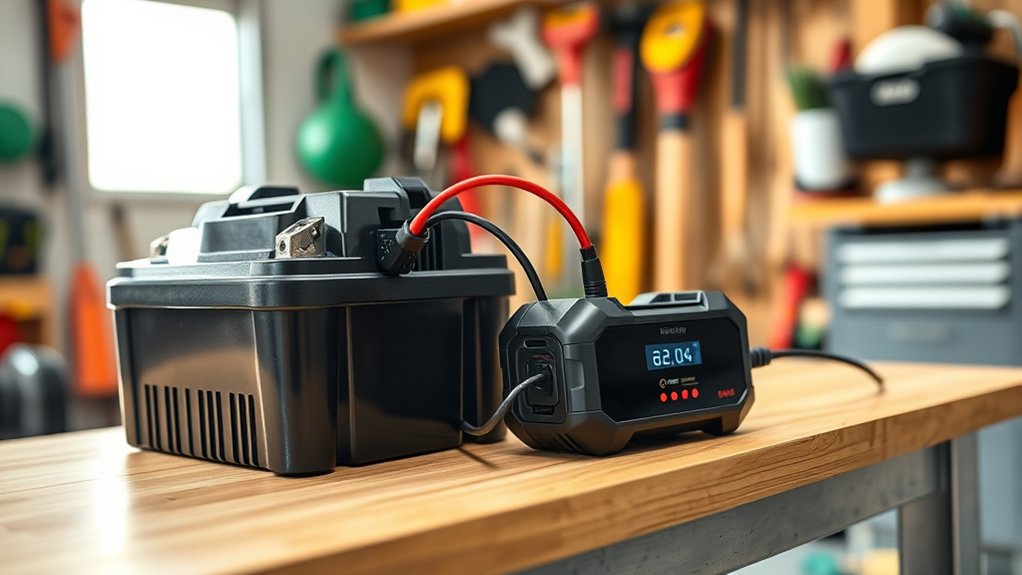
How do you choose the right charger for your lawnmower battery? Start by identifying the battery chemistry. Common types include lead-acid and lithium-ion.
Selecting a charger compatible with your battery chemistry is crucial to ensure safe, efficient charging and to avoid damage. Check the charger’s voltage and amperage ratings; they must match your battery’s specifications.
Choose a charger that matches your battery’s chemistry, voltage, and amperage for safe and efficient charging.
Opt for a charger with built-in protections like overcharge, short circuit, and reverse polarity safeguards. Smart chargers with automatic shutoff and multi-stage charging improve battery longevity.
Avoid generic chargers that don’t specify battery type compatibility. By focusing on these technical factors when selecting a charger, you optimize performance and extend your lawnmower battery’s life, making your maintenance routine both effective and hassle-free.
Prepare Your Lawnmower Battery for Charging
Before charging your lawnmower battery, ensure it’s properly prepared to achieve optimal results. Start by inspecting the battery for damage or corrosion, focusing on terminals. Clean terminals with a mixture of baking soda and water to remove buildup, then dry thoroughly. This preparation safety step prevents poor connections and hazards.
Next, verify charging compatibility by checking your charger’s voltage matches the battery’s specifications, usually 12 volts. Remove the battery from the lawnmower if recommended by the manufacturer to avoid electrical risks. Also, place the battery on a stable, non-conductive surface in a well-ventilated area. Avoid charging near flammable materials.
Step-by-Step Charging Your Lawnmower Battery
Charging your lawnmower battery involves connecting the charger correctly and monitoring the process carefully. First, ensure the charger matches your battery chemistry, typically lead-acid or AGM, to prevent damage.
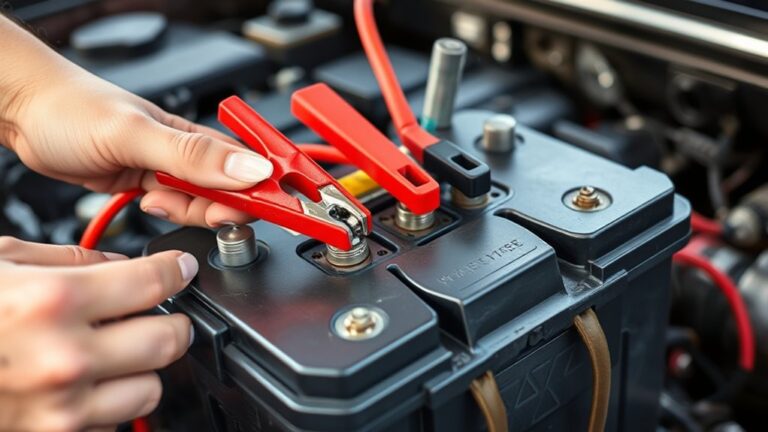
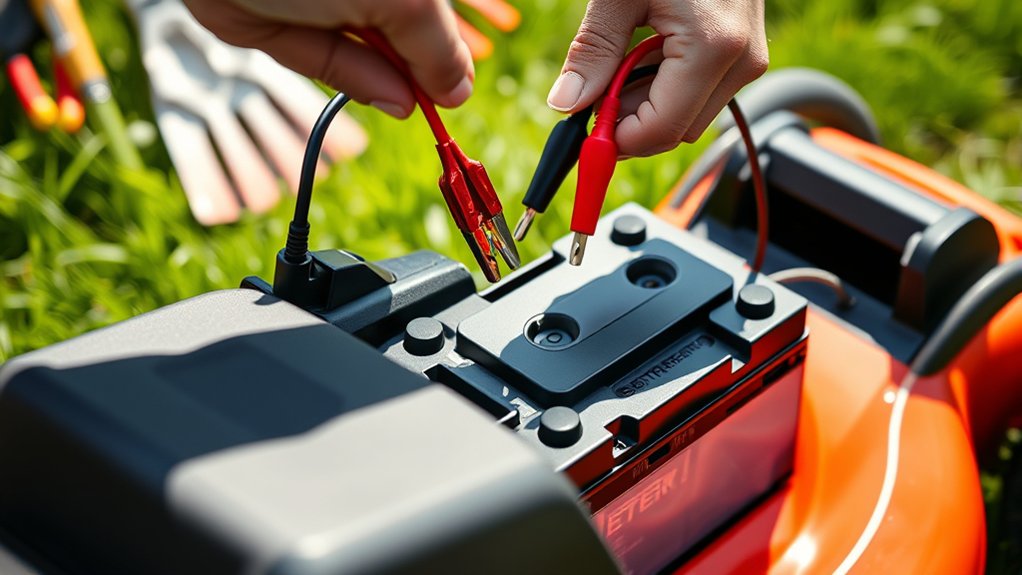
Connect the positive (red) clamp to the battery’s positive terminal, then the negative (black) clamp to the negative terminal or a grounded metal surface. Follow safety norms by wearing protective gear and working in a well-ventilated area.
Set the charger to the recommended voltage and current settings based on your battery’s specifications. Turn on the charger and observe the charging indicators; avoid overcharging to preserve battery life.
Once fully charged, disconnect the charger starting with the negative clamp, then the positive. Proper adherence to these steps ensures efficient, safe charging and prolongs your battery’s performance.
Maintain Your Lawnmower Battery in the Off-Season
Once you’ve fully charged your lawnmower battery, maintaining it properly during the off-season will help preserve its capacity and extend its lifespan. Store the battery in a cool, dry location away from extreme temperatures and moisture.
Disconnect it from the mower to prevent parasitic drains. Use a smart charger or maintainer periodically to keep the battery at an optimal charge level throughout seasonal storage. Avoid letting the battery fully discharge, as this reduces its overall effectiveness.
Inspect the battery terminals for corrosion and clean them if necessary before storage. When the battery reaches the end of its useful life, explore proper recycling options to dispose of it safely and comply with environmental regulations.
Proper off-season care ensures reliable starts and maximizes your battery’s service life.
Troubleshoot Charging Problems With Your Lawnmower Battery
If your lawnmower battery isn’t charging properly, you’ll need to identify common issues like faulty connections, a dead battery, or a malfunctioning charger. First, check the battery terminals for corrosion or loose cables; clean and tighten them to ensure a solid connection.
Test the battery voltage with a multimeter to confirm if it holds a charge. Inspect the charger for damage or improper output. Always follow safety precautions by disconnecting the battery before inspection and wearing protective gear.
Use a multimeter to test battery voltage and inspect the charger, always prioritizing safety with proper precautions.
If the battery fails to charge despite a functional charger, it may need replacement. Regular motor maintenance, including cleaning and lubricating moving parts, can prevent electrical issues affecting battery performance.
Systematic troubleshooting saves time and keeps your lawnmower ready for use.
Frequently Asked Questions
Can I Use a Car Battery Charger for My Lawnmower Battery?
Yes, you can use a car battery charger for your lawnmower battery, but ensure it matches voltage and amperage. Prioritize charging safety by monitoring connections and avoiding overcharging.
Two word discussion ideas: compatibility check, charging safety.
How Long Does a Fully Charged Lawnmower Battery Typically Last?
Like a well-oiled clock, your fully charged lawnmower battery typically lasts 2 to 5 hours, depending on lawnmower specifications.
Always follow charging safety to maintain battery health and ensure consistent performance during use.
What Are Signs That My Lawnmower Battery Needs Replacement?
You’ll notice signs of degradation like slow engine crank, dim lights, or frequent need for charging. These replacement indicators signal the battery’s reduced capacity and inability to hold charge, so it’s time to replace it promptly.
Can Extreme Weather Affect My Lawnmower Battery’s Performance?
Yes, extreme weather can degrade your lawnmower battery’s performance by causing chemical reactions inside the cells to slow down or accelerate. This reduces capacity and lifespan. Protect your battery from temperature extremes to maintain optimal battery performance.
Are Lithium-Ion Batteries Better Than Lead-Acid for Lawnmowers?
You’ll find lithium vs lead acid batteries differ in weight, lifespan, and cost. Lithium offers higher energy density and longer life, but consider battery chemistry considerations like charging needs and temperature sensitivity before choosing for lawnmowers.
Conclusion
So, now that you’re armed with the know-how to charge your lawnmower battery safely, remember it’s not rocket science—just don’t treat it like a car jump-start or a phone charger from your drawer. Use the right charger, connect correctly, and monitor the process like a responsible adult.
Skip these steps, and you might as well invite sparks and frustration to your garage party. Stay sharp, charge smart, and keep your mower ready to roar.
By following these tips, you’ll ensure your lawnmower battery charges efficiently and lasts longer. Proper care is key when you charge lawnmower battery with battery charger.