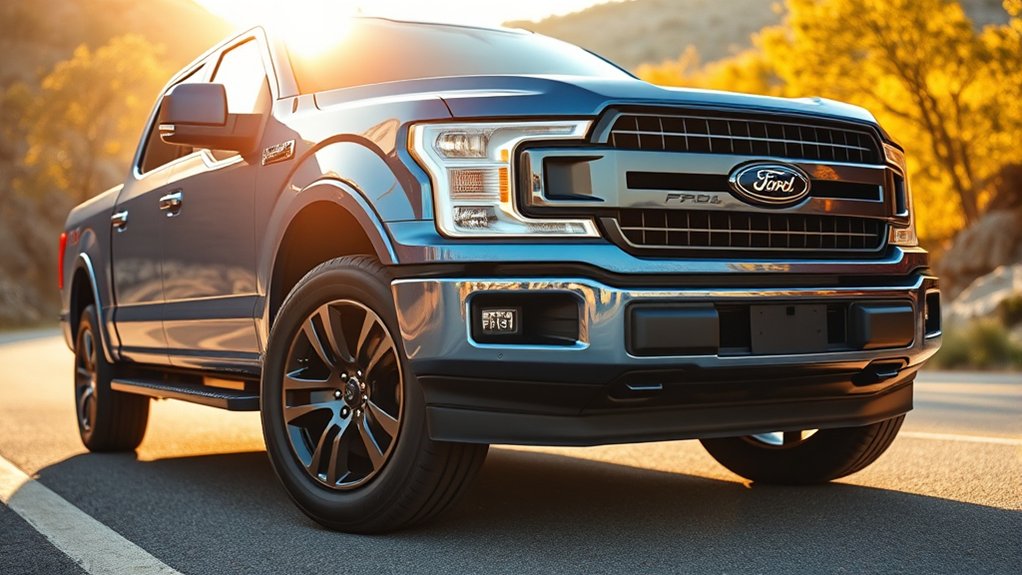
Does the 2025 Ford f150 Hybrid Have Regenerative Braking
Did you know the 2025 Ford F-150 Hybrid features regenerative braking that recovers up to 10% of its energy? This advanced system combines electric motor generation with traditional friction brakes, maximizing energy capture during deceleration.
But how exactly does this hybrid technology enhance braking performance compared to conventional trucks? Understanding the mechanics behind this blend reveals important implications for efficiency, brake wear, and overall driving dynamics you’ll want to contemplate.
Key Takeaways
- The 2025 Ford F-150 Hybrid features regenerative braking to recapture energy during deceleration.
- Its electric traction motors act as generators to store energy in the high-capacity battery pack.
- Advanced control units seamlessly blend regenerative and friction braking for smooth deceleration.
- Regenerative braking reduces brake wear and improves overall fuel efficiency in the hybrid system.
- The system optimizes energy recovery while maintaining safety and reliable braking performance.
Regenerative Braking in the 2025 Ford F-150 Hybrid: What’s Included?
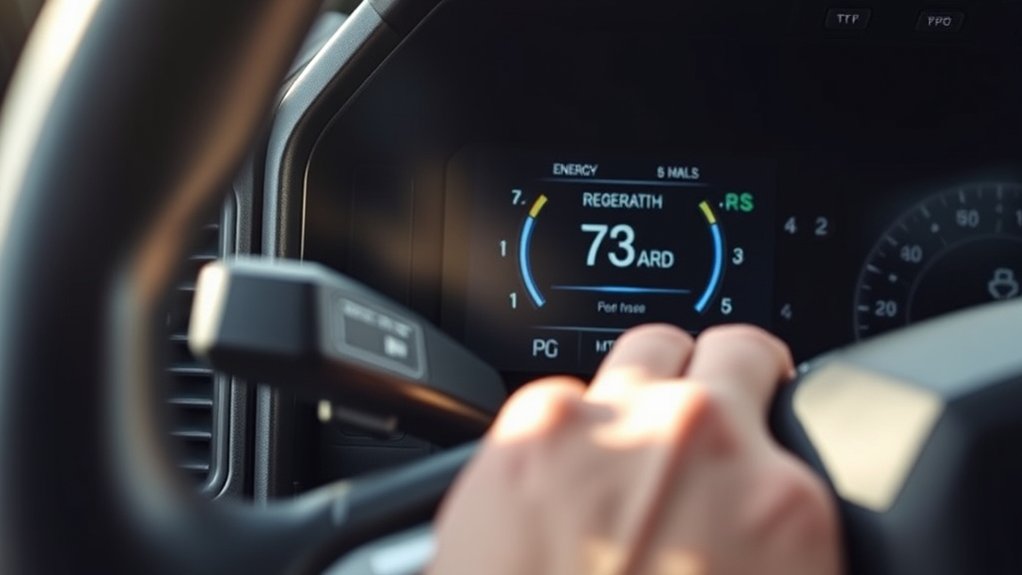
How does the 2025 Ford F-150 Hybrid integrate regenerative braking into its system? It incorporates a sophisticated setup combining electric motors with the vehicle’s drivetrain to recapture kinetic energy during deceleration.
You won’t find irrelevant topics or trivial details here; the system focuses on efficiency and energy recovery without unnecessary complexity. Key components include a high-capacity battery pack, electric traction motors, and advanced control units that modulate braking force to optimize energy capture while maintaining safety and driving feel.
This integration ensures smooth transition between conventional and regenerative braking. When you analyze the system, you see a deliberate design that avoids extraneous features, emphasizing functional synergy among components rather than irrelevant or trivial elements.
This approach maximizes energy recovery and contributes to overall hybrid performance.
How Regenerative Braking Works in the 2025 Ford F-150 Hybrid System
When you decelerate in the 2025 Ford F-150 Hybrid, the regenerative braking system activates by reversing the electric motor’s role, turning it into a generator that converts kinetic energy into electrical energy. This energy is then stored in the hybrid battery, enhancing overall efficiency.
The system uses sensors to monitor brake pressure and vehicle speed, seamlessly blending regenerative braking with traditional friction brakes. This integration maintains consistent hybrid driveability, ensuring a smooth transition between acceleration and deceleration phases.
The system’s control unit optimizes energy recovery without compromising braking responsiveness or safety. By precisely managing the balance between electric motor regeneration and hydraulic brakes, the 2025 Ford F-150 Hybrid maximizes energy recapture while preserving the robust braking performance expected from a full-size pickup.
2025 Ford F-150 Hybrid vs. Non-Hybrid Braking Systems
What sets the 2025 Ford F-150 Hybrid’s braking system apart from its non-hybrid counterpart is the integration of regenerative braking alongside traditional friction brakes. This hybrid system captures kinetic energy during deceleration, converting it to electrical energy stored in the battery, reducing reliance on friction brakes.
As a result, you experience less brake wear and enhanced noise reduction, since the mechanical braking components engage less frequently. In contrast, the non-hybrid F-150 depends solely on friction brakes, which generate more noise and require more frequent maintenance.
Additionally, the hybrid’s regenerative braking directly contributes to improved fuel economy by recapturing energy that would otherwise dissipate as heat. Understanding these differences helps you appreciate the hybrid’s technical advantage in braking efficiency and overall vehicle performance.
Benefits of Regenerative Braking in the 2025 Ford F-150 Hybrid
Why does regenerative braking make such a significant difference in the 2025 Ford F-150 Hybrid? It efficiently recaptures kinetic energy during deceleration, converting it into electrical energy that recharges the battery.
This process enhances fuel economy by reducing reliance on the internal combustion engine, directly debunking turbocharged myths suggesting hybrids compromise power for efficiency. Additionally, regenerative braking mitigates brake wear, lowering maintenance costs over time.
You’ll also find it addresses off road myths; it maintains consistent energy recovery even in rugged conditions, ensuring reliable performance without sacrificing durability. By integrating this technology, the F-150 Hybrid optimizes energy management, delivering both improved efficiency and sustained power output.
This precision engineering makes regenerative braking a pivotal benefit, enhancing overall operational efficiency while challenging misconceptions about hybrid capabilities.
How Regenerative Braking Affects Daily Driving and Maintenance on the 2025 Ford F-150 Hybrid
How does regenerative braking influence your everyday experience behind the wheel of the 2025 Ford F-150 Hybrid? It enhances energy efficiency by capturing kinetic energy during deceleration, reducing reliance on the petrol only engine.
This means you’ll notice smoother, more controlled braking and improved fuel economy during stop-and-go traffic. From a maintenance perspective, regenerative braking reduces wear on traditional brake components, lowering dealership fees and service frequency.
However, the hybrid system’s complexity demands specialized diagnostics, which could impact maintenance costs if not covered under warranty. Overall, regenerative braking optimizes daily driving dynamics and decreases mechanical strain, but you should remain mindful of potential dealership fees associated with hybrid-specific servicing, differentiating it from conventional petrol only models.
Frequently Asked Questions
Can Regenerative Braking Recharge the Battery While Towing Heavy Loads?
Yes, regenerative braking can recharge the battery while towing, but towing impact on regen reduces efficiency. You’ll face regenerative braking limitations because heavier loads decrease deceleration energy capture, limiting how much the system can recover during braking.
Is the Regenerative Braking System Customizable by the Driver?
Yes, you can customize the regenerative braking system to suit your driving style. This driver customization optimizes energy recovery and enhances control, ensuring efficient braking without compromising comfort or performance during various driving conditions.
Does Regenerative Braking Affect Brake Pad Wear on the F-150 Hybrid?
Yes, regenerative braking reduces brake wear considerably by using the electric motor to slow the vehicle, minimizing friction on brake pads.
You’ll notice the regenerative impact extends brake lifespan and improves overall braking system efficiency on the F-150 Hybrid.
How Does Regenerative Braking Perform in Extreme Weather Conditions?
In extreme weather, regenerative braking remains effective but may slightly reduce energy recovery due to temperature impacts on battery chemistry.
You’ll notice consistent deceleration, though cold or wet conditions can alter regenerative efficiency and responsiveness subtly.
Are There Any Alerts or Warnings Related to Regenerative Braking Failures?
Yes, you’ll receive system warnings if regenerative braking fails or brake wear becomes excessive. These alerts help you maintain optimal braking performance and safety by notifying you promptly of any regenerative system issues or mechanical wear concerns.
Conclusion
You’ll find the 2025 Ford F-150 Hybrid’s regenerative braking brilliantly blends braking benefits, boosting battery efficiency while balancing brake wear. This balanced braking system seamlessly switches between traditional friction and energy recapture, safeguarding safety and sustainability.
By smartly managing speed and pressure, it maximizes mileage and minimizes maintenance. So, you’re not just stopping smoothly—you’re steering smarter, saving fuel, and sustaining system health with every controlled, calculated deceleration.
In conclusion, the regenerative braking system in the 2025 Ford F-150 Hybrid plays a key role in enhancing overall driving efficiency and performance.