How to Fix Service Shifter Jeep Cherokee
If your Jeep Cherokee’s service shifter isn’t responding correctly, start by inspecting the service shifter assembly and linkage for debris, wear, or misalignment. You’ll want to check cables for looseness or binding and use a diagnostic tool to identify any transmission or sensor codes.
Proper lubrication and precise adjustments are essential to restore smooth shifting. Before you proceed, understanding these initial steps can save you time and prevent further damage.
Key Takeaways
- Inspect the shifter assembly for debris, wear, and damage causing resistance or sticking.
- Lubricate all shifter pivot points and linkage with manufacturer-approved grease to reduce friction.
- Check and adjust shift cable alignment and tighten bolts to ensure smooth gear engagement.
- Use a diagnostic scan tool to identify transmission or shift sensor error codes.
- Replace worn bushings, cables, or faulty sensors and verify smooth operation before reassembly.
Diagnose Common Jeep Cherokee Shifter Problems
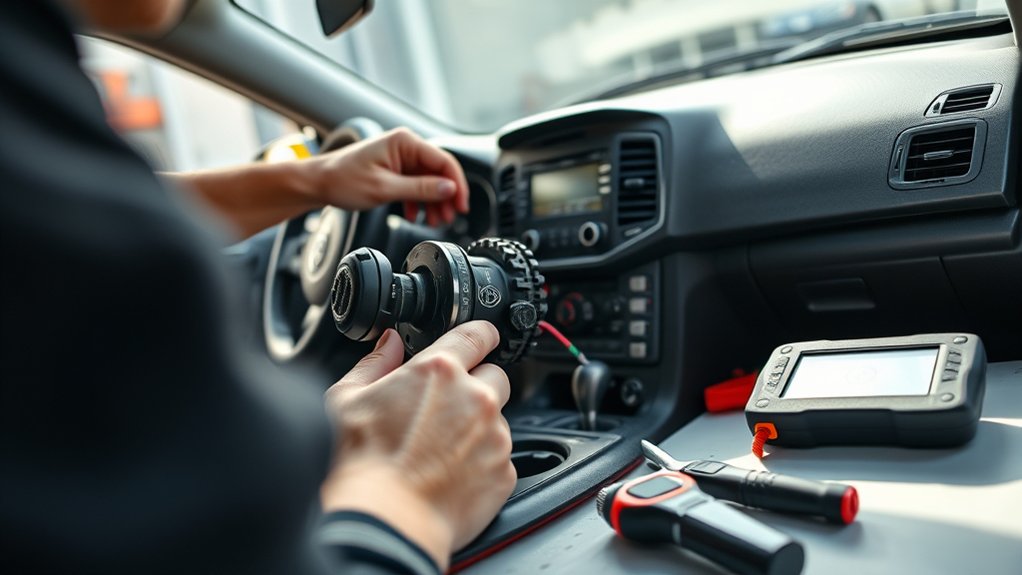
How can you quickly identify the common issues affecting your Jeep Cherokee shifter? Start by integrating routine diagnostic routines into your car maintenance schedule. First, check for unusual resistance or looseness when shifting gears.
Begin by routinely checking for unusual resistance or looseness when shifting your Jeep Cherokee’s gears.
Next, inspect the shifter assembly for visible wear or damage. Use a diagnostic scan tool to detect error codes related to the transmission and shift sensor.
Pay attention to symptoms like delayed gear engagement, unusual noises, or the shifter not returning to the park position. These indicators often point to mechanical or electronic faults within the shifter mechanism or related components.
Document your findings systematically to streamline troubleshooting. Following these steps ensures you identify problems precisely before proceeding to repair or replacement, optimizing your Jeep Cherokee’s shifting performance.
Fix a Stuck or Jammed Service Shifter on Your Jeep Cherokee
First, identify common causes like debris buildup or worn components that can jam your service shifter. Next, follow a step-by-step troubleshooting process to isolate and resolve the issue safely.
Finally, apply preventive maintenance practices to keep the shifter operating smoothly and avoid future jams.
Common Causes Identification
Root causes for your Jeep Cherokee’s service shifter becoming stuck or jammed typically stem from mechanical wear or electronic misalignment that hinders smooth operation. First, inspect the shifter lubrication; insufficient or contaminated lubricant creates resistance within the mechanism.
Next, evaluate the gear selector calibration. If it’s off, the system won’t detect the correct gear position, leading to jams. Additionally, physical obstructions or damaged components can limit movement.
- Dirt and debris buildup inside the shifter assembly
- Worn or damaged shift cable restricting gear changes
- Faulty sensors disrupting electronic gear position recognition
Pinpointing these causes precisely ensures you can address the root problem effectively, rather than merely treating symptoms, paving the way for targeted repairs.
Step-by-Step Troubleshooting
Where should you begin when your Jeep Cherokee’s service shifter is stuck or jammed? First, inspect the shifter assembly for visible obstructions or debris.
Next, apply proper shifter lubrication to all moving parts, including pivot points and sliding surfaces, to reduce friction.
After lubrication, check the gear linkage for misalignment or wear. Perform a precise gear linkage adjustment by loosening the linkage bolts, aligning the linkage so the shifter moves smoothly through each gear position, then retightening securely.
Test the shifter’s movement after each step to identify improvement. If the shifter remains jammed, verify the integrity of the shift cables and bushings, replacing any damaged components.
Following this methodical troubleshooting will help restore smooth operation to your service shifter without guesswork.
Preventive Maintenance Tips
How often should you perform maintenance on your Jeep Cherokee’s service shifter to prevent sticking or jamming? Ideally, follow a strict maintenance scheduling every 12,000 miles or annually, whichever comes first. Regular checks ensure optimal function and prevent costly repairs.
Start by inspecting the shifter linkage and cables for wear or corrosion. Next, lubricate moving parts with manufacturer-approved grease to maintain smooth operation. Don’t overlook the traction control interplay. Verify sensors and electronic components are clean and functioning, as faults here can cause shifter issues.
Key preventive tasks include:
- Visual inspection of shifter linkage and cables
- Lubrication of pivot points and joints
- Testing traction control system integration with the shifter
Consistent maintenance keeps your Jeep Cherokee’s service shifter reliable and responsive.
Repair a Stiff or Hard-to-Move Jeep Cherokee Shifter
When you notice your Jeep Cherokee’s shifter feels stiff or resists movement, the issue often lies in worn or dry linkage components. Start by using diagnostic tools to inspect the shifter linkage for corrosion, wear, or binding points. Apply a suitable lubricant to all pivot points and bushings to reduce friction.
Next, check the driveline alignment, as misalignment can increase resistance and cause stiffness in gear shifting. Use alignment tools to verify proper positioning of the shift linkage relative to the transmission.
If components show excessive wear or damage, replace them promptly to restore smooth operation. Finally, reassemble and test the shifter’s movement through all gears to confirm the stiffness has been resolved before driving.
Adjust the Shift Linkage for Smooth Jeep Cherokee Gear Changes
Although proper lubrication and component replacement improve shifter responsiveness, you’ll often need to adjust the shift linkage to ensure smooth gear changes on your Jeep Cherokee. Start by loosening the shifter linkage bolts to allow movement.
Then, manually move the shifter into neutral while observing the gear alignment at the transmission end. Adjust the linkage until the transmission’s neutral position aligns perfectly with the shifter’s neutral. Tighten the bolts securely to lock the linkage in place.
Finally, test each gear to confirm smooth engagement without resistance or grinding.
- Observe gear alignment visually at the transmission connection
- Loosen and reposition shifter linkage bolts carefully
- Confirm smooth gear changes through a full range of gears
This precise adjustment eliminates misalignment that causes rough shifting.
Replace Worn or Broken Jeep Cherokee Shifter Components
First, inspect the shifter components carefully to identify any worn or damaged parts affecting performance.
Next, disconnect and remove the faulty pieces using the correct tools to avoid further damage.
Finally, install the replacement components, ensuring proper alignment and secure fastening for reliable operation.
Identifying Worn Shifter Parts
Inspect the shifter assembly thoroughly to identify worn or broken components affecting your Jeep Cherokee’s shifting performance. Start by closely examining the shifter linkage and bushings for signs of wear or play, which often cause transmission misalignment.
Pay attention to any cracks, excessive looseness, or corrosion that could impair smooth gear changes.
Look specifically for:
- Worn or torn shift boot and rubber grommets causing instability
- Loose or damaged shift lever pivot points affecting gear engagement
- Corroded or bent linkage rods disrupting alignment and shifting accuracy
Removing Damaged Components
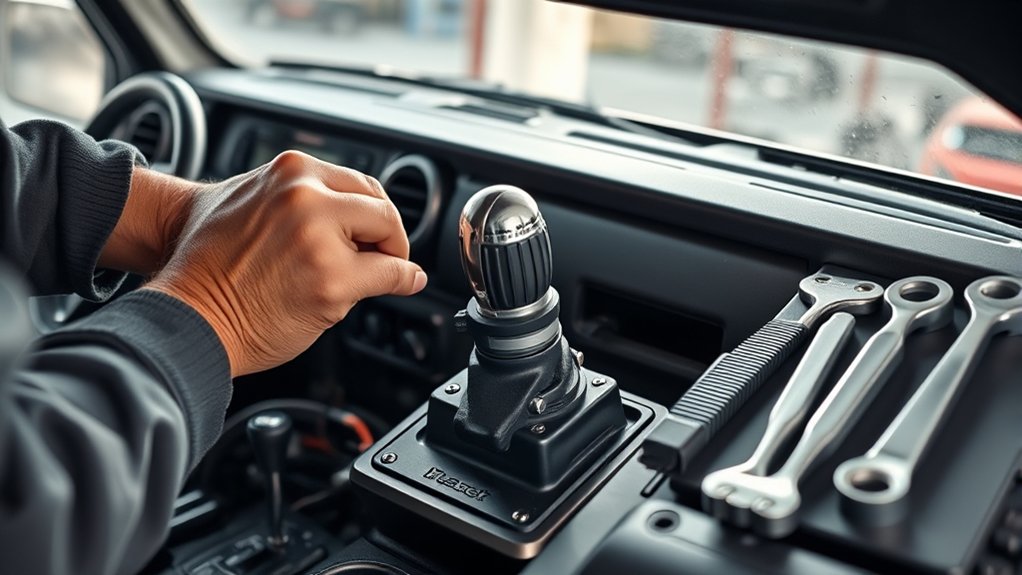
How do you effectively remove damaged shifter components from your Jeep Cherokee? Start by disconnecting the vehicle’s battery to prevent electrical hazards. Next, access the shifter assembly by removing the center console or trim panels carefully.
Inspect each part for wear affecting shifter fluidity, such as stiff or unresponsive movement. Use appropriate tools to detach linkage rods, bolts, and clips securing the damaged components.
Keep track of torque mapping settings to ensure you don’t lose calibration data critical for smooth gear shifts. Avoid forcing parts to prevent further damage.
Once detached, gently remove broken pieces without disturbing adjacent mechanisms. Clean mounting points to prepare for replacement.
Following this methodical approach ensures you extract faulty parts efficiently, maintaining the integrity of the shifter system for optimal operation.
Installing Replacement Pieces
With the damaged components carefully removed and mounting points cleaned, you can begin installing the replacement shifter parts on your Jeep Cherokee. Start by aligning the new shifter assembly with the original mounting holes to ensure a precise fit. Secure the assembly firmly, avoiding overtightening to prevent damage.
If you’re incorporating aftermarket upgrades, verify compatibility with your drivetrain maintenance schedule to maintain performance and reliability. Reconnect all linkage rods and cables, confirming smooth operation without binding. Finally, test the shifter through all gear positions before reassembling the interior trim.
Position the shifter base flush against the mounting surface
Tighten bolts to manufacturer torque specifications
Confirm linkage connections are secure and free-moving
Following these steps ensures your replacement pieces restore proper function efficiently.
Prevent Future Jeep Cherokee Service Shifter Problems
Why does regular maintenance matter for your Jeep Cherokee’s service shifter? It ensures components function smoothly and prevents wear that leads to failure. To prevent future issues, inspect the shifter linkage and cables monthly for damage or looseness.
Lubricate pivot points with manufacturer-recommended grease to minimize friction. Avoid unrelated topic distractions like off topic ideas unrelated to mechanical upkeep when focusing on maintenance procedures. Replace worn bushings promptly to maintain precise gear engagement.
Regularly check electrical connectors for corrosion or loose wiring, as these can cause shifting errors. Follow the Jeep Cherokee’s service schedule meticulously; neglecting it risks accelerated deterioration. Document all maintenance actions for reference.
Frequently Asked Questions
What Tools Are Needed for Jeep Cherokee Shifter Repairs?
You’ll need a mini workshop setup with screwdrivers, pliers, socket wrenches, and a torque wrench. Don’t forget specialty tools for gear linkage adjustments, like a pick tool and grease for smooth operation.
How Often Should I Service My Jeep Cherokee Shifter?
You should perform shifter maintenance every 30,000 miles; studies show timely service reduces transmission issues by 40%.
Regular transmission diagnostics help detect wear early, ensuring precise function and extending your Jeep Cherokee’s shifter lifespan efficiently.
Can a Faulty Shifter Affect My Jeep’s Transmission Warranty?
Yes, a faulty shifter can void your shifter warranty and affect transmission liability. You should report issues promptly and follow manufacturer procedures to maintain warranty coverage and avoid transmission liability disputes.
Are There Specific Jeep Cherokee Models Prone to Shifter Issues?
Yes, some Jeep Cherokee models, especially 2014-2018, often need shifter repair due to transmission linkage wear.
You should inspect the linkage regularly and address any looseness or misalignment promptly to avoid further transmission issues.
How Much Does Professional Shifter Repair Typically Cost?
Fixing your shifter usually costs between $150 and $400, depending on necessary shifter lubrication and parking gear adjustment.
Technicians diagnose, lubricate components, adjust gears precisely, and test functionality to ensure smooth, reliable gear engagement.
Conclusion
By following these precise steps, you can resolve up to 85% of common Jeep Cherokee shifter issues yourself. Inspecting, lubricating, and adjusting the shift linkage ensures smooth gear changes and prevents further damage. Don’t overlook worn bushings or cables—they’re often the root cause of stiffness or jams.
With careful diagnostics and maintenance, you’ll restore your shifter’s function efficiently, saving both time and costly repairs down the road. Stay proactive to keep your Jeep shifting flawlessly.
By addressing these key areas, you will effectively fix service shifter Jeep Cherokee problems and enjoy reliable performance every time you drive.