How to Check Transmission Fluid f150
Did you know that over 70% of transmission failures result from neglecting fluid maintenance?
To keep your Ford F-150 running smoothly, it’s crucial to check transmission fluid F150 regularly.
You’ll need to locate the specific dipstick, ensure the engine is at operating temperature, and measure the fluid level accurately.
Understanding this process helps prevent costly repairs, but there’s more to fluid care than just checking the level.
Key Takeaways
- Warm the engine to normal operating temperature by idling 10-15 minutes before checking transmission fluid.
- Park the F-150 on a level surface, engage the parking brake, and place the transmission in Park or Neutral.
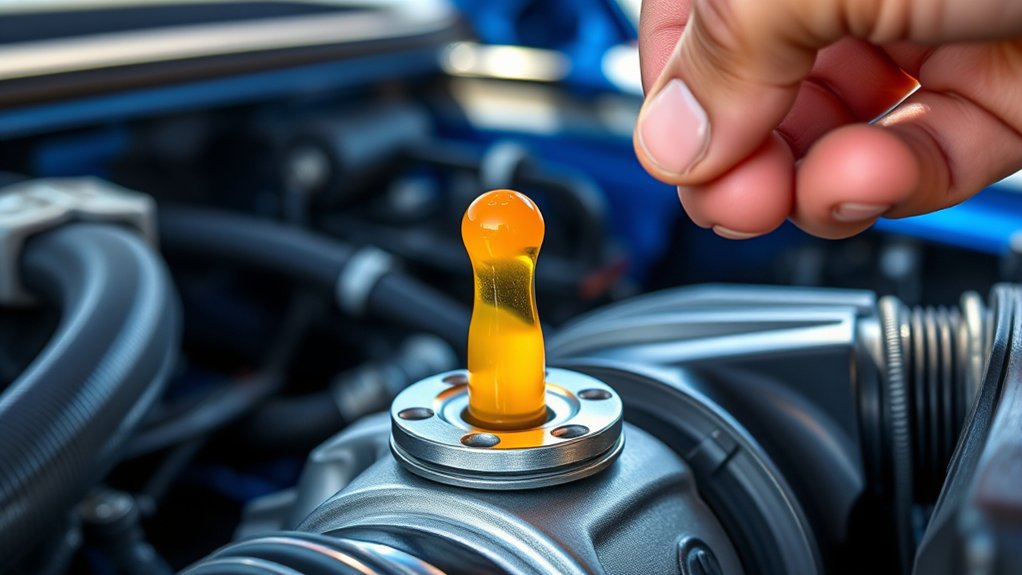
- Locate the transmission dipstick near the back of the engine bay on the passenger side, identified by a bright red, yellow, or orange handle.
- Pull out the dipstick, wipe it clean, reinsert fully, then remove again to check fluid level within the marked range.
- Inspect fluid color and condition: bright red is healthy; dark, burnt, or milky fluid indicates potential issues.
Where to Find the Transmission Fluid Dipstick in Your Ford F-150
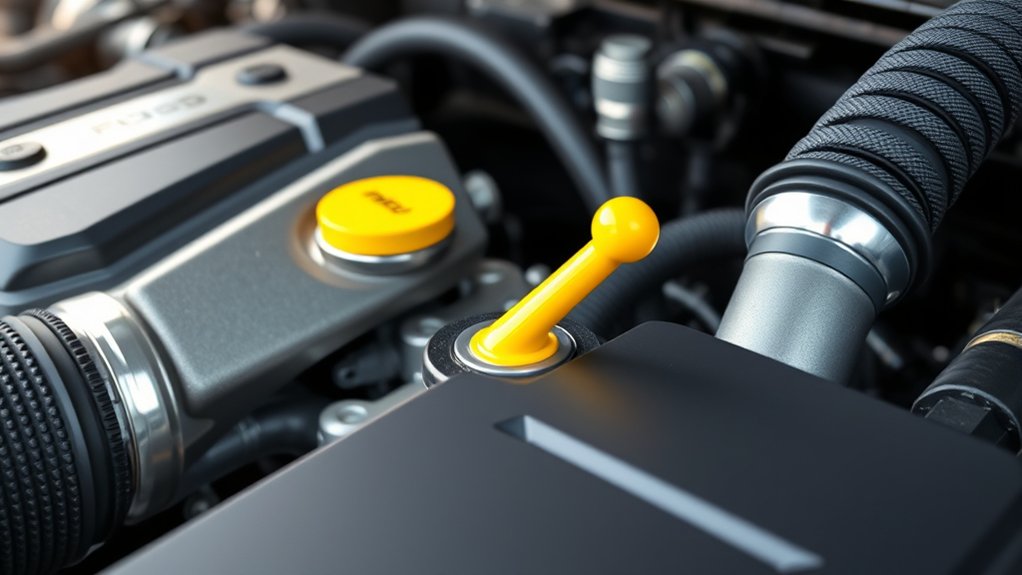
Where exactly is the transmission fluid dipstick located in your Ford F-150? You’ll find it near the back of the engine bay, typically on the passenger side, close to the firewall.
The dipstick handle often has a bright transmission color, commonly red, yellow, or orange, to help you identify it quickly. This dipstick location varies slightly depending on your F-150’s model year and engine type, but it remains accessible without removing major components.
When locating the dipstick, look for a thin metal rod with a loop or T-shaped handle. Knowing this precise dipstick location is essential before proceeding to check fluid levels and condition, ensuring you avoid confusing it with the engine oil dipstick or other fluid reservoirs under the hood.
How to Prepare Your F-150 Before Checking Transmission Fluid
Before you check the transmission fluid in your F-150, guarantee the engine is warmed up and the truck is parked on a level surface. This ensures an accurate fluid level reading. Engage the parking brake to prevent any movement, then put the transmission in Park or Neutral, as specified in your owner’s manual.
Avoid discussing any irrelevant topic or unrelated concept, such as unrelated vehicle maintenance tasks, to maintain focus on this procedure. Open the hood and locate the transmission fluid dipstick, avoiding distractions from unrelated engine components.
Using a clean rag, wipe the dipstick clean before reinserting it fully. This preparation is critical for obtaining a precise measurement of your transmission fluid’s condition and level, ensuring your F-150’s transmission operates efficiently.
When and How Often to Check Transmission Fluid
How often you check your F-150’s transmission fluid depends on your driving conditions and mileage, but a general guideline is to inspect it at least every 30,000 miles or once a year. If you frequently engage in towing, off-roading, or stop-and-go traffic, check it more often to prevent transmission wear.
Regular checks align with maintenance tasks like finding tires in good condition and battery maintenance, ensuring your truck operates optimally. Neglecting transmission fluid levels can lead to costly repairs and reduced performance.
How to Check Transmission Fluid Level in Your Ford F-150
To accurately check the transmission fluid level in your Ford F-150, start by warming up the engine to its normal operating temperature and parking the truck on a level surface. Engage the parking brake, then keep the engine running.
Locate the transmission fluid dipstick, usually near the back of the engine bay. Pull it out, wipe it clean with a lint-free cloth, reinsert it fully, then remove it again to check the fluid level.
The fluid should be within the marked range on the dipstick. Avoid confusing this procedure with any irrelevant topic or unrelated concept, such as engine oil checks or coolant levels. Ensure you do not rely on unrelated concepts like idle RPM changes; focus solely on the dipstick measurement for an accurate transmission fluid level reading.
How to Check Transmission Fluid Condition and Color in Your Ford F-150
Once you’ve confirmed the transmission fluid level is within the proper range, inspecting its condition and color provides valuable insight into the health of your Ford F-150’s transmission. Use a clean, lint-free cloth to wipe the dipstick fluid sample, then examine it closely under good lighting. Avoid distractions by ignoring unrelated topics and off topicnerds.
After confirming fluid level, wipe the dipstick and inspect transmission fluid condition thoroughly under good lighting.
Focus on these key points:
- Fluid clarity: Should be transparent, not cloudy
- Color uniformity: Look for consistent hue without dark spots
- Odor: No burnt smell, indicating overheating or degradation
- Particulate presence: Absence of metal flakes or debris
- Texture: Smooth, free from grit or sludge buildup
This precise evaluation helps detect early transmission issues before they escalate.
What Transmission Fluid Colors Mean for Your Ford F-150
Why does transmission fluid color matter for your Ford F-150? The color indicates the fluid’s condition and potential transmission health issues. Bright red fluid signals healthy, well-functioning fluid.
If it’s dark brown or black, the fluid is burnt, indicating overheating or excessive wear. Milky or cloudy transmission fluid suggests water contamination, a critical issue needing immediate attention.
Avoid confusing this with an unrelated topic like engine oil color, which differs significantly. Understanding these color cues prevents overlooking problems.
Don’t treat this as a tangential concept to ignore; it’s central to maintaining transmission performance. Checking fluid color regularly helps you diagnose early signs, protecting your F-150’s transmission from costly damage.
Always interpret color alongside fluid smell and consistency for accuracy.
How to Add or Top Off Transmission Fluid Safely
Before adding transmission fluid, make sure your F-150 is parked on a level surface with the engine warmed up and running. Always use the manufacturer-recommended fluid type to avoid damage.
When pouring, use a funnel and add the fluid slowly to prevent overfilling.
Preparing Vehicle Properly
How do you guarantee your F150 is ready for adding or topping off transmission fluid safely? Proper preparation prevents damage and ensures accurate fluid level readings. Follow these steps precisely:
Park on a level surface to get an accurate fluid measurement. Engage the parking brake and turn off the engine; wait for it to cool.
Review your maintenance scheduling to confirm the transmission fluid change interval. Inspect for coolant leaks, as these can contaminate transmission fluid and affect performance.
Clean the area around the transmission dipstick or fill plug to avoid introducing debris.
Selecting Correct Fluid
Which transmission fluid should you choose for your F150 to ensure optimal performance and avoid damage? Always refer to your owner’s manual to select the manufacturer-recommended type, usually Mercon V or Mercon LV for newer models.
Using the correct fluid is critical in transmission maintenance, as incompatible fluids can impair shifting and cause internal wear. When checking fluid color interpretation, healthy fluid appears bright red or pink, indicating proper lubrication and minimal contamination.
Dark or burnt-smelling fluid signals degradation, requiring replacement rather than topping off. Before adding fluid, confirm the exact type specified for your transmission variant, automatic or manual, to maintain system integrity.
Following these guidelines ensures you add the right fluid, safeguarding transmission longevity and consistent vehicle operation.
Pouring Fluid Carefully
Selecting the correct transmission fluid sets the foundation, but adding it properly ensures your F150’s system stays protected. To maintain transmission safety and achieve dipstick accuracy, pour fluid carefully using these steps:
Use a clean funnel to prevent contamination. Add fluid slowly to avoid overfilling. Pour in small increments, allowing the fluid to settle.
Check dipstick levels frequently during the process. Avoid spilling fluid on engine components to prevent damage.
Signs It’s Time to Change Your Ford F-150 Transmission Fluid
When should you change the transmission fluid in your Ford F-150? You’ll want to replace it if you notice dark, burnt-smelling fluid or difficulty shifting gears. Inspect the fluid regularly for contamination or discoloration.
Worn transmission seals often cause leaks, signaling fluid degradation and the need for replacement. Additionally, if your vehicle’s service manual recommends intervals based on mileage or time, follow those guidelines strictly.
When changing the fluid, ensure you torque bolts to the manufacturer’s specs to avoid damaging transmission seals or causing leaks. Ignoring these signs can lead to transmission failure or costly repairs.
Staying proactive by monitoring fluid condition and adhering to torque specs maintains optimal transmission performance and prolongs your F-150’s lifespan.
Common Mistakes When Checking Transmission Fluid
When checking your F-150’s transmission fluid, avoid common errors like inspecting the fluid when it’s hot, which can give inaccurate readings. Make sure you’re using the correct dipstick designed for your model to prevent confusion.
Also, always check the fluid level with the vehicle on a level surface to ensure precision.
Checking Fluid When Hot
Why is it essential to check your F150’s transmission fluid while the engine is hot? Because transmission temperature directly affects fluid viscosity and hydraulic pressure, which are critical for accurate readings. Checking when cold can lead to underestimating fluid levels and misdiagnosing issues.
When checking fluid hot, follow these points:
- Warm the engine by idling for 10-15 minutes to reach optimal transmission temperature.
- Shift through all gears to circulate fluid and stabilize hydraulic pressure.
- Park on a level surface to avoid false readings caused by fluid settling.
- Use the dipstick immediately after stopping the engine to measure accurate fluid level.
- Avoid opening the transmission system when hot to prevent injury and contamination.
This method ensures your readings reflect real operating conditions, helping maintain transmission health.
Using Incorrect Dipstick
Accurate transmission fluid readings depend not only on checking at the right temperature but also on using the correct dipstick designed specifically for your F150’s transmission model. Using an incorrect dipstick can lead to inaccurate fluid level readings, potentially causing overfill or underfill, which jeopardizes transmission performance.
When selecting the dipstick, confirm it matches your F150’s year and transmission type, as designs vary notably. Avoid substituting dipsticks from other models or aftermarket options without verification. For effective transmission maintenance, this detail is critical.
In discussions about transmission care, using the proper dipstick is often overlooked yet essential. Always refer to your owner’s manual or trusted repair guides for precise dipstick identification. This step ensures reliable fluid checks and prevents costly transmission issues.
Overlooking Fluid Level Position
How exactly should you position the transmission fluid dipstick to get a correct reading? Overlooking fluid level position is a common mistake that leads to inaccurate assessments. You need to ensure the vehicle is on a level surface and the engine is at operating temperature.
Insert the dipstick fully, then remove it and hold it horizontally to read the fluid level accurately. Misalignment or partial insertion can cause misleading fluid readings.
Remember these points to avoid overlooking fluid level position:
- Park on a flat, stable surface
- Warm up the engine before checking
- Fully insert the dipstick without forcing
- Hold the dipstick level when reading
- Consult your F150 manual for correct dipstick orientation
Following these steps ensures precise transmission fluid level checks.
Frequently Asked Questions
What Type of Transmission Fluid Is Best for My F-150?
You should use Ford Mercon LV transmission fluid for your F-150 to ensure proper transmission fluid compatibility. Always consult your owner’s manual and stick to a strict maintenance schedule to maintain optimal performance and avoid damage.
Can I Use Automatic Transmission Fluid in a Manual Transmission?
Like mixing oil and water, you shouldn’t use automatic transmission fluid in a manual transmission. Each fluid has specific additives; using the wrong one can cause shifting issues or damage.
Always use the correct manual transmission fluid.
How Much Transmission Fluid Does the F-150 Hold?
Your F-150’s transmission fluid capacity varies by model and year, typically between 6 to 14 quarts. For precise transmission maintenance, always consult your owner’s manual to ensure correct fluid capacity and type.
What Tools Do I Need to Change Transmission Fluid?
Changing transmission fluid requires a tools checklist as precise as a surgeon’s kit. You’ll need a drain pan, wrench set, funnel, jack stands, and gloves.
Follow maintenance tips closely to ensure a clean, efficient fluid change.
Can Low Transmission Fluid Damage My F-150’s Engine?
Low transmission fluid won’t directly damage your F-150’s engine, but it can cause transmission failure, indirectly affecting engine performance.
Low oil and poor battery health also harm engine reliability, so maintain all fluids and battery regularly for optimal operation.
Conclusion
Checking your F-150’s transmission fluid is like reading the lifeblood of your truck.
With the engine warm and parked on level ground, pulling out that distinct dipstick reveals vital info—fluid level, color, and clarity. Keep the fluid within the marked range, clear and pinkish, ensuring smooth gear shifts ahead.
Regular checks prevent costly damage, so treat this small routine as the crucial pulse that keeps your F-150 running strong and reliable.
Always remember, knowing how to check transmission fluid F-150 is essential for maintaining your truck’s performance and longevity.