Can You Change Oil Filter Without Changing Oil
Like changing a toothbrush without replacing the toothpaste, swapping your oil filter without changing the oil raises questions about effectiveness.
Can you change the oil filter without changing oil?
While a new filter might seem enough to keep your engine clean, the quality of the oil itself is crucial for proper lubrication and contaminant control.
Using old oil with a new filter can reduce the benefits of the filter replacement.
This combination may allow contaminants to circulate longer, potentially causing engine wear.
Understanding the implications of changing only the filter helps you avoid performance issues.
Let’s explore what happens when you replace just the filter and what you should consider before making this choice.
Key Takeaways
- Changing the oil filter alone can remove contaminants but does not eliminate dissolved sludge or degraded oil particles.
- A filter-only change may temporarily improve filtration but risks circulating old oil contaminants that harm the engine.
- It is safe to change the filter without oil if oil viscosity and condition are stable and no performance issues exist.
- Signs like reduced oil flow, unusual engine noises, or pressure warnings suggest a full oil and filter change is needed.
- Best practice is to replace both oil and filter simultaneously for optimal engine health and consistent lubrication.
Can You Change the Oil Filter Without Changing the Oil?
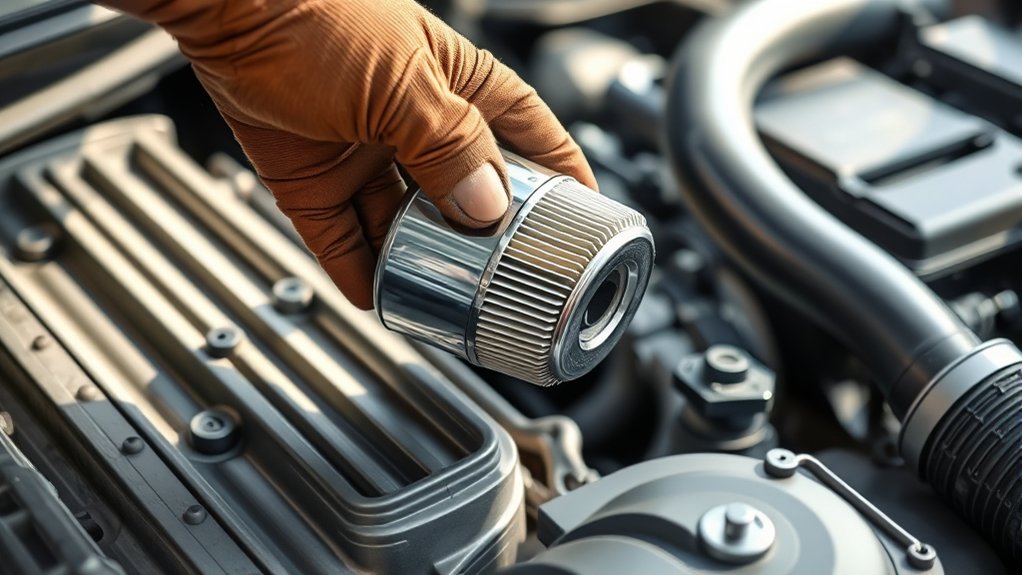
Why would you want to change the oil filter without changing the oil? In some cases, the oil’s viscosity impact on engine performance remains stable, making a filter change alone seem sufficient. However, replacing only the filter can cause contaminants trapped in the old oil to circulate, potentially harming engine components.
You should consider if your oil’s condition justifies this approach. Additionally, from an environmental perspective, filter recycling feasibility supports changing filters independently, as used filters can be processed and repurposed without discarding oil prematurely.
Still, maintaining optimal engine health typically requires simultaneous oil and filter changes, since the filter works in tandem with fresh oil to ensure proper lubrication and contaminant removal. Ultimately, you can change the filter alone, but assessing oil condition and understanding viscosity impact is crucial.
How an Oil Filter Works and Why It Matters
You rely on your oil filter to trap contaminants and prevent debris from circulating through your engine. Effective filtration maintains oil cleanliness, directly impacting engine performance and longevity.
Understanding this process helps you appreciate why timely oil filter changes are vital.
Oil Filter Functionality
How does an oil filter sustain your engine’s health? It performs essential oil filtration by removing contaminants like dirt, metal particles, and sludge from the circulating oil. This filtration prevents abrasive debris from damaging engine components, guaranteeing smooth operation and longevity.
The filter’s media traps impurities while allowing clean oil to flow freely, maintaining optimal lubrication. Understanding oil filter functionality highlights why replacement timing is critical: overused filters clog, restricting oil flow and reducing filtration efficiency.
Changing the filter at recommended intervals ensures it continues capturing harmful particles effectively, preserving engine performance. Skipping or delaying replacement risks contaminant buildup, accelerating wear.
Importance of Filtration
Maintaining effective filtration within your engine relies on the oil filter’s ability to continuously trap contaminants while allowing clean oil to circulate. The oil filter prevents irreversible contamination by capturing particles before they cause damage.
If the filter clogs, a filter bypass valve activates, letting unfiltered oil flow to avoid engine starvation, but this compromises filtration quality.
Here’s why filtration matters:
- Removes dirt, metal shavings, and sludge that degrade oil performance.
- Prevents irreversible contamination that accelerates engine wear.
- Ensures consistent oil flow without excessive pressure buildup.
- Maintains engine efficiency by delivering clean oil to critical components.
Understanding this helps you appreciate why regular oil filter changes are essential, even if you don’t change the oil simultaneously.
Impact on Engine Health
Although oil filters may seem like simple components, they play a critical role in preserving engine health by continuously removing contaminants from circulating oil. As oil flows through the filter, it traps metal particles, dirt, and combustion byproducts that can cause wear and tear.
If you skip changing the oil filter, these contaminants accumulate, reducing filtration efficiency and accelerating engine component degradation. In this discussion, understanding how an oil filter operates helps you appreciate its impact on engine health.
Regularly replacing the filter ensures optimal oil cleanliness, maintaining proper lubrication and minimizing friction. Neglecting this step risks clogging and restricted oil flow, which can lead to overheating, increased wear, and ultimately, engine failure.
These discussion ideas emphasize why timely oil filter replacement is essential for engine longevity.
Why Some People Change the Oil Filter Alone
You might choose to change the oil filter alone to reduce maintenance costs while keeping your engine protected. Replacing just the filter can help extend the oil’s effectiveness by removing contaminants more efficiently.
Additionally, addressing filter issues promptly prevents potential damage without the expense of a full oil change.
Cost-Effective Maintenance Choice
Why do some vehicle owners opt to change only the oil filter without replacing the oil itself? This approach can be a cost-effective maintenance choice when managed carefully. Changing the filter alone reduces expenses while still addressing some contamination and debris buildup.
Here’s why you might consider it:
- Reduced Immediate Cost: Filters are less expensive than oil changes, saving money upfront.
- Extended Filter Life: Frequent filter changes prevent clogging, maintaining flow efficiency.
- Minimized Waste: Changing just the filter produces less environmental waste than full oil replacement.
- Interim Solution: It serves as a stopgap when full oil change resources or time aren’t available.
Prolonging Oil Quality
Beyond cost savings, changing the oil filter alone can help maintain oil quality over time. You might have heard oil filter myths suggesting the filter’s role is minimal between oil changes, but this isn’t accurate.
The filter continuously traps contaminants, metal particles, and sludge that degrade oil performance. By replacing just the oil filter, you remove accumulated debris, which helps prolong the oil’s effective lifespan. It counters filtration myths implying the oil itself purifies without filter assistance.
However, this practice requires careful monitoring since oil degrades chemically regardless of filtration. Changing the filter alone can be a strategic move to extend oil quality, but it’s not a substitute for regular oil changes.
Understanding these nuances ensures you optimize engine protection without relying on misconceptions.
Addressing Filter Issues
How do some drivers justify changing only the oil filter without replacing the oil itself? They often believe that the filter alone traps contaminants, so swapping it out improves oil cleanliness. However, this approach can lead to topic drift when discussing overall engine maintenance, diverting focus from oil degradation. You might encounter unrelated questions about oil quality or engine wear in these debates.
Here’s why some opt for filter-only changes:
- Cost-saving by delaying full oil changes
- Perception that the filter clogs faster than oil degrades
- Convenience during quick maintenance stops
- Misunderstanding of oil and filter functions
While changing the filter alone may offer minor benefits, it doesn’t replace the need for regular oil replacement to maintain engine health.
Is It Safe to Change the Oil Filter Without Changing Oil?
Is it advisable to change your oil filter without also replacing the oil? Technically, you can swap the oil filter independently, but it’s not always safe for your engine’s performance. The existing oil has already accumulated contaminants, and introducing a new filter won’t remove these impurities.
This mismatch can affect oil viscosity, leading to suboptimal lubrication. Poor lubrication increases engine wear and reduces combustion efficiency, ultimately impairing performance. Additionally, new filters initially contain fresh media that may trap particles aggressively, causing temporary oil flow restriction if the oil is degraded.
To maintain optimal engine health and ensure consistent oil viscosity and combustion efficiency, it’s best to replace both the oil and filter simultaneously. This practice ensures cleaner oil circulates, protecting internal components effectively.
Signs Your Oil Filter Needs Changing Between Oil Changes
When should you consider changing your oil filter between regular oil changes? If you notice performance issues or warning signs, it might indicate that your oil filter is clogged or damaged, requiring attention outside generic maintenance schedules. Here are key signs:
- Reduced engine performance. A clogged filter restricts oil flow, causing increased engine wear.
- Dark, contaminated oil. Despite recent oil changes, oil appears dirty, signaling ineffective filtration.
- Unusual engine noises. Metallic sounds or knocking can mean oil isn’t circulating properly.
- Oil pressure warning light. Indicates abnormal pressure, often related to filter blockage.
Avoid unrelated topic distractions; focus on these technical indicators to determine if your oil filter needs changing between oil changes.
How to Change Your Oil Filter Without Draining the Oil
Why change your oil filter without draining the oil? Sometimes, you need a quick filter replacement without a full oil change.
To do this, first warm up your engine to thin the oil, then safely lift the vehicle and locate the oil filter. Use an oil filter wrench to loosen it carefully, avoiding spills. Prepare a container to catch residual oil from the filter.
When installing the new filter, lubricate its gasket with fresh oil to ensure a proper seal. Tighten it according to manufacturer specs.
While this method saves time, be aware of irreversible risks like contaminating clean oil or damaging the engine from partial filtration. These hidden costs can outweigh convenience.
Always weigh the benefits against potential long-term engine harm before proceeding.
What Happens If You Keep Old Oil but Change the Filter
How effective is changing only the oil filter while keeping the old oil? It’s a common question, but focusing solely on the filter without addressing the oil quality is an irrelevant topic when aiming for ideal engine performance. The old oil still contains contaminants that degrade lubrication, so merely swapping the filter offers limited benefits. Consider these points:
- Contaminants in old oil reduce its viscosity and protective properties.
- A new filter can’t remove dissolved sludge or metal particles already dispersed in the oil.
- Retaining old oil risks accelerated engine wear despite a fresh filter.
- Ignoring oil degradation is an unrelated angle that overlooks comprehensive maintenance.
Topping Off Oil and Changing the Filter: What You Should Know
What impact does topping off oil while changing the filter have on your engine’s health? Adding oil without a full change can alter oil viscosity, potentially affecting lubrication efficiency. When topping off, you must ensure the oil matches the existing viscosity grade to maintain optimal flow characteristics.
The filter media plays a critical role in trapping contaminants; replacing the filter can improve filtration, but residual old oil may carry degraded particles, reducing effectiveness. Consistently topping off without flushing old oil risks contaminant buildup within the filter media, which can impair oil circulation and increase engine wear.
Therefore, while topping off during a filter change can temporarily restore oil levels, it’s essential to match oil viscosity and monitor oil condition to protect engine components and maintain performance.
How to Spot Engine Problems From Changing Only the Oil Filter
If you change only the oil filter without replacing the oil, you might notice unusual engine noises indicating inadequate lubrication.
Pay close attention to oil pressure fluctuations, as they can signal blockages or filter issues. Ignoring these signs can lead to increased engine wear and costly damage over time.
Unusual Engine Noises
Why do unusual engine noises often emerge after changing only the oil filter? When you swap out the filter but leave old oil, contaminants and degraded lubrication remain, potentially causing mechanical issues.
It’s important not to go off on an unrelated topic or random tangent when diagnosing these noises. Focus on these key causes:
- Poor oil flow due to clogged passages from old oil residue.
- Air pockets trapped in the filter causing cavitation sounds.
- Worn engine components aggravated by insufficient fresh oil.
- Incorrect filter installation leading to leaks or pressure drops.
Recognizing these signs helps you pinpoint problems early, preventing further damage. Always remember, changing only the filter without fresh oil can trigger noises that signal underlying issues, not just an unrelated topic.
Oil Pressure Fluctuations
Unusual engine noises often accompany fluctuations in oil pressure, especially when you change only the oil filter without replacing the oil. When the oil viscosity is inconsistent with the engine’s requirements, often due to degraded oil left unchanged, pressure can vary unpredictably.
Additionally, the filter material may not be fully compatible with the existing oil’s condition, causing partial blockages or increased resistance. These factors interrupt steady oil flow, leading to fluctuating pressure readings on your gauge.
You should monitor the oil pressure closely after replacing just the filter, as sudden drops or spikes can indicate that the filter’s permeability or the oil’s thinning viscosity is impairing lubrication. Recognizing these signs early helps you avoid further complications by addressing oil and filter compatibility promptly.
Increased Engine Wear
How can you detect increased engine wear after changing only the oil filter? Skipping an oil change while replacing the filter risks leaving contaminants that accelerate wear. Unrelated maintenance or neglect of unrelated components can worsen this effect by stressing engine parts.
Watch for these signs indicating increased engine wear:
1. Unusual Engine Noise
Metallic knocking or ticking signals inadequate lubrication.
2. Reduced Performance
Loss of power or rough idling reflects friction and wear.
3. Increased Oil Consumption
Burning oil suggests worn piston rings or valve seals.
4. Check Engine Light Activation
Sensors detect abnormal engine conditions linked to wear.
Monitoring these indicators helps you promptly address damage caused by changing only the oil filter without fresh oil.
Tips to Keep Your Engine Healthy When Changing Just the Oil Filter
When should you consider changing just the oil filter without replacing the oil? This approach suits situations like emergency filter failure or short-term use between full oil changes. To keep your engine healthy, avoid unrelated topic debates or off topic discussion. Focus on essential maintenance steps.
| Tip | Explanation |
|---|---|
| Use Compatible Filters | Ensure filter matches oil type and engine specs |
| Inspect Oil Condition | Check oil clarity and level before filter change |
| Limit Filter-Only Changes | Avoid frequent filter changes without oil swaps |
| Monitor Engine Performance | Watch for unusual noises or oil pressure drops |
Following these tips helps maintain engine lubrication integrity and prevents contaminants from circulating when only the oil filter is replaced.
Frequently Asked Questions
What Types of Oil Filters Are Best for Frequent Changes?
You’ll want oil filters with advanced filter materials like synthetic fibers for superior oil filtration during frequent changes. These materials trap contaminants effectively, ensuring optimal engine protection while maintaining flow rates, making them best for regular filter replacements.
Can Changing the Oil Filter Affect Fuel Efficiency?
Sure, if you believe swapping your oil filter alone magically boosts changing fuel efficiency, you’re dreaming. But in reality, maintaining oil filter efficiency helps your engine run smoother, subtly supporting optimal fuel consumption over time.
How Much Does an Oil Filter Change Typically Cost?
You’ll typically pay between $15 and $50 for oil filters alone, but combined with oil changes, costs range from $40 to $100. Staying cost aware helps maximize maintenance impact and extends your vehicle’s performance lifespan.
Are There Specific Tools Needed for Changing Oil Filters?
About 80% of DIY oil filter changes require specific oil filter tools like filter removal wrenches. You’ll need these to grip and turn the filter precisely without damage, ensuring a secure seal and proper engine protection.
How Often Should You Inspect the Oil Filter Visually?
You should inspect filters visually every oil change or 3,000 to 5,000 miles, ensuring filter visibility is clear. Regular inspecting filters helps detect damage, clogging, or leaks, maintaining optimal engine performance and preventing potential failures.
Conclusion
You can change your oil filter without changing the oil, but remember, “a stitch in time saves nine.” While a new filter traps contaminants, old oil still circulates, risking engine wear.
If you choose this route, watch for performance drops or unusual noises. For optimal engine health, replace both oil and filter regularly.
Staying vigilant ensures your engine runs smoothly, maintaining proper lubrication and preventing costly damage down the line. To keep your vehicle in top condition, you should not only change your oil filter without changing oil but also change the oil regularly.