How to Use Schumacher Battery Charger
Imagine trying to start your car on a cold morning, only to find the battery dead—like a smartphone without power, it leaves you stranded.
Using your Schumacher battery charger correctly can prevent this hassle by restoring power efficiently and safely.
But before you connect the clamps, there are essential steps to follow to guarantee compatibility, proper setup, and safe operation.
Understanding these steps can make all the difference in maintaining your battery’s health.
Key Takeaways
- Choose a Schumacher charger compatible with your battery type, voltage (6V or 12V), and amperage to ensure safe and effective charging.
- Wear safety goggles and acid-resistant gloves, and avoid synthetic clothing to protect against acid splashes and sparks during charging.
- Inspect the battery for damage, clean terminals, and verify electrolyte levels before connecting the charger.
- Connect the negative (black) clamp first, then the positive (red) clamp to the battery; plug in and power on the charger afterward.
- Monitor indicator lights and voltage readings during charging, and disconnect clamps in reverse order to prevent sparking and injury.
Choosing the Right Schumacher Charger Model
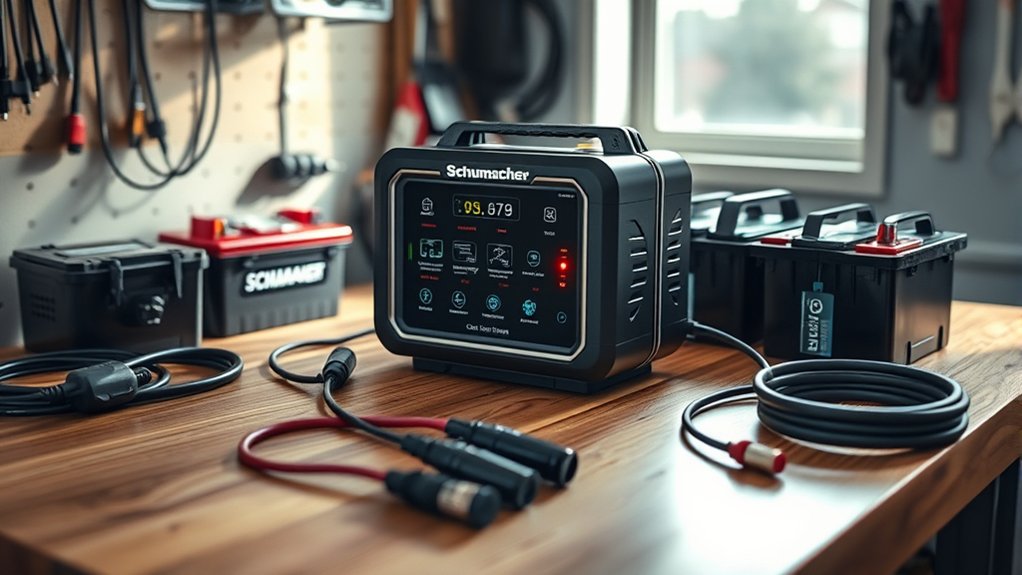
How do you select the right Schumacher charger model for your needs? Start by evaluating your battery type and voltage requirements. Different Schumacher chargers support various battery chemistries, such as lead-acid, AGM, gel, or lithium, and voltages, typically 6V or 12V.
When choosing charger models, verify model compatibility with your battery specifications to prevent damage and ensure efficient charging. Next, consider the charger’s amperage output; higher amperage suits larger batteries but may risk overheating smaller ones.
Also, evaluate features like automatic shutoff, desulfation mode, and multi-stage charging for optimal battery health. Consult the manufacturer’s specifications to confirm model compatibility and performance. By systematically analyzing these factors, you’ll efficiently select a Schumacher charger model that meets your specific battery charging needs without compromise.
Safety Gear You Need Before Charging
Before you start charging, make sure you wear essential protective equipment like safety goggles and insulated gloves. Choose clothing that covers your skin completely and avoid synthetic fabrics to reduce risk.
Following these safety guidelines minimizes the chance of injury during the charging process.
Essential Protective Equipment
Why should you wear protective gear when charging a battery? Battery safety demands minimizing exposure to acid splashes, sparks, and harmful gases. Essential protective equipment includes safety goggles to shield your eyes from acid and debris.
Wear acid-resistant gloves to protect your hands from corrosive electrolyte spills. Use a face shield if available to guard your face against unexpected splashes. Additionally, ensure your protective gear fits properly to avoid gaps that compromise safety.
Avoid using cotton gloves, which absorb acids; instead, opt for chemical-resistant materials like nitrile or neoprene. Proper protective gear reduces the risk of injuries and ensures safe handling of the Schumacher battery charger.
Prioritize battery safety by always equipping yourself before beginning any charging procedure.
Safe Clothing Guidelines
Where should your attention be when selecting clothing for battery charging? Focus on materials that resist acid splashes and prevent static discharge to maintain battery safety.
Always wear long sleeves and pants made from non-synthetic, flame-resistant fabrics to protect your skin from potential acid burns or sparks. Avoid loose clothing and jewelry that could accidentally contact terminals and cause shorts or sparks.
Protective gear, such as chemical-resistant gloves and safety goggles, complements your clothing and shields you from hazardous battery emissions. Ensure your footwear is closed-toed and non-conductive to reduce electrical risks.
Preparing Your Battery for Charging
Before charging, carefully inspect your battery for cracks, corrosion, or leaks to ensure safe operation. Make sure the terminals are clean and securely connected to avoid charging issues.
Always follow safety precautions, such as working in a well-ventilated area and wearing protective gear, to prevent accidents.
Battery Inspection Checklist
How do you ensure your battery is ready for charging? Start by verifying the battery capacity matches your Schumacher charger’s specifications to avoid under- or overcharging.
Next, conduct thorough corrosion checks on the terminals and cable connectors. Use a wire brush or battery terminal cleaner to remove any buildup, ensuring solid electrical contact.
Inspect the battery case for cracks or leaks, as physical damage can compromise charging efficiency and safety. Confirm the electrolyte levels are within manufacturer-recommended limits if you’re working with a flooded lead-acid battery.
Also, check for any swelling or deformation, which may indicate internal damage. Completing these steps guarantees optimal charging performance and prolongs battery life.
Once your battery passes this inspection checklist, you’re ready to proceed with the charging process confidently.
Safety Precautions Before Charging
To what extent must you prioritize safety precautions when preparing your battery for charging? Ignoring safety implications can lead to dangerous outcomes such as acid leaks, electrical shorts, or explosions.
First, ensure you work in a well-ventilated area to disperse harmful gases. Next, wear protective gear like gloves and safety goggles to shield against acid splashes. Disconnect the battery from the vehicle, starting with the negative terminal to prevent sparks.
Clean the terminals, removing corrosion with a wire brush. Use two word discussion ideas like “ventilation requirement” and “terminal cleaning” to focus your preparation steps.
Verify the charger’s settings match your battery type and voltage. Following these steps minimizes risk and ensures a safe, efficient charging process with your Schumacher Battery Charger.
Connecting the Schumacher Charger Correctly
Although connecting the Schumacher charger may seem straightforward, following the correct procedure guarantees safety and optimal charging performance. First, ensure the charger is unplugged before attaching clamps.
Connect the positive (red) clamp to the battery’s positive terminal, then the negative (black) clamp to the negative terminal or a grounded metal part away from the battery to avoid sparks. Avoid discussing unrelated topics or irrelevant concepts like charging mode selection here.
Double-check clamps for secure contact and no corrosion. After connections, plug in the charger and power it on. Never reverse the polarity; connecting clamps incorrectly can cause damage or injury.
Following these precise steps ensures a safe, effective connection and prevents electrical hazards while preparing the battery for proper charging.
Selecting the Proper Charging Mode
When should you select a specific charging mode on your Schumacher battery charger? Choosing the right mode depends on your battery type and condition. Avoid irrelevant topics like general battery care here; focus strictly on mode selection.
Use the charger’s two word discussion ideas, “Mode Selection,” to guide you. Refer to the table below for clarity:
| Charging Mode | Best Use Case |
|---|---|
| Standard | Fully discharged lead-acid |
| Maintenance | Keeping battery topped off |
| Fast Charge | Quick recharge, short time |
| AGM | Absorbent Glass Mat batteries |
| Lithium | Lithium-ion battery types |
Select the mode matching your battery specification to optimize charging efficiency and battery life. Don’t mix modes; it risks damage and reduces effectiveness.
Monitoring the Charging Process Safely
How do you guarantee the charging process proceeds safely and effectively? First, keep a close eye on the charger’s indicator lights and the battery’s voltage readings. Any unexpected fluctuations or failure to progress may signal issues needing immediate attention.
Avoid distractions or stray concerns unrelated to the charging process; focusing solely on relevant data prevents confusion and errors. Don’t get sidetracked by irrelevant topics like unrelated battery conditions or external equipment problems during charging.
Ensure the charger is placed on a stable, non-flammable surface in a well-ventilated area to prevent overheating. Regularly inspect the cables and connections for damage or corrosion, and never touch the leads while the charger is active.
Disconnecting the Schumacher Charger After Use
After carefully monitoring the charging process and confirming the battery is fully charged, you’ll need to disconnect the Schumacher charger properly to avoid damage or safety risks. First, switch off the charger and unplug it from the power source.
Next, disconnect the negative (black) clamp from the battery terminal, followed by the positive (red) clamp. This sequence prevents sparking and potential injury. Inspect the clamps and cables for any wear or damage, as improper handling could void your warranty coverage.
If the charger or battery shows signs of malfunction, consult the user manual for appropriate disposal methods. Never discard batteries or chargers in regular trash. Proper disconnection and handling ensure safety, extend equipment lifespan, and maintain your warranty coverage.
Maintaining Your Battery With a Schumacher Charger
Why should you maintain your battery regularly with a Schumacher charger? Proper maintenance ensures optimal battery performance, extends lifespan, and prevents unexpected failures. Use the Schumacher charger’s maintenance mode to keep your battery fully charged without overcharging.
Connect the charger securely, select the maintenance setting, and let it run until the battery reaches full capacity. Avoid initiating irrelevant topic or off topic discussion about unrelated battery care methods while operating the charger.
Regularly inspect battery terminals for corrosion and clean them before charging. Maintain proper electrolyte levels if applicable.
Consistent maintenance with the Schumacher charger stabilizes voltage and prevents sulfation, ensuring reliable starts and efficient power delivery. Follow manufacturer guidelines closely. This focused approach guarantees your battery stays healthy and ready for use.
Troubleshooting Common Schumacher Charger Issues
When your Schumacher charger doesn’t function as expected, identifying the root cause quickly can save time and prevent battery damage. First, ensure all connections are secure and clean; corrosion or loose clamps often cause charging failure.
Next, verify the power source is active. Plug into a different outlet if necessary. Avoid distractions like unrelated topic discussions or random chatter when troubleshooting to focus effectively.
If the charger’s indicator lights don’t illuminate, check the fuse or circuit breaker. For errors like slow charging, confirm the battery’s voltage matches the charger’s specifications.
If problems persist, consult the user manual’s troubleshooting section or contact customer support. By following these precise steps and eliminating unrelated variables, you’ll diagnose and resolve common Schumacher charger issues efficiently.
Frequently Asked Questions
Can Schumacher Chargers Be Used on Lithium-Ion Batteries?
You can’t use Schumacher chargers on lithium-ion batteries unless specified. Always check lithium compatibility to guarantee charging safety.
Using incompatible chargers risks damage or hazards, so follow manufacturer guidelines strictly when charging lithium-ion batteries.
How Long Does a Typical Full Charge Take With Schumacher Chargers?
Imagine charging your smartphone as if it were a Model T engine revving up; your Schumacher charger’s charge duration typically ranges from 4 to 24 hours depending on battery compatibility and capacity, ensuring precise, safe replenishment every time.
Are Schumacher Chargers Compatible With Motorcycle Batteries?
Yes, Schumacher chargers offer motorcycle compatibility, efficiently managing charging time for smaller batteries. You’ll appreciate their precise voltage control, ensuring safe, optimized charging cycles tailored to your motorcycle’s battery specifications and preserving battery health.
Can I Leave the Schumacher Charger Connected Overnight?
You can leave your Schumacher charger connected overnight, as many models feature automatic shutoff after reaching full charge.
For discussion ideas, monitor the charger’s status to avoid overcharging and extend battery life safely.
Do Schumacher Chargers Have a Warranty or Customer Support?
Yes, Schumacher chargers come with warranty options that vary by model. You can contact their customer support for detailed coverage information, troubleshooting assistance, or to initiate a warranty claim efficiently.
Conclusion
By following these precise steps, you’ll harness the full power of your Schumacher charger without risking damage or injury. Remember, connecting clamps in the right order and selecting the correct mode is as crucial as the sun rising in the east—non-negotiable. Always monitor the process closely and maintain your battery regularly to extend its life.
With proper use, your Schumacher charger becomes an indispensable tool, charging efficiently and safely every single time. Using the Schumacher battery charger correctly ensures optimal performance and longevity for both your battery and the charger itself.