How to Fix a Hole in a Tonneau Cover
You might think a small hole in your tonneau cover ruins your entire truck bed protection, but it doesn’t have to. Fixing a hole in a tonneau cover can be straightforward with the right approach. You can restore its integrity quickly and effectively.
Before you jump into repairs, it’s essential to identify the hole’s type and size accurately. Getting this step right determines the best patch method and guarantees a durable fix. So let’s start by understanding what you’re dealing with.
Key Takeaways
- Measure the hole size and examine edges to determine whether a simple adhesive patch or reinforced patch is needed for repair.
- Clean and dry the damaged area thoroughly, then lightly sand around the hole to improve patch adhesion.
- Select a patch that matches the cover material and color, cutting it slightly larger than the hole with rounded edges.
- Apply adhesive evenly, press the patch firmly to eliminate air bubbles, and allow it to cure for at least 24 hours.
- Finish by applying a waterproof sealant over patch edges to ensure moisture protection and enhance durability.
Identify the Type and Size of the Hole in Your Tonneau Cover

How big is the hole in your tonneau cover, and what type of damage does it show? Begin your hole assessment by measuring the diameter or length of the tear accurately using a ruler or tape measure.
Examine the edges to determine if the damage is a clean puncture, a jagged tear, or a worn abrasion. This classification affects your patch options. Small punctures under an inch usually require simple adhesive patches, while larger tears may need reinforced patches with stitching.
If the material around the hole is frayed or weakened, you might need to trim and smooth the edges before patching. Documenting the hole’s size and damage type ensures you select a patch option that provides a durable, watertight repair tailored to your tonneau cover’s material and condition.
Gather the Right Tools and Materials for Repair
You’ll need specific tools like a utility knife, adhesive, and a patch kit designed for your tonneau cover material. Choose repair materials that match the cover’s fabric, whether vinyl, canvas, or leather, to guarantee durability.
Don’t forget safety gear such as gloves and eye protection to prevent injury during the repair.
Essential Repair Tools
Where do you start when preparing to fix a hole in your tonneau cover? First, gather essential repair tools to ensure a smooth process. You’ll need a sole patch designed for outdoor fabric repairs. It acts as a durable, waterproof seal.
Use sharp scissors to trim the patch to size, ensuring it covers the hole plus an extra margin. Clean the area around the hole thoroughly, removing dirt and debris from the fabric fiber to improve adhesion.
A fabric adhesive or waterproof glue compatible with your tonneau cover material is crucial; it bonds the sole patch securely. Additionally, have a roller or flat tool ready to press the patch firmly onto the cover.
Finally, keep a clean cloth and gloves on hand to maintain precision and cleanliness during repair.
Material Selection Tips
When selecting materials for repairing your tonneau cover, focus on compatibility and durability to guarantee a lasting fix. Start by identifying the cover’s fabric type: vinyl, canvas, or leatherette. Source repair materials designed for that specific substrate.
Proper material sourcing ensures adhesion and flexibility, preventing further damage. Next, prioritize color matching to maintain your cover’s appearance; mismatched patches can be visually unappealing and reduce resale value. Use swatches or sample patches to compare shades under natural light.
Choose weather-resistant adhesives or patches rated for outdoor exposure to withstand UV rays, moisture, and temperature changes. Avoid generic repair kits unless confirmed compatible. With the right materials, your repair will blend seamlessly and endure rigorous use, restoring your tonneau cover’s protective function efficiently.
Safety Equipment Needed
Proper safety equipment is essential to protect yourself and guarantee a smooth repair process when fixing a hole in your tonneau cover. Begin with a thorough risk assessment to identify hazards like sharp edges or adhesives. Use appropriate safety gear to minimize injury and maximize efficiency.
| Safety Gear | Purpose | Tips |
|---|---|---|
| Gloves | Protects hands from cuts | Use puncture-resistant types |
| Safety Glasses | Shields eyes from debris | Fit snugly to prevent gaps |
| Respirator Mask | Guards against fumes | Use if working with adhesives |
| Protective Clothing | Prevents skin contact with chemicals | Wear long sleeves and pants |
Gather these tools before starting to maintain safety standards throughout the repair.
Clean and Prepare the Damaged Area on Your Tonneau Cover
How do you guarantee the patch adheres securely to your tonneau cover? Start by thoroughly cleaning the damaged area. Use a mild detergent and water to remove dirt, oils, and debris, then let it dry completely. Any residue can compromise adhesion, increasing maintenance budgeting costs due to repeated repairs.
Next, lightly sand the surface around the hole to create a rough texture, improving patch grip. Wipe away sanding dust with a clean cloth. Proper preparation is essential for effective weatherproofing strategies, ensuring the patch seals tightly against moisture and prevents further damage.
Avoid skipping these steps, as poor surface prep leads to patch failure, undermining your repair’s longevity and increasing future expenses.
Choose the Best Patch Method for Your Cover Type
You need to match your patch material with the tonneau cover’s fabric for proper adhesion and durability. Evaluate adhesive options based on their strength and compatibility with your cover type.
Apply the patch using techniques suited to your material to ensure a secure, long-lasting repair.
Material Compatibility
Why does material compatibility matter when repairing your tonneau cover? Ensuring the patch material matches your cover’s fabric is crucial for durability and performance. A compatible patch withstands tension testing and resists UV exposure without degrading prematurely.
Consider these factors when selecting your patch material:
- Fabric type: vinyl, canvas, or leather demands specific patch materials
- Flexibility: match the patch’s stretch to your cover’s elasticity
- Thickness: avoid adding bulk that could cause stress points
- UV resistance: select materials that won’t fade or crack under sun exposure
- Adhesion compatibility: ensure your patch bonds well without compromising fabric integrity
Choosing the right material keeps your repair strong, maintains tension, and prolongs your tonneau cover’s lifespan.
Adhesive Strength Options
Which adhesive method provides the strongest, most durable bond for your tonneau cover repair? For vinyl or fabric covers, specialized vinyl adhesives offer superior adhesive strength and optimal patch durability. These adhesives chemically bond with the cover material, ensuring a flexible yet robust seal.
If your cover is made of heavy-duty canvas or leather, contact cement or urethane-based adhesives provide enhanced durability under stress and weather exposure. For quick fixes, double-sided adhesive patches offer convenience but may compromise long-term patch durability.
Heat-activated adhesives deliver excellent bonding but require proper temperature control during application. Choose an adhesive compatible with your cover’s material to maximize patch durability. Prioritize adhesive strength that withstands frequent folding, UV exposure, and moisture to keep your repair intact over time.
Application Techniques
How should you apply a patch to ensure a secure, long-lasting repair on your tonneau cover? Start by selecting a patch method compatible with your cover material: vinyl, fabric, or leather. Proper repair scheduling helps avoid rushed jobs that compromise adhesion and durability. Follow these steps:
- Clean and dry the damaged area thoroughly.
- Cut the patch slightly larger than the hole.
- Apply adhesive evenly, considering manufacturer instructions.
- Press the patch firmly, eliminating air bubbles.
- Allow curing time as per adhesive requirements.
Be mindful of warranty implications; improper patching may void coverage. Always consult your cover’s warranty terms before repair. Using the right application technique maintains structural integrity and extends your tonneau cover’s lifespan.
Apply a Vinyl or Fabric Patch to Seal Small Holes
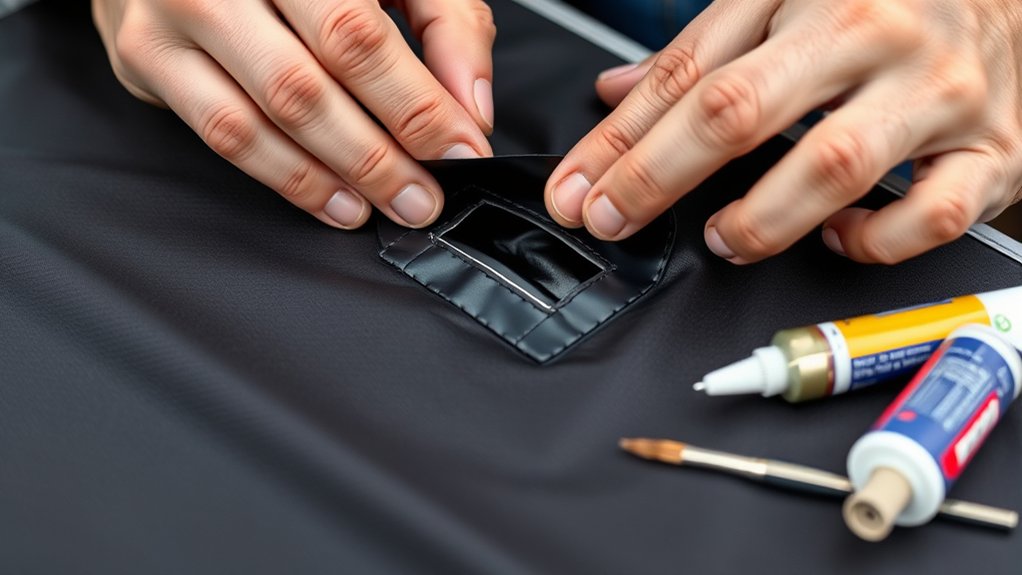
Vinyl or fabric patches provide a durable, straightforward solution for sealing small holes in your tonneau cover. Begin by cleaning and drying the affected area thoroughly. Perform patch testing on a small, inconspicuous section to ensure adhesion compatibility and avoid damage.
Select a patch that closely matches your cover’s color for a seamless appearance. Cut the patch slightly larger than the hole, rounding the edges to prevent peeling. Apply adhesive if not pre-glued, pressing firmly to eliminate air bubbles.
Allow the patch to cure according to the adhesive’s instructions, typically 24 hours. Avoid stretching the cover during application to maintain seal integrity. Proper patch testing and color matching enhance durability and aesthetics, ensuring your repair withstands weather and use effectively.
Fix Larger Tears With Adhesive or Sewn Patches
While small holes can be effectively sealed with vinyl or fabric patches, larger tears require a more robust approach to restore your tonneau cover’s integrity. You’ll need to evaluate repair budgeting carefully since adhesive or sewn patches involve materials and labor.
Follow these weatherproofing tactics for a lasting fix:
- Clean the area thoroughly to remove dirt and oils
- Trim jagged edges around the tear for a smooth patch fit
- Choose a heavy-duty adhesive or durable fabric patch material
- For sewn patches, use waterproof thread and double-stitch for strength
- Press and cure adhesive patches according to manufacturer guidelines
This method ensures your cover withstands exposure and maintains functionality. Proper preparation and application are key to a successful, weather-resistant repair.
Apply Waterproof Sealant to Protect the Repair
Protection is essential to ensure your repair endures harsh weather and daily wear. After patching the hole, apply a waterproof sealant evenly over the repair area using a brush or applicator. Focus on sealing all edges and seams to prevent moisture infiltration.
Choose a high-quality sealant compatible with your tonneau cover material. Checking product specifications ensures effective adhesion and durability. Implement quality control by inspecting the sealant layer for uniform coverage and curing it according to manufacturer instructions.
Comparing costs among sealants helps balance budget constraints with performance. Investing in a reliable sealant reduces future repairs and extends cover life. Avoid shortcuts, as inadequate sealing compromises the patch’s integrity.
Once fully cured, the waterproof barrier will protect your repair from water damage and environmental wear, maintaining the cover’s functionality.
Tips to Blend Your Patch Seamlessly for a Clean Look
Choose a patch material that closely matches your tonneau cover in color and texture to ensure a subtle repair. Use seam sealing techniques like heat bonding or adhesive application to secure edges without visible gaps. This approach will help your patch blend smoothly for a professional finish.
Matching Patch Material
How do you guarantee your patch blends seamlessly with the existing tonneau cover material? Start by selecting patch materials that match the texture, thickness, and flexibility of your cover. This ensures uniformity and durability.
Consider these key points:
- Choose weather-resistant fabrics to maintain weatherproofing methods.
- Match color and finish to avoid noticeable contrasts.
- Opt for vinyl or marine-grade fabrics for longevity.
- Test patch adhesion on a small area before full application.
- Use patches slightly larger than the hole for secure coverage.
Seam Sealing Techniques
Where should you focus when sealing the seam of your patch to achieve a smooth, professional finish? Prioritize even application of a heat-resistant adhesive or seam sealer along the entire patch edge. Ensure the sealer penetrates the fabric layers to prevent moisture intrusion.
Use a heat gun carefully to activate the adhesive. Maintain moderate heat to avoid warping or discoloration. For optimal results, apply multiple thin coats rather than one thick layer.
Pay close attention to color matching the sealer with your tonneau cover to blend the patch seamlessly, avoiding visible contrast. Finally, press the seam firmly with a roller or flat tool during curing to eliminate air bubbles and wrinkles, ensuring a flush, durable bond that upholds both aesthetics and functionality.
Maintain Your Tonneau Cover to Prevent Future Damage
Why does regular maintenance matter for your tonneau cover? It preserves its integrity, ensuring optimal noise reduction and fuel efficiency by preventing air leaks. Neglect can cause small issues to escalate, leading to costly repairs or replacements.
Regular maintenance preserves your tonneau cover’s integrity, enhancing noise reduction and fuel efficiency while preventing costly damage.
To maintain your tonneau cover:
- Clean it regularly with mild soap and water to remove debris and prevent material degradation.
- Inspect seams and fasteners for signs of wear or looseness.
- Apply a UV protectant to guard against sun damage and cracking.
- Lubricate hinges and locks to ensure smooth operation and prevent rust.
- Store the cover properly when not in use to avoid unnecessary stress or deformation.
Consistent upkeep extends your cover’s lifespan and maintains its functional benefits effectively.
When to Replace Your Tonneau Cover Instead of Repairing
Regular maintenance helps extend your tonneau cover’s life, but some damage goes beyond simple repairs. You should consider replacing your cover when holes are extensive, the material is severely worn, or multiple repairs have failed.
Cost considerations play a major role. If repair expenses approach or exceed replacement costs, investing in a new cover is more practical. Also, assess the structural integrity; a compromised frame or fasteners can’t be fixed with patches alone.
DIY risks increase with complex damage, as improper repairs may worsen leaks or cause material failure. In such cases, replacing your tonneau cover ensures reliability, weather protection, and a clean appearance.
Prioritize replacement when damage affects performance or safety rather than attempting costly, risky repairs repeatedly.
Frequently Asked Questions
Can I Use Household Glue for Tonneau Cover Repairs?
You shouldn’t rely on household glue for tonneau cover repairs, as it lacks the patch durability needed. Instead, use specialized adhesive designed for vinyl or fabric to ensure a strong, long-lasting seal.
How Long Does a Patch Repair Typically Last?
A patch repair lasts like a well-sealed book, typically 6-12 months depending on patch durability and environmental exposure. You’ll want two-word ideas like “material quality” and “application technique” to maximize longevity.
Are There Specific Brands of Patches Recommended for Tonneau Covers?
You should choose patch materials like vinyl or heavy-duty PVC for durability. Brands such as 3M and Tear-Aid offer reliable patch kits. These brand recommendations guarantee strong adhesion and weather resistance for tonneau covers.
Will Repairing the Cover Affect My Truck’s Warranty?
Don’t jump the gun. Repairing your tonneau cover usually won’t void warranty considerations if you use patches with proper material compatibility. Always check your truck’s specific warranty terms and use recommended products to keep coverage intact.
Can I Repair Holes Caused by Sharp Objects or Only Wear and Tear?
You can apply hole repair strategies for both sharp object damage and wear. Assess damage vs wear first; sharp punctures may need patch kits or adhesive, while wear holes often require reinforcement or professional repair methods.
Conclusion
Fixing a hole in your tonneau cover is like patching a tire—quick, precise, and essential for lasting protection. By identifying the damage, preparing the surface, and applying the right patch with waterproof sealant, you’ll restore its function efficiently.
Keep your cover maintained to avoid future tears. Regular inspections and gentle cleaning can extend its life significantly.
Remember, if damage is too extensive, replacing the cover ensures reliability. Follow these steps carefully, and your tonneau cover will stay secure and watertight, preserving its durability and performance.