How to Fold a Tonneau Cover
You need to identify your tonneau cover type, prepare your truck bed, and follow the correct folding method to fold a tonneau cover properly. Each step requires attention to detail to prevent damage and ensure ease of use. Whether you’re handling a soft roll-up, tri-fold, or hard folding cover, knowing the precise folding technique is crucial.
Understanding these basics will help you avoid common mistakes and keep your cover in optimal condition. Taking the time to learn the proper folding process can extend the life of your tonneau cover and maintain its functionality.
Key Takeaways
- Clear debris and secure loose items in the truck bed before folding the tonneau cover to prevent damage or shifting.
- Fully disengage latches or clamps to allow smooth folding without resistance or creasing.
- For roll-up covers, roll evenly and tightly toward the cab, aligning edges to avoid tears or wrinkles.
- For tri-fold covers, fold panels sequentially along hinges, keeping alignment and securing with straps or clips.
- Store folded covers in a dry, shaded area, avoiding moisture and direct sunlight to maintain material integrity.
How To Identify Your Tonneau Cover Type
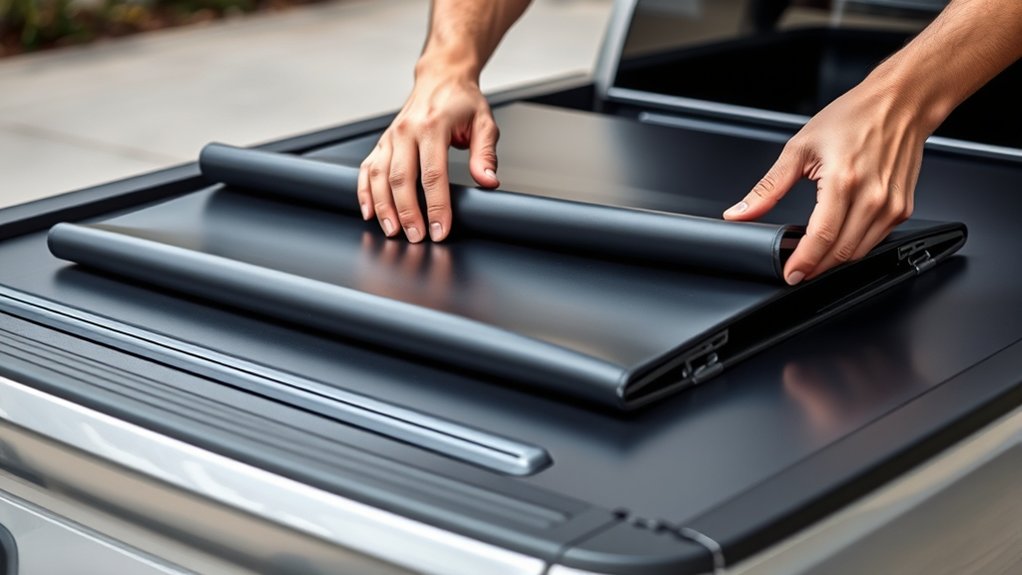
How can you quickly determine the type of tonneau cover you have? Start by identifying cover types through visual inspection and feel. Roll-up covers typically use vinyl or fabric materials and feature a flexible design that rolls toward the cab.
Folding covers consist of segmented panels made from hard materials like aluminum or fiberglass, connected by hinges. Retractable covers slide open horizontally, often constructed with aluminum slats or composite materials. Snap-on covers use soft vinyl, attaching with snaps along the bed rails.
Material differences play a critical role: soft covers are pliable and lighter, while hard covers offer rigidity and enhanced security. By distinguishing these material and structural characteristics, you can accurately identify your tonneau cover type, setting the stage for proper folding techniques.
Get Your Truck Bed Ready Before Folding Your Tonneau Cover
Before folding your tonneau cover, clear any debris from the truck bed to prevent damage. Inspect the bed carefully for dents or scratches that could worsen during folding.
Finally, secure or remove loose items to keep them from shifting or falling out.
Clear Debris From Bed
Why should you clear debris from your truck bed before folding the tonneau cover? Removing all dirt, leaves, and loose materials ensures bed cleanliness, which prevents scratches and damage to both the bed surface and the cover.
Start by thoroughly sweeping or vacuuming the truck bed, focusing on corners and under any accessories. Check for small stones or twigs that could obstruct the tonneau cover’s folding mechanism.
Clear debris maintains a smooth surface, allowing the cover to fold evenly without resistance. Neglecting this step can cause abrasion or misalignment during folding.
Consistently maintaining bed cleanliness not only protects your truck’s interior but also extends the life of your tonneau cover by facilitating proper operation every time you fold it.
Inspect Bed For Damage
Anyone folding a tonneau cover should carefully inspect the truck bed for damage beforehand. Begin your bed inspection by thoroughly examining the entire surface for dents, scratches, or rust spots that could interfere with the cover’s function.
Focus on the side rails and tailgate edges, as these areas often sustain wear. Conduct a damage assessment by checking for loose or bent components that might obstruct the cover’s folding mechanism.
Use a flashlight to identify hidden cracks or corrosion, especially around mounting points. Address any identified issues before folding the cover to prevent further damage or improper sealing.
Completing a precise bed inspection ensures your tonneau cover operates smoothly and maintains a secure, weatherproof fit over your truck bed.
Organize Loose Items
After confirming your truck bed is free of damage, the next step is to organize any loose items inside. Remove or secure all tools, cargo, and debris to prevent shifting during tonneau cover folding. Use storage bins or tie-downs for better stability and protection.
This organization improves your cover’s lifespan by minimizing pressure points. Follow storage tips like grouping small items in containers and placing heavier objects near the cab to maintain weight balance.
Properly arranged items reduce moisture traps, supporting essential weatherproofing steps. Clear space ensures the tonneau cover folds smoothly without obstruction, preventing damage to both the cover and contents.
Taking these measures prepares your truck bed efficiently, optimizing cover functionality and maintaining cargo safety.
How To Fold A Soft Roll-Up Tonneau Cover
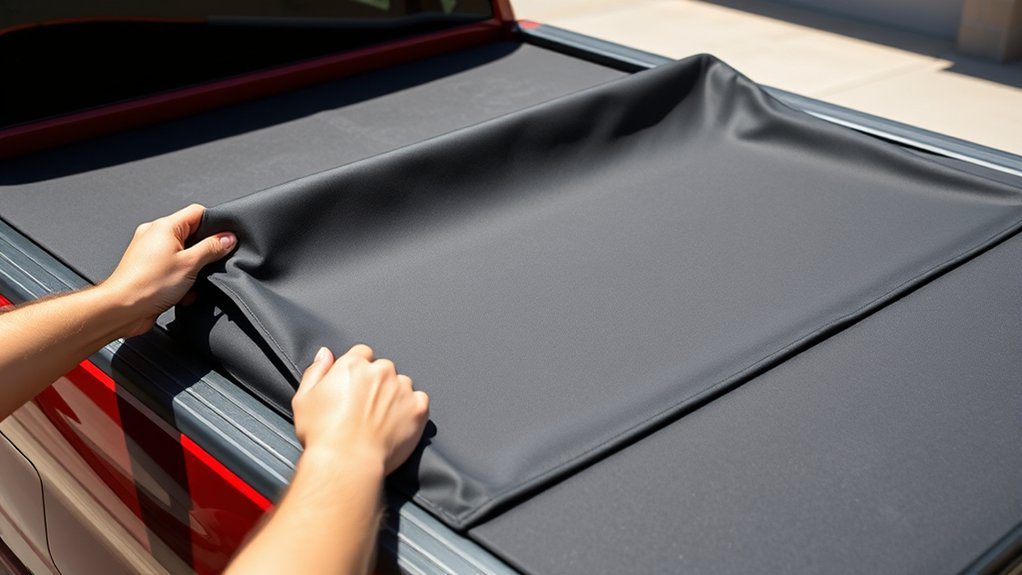
How do you properly fold a soft roll-up tonneau cover to guarantee durability and ease of use? Start by ensuring the cover is clean and dry to prevent damage and mold buildup. Then, release the latch or fastening mechanism carefully, avoiding sudden pulls that could stress the material.
As you roll, maintain even pressure to keep the roll tight and compact. Focus on these key steps:
- Align edges precisely to prevent creases or tears.
- Roll the cover slowly, keeping consistent tension.
- Store the cover in a dry, shaded area to avoid sun damage.
Following this two word idea 1 method preserves the cover’s integrity, while two word idea 2 ensures smooth operation every time you need to deploy or stow it.
How To Fold A Tri-Fold Tonneau Cover
Start by clearing debris and loosening any clamps to prepare your tri-fold tonneau cover. Fold each panel carefully along the hinges, ensuring alignment to prevent damage.
Finish by securing the folded cover with straps or clips to keep it stable during transit.
Preparing The Cover
Where should you begin when preparing your tri-fold tonneau cover for folding? Start with a thorough preparation checklist to ensure a smooth process. First, perform debris removal by clearing leaves, dirt, and dust from the cover’s surface to prevent scratches or damage.
Next, inspect the cover for any tears or weak points that could worsen during folding. Finally, secure any loose components like clamps or straps to avoid misalignment.
Focus on these key tasks in your preparation checklist:
- Remove all debris to protect the cover’s material
- Check for damage or wear before folding
- Ensure all fasteners and seals are properly engaged
Completing these steps sets a solid foundation before moving on to the folding procedure.
Folding Steps Explained
With the cover thoroughly prepared and all debris cleared, you can proceed to fold your tri-fold tonneau cover carefully to maintain its integrity. Begin by lifting the rear panel and folding it forward onto the center panel. Ensure the material folds evenly to prevent stress on seams and preserve material durability.
Next, fold the combined panels toward the cab, aligning edges precisely. Use smooth, firm motions to avoid creasing or damage.
Remember installation tips: check that latches disengage fully prior to folding, and avoid forcing panels to prevent wear. Keep the cover flat and supported during folding for consistent alignment.
Following these steps ensures your tri-fold tonneau cover folds neatly, extends its lifespan, and remains ready for quick deployment without compromising its protective qualities.
Securing The Fold
How do you guarantee your tri-fold tonneau cover stays securely folded during transport or storage? Securing the fold properly is essential to prevent damage and avoid incorrect installation, which can void your warranty. Start by aligning each fold precisely, then engage the securing straps or clamps designed for your model.
Ensure all fasteners are tight without over-torquing, which can cause wear or deformation.
Remember these key points:
- Verify all locking mechanisms engage fully to prevent accidental unfolding.
- Avoid forcing folds; improper alignment risks fabric damage and warranty impact.
- Regularly inspect securing points for wear or looseness.
How To Fold A Hard Folding Tonneau Cover Safely
Why is it important to fold your hard folding tonneau cover safely? Proper folding safety prevents damage to the cover and ensures its longevity. Start by inspecting the hinges for debris or corrosion; clean them if necessary to maintain smooth operation.
When folding, support the cover evenly to avoid stressing the hinges. Lift the cover gently at the designated folding points, aligning each section precisely to prevent misalignment or bending.
Use controlled movements to avoid sudden pressure on the hinges, which can cause cracks or breaks. Secure the folded cover firmly, ensuring it doesn’t shift during transit.
Common Mistakes To Avoid When Folding Your Tonneau Cover
What common pitfalls should you watch out for when folding your tonneau cover? Avoiding mistakes ensures durability and proper function. First, don’t force the cover if it resists folding; weak material can tear easily.
Avoid forcing your tonneau cover when folding to prevent tears and maintain its durability.
Second, beware of marketing bias. Some covers claim flexibility but degrade quickly. Third, improper alignment during folding can cause stress points and damage.
Keep these in mind:
- Avoid folding at sharp angles that strain joints or fabric.
- Ensure no debris or moisture is trapped, which can cause wear.
- Follow manufacturer guidelines precisely, ignoring exaggerated claims.
How To Store Your Folded Tonneau Cover Properly
After avoiding common folding mistakes, proper storage of your folded tonneau cover helps maintain its condition and functionality. First, select a storage location that is dry, cool, and away from direct sunlight to prevent material degradation.
Consider storage considerations like elevation; keep the cover off the ground to avoid moisture exposure. Use a breathable cover or storage bag designed for tonneau covers to enhance weather resistance and prevent mold or mildew buildup.
Avoid placing heavy objects on the folded cover to maintain its shape and prevent creases. If storing for extended periods, periodically inspect the cover and refold it to avoid permanent folds.
Following these steps ensures your tonneau cover remains weather-resistant and ready for use when you need it.
Troubleshooting Folding Problems And Maintaining Your Tonneau Cover
When do folding issues typically arise with your tonneau cover? Most problems occur due to dirt buildup, damaged hinges, or misalignment. To troubleshoot, first inspect the cover and hardware carefully.
Folding issues often stem from dirt, damaged hinges, or misalignment—inspect your cover and hardware carefully to troubleshoot.
Clean all folding sections with a mild detergent to remove debris. Lubricate hinges and joints with a silicone-based spray to ensure smooth movement. Check for tears or warping that could prevent proper folding.
Regular maintenance is essential, especially when planning a road trip or choosing compatible accessories. Keep your cover in optimal condition by:
- Cleaning and lubricating hinges monthly
- Checking alignment before each use
- Storing the cover in a dry, shaded area when not in use
Following these steps prevents folding issues and extends your cover’s lifespan.
Frequently Asked Questions
Can a Tonneau Cover Improve My Truck’s Fuel Efficiency?
Yes, a tonneau cover can improve your truck’s fuel efficiency by reducing aerodynamic drag.
For two word discussion ideas, consider “drag reduction” and “fuel savings” when evaluating its impact on your vehicle’s performance and efficiency.
Are Tonneau Covers Compatible With All Truck Models?
Tonneau covers aren’t universally compatible; you’ll need to check truck compatibility carefully. Use discussion ideas like bed size, mounting style, and model year.
Confirm measurements and specifications before purchasing to ensure a proper fit and function.
How Much Does a Tonneau Cover Typically Cost?
You don’t have to break the bank. Tonneau covers with folding mechanisms typically range from $200 to $1,500. Prices vary based on materials, design complexity, and compatibility, so choose one that fits your truck and budget precisely.
Can I Install a Tonneau Cover by Myself?
Yes, you can handle DIY installation of a tonneau cover by yourself. Just ensure you follow instructions carefully, use weatherproof materials, and secure all fasteners tightly to maintain durability and protect your truck bed effectively.
Do Tonneau Covers Provide Security Against Theft?
Like a locked safe, tonneau covers offer security benefits by concealing your truck bed’s contents, providing theft deterrence. While not impenetrable, they discourage opportunistic thieves, enhancing your vehicle’s overall protection against unauthorized access.
Conclusion
Now that you know how to fold each tonneau cover type correctly, why risk damage by skipping steps? Always clean and prepare your truck bed, fold carefully along hinges or roll evenly, and secure straps properly. Avoid common pitfalls like forcing latches or folding on debris.
Proper storage in a dry, shaded spot extends your cover’s life. Follow these precise steps every time to maintain functionality and protect your investment efficiently. By consistently following the correct method, you ensure your tonneau cover remains in top condition for years to come.