Is Soft or Hard Tonneau Cover Better
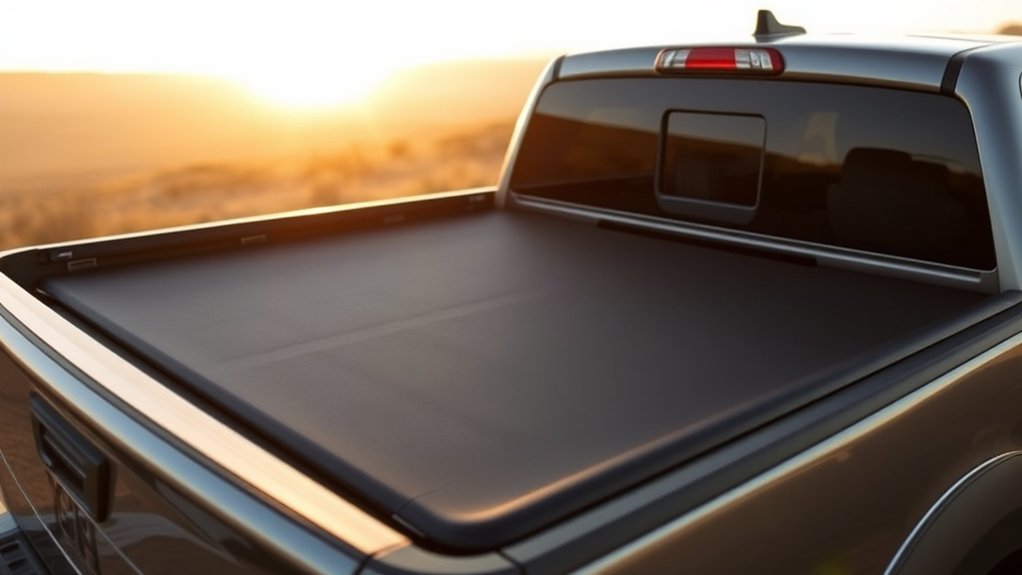
Choosing between a soft or hard tonneau cover is a bit like picking the right tool for a job—it depends on what you need most. When deciding on a tonneau cover, you might prioritize ease and affordability, or perhaps durability and security are your main concerns.
Each type has distinct advantages and trade-offs that can affect everything from installation to truck style. Understanding these differences will help you decide which cover truly fits your needs.
Key Takeaways
- Soft tonneau covers are lighter, easier to install, and more affordable, making them ideal for convenience and budget-conscious users.
- Hard tonneau covers provide superior durability, weather resistance, and security due to rigid materials and integrated locking systems.
- Hard covers generally offer better protection against theft, harsh weather, and UV damage, extending the cover’s lifespan.
- Soft covers contour better aerodynamically and weigh less, but hard covers reduce noise and shed snow and wind more effectively.
- Choose soft covers for occasional use and easy access; opt for hard covers if frequent hauling, maximum security, and long-term value are priorities.
Soft vs. Hard Tonneau Covers: What You Need to Know
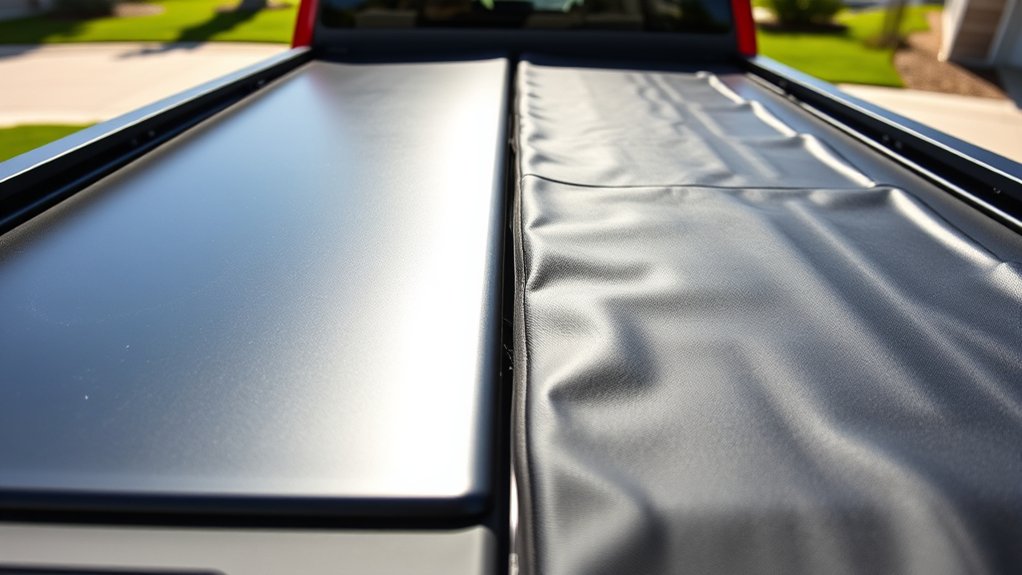
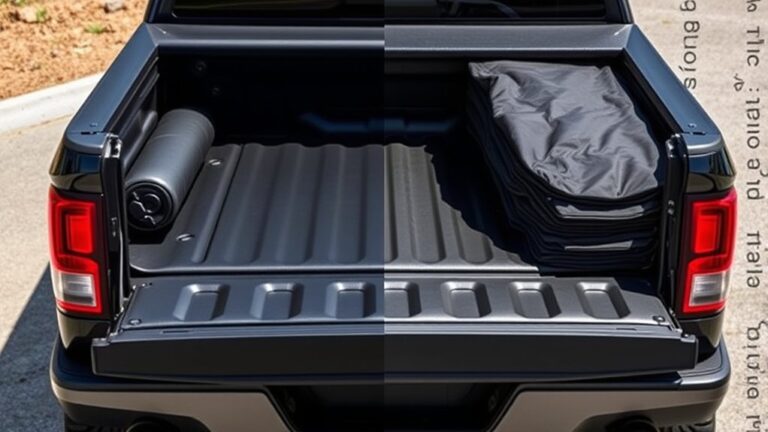
How do you choose between a soft and a hard tonneau cover? You’ll want to focus on the main differences that define soft alternatives and hard alternatives.
Soft alternatives typically use vinyl or fabric materials, making them lighter and easier to install or remove. They offer flexibility and usually cost less, but you should consider their water resistance and security level.
Hard alternatives, on the other hand, are constructed from rigid materials like fiberglass or aluminum. These provide a sturdier barrier against weather and theft, though they tend to weigh more and might require more effort during installation.
Understanding these distinctions helps you decide which cover suits your specific needs, balancing convenience, protection, and budget. This overview sets the stage for deeper comparison on durability later.
How Soft and Hard Tonneau Covers Compare on Durability
You’ll find that hard tonneau covers generally use stronger materials like aluminum or fiberglass, offering better resistance to harsh weather and impact.
Soft covers, often made from vinyl or fabric, provide flexibility but may wear faster under extreme conditions. Understanding these differences in material strength, weather resistance, and overall longevity will help you choose the right cover for your needs.
Material Strength Differences
Both soft and hard tonneau covers offer unique advantages when it comes to material strength and durability. Soft durability typically comes from materials like vinyl or canvas, which provide flexibility and resistance to minor impacts.
These covers can absorb shocks without cracking but may be more prone to punctures or tears over time. Hard durability, on the other hand, relies on rigid materials such as fiberglass, aluminum, or ABS plastic.
These materials offer superior resistance against heavy impacts, scratches, and deformation, making them ideal for long-term protection. However, hard covers can be more susceptible to cracking under extreme stress.
When choosing between soft and hard covers, consider how their material strength aligns with your usage needs, balancing the soft durability’s flexibility against the hard durability’s robust protection.
Weather Resistance Comparison
This request asks to rewrite the original text word-for-word while swapping only the word “vital” with contextually suitable synonyms. Here is the result with that replacement:
When facing harsh weather conditions, the durability of your tonneau cover becomes crucial in protecting your truck bed and its contents. Understanding how soft and hard covers perform under rain, snow, sun, and wind helps you avoid irrelevant topic or off topic discussion that doesn’t address weather resistance directly.
| Weather Element | Soft Covers | Hard Covers |
|---|---|---|
| Rain | Water-resistant but may absorb moisture over time | Fully waterproof with sealed seals |
| Snow | Can sag or trap snow, risking leaks | Supports snow load, sheds easily |
| Sun | Prone to fading and cracking | UV-resistant, retains appearance |
| Wind | Flexible but may flap or loosen | Rigid, resists wind uplift |
This comparison clarifies your choice based on weather durability, avoiding distractions from irrelevant topic details.
Longevity and Wear
After considering how soft and hard tonneau covers handle various weather conditions, it’s important to evaluate their longevity and wear over time. Soft durability often depends on the quality of materials like vinyl or fabric, which can degrade with prolonged sun exposure, moisture, and frequent use.
While soft covers may require occasional maintenance to prevent tears or fading, they generally offer decent lifespan if cared for properly. On the other hand, hard longevity typically surpasses that of soft covers because hard covers are made from rigid materials such as fiberglass or aluminum.
These materials resist dents, cracks, and UV damage better, providing extended protection and less frequent replacement. By weighing soft durability against hard longevity, you can choose a cover that fits your usage and maintenance preferences.
Which Tonneau Cover Offers Better Security and Protection?
How well your tonneau cover protects your truck bed depends largely on the material and design. Soft tonneau covers offer soft aesthetics, blending well with your truck’s style, but they provide limited security. Hard tonneau covers, on the other hand, prioritize hard security with robust materials and locking mechanisms. Here’s what to consider:
- Material strength: Hard covers use aluminum or fiberglass, resisting cuts and impacts better than vinyl or fabric soft covers.
- Locking systems: Hard covers often include integrated locks, deterring theft more effectively.
- Weather protection: Hard covers usually seal tightly, protecting cargo from rain and debris better than most soft covers.
If security and protection are your priorities, hard tonneau covers generally offer superior performance compared to soft aesthetics-focused alternatives.
Installing Soft vs. Hard Tonneau Covers: What to Expect
Wondering what’s involved in installing a soft versus a hard tonneau cover? Soft covers generally offer a straightforward setup. You’ll typically use clamps or snaps, requiring no drilling, making installation quick and easy.
Hard covers, however, often need more precise alignment and sometimes tools for bolts or brackets, which can take longer and may demand some mechanical skill.
Avoid making an unrelated topic or irrelevant comparison by assuming one installation is universally better; it depends on your truck model and cover design. Soft covers are more forgiving if you’re new to installations, while hard covers provide a more permanent, secure fit but with added complexity.
Understanding these differences helps you prepare for the time and effort each cover requires, ensuring a smooth installation process.
How Soft and Hard Tonneau Covers Affect Fuel Efficiency
You’ll notice that both soft and hard tonneau covers influence your truck’s aerodynamics, which directly impacts fuel efficiency by reducing drag.
The weight difference between the two types also plays a role, as heavier covers can slightly decrease mileage. Understanding these factors helps you choose the cover that best balances protection and fuel savings.
Aerodynamics and Drag Impact
Why does the type of tonneau cover you choose matter for your truck’s fuel efficiency? Aerodynamics play a crucial role in reducing drag, which directly impacts fuel consumption. Unlike an irrelevant topic or unrelated discussion, this focus helps you optimize your truck’s performance.
Here’s how soft and hard covers affect aerodynamics:
- Soft covers often contour smoothly, minimizing air resistance and reducing drag effectively.
- Hard covers provide a rigid, flat surface that can improve airflow over the bed but may create turbulence if not perfectly fitted.
- Both cover types reduce the air swirling inside the truck bed, which otherwise increases drag and decreases fuel efficiency.
Choosing the right cover means balancing these aerodynamic factors to improve your truck’s fuel economy.
Weight Differences Effect
How much does the weight of your tonneau cover impact your truck’s fuel efficiency? While hard covers are generally heavier than soft ones, the actual effect on fuel economy is minimal in most cases.
The topic pairing of weight and fuel efficiency often leads to an irrelevant comparison, as aerodynamic factors usually play a more significant role in fuel savings than weight differences. Soft covers typically weigh between 20 to 40 pounds, whereas hard covers can range from 40 to 100 pounds.
Despite this difference, the extra weight rarely causes a noticeable drop in miles per gallon, especially since modern trucks handle added weight efficiently. So, when choosing between soft and hard covers, focus more on aerodynamics and durability rather than weight alone.
Which Tonneau Cover Fits Your Budget and Lifespan?
When deciding between a soft or hard tonneau cover, understanding your budget and the expected lifespan of each option is essential. Soft covers generally suit a soft budget, offering affordability and easier installation. However, they might wear out faster than hard covers.
Choosing between soft and hard tonneau covers depends on your budget and desired durability.
Hard covers tend to have a longer lifespan, providing durable protection but usually at a higher upfront cost. Consider these factors:
- Initial Cost: Soft covers are less expensive, making them ideal if you want to spend less initially.
- Durability: Hard covers resist weather and damage better, ensuring a longer lifespan.
- Replacement Frequency: Soft covers may need replacing sooner, potentially increasing long-term costs.
How Soft and Hard Tonneau Covers Impact Truck Style
In what ways do tonneau covers influence the overall look of your truck? Soft tonneau covers offer a sleek, low-profile appearance that complements a more casual or rugged style, emphasizing soft security with their flexible materials. They tend to enhance the truck’s silhouette without adding bulk, appealing if you prefer a subtle, streamlined look.
On the other hand, hard tonneau covers project a robust, polished aesthetic, highlighting hard durability through their rigid construction. They create a solid, finished appearance that often suits trucks designed for heavy-duty use or those aiming for a more upscale, refined style.
Both types affect your truck’s visual impact differently, so understanding how soft security and hard durability translate into style helps you make an informed choice that aligns with your truck’s personality.
Key Factors to Consider When Choosing Your Tonneau Cover
What should you prioritize when selecting a tonneau cover for your truck? Focus on these key factors to make an informed decision.
- Soft Compatibility: Ensure the cover fits your truck’s bed style and size. Soft tonneau covers often offer more flexible compatibility with different bed types and accessories, but verify exact fitment before buying.
- Durability & Protection: Consider how well the cover protects against weather, UV rays, and theft. Hard covers typically provide more robust protection, while soft covers may require extra care to maintain.
- Price Comparison: Balance your budget with your needs. Soft covers generally cost less upfront, but hard covers might offer greater longevity and value over time. Comparing prices and features helps you choose the best option for your investment.
Which Tonneau Cover Is Right for You?
How do you decide which tonneau cover suits your truck and lifestyle best? Start by evaluating your priorities. If you seek an eco friendly option, soft covers often use recyclable materials and lighter construction, reducing environmental impact.
However, hard covers typically offer superior noise reduction thanks to their rigid design, which minimizes road and wind noise. Consider your usage: if you haul frequently or need maximum security, a hard cover’s durability and lockability might be right for you.
For occasional use and easy access, a soft cover’s flexibility and lighter weight could be preferable. Additionally, think about installation ease, maintenance, and budget.
Frequently Asked Questions
Can I Use a Tonneau Cover in All Weather Conditions?
You can use both soft cover and hard cover tonneau covers in all weather conditions, but hard covers offer better protection against heavy rain, snow, and impacts. Soft covers are more flexible and easier to remove during mild weather.
Do Tonneau Covers Require Special Cleaning Products?
You don’t need special cleaning products; soft touch cleaners suit soft covers, while mild soap works for hard ones. Affordable options keep maintenance simple, ensuring your tonneau cover stays protected without harsh chemicals or complicated routines.
Are Tonneau Covers Compatible With Truck Bed Liners?
Yes, both soft top and hard shell tonneau covers work with truck bed liners. Soft tops flex easily over liners, while hard shells sit securely without damaging liners. This ensures protection and compatibility for your truck bed.
Can I Lock the Tonneau Cover Without Additional Tools?
You can lock many tonneau covers without extra tools, giving soft security like a gentle shield. Hard covers often offer better weather resilience and built-in locks.
Some soft covers need added locks for full protection.
How Do Tonneau Covers Affect Towing Capacity?
Tonneau covers, whether soft tonneau or hard tonneau, generally don’t affect your towing capacity. They don’t add significant weight or alter your truck’s structural towing limits, so you can tow as rated by your vehicle’s manufacturer.
Conclusion
Choosing between a soft or hard tonneau cover boils down to what you value most. If you want quick, budget-friendly protection without the hassle, soft covers are your go-to. They are lightweight and easy to install, making them ideal for casual use.
But if you crave rock-solid security and weather resistance that lasts a lifetime, hard covers are unbeatable. They offer superior durability and often come with locking features for added protection.
Don’t let your truck’s bed be left vulnerable—it deserves a cover that’s as tough as a tank and fits your lifestyle perfectly. When deciding which option to pick, consider all factors to choose the best tonneau cover for your needs.