Where Is the Oil Filter
Did you know that the oil filter is a crucial component in over 70% of routine oil changes? The oil filter helps keep your engine clean by trapping contaminants and preventing them from circulating through the engine oil.
You’ll typically find the oil filter near the engine block, often accessible from underneath your vehicle. Its exact location varies by make and model, making identification tricky without knowing what to look for.
Understanding these differences is key to efficient maintenance and avoiding damage—so let’s explore how to pinpoint your oil filter precisely.
Key Takeaways
- The oil filter is usually a cylindrical component located near the engine block, often accessible from underneath the vehicle.
- Front-wheel-drive vehicles typically have the oil filter near the lower section of the engine block.
- Rear-wheel-drive vehicles often place the oil filter on the side or rear of the engine.
- Some modern cars use cartridge-style filters located inside the engine, sometimes requiring cover removal for access.
- Brand-specific locations vary, such as Honda filters near the front or side of the block and Toyota filters close to the oil pan.
Where to Find Your Car’s Oil Filter
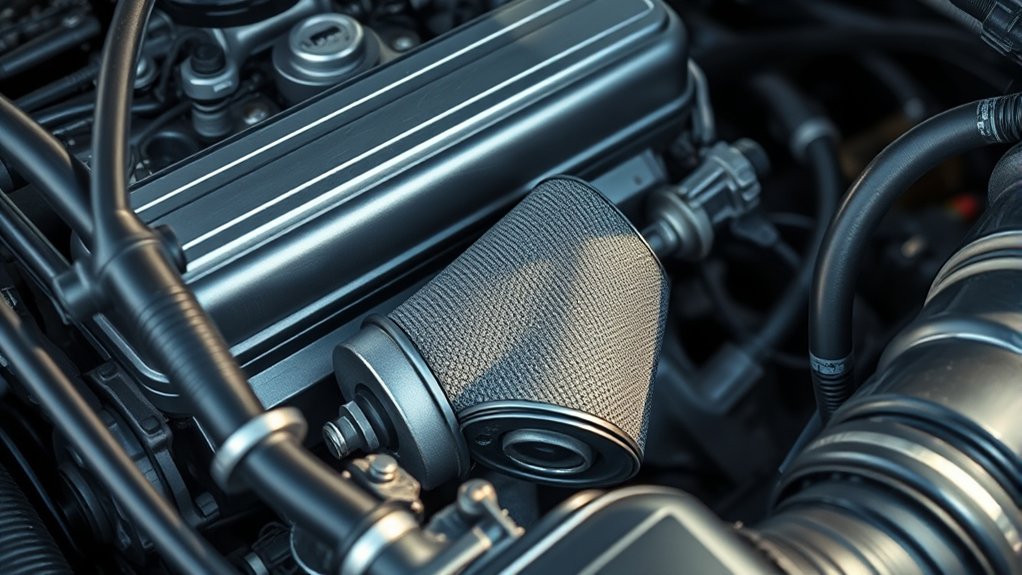
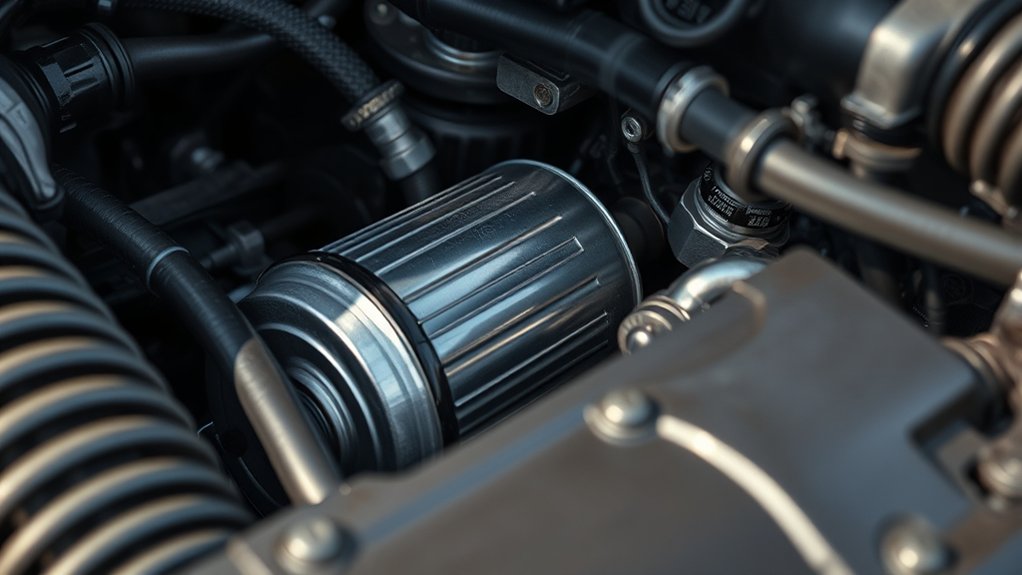
Where exactly can you locate your car’s oil filter? Typically, it’s positioned near the engine block, often accessible from underneath the vehicle. You might find it as a cylindrical component, either spin-on or cartridge style.
Don’t rely on common oil filter myths that all filters fit universally, since filter cross compatibility varies by make and model. Using the wrong filter can cause leaks or engine damage. Consult your vehicle’s manual or manufacturer specifications for the exact location and compatible filter type.
Filters may sit near the oil pan or behind protective shields, so you may need to remove covers or use a flashlight to spot it. Knowing the precise location helps during oil changes, ensuring you replace the correct part without guesswork or unnecessary disassembly.
Identifying the Oil Filter: What to Look For
Once you locate your vehicle’s oil filter, the next step is accurately identifying it among surrounding components. Focus on its cylindrical shape, typically metal or plastic, and the presence of a rubber gasket or seal at one end. Identifying seals is essential because they ensure a tight fit and prevent leaks.
Check for manufacturer markings or part numbers stamped on the filter body; these help confirm filter compatibility with your vehicle. Avoid confusing the oil filter with nearby components like fuel filters or air filters, which differ in design and placement.
How Oil Filter Locations Change Depending on Your Vehicle
How you locate the oil filter depends heavily on your vehicle’s make, model, and engine configuration. In front-wheel-drive vehicles, the oil filter often sits near the engine block’s lower section, accessible from underneath.
Rear-wheel-drive models might position the filter toward the side or rear of the engine, sometimes requiring removal of protective covers. Some modern cars use cartridge-style filters housed inside the engine, demanding specific access points.
Knowing the exact location is crucial for efficient drivetrain maintenance, as improper filter replacement can compromise oil flow and reduce fuel efficiency. Your vehicle’s service manual provides precise diagrams, ensuring you target the correct filter without unnecessary disassembly.
Understanding these variations helps you perform timely oil filter changes, maintaining optimal engine performance and prolonging drivetrain life.
Essential Tools for Changing Your Oil Filter
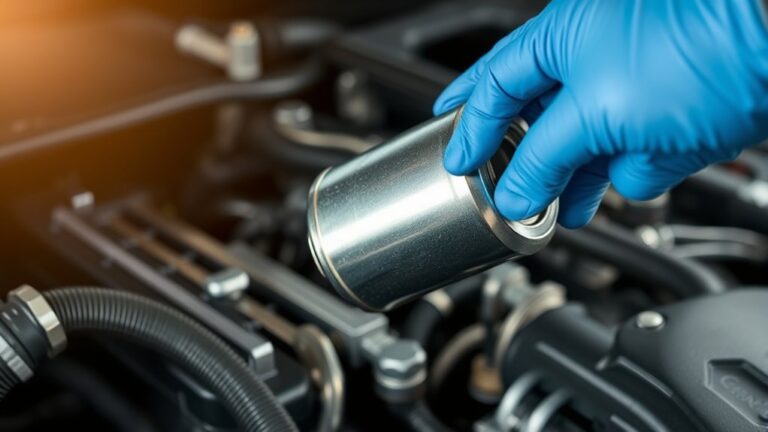
Which tools do you need to change your oil filter efficiently and safely? Start with a quality oil filter wrench, either a strap or cup type, designed to fit your specific filter size. You’ll also need a drain pan to catch used oil, gloves to protect your hands, and a ratchet with the correct socket if your filter housing requires it.
Use a funnel to add new oil cleanly. Once removed, place the used oil filter in a sealed container to prevent leaks during oil filter disposal. Never toss it in regular trash; instead, take it to a certified oil filter recycling center.
Proper disposal protects the environment and complies with regulations. Having these tools ready ensures a smooth oil filter change and responsible handling of waste.
Tips for Accessing Hard-to-Reach Oil Filters
You’ll need specific tools like a flexible oil filter wrench and a ratchet with an extension to reach tight spots effectively. Positioning yourself for better leverage and using these tools properly can prevent damage to the filter or surrounding components.
Let’s explore practical techniques that make accessing hard-to-reach oil filters more manageable.
Essential Tools Needed
Where can you find the right tools to tackle stubborn, hard-to-reach oil filters? Start with a quality oil filter wrench set, including band and cap types, to match various filter sizes and shapes.
A flexible extension bar paired with a ratchet lets you reach confined spaces without strain. Magnetic trays keep loose bolts organized, preventing oil reduction caused by lost parts during disassembly.
Use a torque wrench to ensure proper filter installation, which directly impacts filter longevity and engine performance. A bright LED work light illuminates tight engine bays, improving visibility and precision.
Finally, gloves with good grip protect your hands and help you maintain control. Equipping yourself with these tools ensures efficient, safe removal and installation, essential for maintaining optimal oil flow and prolonging filter life.
Effective Access Techniques
How do you efficiently access oil filters tucked deep within tight engine compartments? First, debunk common oil filter myths. Don’t assume all filters spin off easily; some require specific angles or tools.
Use a flexible oil filter wrench or a cap-style wrench with an extension to reach confined spaces. Ensure proper lighting and consider removing obstructing components if feasible.
When loosening the filter, turn slowly to avoid oil spills. After removal, follow strict disposal etiquette: drain the filter fully and place it in a sealed container to prevent contamination.
Proper disposal protects the environment and aligns with regulations. By combining precise tools, correct techniques, and responsible disposal, you’ll streamline accessing hard-to-reach oil filters safely and efficiently.
Oil Filter Locations by Popular Car Brands
You’ll find oil filters in a few common spots, like near the engine block or under the hood. Different brands place filters in specific locations to optimize access and performance.
Understanding these brand-specific positions helps you locate and replace the filter efficiently.
Common Oil Filter Spots
Finding the oil filter on your vehicle depends largely on the make and model. Typically, you’ll find it near the engine block or oil pan, often on the side or bottom. Common spots include the front of the engine, tucked behind components like the exhaust manifold, or accessible from underneath the car.
Some filters are cartridge-style, housed inside a metal canister, while others are spin-on filters exposed for easier removal. Knowing these common locations helps streamline oil changes and improves your maintenance routine.
When performing oil changes, always check the filter’s accessibility to avoid damage and ensure a proper seal. Incorporating this knowledge into your maintenance tips guarantees efficient service and prolongs engine life by ensuring the filter is replaced correctly and on schedule.
Brand-Specific Filter Locations
Where exactly is the oil filter located on your vehicle? Knowing the brand specific filter locations can save you time and hassle during maintenance.
For example, Honda typically places the oil filter near the engine block’s front or side, making it accessible from underneath. Toyota often positions it close to the oil pan, sometimes requiring you to remove a splash guard.
Ford models vary, but many place the filter on the driver’s side of the engine bay. BMW usually mounts the oil filter inside a housing on top of the engine, requiring a cap removal tool. Understanding these brand specific filter locations helps you prepare the right tools and workspace, ensuring a smoother oil change process tailored to your vehicle’s design.
Frequently Asked Questions
How Often Should I Replace My Car’s Oil Filter?
You should replace your car’s oil filter every 3,000 to 7,500 miles, depending on your vehicle and oil type. Avoid confusing this with irrelevant topics or unrelated concepts like tire rotation schedules. Stay precise for engine health.
What Happens if I Don’T Change the Oil Filter Regularly?
If you neglect regular filter changes, expect oil misfire, engine wear, and reduced filter longevity. You’ll damage parts, reduce efficiency, and risk costly repairs.
Consistent maintenance ensures performance, protects components, and extends your engine’s lifespan effectively.
Can I Reuse an Old Oil Filter?
You shouldn’t reuse old oil filters because reusing filters compromises filtration efficiency, risking engine damage. Proper filter disposal prevents environmental harm.
Always replace filters with new ones to maintain optimal engine performance and comply with disposal regulations.
Are Aftermarket Oil Filters as Good as OEM Filters?
You’ll find that about 70% of aftermarket oil filters match OEM standards, but aftermarket compatibility varies. Always check filter material quality, as lower-grade media can reduce filtration efficiency and engine protection compared to OEM filters.
What Type of Oil Filter Is Best for My Engine?
You should choose an oil filter with high-quality filter material compatible with your engine viscosity to ensure optimal flow and filtration.
Synthetic media filters often provide better particle retention and durability, enhancing your engine’s longevity and performance.
Conclusion
Now that you know where to find and how to identify your oil filter, changing it won’t feel like searching for a needle in a haystack. With the right tools and a clear understanding of your vehicle’s layout, accessing even the trickiest filters becomes straightforward.
Keep these tips handy, and you’ll handle oil filter changes like a pro—saving your engine and your time from unnecessary headaches. Remember, knowing where the oil filter is located is key to making the process smooth and efficient.