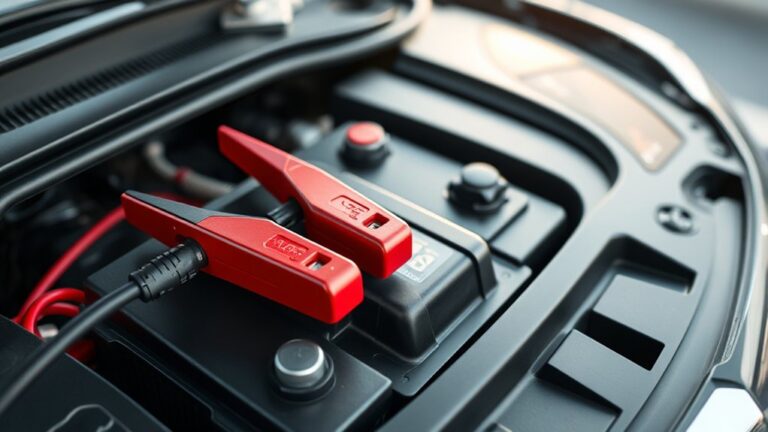
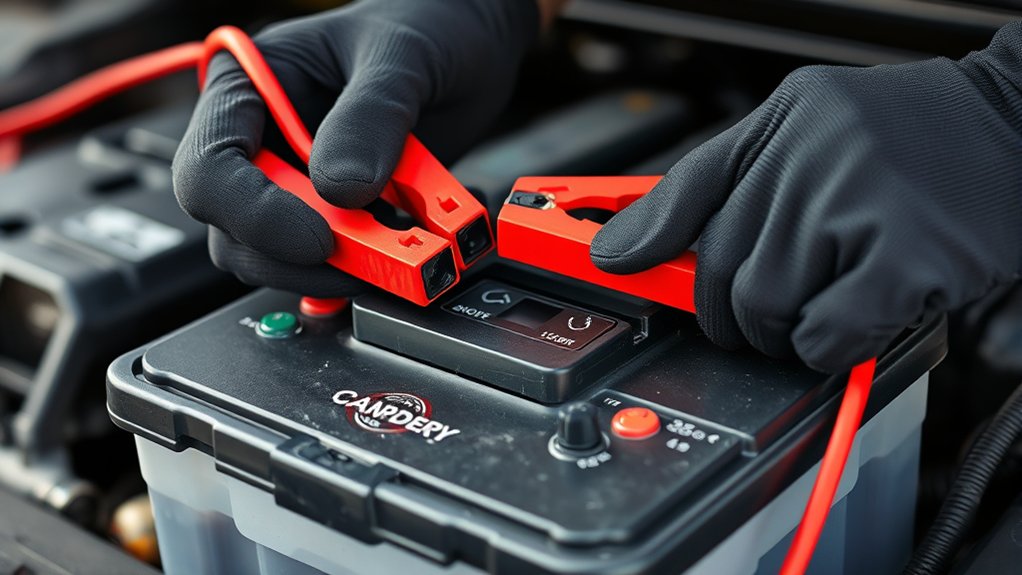
How to Use Auto Battery Charger
When you need to charge your car battery, using an auto battery charger correctly is crucial for safety and effectiveness. You’ll want to ensure the charger matches your battery type, follow proper connection procedures, and monitor the process to avoid damage.
Understanding these steps helps you maintain battery health and prevents costly mistakes. Yet, there’s more to consider before you start the actual charging process.
Key Takeaways
- Ensure the charger is compatible with your battery type and always connect positive to positive and negative to negative terminals.
- Turn off the charger before connecting clamps, and work in a well-ventilated area to avoid hydrogen gas buildup.
- Inspect the battery for damage and clean terminals before charging to prevent shorts and corrosion.
- Monitor the charging process to avoid overcharging; look for the charger’s “full” indicator or check battery voltage.
- Turn off the charger and disconnect clamps in the proper order, removing the negative clamp first after charging completes.
How to Use an Auto Battery Charger
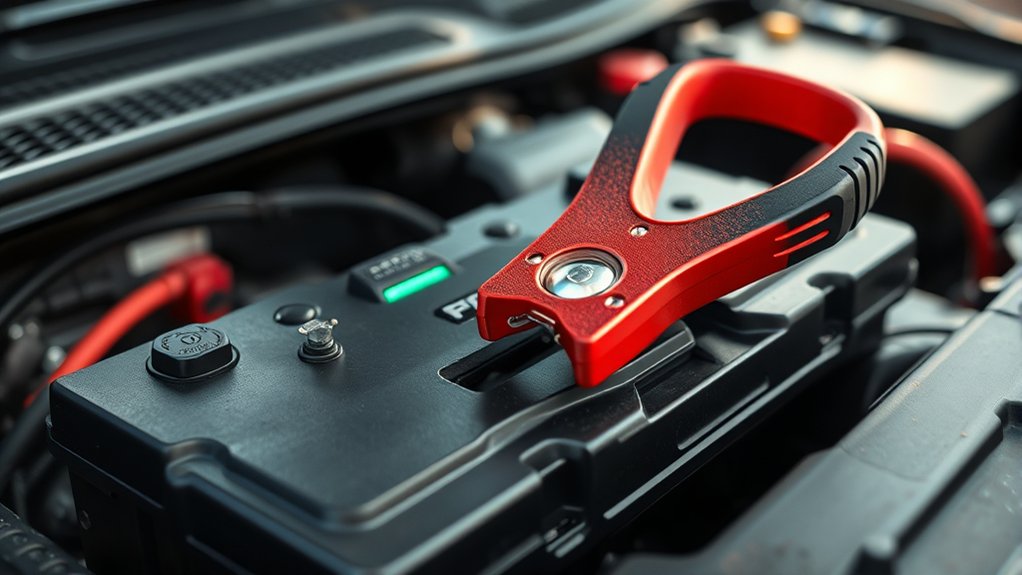
How exactly do you use an auto battery charger safely and effectively? First, ensure you understand the charger’s specifications and your battery type.
Proper battery installation is critical. Connect the positive clamp to the battery’s positive terminal and the negative clamp to the negative terminal, avoiding contact with metal surfaces to prevent sparks. Confirm the charger is off before making connections.
Once connected, turn on the charger and select the appropriate charge setting. Monitor the charging process closely to prevent overcharging.
Always prioritize jump start safety by avoiding direct contact with battery acid and ensuring good ventilation to disperse hydrogen gas.
Disconnect the charger only after turning it off, removing the negative clamp first to minimize the risk of short circuits or electrical hazards.
Preparing Your Car Battery for Charging
Before charging, always follow safety precautions to prevent accidents. Check your battery for cracks, leaks, or corrosion to guarantee it’s safe to charge.
Then, disconnect the battery terminals to avoid electrical shorts during the process.
Safety Precautions First
Why should you prioritize safety when preparing your car battery for charging? Batteries contain corrosive acid and generate explosive gases. Wearing proper safety gear and understanding emergency procedures protects you from injury.
Always work in a well-ventilated area to avoid gas buildup.
| Safety Step | Required Gear | Key Action |
|---|---|---|
| Wear safety gear | Gloves, goggles | Prevent acid burns and eye injury |
| Ventilate workspace | Open doors or windows | Disperse hazardous gases |
| Avoid sparks | Non-metallic tools | Prevent ignition of explosive gas |
| Know emergency procedures | First aid kit, fire extinguisher | Respond quickly to accidents |
Following these precautions reduces risk and ensures a safer charging process. Don’t skip safety checks before connecting the charger.
Inspect Battery Condition
Once you’ve ensured a safe working environment, the next step involves thoroughly inspecting your battery’s condition. Start by visually examining the battery case for cracks, swelling, or leaks, which indicate severe damage.
Check the terminals for corrosion or buildup; these can impede charging efficiency. When inspecting battery electrolyte levels, ensure they’re within the recommended range. Too low may require topping up with distilled water.
Use a hydrometer or voltmeter to assess the battery’s state of charge and voltage. Evaluating health includes measuring the battery’s specific gravity or resting voltage to determine if it’s capable of holding a charge.
If readings fall below manufacturer specifications, the battery may need replacement. Careful inspecting battery and evaluating health helps prevent ineffective charging and prolongs battery life.
Disconnect Battery Terminals
How do you safely prepare your car battery for charging? Begin by disconnecting the battery terminals to prevent electrical shorts and protect vehicle electronics. Follow these steps precisely:
- Turn off the ignition and remove the key to ensure no power flows.
- Use a wrench to loosen the negative terminal clamp first; carefully remove the cable and secure it away from the battery to avoid accidental contact.
- Repeat the process for the positive terminal, inspecting both cables for battery corrosion and cleaning them if necessary before proceeding.
Always handle disconnected cables carefully to prevent sparking. Removing the negative terminal first minimizes the risk of short circuits. Addressing battery corrosion at this stage ensures ideal charging performance and extends battery life.
Tools You’ll Need to Charge Your Battery
What essential tools do you need to charge your auto battery safely and effectively? First, you’ll require a reliable auto battery charger compatible with your battery type.
Next, insulated gloves will protect you from electrical shocks. Use safety goggles to shield your eyes from acid splashes.
A multimeter helps verify battery voltage before and after charging, ensuring accurate assessment. Additionally, keep a wire brush or battery terminal cleaner on hand to remove corrosion from terminals, similar to how you maintain equipment during freezer maintenance to prevent buildup.
Though unrelated directly, think of tire rotation: just as regular rotation ensures optimal tire function, keeping your battery terminals clean ensures efficient charging.
Finally, have a well-ventilated workspace and a fire extinguisher nearby to handle emergencies promptly.
Choosing the Right Charging Mode
You need to understand the different charging modes your auto battery charger offers, such as trickle, fast, or maintenance charging. Choosing the right mode depends on your battery’s type, condition, and charge level.
Using the best mode ensures efficient charging and prolongs battery life.
Understanding Charging Modes
Why does selecting the correct charging mode matter? Choosing the right mode directly impacts charging efficiency and battery health. Using an inappropriate mode can lead to undercharging, overcharging, or damage.
To optimize performance, you need to understand how each mode functions.
Key charging modes include:
- Bulk Mode: Delivers maximum current to rapidly charge the battery until it reaches a set voltage.
- Absorption Mode: Maintains voltage while reducing current, allowing the battery to absorb charge safely.
- Float Mode: Keeps the battery fully charged at a lower voltage, preventing overcharge during idle periods.
Performing load testing after charging ensures the battery can hold and deliver power effectively. Selecting the right mode improves charging efficiency and prolongs battery lifespan.
Selecting Mode Based On Battery
How do you determine the best charging mode for your specific battery type? Selecting mode based on battery chemistry and condition ensures optimal battery health and efficiency. Different batteries require distinct voltage and current levels during charging to avoid damage or underperformance.
| Battery Type | Recommended Mode |
|---|---|
| Lead-Acid | Standard Charge |
| AGM | AGM Mode |
| Gel | Gel Mode |
| Lithium-Ion | Lithium Mode |
| Deep Cycle | Deep Cycle Mode |
Always consult your charger’s manual to match the mode with your battery type. Using the correct mode maintains battery health, extends life, and prevents overcharging or overheating. Selecting mode with precision safeguards your investment and guarantees reliable performance.
Knowing When Your Battery Is Fully Charged
To be certain your auto battery is fully charged, look for these indicators:
- Charger indicator light turns green or a “full” status appears.
- Battery voltage stabilizes around 12.6 to 12.8 volts at rest.
- Absence of charging current flow, signaling completion.
Avoid the myth that charging beyond this point improves battery health. Instead, overcharging can shorten your battery lifecycle. Use a reliable charger with an automatic cutoff feature to guarantee accuracy. By monitoring these technical indicators, you’ll confidently know when to disconnect your charger and maintain your battery’s longevity.
Safety Tips for Charging Your Battery
Once your battery shows signs of a full charge, your focus should shift to maintaining safety throughout the charging process. Always follow established safety protocols: ensure the charger is disconnected before handling, avoid sparks near the battery, and work in a well-ventilated area to prevent gas buildup.
Wear protective gloves and eyewear to protect against acid splashes. Never overcharge the battery, as it increases risks of overheating and damage.
If the battery is damaged or no longer holds a charge, follow local regulations for battery disposal. Never discard it in regular trash. Proper disposal prevents environmental hazards and complies with legal requirements.
Troubleshooting Common Charging Problems
Why isn’t your battery charging properly? First, dismiss common troubleshooting myths that lead to incorrect diagnoses. Understand charging acronyms like CCA (Cold Cranking Amps) and Ah (Ampere-hours) to assess battery health accurately.
Here’s how to troubleshoot common issues:
Check cable connections for corrosion or looseness, as poor contact disrupts current flow.
Verify the charger’s output voltage and current match your battery’s specifications; mismatched settings hinder charging.
Inspect the battery’s state; a sulfated or deeply discharged battery might not accept a charge despite proper setup.
Tips to Maintain Your Car Battery Longer
How can you extend your car battery’s lifespan effectively? Focus on consistent battery maintenance and preserving electrolyte balance. Regularly check terminals for corrosion and clean them.
Maintain proper electrolyte levels by topping off distilled water as needed. Avoid deep discharges by using a quality auto battery charger to keep the battery at optimal charge.
Store the vehicle in a cool, dry place to reduce thermal degradation.
| Maintenance Task | Frequency | Purpose |
|---|---|---|
| Terminal cleaning | Monthly | Prevent corrosion |
| Electrolyte level check | Every 3 months | Maintain electrolyte balance |
| Battery charging | Every 2 weeks | Avoid deep discharge |
| Storage condition check | Seasonal | Minimize heat-related damage |
Adhering to these tips ensures reliable performance and prolongs your battery’s life.
Frequently Asked Questions
Can I Use a Solar Charger Instead of a Traditional Auto Battery Charger?
Yes, you can use solar charging instead of a traditional charger, but it’s slower and depends on sunlight.
Solar charging can maintain battery longevity with proper regulation but won’t rapidly restore a depleted battery like conventional chargers.
How Often Should I Replace My Car Battery Regardless of Charging?
Wondering how often to replace your car battery? Typically, a battery lifespan lasts 3-5 years.
Monitor performance closely, as temperature and usage impact degradation. Replace promptly to avoid unexpected failures and maintain optimal vehicle function.
What Are the Environmental Impacts of Disposing Old Car Batteries?
You should know improper environmental disposal of old car batteries releases toxic lead and acid, harming soil and water.
Always choose battery recycling to recover materials safely, minimizing pollution and resource waste effectively.
Can a Charger Fix a Battery That Won’T Hold Any Charge?
Like reviving a wilted plant, a charger can sometimes restore a dead battery by reversing sulfation. However, if it won’t hold any charge after thorough charge troubleshooting, replacement is usually necessary to ensure reliability.
Are There Any Apps to Monitor My Car Battery Health Remotely?
Yes, you can use battery monitoring apps like Car Scanner or BimmerLink to track your car’s battery health remotely. These apps connect via OBD-II adapters, providing real-time data on remote battery health status efficiently.
Conclusion
Using an auto battery charger is as straightforward as following a clear blueprint. By preparing your battery properly, choosing the right mode, and monitoring the charge, you ensure efficient and safe charging every time.
Remember to prioritize safety, avoid overcharging, and maintain your battery regularly to extend its life.
With these steps, your battery will stay reliable, powering your vehicle smoothly like a well-oiled machine ready for the road ahead when using an auto battery charger.