Can You Replace the Velcro on a Tonneau Cover
Think of your tonneau cover’s Velcro as the handshake that keeps everything secure—when it weakens, the whole system feels unreliable. Replacing the Velcro on a tonneau cover might seem complicated, but with the right approach, it’s a straightforward repair that restores function without damage.
Before you jump in, understanding the signs of wear and the precise steps to remove and reinstall new Velcro is essential. Let’s explore what you need to know to get it right.
Key Takeaways
- Yes, you can replace Velcro on a tonneau cover to restore secure fastening and improve cover attachment.
- Remove old Velcro carefully using a plastic scraper and isopropyl alcohol to avoid surface damage.
- Clean the surface thoroughly with isopropyl alcohol before applying new adhesive-backed automotive Velcro strips.
- Align and press the new Velcro firmly for at least 30 seconds, allowing 24 hours for adhesive curing.
- Regular inspection and maintenance extend Velcro life and ensure effective tonneau cover fastening and protection.
Signs Your Tonneau Cover Velcro Needs Replacing
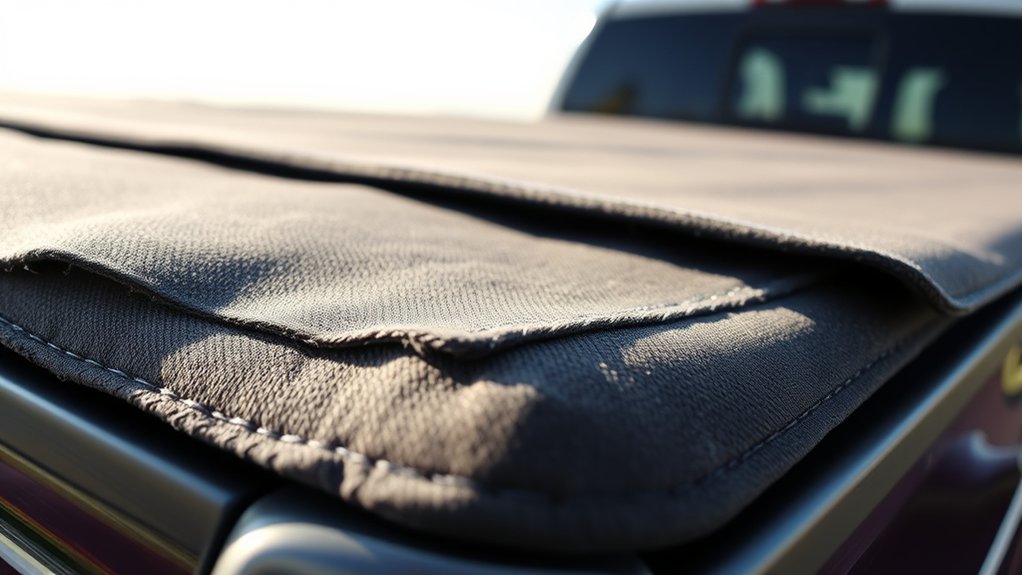
If you notice your tonneau cover no longer secures tightly or the Velcro strips appear frayed and lose their grip, it’s a clear sign they need replacing. Don’t confuse this with an irrelevant topic, like the cover’s color fading or unrelated concept such as weatherproofing, which don’t affect Velcro performance.
Focus on physical indicators: weakened adhesion, visible wear, or accumulation of debris that hinders fastening. You’ll find that compromised Velcro can cause the cover to flap or detach, reducing protection.
Inspect the strips for peeling edges or flattened hooks and loops, as these reduce the mechanical bond necessary for a tight seal. Addressing these signs promptly ensures your cover maintains its integrity and functionality without being distracted by unrelated issues.
Tools and Replacement Velcro You’ll Need
Before you begin replacing the Velcro on your tonneau cover, gather the essential tools and materials to guarantee a smooth process. You’ll need high-quality replacement Velcro designed specifically for automotive use, guaranteeing strong adhesion and durability. Precision is key when selecting tools to achieve a clean, secure fit.
Here’s a numeric list to prepare your two word idea 1 and two word idea 2 effectively:
- Replacement Velcro strips with adhesive backing
- A sharp utility knife or scissors
- Isopropyl alcohol and a clean cloth for surface prep
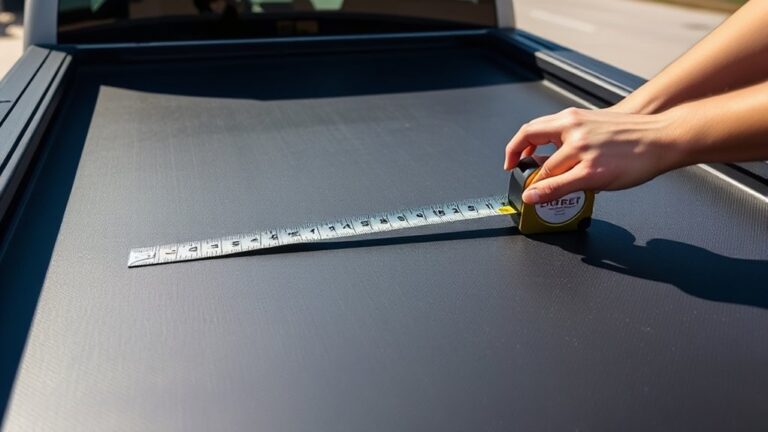
- Measuring tape or ruler for accurate sizing
Having these tools and materials ready will streamline your work and guarantee the new Velcro adheres firmly to your tonneau cover.
How to Remove Old Velcro From Your Cover
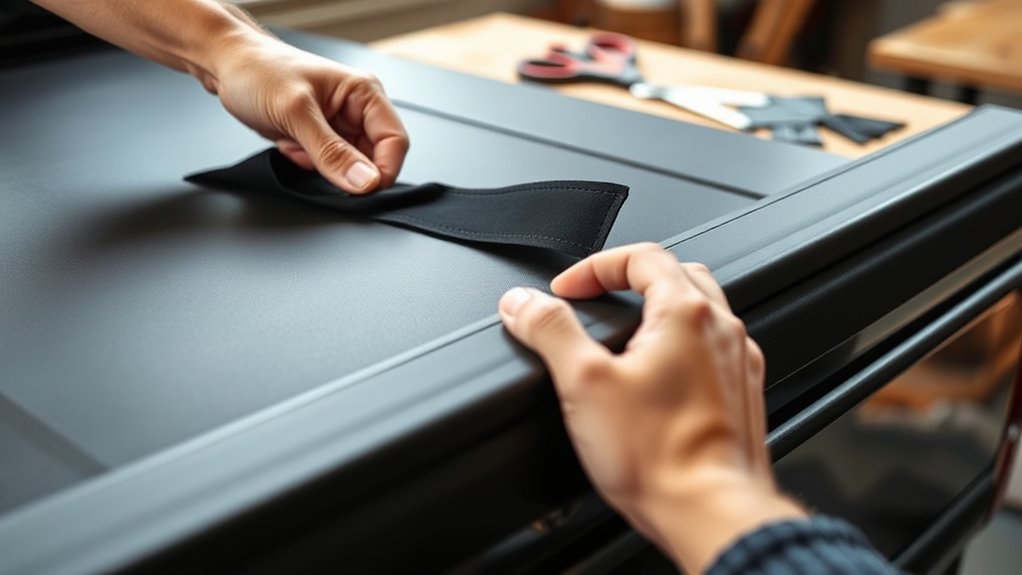
Why does removing old Velcro require careful attention? Because improper removal can damage your tonneau cover’s surface, compromising its integrity. Start by peeling back one edge of the Velcro slowly to avoid tearing the fabric.
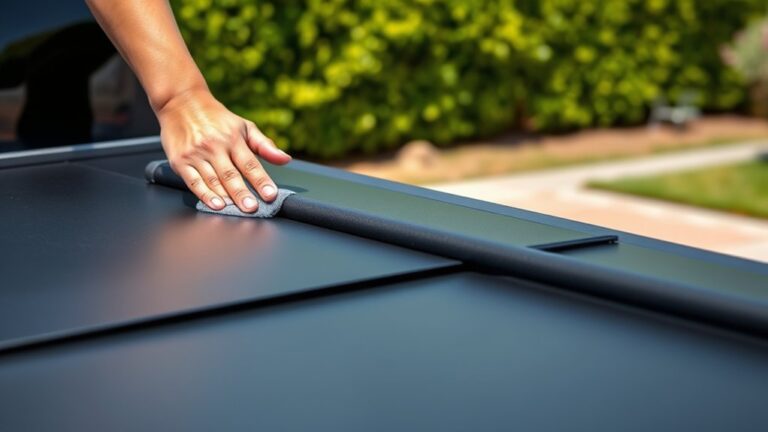
Use a plastic scraper or credit card to lift stubborn adhesive without harming the cover. Avoid metal tools; they risk puncturing or scratching. If adhesive residue remains, apply isopropyl alcohol sparingly with a microfiber cloth, gently dissolving the glue.
Resist unrelated subtopic distractions like cleaning methods; focus strictly on removal. Keep two word discussion ideas in mind: “adhesive residue” and “surface integrity.” Following this precise approach ensures you preserve your cover’s condition, setting a solid foundation for the next step: preparing the surface for new Velcro installation.
Cleaning Surfaces Before Applying New Tonneau Cover Velcro
Before applying new Velcro, you need to thoroughly clean the surfaces to ensure strong adhesion. Use isopropyl alcohol or a specialized adhesive remover to eliminate dirt, oils, and old adhesive residue.
Make sure the area is completely dry and free of debris before proceeding with the replacement.
Surface Preparation Tips
How clean is the surface where you’ll attach the new Velcro on your tonneau cover? Proper surface prep is crucial for Velcro longevity and strong adhesion. Any dirt, oil, or residue weakens the bond, causing premature failure.
Before applying the new Velcro, follow these essential steps:
- Remove all loose debris and dust with a soft brush or cloth.
- Degrease the surface using isopropyl alcohol or a suitable solvent.
- Allow the surface to fully dry to prevent moisture interference.
- Avoid touching the cleaned area with your fingers to maintain cleanliness.
Best Cleaning Products
Even with proper surface preparation laying the groundwork, selecting the appropriate cleaning products guarantees the new Velcro adheres securely to your tonneau cover. Start by choosing isopropyl alcohol (70% or higher) as your primary cleaning agent; it effectively removes oils, dirt, and residues without leaving a film.
Avoid soap-based cleaners, which can leave residues that weaken adhesive bonds. Use lint-free cloths to apply the cleaning products, ensuring no fibers remain on the surface. For stubborn dirt, a gentle plastic scraper combined with isopropyl alcohol works well.
After cleaning, let the surface dry completely before applying the replacement Velcro. Using the right cleaning products ensures a strong, lasting bond, preventing premature peeling or failure of your tonneau cover’s Velcro attachment.
Choosing the Right Replacement Velcro for Your Tonneau Cover
Why does selecting the right replacement Velcro matter for your tonneau cover? Choosing the proper Velcro directly impacts fabric durability and seal integrity, debunking common maintenance myths and installation myths that compromise performance. You need a product that withstands environmental stress while maintaining a tight seal.
Consider these factors when selecting replacement Velcro:
- Adhesive strength: ensure it bonds securely to your tonneau cover material.
- Weather resistance: opt for Velcro designed to resist UV rays, moisture, and temperature fluctuations.
- Hook and loop density: higher density provides better grip and longevity.
- Compatibility: match the Velcro type to your cover’s fabric for optimal fabric durability and seal integrity.
Picking the right Velcro guarantees a long-lasting, reliable repair.
Tips for Installing Velcro That Sticks
After selecting the right Velcro, proper installation guarantees it adheres firmly and lasts. Start by thoroughly cleaning the mounting surface with appropriate cleaning solvents to remove oils and dirt. Avoid common adhesive mishaps like pressing unevenly or peeling too soon.
Apply steady pressure for at least 30 seconds to activate the adhesive bond. Allow the adhesive to cure for 24 hours before exposing it to stress.
| Step | Tip |
|---|---|
| 1. Clean Surface | Use isopropyl alcohol or similar |
| 2. Dry Thoroughly | Ensure no moisture remains |
| 3. Align Correctly | Position before peeling backing |
| 4. Apply Pressure | Press firmly and evenly |
| 5. Cure Time | Wait 24 hours before use |
How to Maintain Your Tonneau Cover Velcro for Long-Term Use
You should clean your tonneau cover Velcro strips regularly to remove dirt and debris that reduce adhesion. Prevent buildup by brushing out particles and avoiding exposure to excessive dust or moisture.
When not in use, store the cover properly to maintain Velcro integrity and extend its lifespan.
Cleaning Velcro Strips Regularly
How often should you clean the Velcro strips on your tonneau cover to ensure optimal performance? Regular cleaning is essential to maintain strong adhesion and prolong the lifespan of the Velcro. Neglecting this aspect of generic maintenance can lead to diminished fastening strength.
Avoid confusing this with unrelated topics like fabric care or hardware adjustments.
To clean your Velcro strips efficiently, follow these steps:
- Use a fine-toothed comb or a Velcro cleaning tool to remove lint and debris.
- Gently brush the hooks and loops in one direction to avoid damage.
- If needed, use mild soapy water and a soft brush to clean stubborn dirt.
- Allow the strips to dry completely before reattaching the cover.
This routine prevents performance loss and keeps your tonneau cover secure.
Preventing Debris Buildup
Regular cleaning keeps your tonneau cover’s Velcro functional, but preventing debris buildup extends its lifespan even further. To do this, inspect the Velcro strips frequently for dirt, leaves, or dust that can reduce adhesion.
Use a soft brush or compressed air to dislodge particles without damaging the hooks and loops. Avoid letting unrelated topic distractions or random chatter delay maintenance, as debris can accumulate quickly, especially in dusty or leafy environments.
Additionally, keep the cover secured when not in use to minimize exposure to contaminants. Avoid harsh chemicals that might degrade the Velcro material.
Proper Storage Techniques
Where should you store your tonneau cover to preserve the integrity of its Velcro strips? Proper storage is essential for maintaining Velcro longevity and effective vehicle care. Use these storage hacks to prevent damage and debris accumulation:
- Clean the Velcro thoroughly before storage to remove dirt and fibers.
- Store the cover in a cool, dry place away from direct sunlight and moisture.
- Avoid folding the cover on the Velcro side; roll it instead to prevent crushing the hooks and loops.
- Use a breathable storage bag or container to protect against dust and pests while allowing airflow.
Following these steps guarantees the Velcro maintains its fastening strength and extends your tonneau cover’s lifespan, making replacement less frequent and vehicle care more efficient.
Frequently Asked Questions
Can I Use Velcro Replacement on All Types of Tonneau Covers?
You can’t guarantee velcro compatibility on all tonneau covers since materials vary. Check manufacturer specs first.
If incompatible, consider alternative fasteners like snaps or adhesive strips to ensure secure, practical attachment and maintain cover functionality.
How Long Does the Velcro Replacement Process Usually Take?
Replacing the Velcro usually takes about 30 to 60 minutes, like threading a needle. For durability comparison, choose heavy-duty strips.
Use installation tips: clean surfaces thoroughly and press firmly for lasting adhesion and performance.
Will Replacing Velcro Affect My Tonneau Cover’s Waterproof Ability?
Replacing velcro properly won’t affect your tonneau cover’s waterproof ability if you ensure tight velcro maintenance. Use waterproof-compatible adhesive and seal edges well to prevent water intrusion, minimizing any waterproof impact during the replacement process.
Can I Replace Velcro on My Tonneau Cover Without Removing It From the Truck?
Like fixing a watch while it ticks, you can replace Velcro on your tonneau cover without removing it from the truck. However, Velcro durability and installation challenges mean you’ll need patience and precise tools for a clean, secure fit.
Are There Any Alternatives to Velcro for Securing a Tonneau Cover?
You can use snaps, magnetic strips, or buckle straps as alternative fastening for your tonneau cover. Each offers improved weatherproofing concerns, providing secure attachment and durability in varying conditions without relying solely on Velcro’s adhesive properties.
Conclusion
Replacing your tonneau cover’s Velcro is simple, smart, and saves stress. Start by spotting signs of wear, then safely strip the old strips. Scrub surfaces spotless, select strong, suitable strips, and stick securely with steady pressure.
Give glue a good 24-hour grip time before using. Staying sharp with regular checks and cleanings ensures your cover clings consistently. This extends its life and keeps your cargo covered confidently.
By maintaining and replacing the Velcro on your tonneau cover when needed, you ensure reliable performance and long-lasting protection.