How to Make a Fiberglass Tonneau Cover
Over 60% of pickup owners choose tonneau covers to improve fuel efficiency and protect their cargo.
If you want a custom fiberglass tonneau cover, you’ll need to master precise measurements, mold creation, and resin application.
The process requires careful layering and finishing to ensure strength and durability.
Understanding these technical steps will help you achieve a professional, weatherproof result that fits perfectly—here’s how to start.
Key Takeaways
- Measure truck bed dimensions accurately and build a foam or wood mold base matching its contours for fiberglass layup.
- Apply release agent evenly on the mold base to prevent fiberglass from sticking during resin curing.
- Cut and layer fiberglass cloth with alternating weave angles, saturating each layer evenly with polyester resin and hardener.
- Trim, shape, and sand the cured fiberglass cover progressively using coarse to fine grit sandpapers for smoothness.
- Apply a UV-resistant gel coat, cure properly, and securely install the finished fiberglass tonneau cover on the truck bed.
Gather Materials and Tools for Your Fiberglass Tonneau Cover
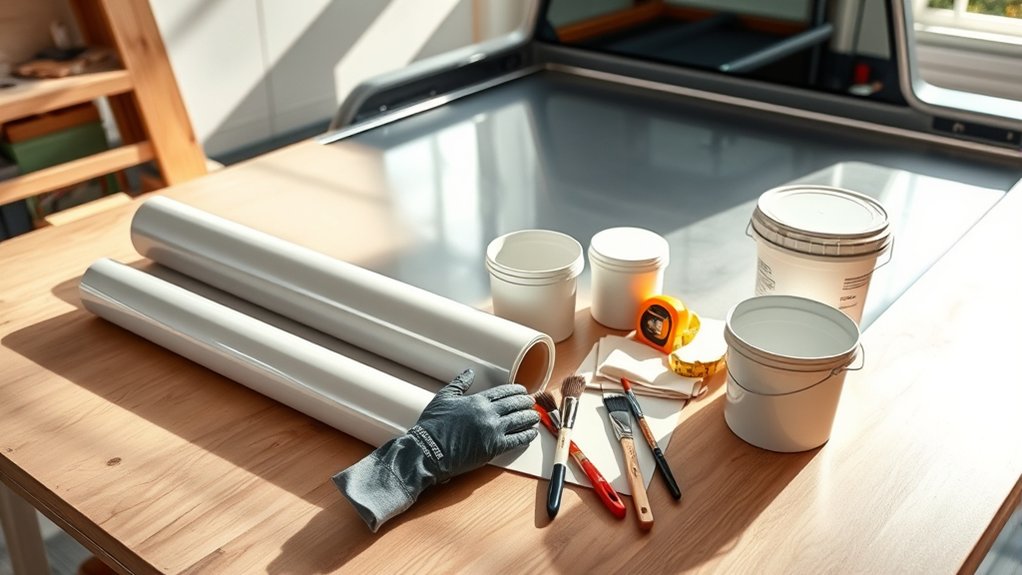
Before you begin crafting your fiberglass tonneau cover, you’ll need to gather all the necessary materials and tools to assure a smooth build process. Focus on reliable materials sourcing, prioritizing marine-grade fiberglass cloth, polyester resin, and a hardener to ensure durability.
Include release agents and mold-release wax to prevent sticking during molding. For weatherproofing considerations, select UV-resistant gel coat and waterproof sealants to protect against moisture and sun damage.
Essential tools include mixing containers, brushes, rollers, respirators, and sanding equipment for precise finishing. Accurate materials sourcing reduces delays and enhances structural integrity.
Measure and Prepare Your Truck Bed for Molding
With your materials and tools ready, focus on accurately measuring your truck bed to ensure a perfect fit for the fiberglass tonneau cover. Begin by measuring bed length, width, and depth at multiple points to account for any irregularities. Record all dimensions precisely.
Use a tape measure with clear markings and verify measurements twice to avoid errors. Consider the contours and wheel wells, which impact the cover’s shape.
Next, clean the truck bed thoroughly, removing dirt, debris, and rust spots to promote material compatibility during molding. Ensure the surface is dry and smooth, as contaminants can affect fiberglass adhesion.
Proper measuring bed procedures and surface preparation are critical to achieving a seamless, durable cover that fits snugly and performs well.
Build a Mold Base Using Foam or Wood to Shape the Cover
Choose foam for easy carving or wood for durability when building your mold base. Shape the material to match your truck bed’s contours precisely.
Then, secure the base firmly to prevent movement during the fiberglass layup process.
Selecting Foam Or Wood
How do you decide between foam and wood for building the mold base of your fiberglass tonneau cover? Foam engineering offers a lightweight, easily shaped material ideal for complex curves, while wood aesthetics provide a sturdy, natural surface that supports detailed finishing.
| Material | Weight | Ease of Shaping |
|---|---|---|
| Foam | Lightweight | Easily cut and sanded |
| Wood | Heavier | Requires woodworking tools |
| Foam | Good for curves | Less durable |
Choose foam if you prioritize quick shaping and weight savings. Opt for wood if you need a durable base and appreciate the natural texture for sanding and finishing. Both materials suit different build preferences, but foam engineering allows more flexibility, whereas wood aesthetics bring robustness and a classic feel.
Shaping The Mold Base
Where do you start when shaping your mold base? Begin by cutting your foam or wood to approximate dimensions, ensuring it matches your truck bed’s contours precisely. Use a rasp or sandpaper for gradual refinement, checking curves frequently to maintain symmetry.
Focus on creating smooth, continuous surfaces; this precision directly impacts the final cover’s fit and finish. Proper shaping helps optimize noise reduction by minimizing vibration gaps and enhances weather sealing by ensuring tight edges.
Pay close attention to edge profiles. Rounded edges improve resin flow and reduce stress points. Keep the mold base sturdy enough to hold shape during layup, but don’t overbuild; excessive mass complicates handling.
Accurate shaping at this stage saves time later and is key to producing a high-quality fiberglass tonneau cover.
Securing Materials For Stability
To what extent is it important to secure your mold base materials before proceeding? Properly securing your foam or wood mold base ensures stable shaping and prevents movement during fiberglass application.
Start by mounting the foam or wood firmly to a flat work surface using screws or industrial adhesive for secure mounting. Make sure all joints between foam sections or wood panels align tightly to maintain the intended shape.
Apply weatherproof seals at seams and edges to protect the mold base from moisture, which can cause warping or degradation over time. Confirm that the entire mold base is rigid and immobile before laying fiberglass layers.
This stability is essential for achieving a smooth, consistent cover shape and avoiding imperfections during curing. Secure mounting and weatherproof seals form the foundation for a successful fiberglass tonneau cover build.
Apply Release Agent for Easy Mold Removal
You’ll need to choose the right release agent, such as wax-based, PVA film, or silicone spray, to ensure clean separation from the mold. Apply it evenly using a brush, roller, or spray, making sure to cover all surfaces without pooling.
Proper technique and multiple thin coats prevent sticking and extend the mold’s lifespan.
Types Of Release Agents
A proper release agent is essential to guarantee your fiberglass mold separates cleanly without damage. You’ll typically choose between wax-based, paste, or PVA (polyvinyl alcohol) release agents.
Wax-based agents offer excellent mold protection but require multiple coats and careful buffing. Paste agents provide a thicker barrier, ideal for complex molds, but demand thorough cleaning after use.
PVA creates a thin, water-soluble film, perfect for detailed surfaces but can reduce mold lifespan if overused. Prioritize release agent safety by selecting low-VOC, non-toxic options to minimize health risks.
Also, consider environmental impact; biodegradable or water-based agents reduce pollution and waste. Understanding these types helps you balance effectiveness, safety, and sustainability, ensuring clean mold release and preserving your workspace.
Application Techniques And Tips
Although selecting the right release agent is essential, applying it correctly guarantees easy mold removal and prevents damage. You should apply a thin, even coat using a clean, lint-free cloth or a spray system. Multiple light layers work better than one heavy application.
Proper curing time prevents interference with paint aging and minimizes weathering patterns on the final surface.
| Step | Recommendation |
|---|---|
| Surface prep | Clean thoroughly, remove dust |
| Application method | Light, even coats; avoid pooling |
| Curing time | Follow manufacturer’s guidelines |
Correct application ensures a smooth interface between mold and fiberglass, reducing defects. Adhering to these techniques preserves the mold’s integrity and extends its lifespan, essential for consistent paint aging and minimizing weathering patterns on your tonneau cover.
Lay Fiberglass Cloth and Resin for the First Layer
Before applying resin, guarantee the fiberglass cloth is cut to fit the surface accurately without overlapping edges. Lay the cloth smoothly to avoid wrinkles or air bubbles, which compromise structural integrity.
Mix the resin and hardener precisely according to manufacturer specifications to ensure proper curing. Apply the resin evenly with a roller or brush, saturating the cloth thoroughly but without excess pooling. Work efficiently to prevent premature resin thickening.
Avoid distractions or unrelated topics during this critical step to maintain focus and accuracy. Proper ventilation and a clean workspace contribute to effective application and prevent contamination.
Once the first layer is set, store any unused materials in sealed containers as part of your storage solutions to preserve resin quality and cloth condition for future layers.
Add Fiberglass Layers to Strengthen Your Tonneau Cover
You’ll need to prepare additional fiberglass cloth and mix fresh resin for each layer to maintain proper adhesion and strength. Apply resin evenly before laying each new fiberglass sheet, ensuring no air bubbles form.
Repeat this process until you achieve the desired thickness and durability for your tonneau cover.
Preparing Fiberglass Materials
A critical step in preparing fiberglass materials involves properly layering the fiberglass cloth to enhance the strength and durability of your tonneau cover. Avoid unrelated focus or off-topic concepts like decorative finishes at this stage.
Concentrate on cutting fiberglass cloth to precise dimensions, ensuring edges align without overlap to prevent weak spots. Organize layers with alternating weave directions for maximum rigidity.
| Step | Action | Purpose |
|---|---|---|
| 1 | Cut fiberglass cloth | Fit cover dimensions |
| 2 | Arrange layers | Ensure proper alignment |
| 3 | Alternate weave angles | Increase structural strength |
| 4 | Avoid overlapping edges | Prevent weak points |
| 5 | Prepare workspace | Maintain material cleanliness |
Stick to this methodical prep to guarantee a robust base before resin application.
Applying Resin and Layers
Once your fiberglass cloth is properly cut and layered, begin applying resin to bond the materials and build strength. Use a brush or roller to saturate each layer evenly, avoiding dry spots that compromise integrity.
Apply resin progressively, allowing partial curing between layers to enhance adhesion. Add multiple fiberglass layers according to your design specifications; more layers increase rigidity but also weight.
Focus on uniform resin distribution; inconsistent application leads to weak points. While researching topic ideas, avoid unrelated aspects such as decorative finishes or unrelated materials. They don’t affect structural strength.
Maintain a clean workspace and wear protective gear to handle resin safely. By following these steps precisely, you ensure your tonneau cover gains optimal durability and a solid fiberglass core that withstands daily wear and environmental exposure.
Trim and Shape the Fiberglass Cover to Fit Your Truck Bed
Trimming and shaping the fiberglass cover requires careful measurement and steady hands to ensure a perfect fit on your truck bed. Begin by marking the trim design directly on the cured fiberglass, using a tape measure and straight edge for accuracy.
Use a fine-toothed saw or rotary tool to cut along these lines, maintaining controlled, even movements to avoid chipping. After rough trimming, test-fit the cover, making incremental adjustments for seamless alignment with the bed edges.
To enhance aesthetics, consider color matching any exposed edges with automotive-grade paint or gel coat, ensuring the cover complements your truck’s finish. Precise shaping at this stage is critical; it sets the foundation for a snug fit and professional appearance, avoiding gaps or uneven surfaces before proceeding to sanding and finishing.
Sand the Surface Smooth for a Professional Finish
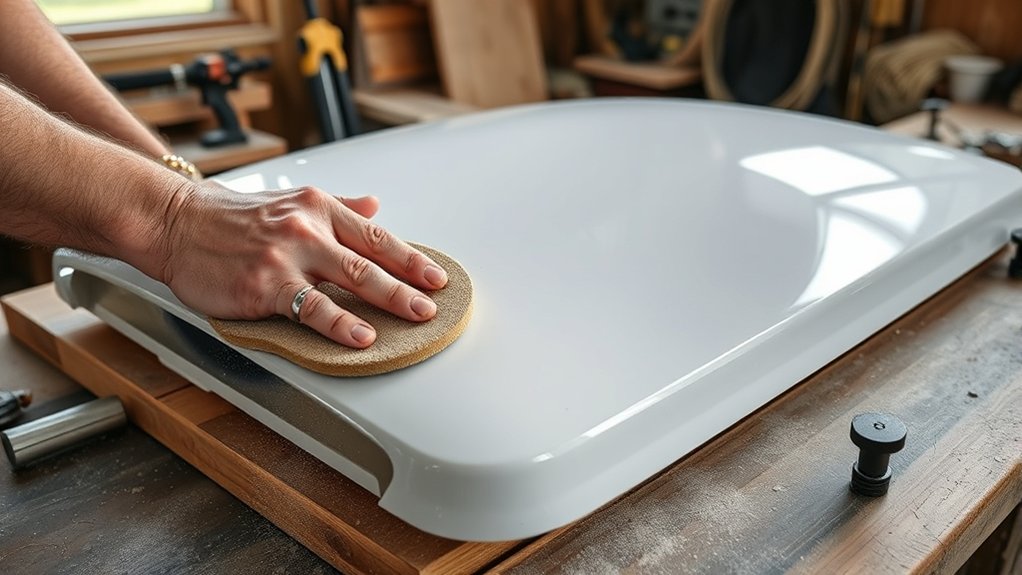
Sanding the fiberglass surface smooth requires patience and attention to detail to achieve a flawless finish. Begin with coarse grit sandpaper (80-120 grit) to remove major imperfections, then progress to finer grits (220-400 grit) for sand smoothing.
Maintain a consistent, circular motion to avoid uneven surfaces. Use wet sanding to minimize dust and reveal imperfections early. Proper sanding prepares the cover for spray finishing, ensuring adhesion and a sleek look.
| Step | Grit Range | Purpose |
|---|---|---|
| Initial Sand | 80-120 | Remove large bumps |
| Intermediate | 180-220 | Smooth rough scratches |
| Fine Sanding | 320-400 | Refine surface texture |
| Wet Sanding | 400+ | Eliminate minor flaws |
| Final Check | Visual | Ensure uniform smoothness |
Finish With a Durable, Glossy Gel Coat
After achieving a perfectly smooth surface through careful sanding, you’re ready to apply a gel coat that will protect the fiberglass and give it a glossy, professional appearance. First, put on appropriate safety gear: respirator, gloves, and goggles to avoid inhaling fumes or skin contact.
Mix the gel coat thoroughly with its catalyst according to manufacturer instructions. Apply a thin, even layer using a high-quality brush or spray gun, maintaining steady strokes to prevent streaks.
Be mindful of weather considerations: apply in a well-ventilated, dust-free area with temperatures between 65°F and 85°F and low humidity to ensure proper curing. Allow the gel coat to cure fully before handling or additional work.
Apply gel coat in a clean, ventilated space with moderate temperature and low humidity for best results.
This durable finish enhances UV resistance and adds long-lasting shine to your tonneau cover.
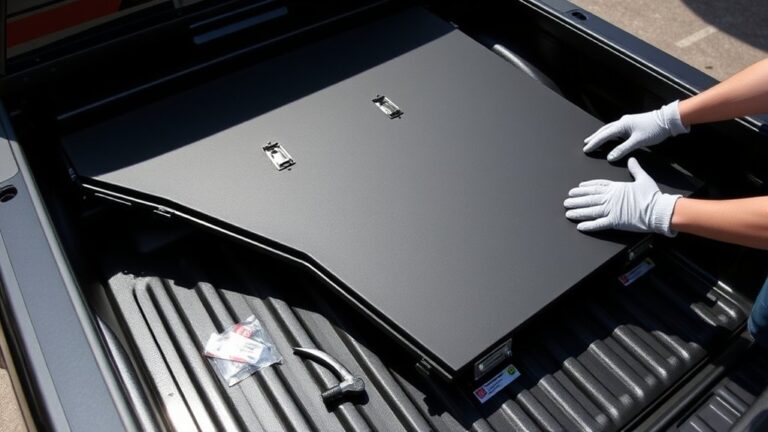
Install Your Fiberglass Tonneau Cover Securely on the Truck Bed
How do you ensure your fiberglass tonneau cover stays firmly in place during every drive? Secure installation is crucial for durability and safety, especially when factoring in route planning and weather considerations. Follow these steps:
- Align the cover precisely on the truck bed, ensuring even contact with seals.
- Use stainless steel clamps or custom brackets to fasten the cover, tightening all hardware to manufacturer torque specifications.
- Check for proper seal compression to prevent water intrusion, adjusting as necessary for varying weather conditions.
- Test stability by driving short routes, mimicking your typical route planning to identify any shifting or noise.
Frequently Asked Questions
How Long Does the Entire Fiberglass Tonneau Cover Process Take?
You’ll spend about 2 to 3 days on the entire process, thanks to short curing times for each fiberglass layer.
Your DIY timing depends on prep and sanding, but efficient work keeps it concise and technical.
Can I Paint My Fiberglass Tonneau Cover a Custom Color?
You can paint your fiberglass tonneau cover like an artist customizing a blank canvas. Use proper painting options such as primer, automotive paint, and clear coat to achieve precise color customization. This approach ensures durability and a flawless finish that lasts.
What Maintenance Is Required for a Fiberglass Tonneau Cover?
You should regularly clean your fiberglass tonneau cover with mild soap and water as part of maintenance basics. Check seals and hinges for damage, and use troubleshooting tips like tightening hardware or resealing cracks to ensure durability.
Is a Fiberglass Cover Weather-Resistant and Uv-Protected?
Think of your fiberglass cover as a fortress, weather resistance and UV protection as its shields. You’ll enjoy diverse paint color options, easy installation tips, a clear maintenance schedule, and vast customization potential for lasting durability.
Can I Install the Tonneau Cover Without Professional Help?
You can handle DIY installation of the fiberglass tonneau cover if you follow instructions carefully. However, don’t ignore warranty concerns. Improper installation might void it. Always double-check mounting hardware and seal integrity during setup.
Conclusion
Just like a craftsman shaping molten glass into a sleek vase, your careful layering and finishing transform raw materials into a sturdy, glossy tonneau cover.
Remember, precision in each step—from applying release agent to sanding smooth—ensures durability and a perfect fit. With patience and attention to detail, your fiberglass cover will protect your truck bed like armor, blending strength and style seamlessly.
Now, clamp it down and hit the road with confidence, knowing your fiberglass tonneau cover was made with skill and care.