
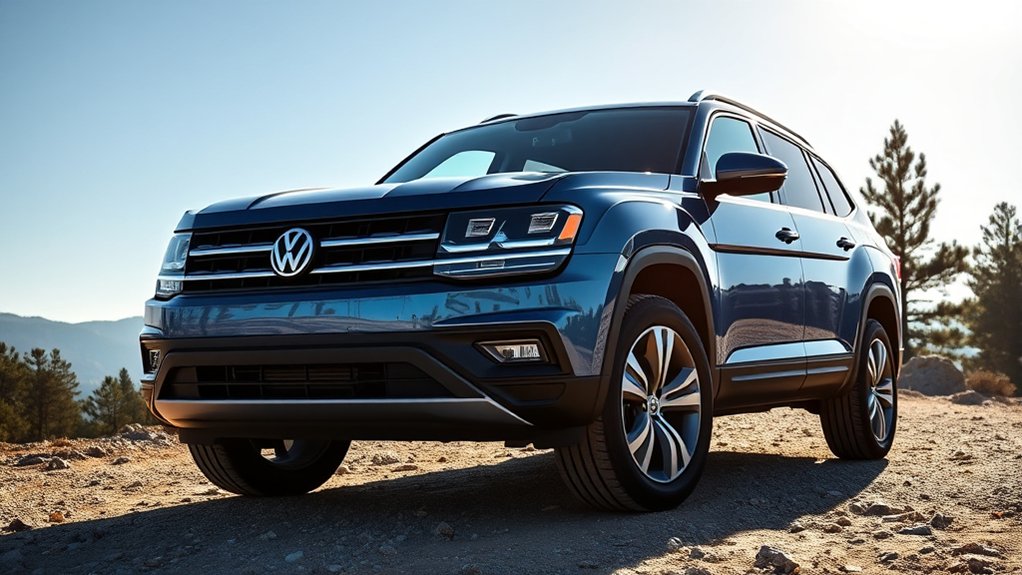
Is Volkswagen Atlas a Good Car
If you’re considering the Volkswagen Atlas as a midsize SUV, it offers a compelling mix of spaciousness, versatile seating, and solid performance. You’ll find it balances powertrains and handling with a refined ride, while including a suite of safety features and tech options that meet modern expectations.
However, some quirks in infotainment responsiveness and moderate maintenance costs might influence your decision. Understanding these factors can help determine if the Atlas fits your specific needs.
Key Takeaways
- Volkswagen Atlas offers spacious three-row seating and versatile cargo space, making it practical for families and daily use.
- It has balanced powertrains with a comfortable ride and responsive handling, suitable for varied driving needs.
- The infotainment system includes modern features like an 8-inch touchscreen and wireless charging but may experience occasional lag.
- Safety ratings are strong, with advanced driver assists and high-strength steel construction for crash protection.
- Reliability is average with moderate maintenance costs, fitting buyers prioritizing practicality over luxury or premium reliability.
Why the Volkswagen Atlas Is a Top Midsize SUV Choice
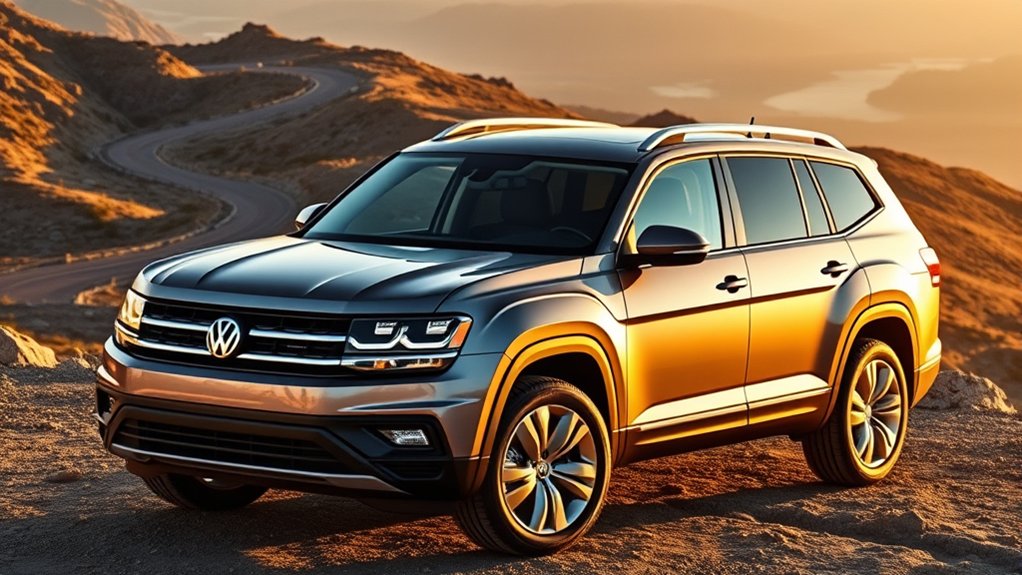
What makes the Volkswagen Atlas stand out in the midsize SUV segment? You’ll find its robust engine options and solid build quality appealing, offering a smooth ride and competent handling. The Atlas features a turbocharged four-cylinder and a V6 engine, both delivering reliable performance tailored to your driving needs.
However, you should be aware of the unreliable infotainment system that can disrupt your user experience. Additionally, the vehicle’s maintenance costs tend to be on the higher side compared to competitors, which might impact long-term ownership expenses.
Despite these drawbacks, the Atlas balances power, safety features, and driving comfort effectively, making it a technically sound choice if you prioritize performance over infotainment reliability and cost efficiency.
How Spacious Is the Volkswagen Atlas Interior?
You’ll find the Volkswagen Atlas seats up to seven passengers across three rows, offering generous legroom and headroom.
Its cargo space measures approximately 20.6 cubic feet behind the third row, expanding to 55.5 cubic feet with the third row folded down. This balance between passenger capacity and cargo volume makes the interior particularly spacious for a midsize SUV.
Passenger Seating Capacity
How spacious is the Volkswagen Atlas when it comes to passenger seating? The Atlas offers a well-designed interior that maximizes passenger space and seating comfort. It features three rows of seats accommodating up to seven passengers with the following specifics:
- Front row provides 41.4 inches of legroom, ensuring ample space for driver and front passenger.
- Second-row seats offer 38.1 inches of legroom, suitable for adults on longer journeys.
- Third-row legroom measures 33.7 inches, which is more generous than many competitors’ third rows.
- Seat cushions and backrests are ergonomically contoured to enhance seating comfort across all rows.
This combination of dimensions and design choices results in a spacious cabin that balances passenger capacity with comfort effectively.
Cargo Space Dimensions
While the Volkswagen Atlas comfortably seats up to seven passengers, its interior flexibility extends to cargo capacity, accommodating various hauling needs. You’ll find the cargo space practical, especially with the rear seats folded down, expanding your rear cargo area considerably.
| Configuration | Cargo Space (cu ft) | Rear Cargo Length (in) |
|---|---|---|
| All seats up | 20.6 | 36.2 |
| Third row folded | 55.5 | 67.1 |
| Second & third rows folded | 96.8 | 96.8 |
This setup allows you to optimize space depending on passenger and cargo requirements. The rear cargo area is notably deep and wide, making it suitable for larger items without compromising passenger comfort.
What Technology Features Does the Volkswagen Atlas Offer?
What sets the Volkswagen Atlas apart in its class is the suite of advanced technology features designed to enhance both convenience and safety. While the Atlas generally offers robust tech, you should be aware of certain technology limitations, such as occasional system lag and restricted smartphone integration.
Volkswagen backs these features with comprehensive warranty coverage, typically covering electronics for up to 4 years or 50,000 miles.
Key technology features include:
- 8-inch touchscreen infotainment system with Apple CarPlay and Android Auto compatibility
- Digital cockpit display providing customizable driver information
- Adaptive cruise control with stop-and-go functionality
- Wireless charging pad and multiple USB ports for device connectivity
These systems deliver a modern driving experience, but knowing their constraints helps set realistic expectations.
How Safe Is the Volkswagen Atlas on the Road?
When evaluating the Volkswagen Atlas’s safety, you’ll find it equipped with a thorough array of active and passive features designed to protect occupants and prevent collisions. It includes advanced driver-assistance systems like adaptive cruise control, blind-spot monitoring, and forward collision warning with automatic emergency braking.
Structurally, the Atlas uses high-strength steel to enhance crash energy absorption. In independent crash tests, the Atlas has earned strong safety ratings from the National Highway Traffic Safety Administration (NHTSA) and the Insurance Institute for Highway Safety (IIHS).
It performed well in frontal, side, and rollover crash tests, demonstrating robust occupant protection. These safety ratings reflect the vehicle’s capability to mitigate injury risks effectively.
How Does the Volkswagen Atlas Perform and What’s Its Fuel Economy?
Beyond its strong safety credentials, the Volkswagen Atlas delivers a performance profile tailored for both daily driving and family hauling. You’ll find its driving dynamics well-balanced, offering steady handling and a smooth ride thanks to its independent rear suspension.
The Volkswagen Atlas combines reliable safety with balanced handling and a smooth, comfortable ride for everyday family driving.
The Atlas comes with two engine choices: a 2.0L turbocharged four-cylinder and a 3.6L V6, producing 235 and 276 horsepower respectively, which affect acceleration and towing capacity. Fuel economy varies, with the four-cylinder averaging about 21 mpg city/24 mpg highway, and the V6 closer to 17/23 mpg, impacting your overall cost of ownership.
Key performance aspects include:
- Responsive steering for confident maneuvering
- Adequate power for highway merging and passing
- Comfortable suspension absorbing road imperfections
- Competitive fuel efficiency within its segment
This balance supports versatile use without compromising economy.
What Are the Pros and Cons of the Volkswagen Atlas?
Considering the Volkswagen Atlas involves weighing several advantages against some notable drawbacks. You’ll appreciate the surprising strengths like its spacious three-row seating, user-friendly infotainment system, and solid build quality that ensures durability. The engine options provide adequate power for daily driving, and the ride quality remains comfortable, even on rough roads.
However, there are opinionated drawbacks you should consider. The fuel economy lags behind some competitors, and the base engine may feel underpowered during highway merges. Additionally, some interior materials don’t match the upscale feel Volkswagen aims for, and advanced safety features are limited in lower trims.
Balancing these factors helps you decide if the Atlas suits your needs, especially if you prioritize space and comfort over efficiency and luxury finishes.
How Does the Volkswagen Atlas Compare to Other Midsize SUVs?
Weighing the Volkswagen Atlas’s strengths and weaknesses naturally leads to how it stacks up against other midsize SUVs in its class. You’ll find that the Atlas offers a competitive package, especially when considering:
- Interior space and comfort, which rivals top contenders with three rows of seating.
- Engine performance that balances power and fuel efficiency, though some rivals offer more advanced turbo options.
- Interesting color options that let you personalize your vehicle beyond standard palettes.
- Maintenance costs, which tend to be moderate compared to luxury brands but slightly higher than some Japanese competitors.
Who Is the Volkswagen Atlas Best For?
Who exactly benefits most from driving a Volkswagen Atlas? If you prioritize spacious interiors and straightforward technology without falling for marketing fluff, this SUV suits you well. You’ll appreciate its three-row seating and user-friendly infotainment system, especially if you frequently transport family or groups.
However, be aware of dealership tactics that may inflate prices or add unnecessary extras. The Atlas also appeals to those willing to manage moderate maintenance costs, as it’s not the cheapest to upkeep compared to rivals.
If you hear reliability myths, look closely at data showing average dependability; the Atlas performs adequately but isn’t flawless. Ultimately, if you want a practical midsize SUV with honest features and can navigate typical upkeep, the Volkswagen Atlas fits your needs effectively.
Frequently Asked Questions
What Is the Warranty Coverage for the Volkswagen Atlas?
You get a 4-year/50,000-mile limited warranty for the Volkswagen Atlas, with regional dealership differences possibly affecting service. Maintenance terms require regular upkeep to keep eligibility, so follow your dealer’s schedule for full coverage specifics.
How Expensive Is Volkswagen Atlas Maintenance and Repairs?
Maintenance costs for the Volkswagen Atlas can feel like a steep climb, with expensive maintenance and occasional reliability concerns.
You’ll face higher-than-average repair bills, especially for engine and transmission issues, so budgeting carefully is essential.
Are There Any Common Mechanical Issues With the Volkswagen Atlas?
You’ll find common issues focus on transmission problems and electrical glitches in the Volkswagen Atlas. These reliability concerns may require attention over time, so monitoring performance and regular maintenance are essential to avoid costly repairs.
Can the Volkswagen Atlas Tow Heavy Loads?
You’ll find towing heavy loads with the Volkswagen Atlas isn’t a walk in the park, but its tow hitch compatibility and moderate off road capability let you haul up to 5,000 pounds safely and efficiently.
What Are the Available Color Options for the Volkswagen Atlas?
You’ll find color availability including Deep Black Pearl, Pure White, and Tourmaline Blue. The interior styling complements these with customizable options like Titan Black leather or Titan Black and Clark Gray cloth, enhancing your driving experience.
Conclusion
The Volkswagen Atlas feels like a well-engineered toolbox—practical, spacious, and reliable for your daily needs. You’ll appreciate its roomy three-row seating, balanced powertrains, and solid safety features. While the tech system can lag, its overall build quality and moderate maintenance costs make it a sensible choice.
If you prioritize space and value over luxury flair, the Atlas is a strong contender in the midsize SUV segment that won’t disappoint. Overall, the Volkswagen Atlas is a good car for those seeking a versatile and family-friendly vehicle.