How Wide Is an f150
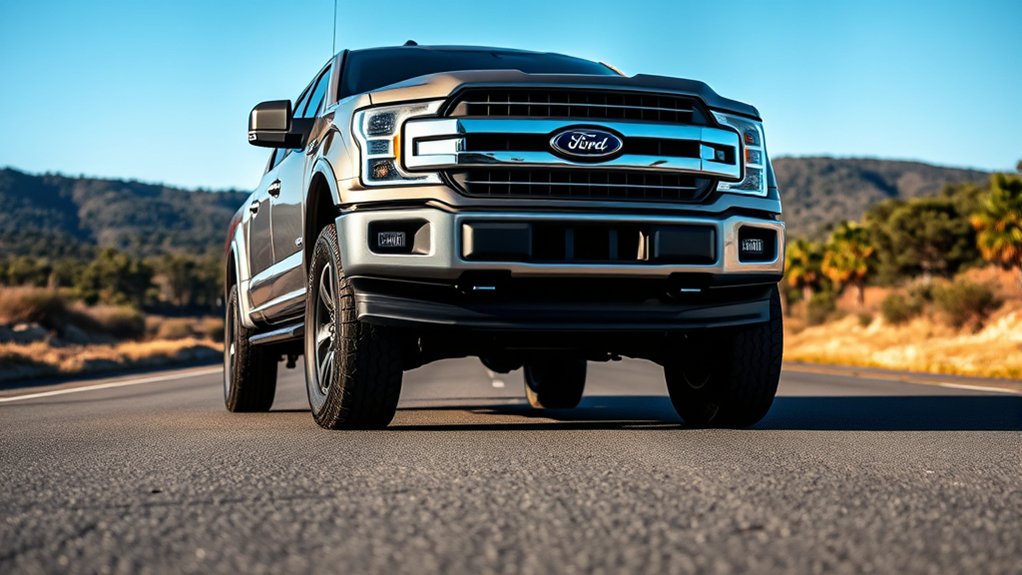
You might be surprised to learn that the width of a Ford F-150 can vary from about 79.9 inches up to 86.3 inches without mirrors, depending on the trim and configuration.
Including mirrors, that width jumps past 96 inches, which significantly affects parking and maneuvering.
Understanding these dimensions is crucial, especially if you plan to navigate tight spaces or compare it with other trucks.
Let’s explore what this means for your daily use and more specialized needs.
Key Takeaways
- The Ford F-150 body width ranges from about 79.9 inches on XL/XLT trims to 86.3 inches on higher trims like Lariat and Platinum.
- Including mirrors, the F-150 width can extend beyond 96 inches, affecting parking and maneuvering space needs.
- Standard F-150 models are narrower than competitors like the Chevrolet Silverado (81.2 inches) but similar in mirror-inclusive width.
- Width variations influence garage fit, requiring consideration of door width and side clearance for safe parking.
- The truck’s wide stance improves towing stability and off-road traction but may challenge tight parking and narrow trails.
How Wide Is a Ford F-150 Across Different Models?
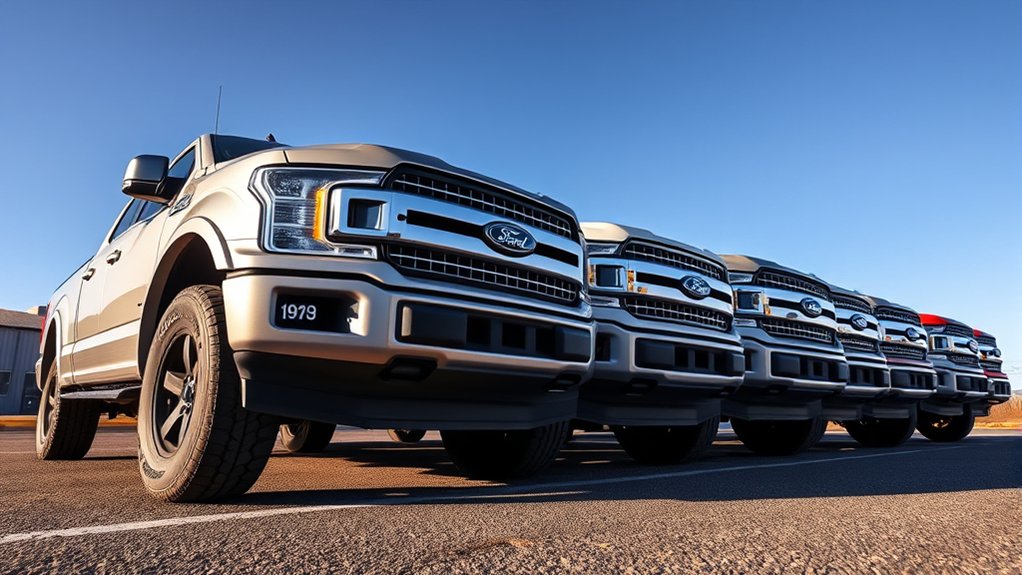
How wide is a Ford F-150 across its various models? When you examine the width variations, you’ll notice the standard width without mirrors ranges from about 79.9 inches to 86.3 inches, depending on the model and trim.
The base XL and XLT trims typically measure around 79.9 inches wide, while higher trims like the Lariat and Platinum push closer to 86.3 inches because of additional features and wider tires. Model differences also affect width due to bed size options and wheelbase configurations, which slightly alter the overall stance.
Keep in mind, including mirrors, the width expands further, but focusing on body width highlights these subtle distinctions across the F-150 lineup. Understanding these width variations helps you anticipate handling and space requirements.
How Does Ford F-150 Width Affect Parking and Garage Fit?
When considering parking or garage space, you might wonder if your Ford F-150 will fit comfortably without causing inconvenience. The F-150’s width variation across different models directly impacts parking clearance requirements.
For instance, standard models measure around 79.9 inches wide without mirrors, while wider trims can exceed 86 inches including mirrors. This difference affects how much lateral space you need to maneuver and park safely.
When evaluating your garage dimensions, account for door width and clearance on each side to avoid scraping. In tight parking spots, the F-150’s width may challenge standard space limits, requiring cautious entry and exit.
Understanding these width variations helps you plan parking strategies and garage modifications to ensure your F-150 fits securely without compromising accessibility.
Comparing Ford F-150 Width With Other Popular Pickup Trucks
Considering the Ford F-150’s width is key for parking and garage fit, it’s equally important to see how it stacks up against other popular pickup trucks. The F-150 typically measures around 79.9 inches wide without mirrors, which is comparable to the Chevrolet Silverado’s 81.2 inches and the Ram 1500’s 79.4 inches.
Width comparisons show the Toyota Tundra is slightly wider at 80.5 inches. These subtle differences can impact parking implications, especially in tight urban spaces or narrow garages. When you consider side mirrors, the F-150 extends beyond 96 inches, similar to competitors.
Understanding these exact dimensions helps you evaluate your parking options and ensures your chosen truck fits comfortably in your garage or parking spot without risking damage or inconvenience.
Why Ford F-150 Width Matters for Towing and Off-Roading
Why does the width of the Ford F-150 play a critical role in towing and off-roading performance? Its wide stance enhances stability and control, especially under heavy loads or uneven terrain. When towing, this width helps distribute weight more evenly, reducing sway and improving handling.
The Ford F-150’s wide stance improves stability and control during towing and off-roading, especially on uneven terrain.
Off-roading benefits from the wider footprint by increasing traction and preventing rollovers on rugged paths.
Here’s why it matters:
- Stability: A wide stance lowers the center of gravity, crucial when hauling trailers.
- Traction: More tire contact with the ground boosts grip on slippery or uneven surfaces.
- Maneuverability: While the width aids performance, it complicates tight curb parking and navigating narrow trails.
Understanding this balance helps you optimize your F-150’s towing and off-road capabilities effectively.
Tips for Measuring and Managing Your Ford F-150’s Width
To make the most of your Ford F-150’s towing and off-road performance, you need accurate measurements of its width. Start by measuring the widest points, typically the side mirrors when extended. Use a tape measure or laser tool for precision, noting both the standard and extended widths.
This ensures you understand your vehicle’s spatial requirements. When managing your F-150’s width, consider parking considerations carefully; choose spots that accommodate the full width, including mirrors, to avoid damage.
Additionally, retract mirrors when navigating tight spaces to reduce overall width. Regularly verify your width measurements, especially after modifications like adding accessories or wider tires. Precise width measurements help you maneuver confidently and prevent costly mistakes during towing, off-roading, or parking.
Frequently Asked Questions
What Is the Fuel Efficiency of the Ford F-150?
You can expect the Ford F-150’s fuel economy to range from about 19 to 25 mpg, depending on the engine and configuration. Its gas mileage varies, so check specific models for precise efficiency ratings.
How Much Does a Ford F-150 Weigh?
Curious about the Ford F-150’s weight? It typically ranges from 4,000 to 5,700 pounds. This two word technical detail helps you understand payload capacity, though discussion ideas about unrelated subtopics don’t fit this subtopic’s focus.
What Engine Options Are Available for the Ford F-150?
You’ll find multiple engine options in the Ford F-150, including V6, V8, and hybrid variants. Transmission choices typically feature a 10-speed automatic, optimizing power delivery and fuel efficiency across configurations.
Does the Ford F-150 Come With Advanced Safety Features?
You’ll find it’s no coincidence the Ford F-150 includes advanced tech like adaptive cruise and lane-keeping, perfect for rural roads. These safety features actively protect you, enhancing your driving confidence and control in challenging environments.
What Is the Towing Capacity of the Ford F-150?
You can tow up to 14,000 pounds with the Ford F-150, aligning with current towing trends.
Remember to factor in payload budgeting to avoid overloading, ensuring safe and efficient towing performance for your tasks.
Conclusion
You might think the Ford F-150’s width is just a number, but it coincidentally shapes your entire driving experience—from squeezing into tight garages to mastering off-road trails.
Knowing that trims range from about 79.9 to over 86 inches wide helps you plan parking and towing with precision. So, measuring your truck’s widest points isn’t just a task; it’s the key to navigating both urban streets and rugged landscapes confidently.
Understanding how wide an F-150 is ensures you’re always prepared, whether maneuvering through city traffic or exploring off the beaten path.