How to Cut Bed Liner for Tonneau Cover
Did you know that over 60% of truck owners install bed liners to protect their investment? When it comes to adding a tonneau cover, knowing how to cut bed liner for tonneau cover precisely is essential. This ensures a seamless fit and maintains full functionality.
With the right tools and careful measurements, you can avoid costly mistakes. Proper cutting also helps preserve your truck bed’s integrity. Let’s explore the exact steps you need to take for a flawless cut.
Key Takeaways
- Measure truck bed dimensions precisely using a steel tape measure and carpenter’s square before marking cut lines on the bed liner.
- Mark cut lines on the bed liner with a fine-tip marker and straightedge, ensuring proper alignment with the tonneau cover.
- Secure the bed liner with clamps or tape to prevent shifting during cutting for clean, accurate edges.
- Cut slowly along marked lines using a sharp utility knife or heavy-duty scissors, stabilizing cuts with a straight edge.
- Verify the fit after initial cuts, trim edges for seamless alignment, and ensure mounting points and moving parts remain accessible.
Benefits of Using a Bed Liner Under Your Tonneau Cover
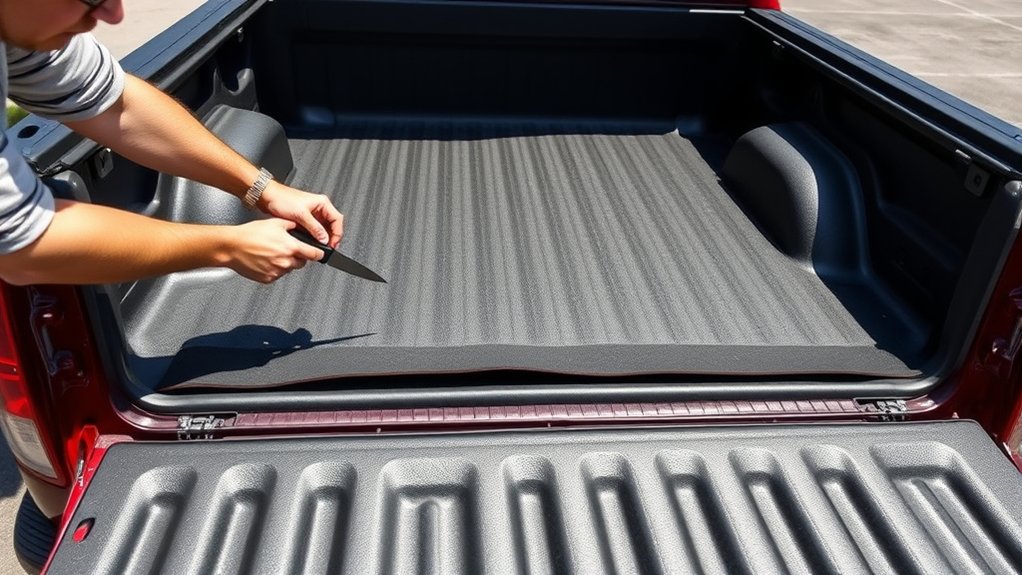
Protecting your truck bed by installing a bed liner under your tonneau cover enhances durability and prevents damage from shifting cargo. The bed liner acts as a robust barrier, safeguarding the truck bed’s surface against scratches, dents, and corrosion caused by heavy or abrasive items.
When paired with a tonneau cover, the liner helps maintain a secure, non-slip environment, reducing cargo movement and potential wear. Additionally, the bed liner provides an extra layer of waterproofing, complementing the tonneau cover’s protection against moisture intrusion.
This combination extends the lifespan of your truck bed, preserving its structural integrity and resale value. By integrating a bed liner under your tonneau cover, you ensure comprehensive defense against environmental factors and mechanical impacts, optimizing your truck’s functionality and appearance.
Tools for Measuring and Cutting Your Bed Liner
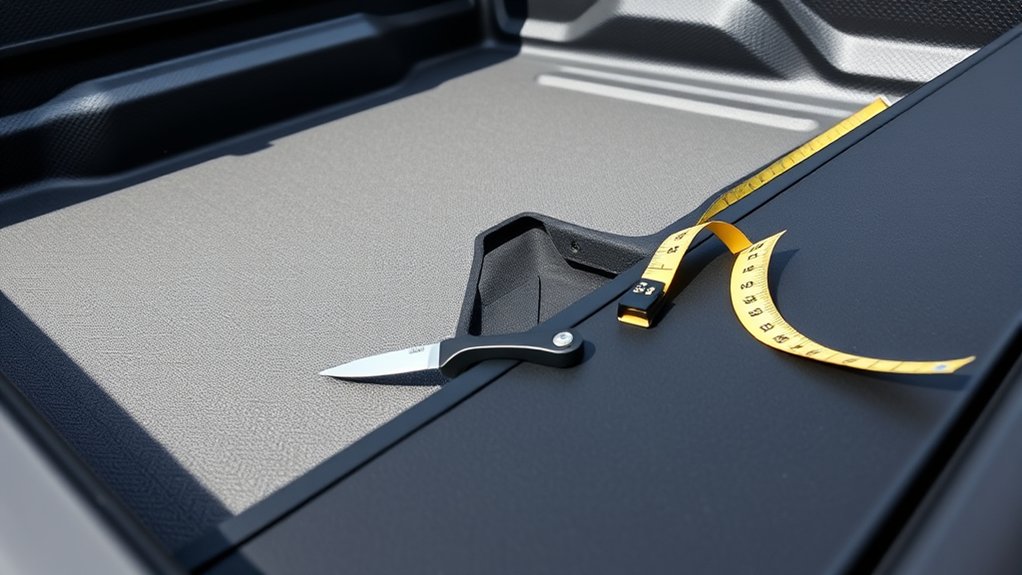
You’ll need accurate measuring tools like a tape measure and straight edge to mark precise cut lines on your bed liner.
For cutting, a sharp utility knife or heavy-duty scissors will give you clean, controlled cuts. Don’t forget safety gear such as gloves and eye protection to prevent injuries during the process.
Essential Measuring Tools
How do you guarantee your bed liner fits perfectly under the tonneau cover? Start with essential measuring tools designed for accuracy and ease. A retractable steel tape measure provides precise linear readings and reliable rigidity, improving measurement ergonomics by reducing hand fatigue during extended use.
Ensure your tape is properly calibrated; a miscalibrated tool leads to cumulative errors. A digital caliper offers exactness for smaller dimensions, helping you capture intricate contours with confidence.
Use a carpenter’s square or combination square to verify right angles, crucial for clean, straight cuts. Always inspect and calibrate your tools before measuring to maintain accuracy.
Best Cutting Instruments
Accurate measurements set the foundation, but selecting the right cutting instruments guarantees your bed liner fits the tonneau cover cleanly and securely. Using dull or improper tools risks warped edges and material damage.
A sharp utility knife or heavy-duty scissors provide precise, controlled cuts to prevent incorrect cleaning and trimming. A straight edge or metal ruler stabilizes the liner during cutting, ensuring straight lines.
| Tool | Benefit |
|---|---|
| Utility Knife | Sharp, clean cuts |
| Heavy-Duty Scissors | Control, flexibility |
| Metal Ruler | Straight, accurate lines |
Choose tools with ergonomic handles to reduce fatigue and improve accuracy. Avoid makeshift blades to prevent jagged cuts and material warping, ensuring your bed liner maintains a professional finish.
Safety Gear Recommendations
Why is wearing safety gear essential when measuring and cutting your bed liner? Using cutting instruments exposes you to sharp edges and debris, which can cause injuries. Proper safety gear minimizes risks and ensures precise work.
Before starting, make sure you have the following:
- Protective Gloves: Shield your hands from cuts and abrasions when handling cutting instruments and the bed liner material.
- Safety Glasses: Prevent debris and dust from entering your eyes during cutting, maintaining clear vision and safety.
- Dust Mask: Avoid inhaling particles generated while cutting, especially if your bed liner material creates fine dust.
Wearing appropriate safety gear lets you focus on accurate measurements and clean cuts without compromising safety or efficiency.
How to Measure Your Truck Bed for a Perfect Fit
Where should you start when measuring your truck bed to ensure a perfect fit for your bed liner? Begin by measuring the length from the bulkhead to the tailgate edge. Use a tape measure and record this two-word idea clearly: “bed length.”
Next, measure the width at the widest point, typically between the wheel wells, noting this as “bed width.” Avoid mixing this task with an unrelated topic, like measuring the tonneau cover itself, to maintain accuracy.
Also, measure bed height from the floor to the top edge of the bed rails. Document all dimensions precisely. These measurements form the foundation for cutting your bed liner.
Accurate, systematic measuring prevents costly errors and ensures your bed liner fits snugly, protecting your truck bed beneath the tonneau cover.
Cut Your Bed Liner Accurately: Step-by-Step
How do you guarantee your bed liner fits perfectly after measuring? Precise cutting is key to ensuring tonneau compatibility and a snug fit. Follow these steps:
- Mark Your Cut Lines: Use a straightedge and a fine-tip marker to outline the cut areas on the bed liner, referencing your measurements precisely.
- Secure the Bed Liner: Clamp or tape the bed liner firmly to prevent shifting during cutting, ensuring accuracy.
- Cut with the Right Tool: Use a sharp utility knife or heavy-duty scissors, cutting slowly along the marked lines to maintain clean, straight edges.
Avoid Common Cutting Mistakes for a Perfect Fit
When cutting your bed liner, what common errors should you watch out for to ensure a precise fit? First, avoid rushing the cutting process; imprecise measurements often lead to uneven edges and нестéticas trimming. Use a sharp utility knife and straightedge for clean cuts.
Be cautious about hardened adhesives. These can cause your cutting tool to slip, resulting in jagged lines. If you encounter hardened adhesives, soften them slightly with heat before cutting.
Also, never cut directly on the truck bed; protect the surface to prevent damage. Lastly, double-check your measurements and cut progressively rather than removing large sections at once. Taking these steps minimizes errors and ensures your bed liner fits perfectly under your tonneau cover without compromising its function or appearance.
Install Your Bed Liner Without Affecting Your Tonneau Cover
You need to measure your bed liner with exact precision to guarantee it fits around your tonneau cover without interference. Use sharp cutting tools and steady techniques to maintain clean, accurate edges.
This approach helps you install the liner securely while preserving the cover’s functionality.
Measuring Bed Liner Precisely
Why is precise measurement essential before cutting your bed liner? Calibration accuracy ensures your liner fits perfectly without gaps or overlaps, preserving the integrity of both the bed liner and tonneau cover. Achieving proper edge alignment prevents interference, avoiding damage during installation.
Follow these key steps:
- Use a calibrated measuring tape or laser device to guarantee calibration accuracy.
- Measure the truck bed’s length, width, and depth at multiple points to account for any irregularities.
- Mark the bed liner with fine, precise lines aligned exactly to the bed edges, ensuring edge alignment that prevents trimming errors.
Cutting Techniques For Accuracy
How should you approach cutting your bed liner to ensure precision without damaging your tonneau cover? Start by securing the liner firmly on a flat surface to prevent shifting. Use a sharp utility knife or heavy-duty scissors for clean cuts, following your precise measurements closely.
Mark your cut lines clearly, especially if incorporating decorative patterns, to maintain visual consistency. Cut slowly and steadily, avoiding jagged edges that could interfere with paint options or liner adhesion.
If your bed liner has a textured surface, use a straightedge to guide your cuts, ensuring accuracy. Always protect the tonneau cover by covering edges near the cut area with masking tape. This method minimizes accidental damage, allowing you to install your bed liner neatly, preserving both functionality and aesthetics.
Maintain Your Bed Liner and Tonneau Cover for Long-Term Protection
When should you schedule routine inspections of your bed liner and tonneau cover to ensure they remain in optimal condition? Ideally, inspect both components monthly to catch wear early and maintain long-term protection.
Follow these key maintenance steps:
- Clean Thoroughly: Remove debris and wash the bed liner and tonneau cover with mild soap and water to prevent material degradation.
- Check for Damage: Look for cracks, tears, or loose fittings on the bed liner and tonneau cover; repair or replace parts promptly.
- Lubricate Moving Parts: For tonneau covers with hinges or locks, apply silicone-based lubricant to ensure smooth operation and prevent rust.
Frequently Asked Questions
Can I Use a Spray-On Bed Liner With a Tonneau Cover?
Yes, you can use a spray-on bed liner with a tonneau cover, but you’ll face spray-on challenges like uneven surfaces and curing time.
Ensure installation compatibility by applying the liner before mounting the tonneau cover for best results.
Will a Bed Liner Affect My Truck’s Fuel Efficiency?
Like adding armor to Iron Man, a bed liner slightly increases your truck’s weight, which can affect fuel economy. However, the impact is minimal, usually just a fraction of a mile per gallon, so don’t worry much.
How Do Bed Liners Impact My Truck’s Resale Value?
You’ll find bed liner resale generally boosts value by preserving your truck’s bed. Spray on durability prevents scratches and corrosion, making your vehicle more attractive to buyers seeking a well-maintained, protected cargo area.
Are There Eco-Friendly Bed Liner Options Available?
Imagine protecting your truck while reducing environmental impact. Eco-friendly options like biodegradable bed liners and recycled materials exist.
You’ll find durable, low-toxicity solutions that balance performance with sustainability, letting you protect your truck responsibly.
Can I Install a Bed Liner Myself or Should I Hire a Professional?
You can do it yourself if you have basic tools and patience, but professional installation ensures precise fitting and durability.
Weigh your skill level against the complexity to decide whether to attempt DIY or hire a pro.
Conclusion
Remember, measure twice and cut once to ensure your bed liner fits perfectly under your tonneau cover. By using the right tools and following precise steps, you’ll protect your truck bed without compromising functionality.
Taking care during installation and maintenance guarantees long-term durability. With attention to detail and patience, you’ll achieve a professional finish that safeguards your investment and keeps your truck looking sharp for years to come.
Cutting your bed liner accurately is essential for the best fit and protection. Following these guidelines will help you master how to cut bed liner for tonneau cover effectively.