What to Use on Tonneau Cover
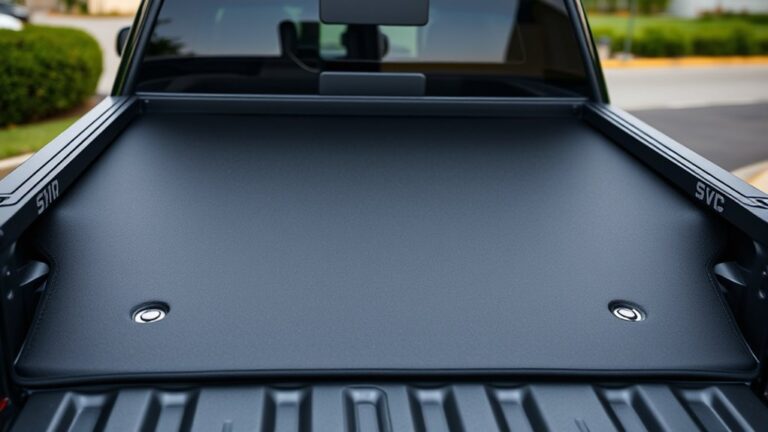
Choosing the right cleaner for your tonneau cover isn’t just a matter of preference—it’s essential for maintaining its durability and appearance. When it comes to what to use on tonneau cover materials, selecting the appropriate product can make all the difference.
You might think any soap will do, but harsh chemicals can quickly damage the material, causing cracks or fading. Understanding which products suit your cover’s specific fabric or finish can save you time and money down the road.
Let’s explore what you should avoid and what works best to keep your cover looking and functioning like new.
Key Takeaways
- Use mild, pH-balanced automotive soap or fabric-safe cleaners specific to the tonneau cover material for gentle cleaning.
- Apply silicone-based protectants on rubber seals to maintain flexibility and prevent cracking.
- Utilize UV-protectant sprays designed for vinyl, fabric, or hard surfaces to prevent fading and deterioration.
- Avoid harsh solvents like acetone or industrial degreasers that can weaken or discolor the cover material.
- Clean with soft-bristle brushes and microfiber cloths to prevent surface scratches and maintain appearance.
Why Cleaning and Protecting Your Tonneau Cover Matters
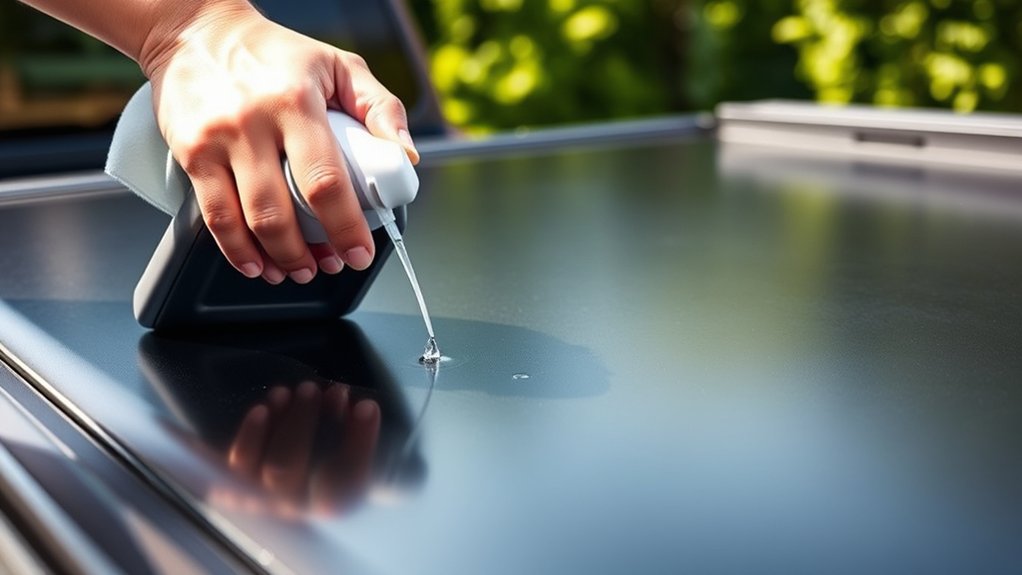
Why should you prioritize cleaning and protecting your tonneau cover? Maintaining it ensures durability and prevents damage from environmental factors like UV rays, rain, and dirt. Regular cleaning removes debris that can harbor pests, aiding in effective pest management around your truck bed.
Prioritize cleaning your tonneau cover to enhance durability and prevent pest-related damage from environmental factors.
Neglecting this can lead to infestations, which compromise both the cover and the cargo underneath. Additionally, protecting your tonneau cover preserves its material integrity, preventing cracks and fading.
Just as you care for your tires to maintain optimal performance and safety, your tonneau cover also requires consistent upkeep. Tire care prevents deterioration from road grime and weather. Similarly, the right cleaning products and protectants shield your tonneau cover, extending its lifespan and functionality.
Prioritize this maintenance to avoid costly replacements and ensure your truck bed stays secure and clean.
How to Tell Which Tonneau Cover You Have
How can you identify the type of tonneau cover on your truck? Start by examining the cover’s surface to identify material—vinyl, aluminum, or fiberglass. Next, determine model by noting how it opens: roll-up, folding, retractable, or hinged.
Manufacturer labels or documentation can also help confirm your findings.
| Cover Type | Identify Material | Determine Model |
|---|---|---|
| Soft Roll-Up | Vinyl or fabric | Rolls toward cab |
| Folding | Hard panels (vinyl/aluminum) | Folds in sections |
| Retractable | Aluminum slats | Slides back into canister |
| Hinged | Fiberglass or aluminum | Lifts like a truck hood |
Chemicals to Avoid on Your Tonneau Cover
You should avoid using harsh solvents on your tonneau cover, as they can weaken or degrade the material over time.
Strong alkali cleaners are especially damaging and can cause discoloration or brittleness. Sticking to mild, pH-balanced products ensures your cover stays in good condition longer.
Harsh Solvents Damage Material
Which chemicals can cause irreversible damage to your tonneau cover’s material? Harsh solvents like acetone, paint thinners, and industrial degreasers can severely damage materials used in tonneau covers, including vinyl, leather, and certain plastics.
These solvents break down the protective coatings and weaken the fabric’s fibers, leading to discoloration, brittleness, and eventual cracking. When you use harsh solvents, you risk compromising the cover’s durability and water resistance.
To preserve your tonneau cover’s integrity, avoid applying any cleaners or chemicals containing aggressive solvents. Instead, opt for mild, pH-balanced cleaners specially formulated for automotive fabrics.
Avoid Strong Alkali Cleaners
Why should you steer clear of strong alkali cleaners when maintaining your tonneau cover? These harsh chemicals can significantly compromise material safety, especially with frequent cleaning. Alkalis break down protective coatings, causing premature wear and discoloration.
Over time, this damage reduces the cover’s effectiveness and lifespan.
Avoid using strong alkali cleaners because they can:
- Strip UV-resistant layers, increasing sun damage
- Cause cracking or brittleness in vinyl or leather surfaces
- Accelerate fading and color loss
- Weaken seams and stitching adhesives
- Leave residue attracting dirt, requiring more frequent cleaning
To preserve your tonneau cover, choose mild, pH-neutral cleaners and moderate your cleaning frequency. This approach maintains material integrity and ensures long-term protection without risking damage from strong alkali substances.
Essential Tools and Materials for Cleaning Covers
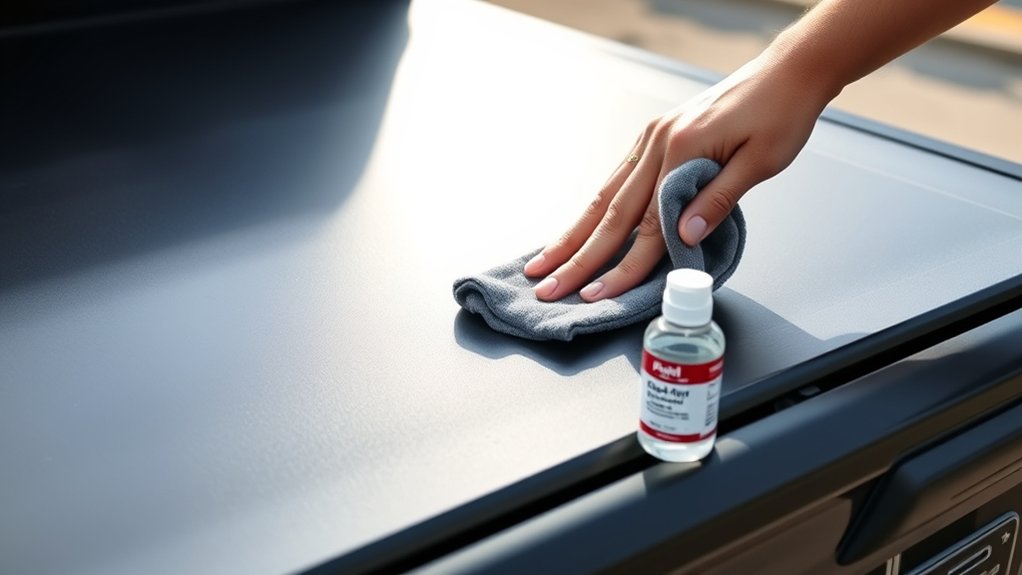
You’ll want to choose cleaning solutions that are gentle yet effective, specifically formulated for vinyl or fabric tonneau covers to avoid damage. Using the right tools, such as soft-bristle brushes and microfiber cloths, ensures thorough cleaning without scratching the surface.
Let’s explore which materials will help maintain your cover’s appearance and durability.
Cleaning Solutions Overview
Maintaining a tonneau cover requires selecting the right cleaning solutions and tools tailored to the material of your cover. Avoid diving into irrelevant topics or unrelated themes that don’t affect the cover’s longevity or appearance. Instead, focus on solutions designed for specific materials like vinyl, leather, or fabric.
Typically, mild soap-based cleaners and water form the base of effective cleaning. Harsh chemicals or abrasive products often damage surfaces and reduce durability.
Here’s a concise list of essential cleaning solutions:
- Mild liquid soap (non-detergent)
- Warm water mixture
- Vinyl or leather-specific cleaner
- Fabric-safe upholstery cleaner
- UV protectant sprays for added protection
Choosing the appropriate solution ensures you maintain your tonneau cover without causing damage or wear.
Recommended Cleaning Tools
How do you guarantee your tonneau cover stays clean without causing damage? Start with soft microfiber cloths or sponges that won’t scratch the surface. Avoid harsh brushes, which can compromise the cover’s integrity, especially if it’s vinyl or fabric designed for sun protection.
Use a gentle spray bottle to apply cleaning solutions evenly, minimizing oversaturation. For drying, opt for a clean, lint-free towel to prevent residue buildup. Consider tools with UV-resistant properties to reduce the UV impact during cleaning, preserving the cover’s longevity.
Avoid abrasive pads or harsh chemicals that can degrade materials sensitive to sun exposure. These essential tools help maintain your cover’s appearance while protecting it from environmental stressors, ensuring effective cleaning without compromising sun protection features.
Best Cleaners for Soft Tonneau Covers
Which cleaner works best for your soft tonneau cover depends largely on the material and level of dirt buildup. Soft covers often use vinyl or fabric, so choosing a cleaner that respects these materials is essential. You want to avoid products that lead to damage or residue, steering clear of unrelated topics like harsh chemicals used for hard covers.
Here are some discussion ideas to consider when selecting a cleaner:
- Mild soap and water solution
- Specialized vinyl cleaner with UV protection
- Fabric-safe upholstery cleaner
- pH-balanced automotive cleaner
- Soft brush or sponge for gentle scrubbing
Using these options ensures effective cleaning without compromising your cover’s integrity or appearance. Stick with cleaners designed for soft materials to maintain longevity and look.
Best Cleaners for Hard Folding Tonneau Covers
While soft tonneau covers require gentle cleaners tailored for vinyl or fabric, hard folding tonneau covers demand products suited to their rigid materials, typically fiberglass, aluminum, or hard plastic. You’ll want a cleaner that effectively removes dirt and grime without damaging the surface or compromising UV protection.
Look for quick foam questions on product labels to ensure easy application and thorough coverage, which helps prevent streaking. Avoid harsh chemicals that can degrade the finish or strip UV protective coatings. Mild, pH-balanced cleaners formulated for automotive plastics or painted surfaces work best.
Applying a UV-protective spray after cleaning can extend the cover’s lifespan by preventing fading and cracking. By choosing specialized cleaners designed for hard surfaces, you maintain both the appearance and durability of your tonneau cover.
Best Cleaners for Retractable Tonneau Covers
When caring for retractable tonneau covers, you’ll need cleaners that cater specifically to their unique materials and mechanisms. These covers often have delicate seals and tracks that require gentle cleaning to avoid damage and maintain smooth operation.
Addressing soundproofing concerns means choosing products that don’t degrade rubber or foam components. You also want to protect interior upholstery care by preventing harsh chemicals from causing residue or odors inside the truck bed.
The best cleaners for these covers typically include:
- Mild automotive soap with pH balance
- Non-abrasive vinyl and rubber cleaner
- Silicone-based protectant for seals
- Water-based spray designed for retractable mechanisms
- Microfiber cloths to avoid scratching
Using these ensures your retractable cover stays functional and looks great without compromising soundproofing or upholstery.
When and How Often to Clean and Protect Your Cover
How often you clean and protect your tonneau cover depends on factors like usage, weather conditions, and storage habits. If you frequently drive in harsh weather or dusty environments, cleaning and applying protectant every few weeks is ideal.
For occasional use and sheltered storage, a quarterly routine may suffice. Avoid engaging in irrelevant topic or unrelated discussion about unrelated vehicle parts; focus solely on the cover’s maintenance.
Regular cleaning removes dirt and debris that can degrade the material, while protection preserves flexibility and resists UV damage. Skipping or delaying care increases the risk of cracking or fading.
Tips to Keep Your Tonneau Cover Working and Looking Great
Why does maintaining your tonneau cover matter beyond just cleaning? Proper upkeep enhances its durability trends and ensures consistent material care, preventing premature wear and damage. To keep your cover working and looking great, follow these tips:
- Inspect seals and fasteners regularly to avoid leaks and secure fit.
- Apply UV protectant designed for your cover’s material to prevent fading.
- Remove debris promptly to avoid scratches and mildew buildup.
- Lubricate moving parts like hinges or locks to maintain smooth operation.
- Store the cover properly when not in use, avoiding prolonged exposure to harsh weather.
Frequently Asked Questions
Can I Use a Pressure Washer on My Tonneau Cover?
You can use pressure washing on your tonneau cover, but keep the pressure low to avoid damage.
It helps maintain weather protection by removing dirt and debris, ensuring your cover stays effective without compromising its material.
How Do I Fix Small Tears or Holes in the Cover?
You can fix small tears by cleaning the area, then applying a fabric repair kit or adhesive patch designed for tonneau covers. Make sure the surface is dry and follow the kit’s instructions for a durable, weatherproof seal.
Are There Specific Storage Tips for Winter Months?
Like a knight polishing his armor, you should clean and dry your tonneau cover thoroughly for effective winter prep. Use storage maintenance techniques. Store it in a cool, dry place and avoid folding to prevent creases or damage.
Will Covering My Tonneau Cover With a Tarp Help?
Covering your tonneau cover with a tarp can offer extra protection, but you should perform a sufficiency assessment first. Ensure the tarp’s material compatibility to avoid abrasion or moisture buildup that could damage the cover over time.
Can I Apply Sunscreen to Protect My Tonneau Cover?
You shouldn’t apply sunscreen to your tonneau cover; it lacks proper sun protection for materials. Instead, use specialized cleaning methods and UV protectants designed for covers to maintain durability and prevent damage from prolonged sun exposure.
Conclusion
You might think your tonneau cover can fend for itself against dirt and sun, but ignoring proper care is the fastest way to ruin it. Using harsh chemicals or skipping protection won’t make it last longer—it’ll do the opposite.
By choosing the right cleaners and protecting your cover regularly, you actually save time and money.
So, don’t let neglect be the unexpected enemy of your trusty cover’s longevity. Always remember what to use on tonneau cover to keep it looking and performing its best.