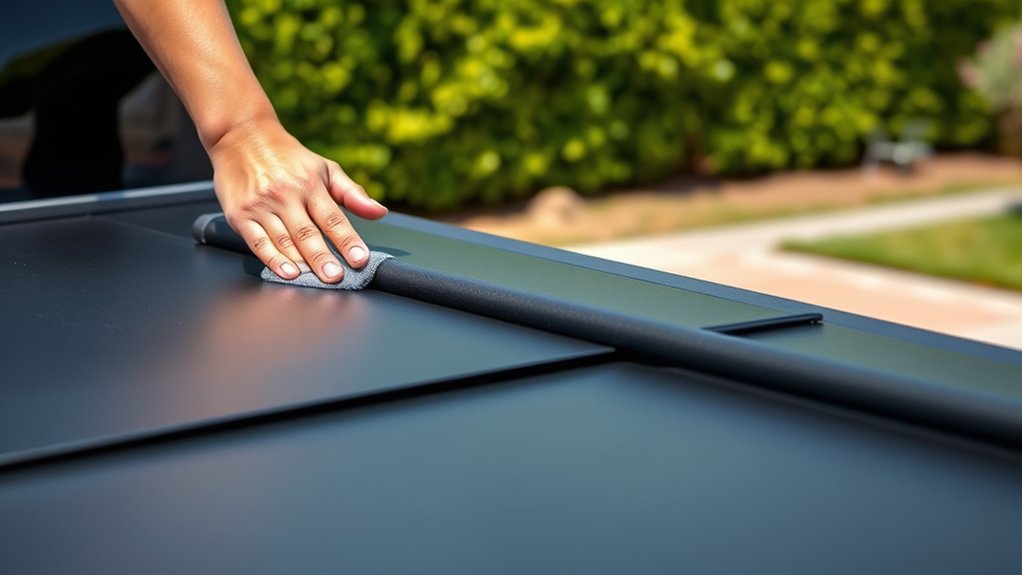
How to Care for a Tonneau Cover
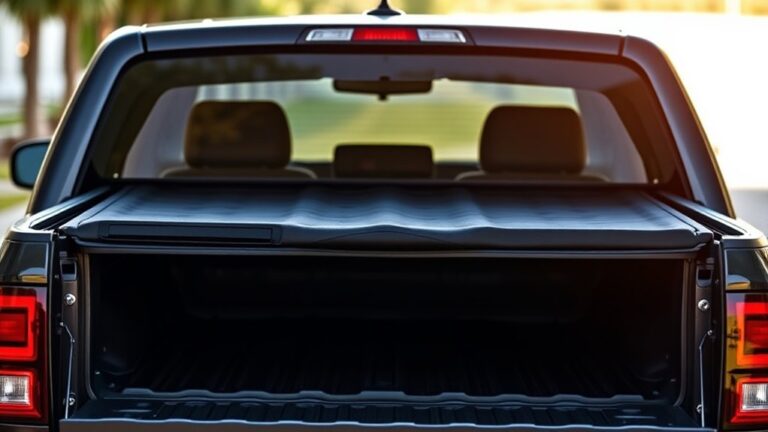
Think of your tonneau cover as a shield guarding your truck’s bed from the elements and wear. To keep that shield effective, you need a precise care routine tailored to its material and design. Proper tonneau cover maintenance is essential to prolong its life and functionality.
Ignoring small issues like dirt buildup or seal deterioration can lead to costly damage and reduced performance. Understanding the right cleaning methods, protective treatments, and maintenance schedules will ensure your cover stays durable and functional for years to come.
Key Takeaways
- Clean your tonneau cover regularly using mild soap and water appropriate for its material to prevent dirt buildup and surface damage.
- Remove stubborn stains gently with specialized cleaners and soft brushes, avoiding harsh chemicals that can degrade the cover.
- Apply UV-resistant protectants and waterproof sealants to maintain coating integrity and protect against sun and moisture damage.
- Inspect and maintain seals, latches, and fasteners to ensure a tight fit, reduce air drag, and improve fuel efficiency.
- Store the cover in a cool, dry place when not in use, cleaning and drying it thoroughly before off-season storage.
Why Clean Your Tonneau Cover Regularly
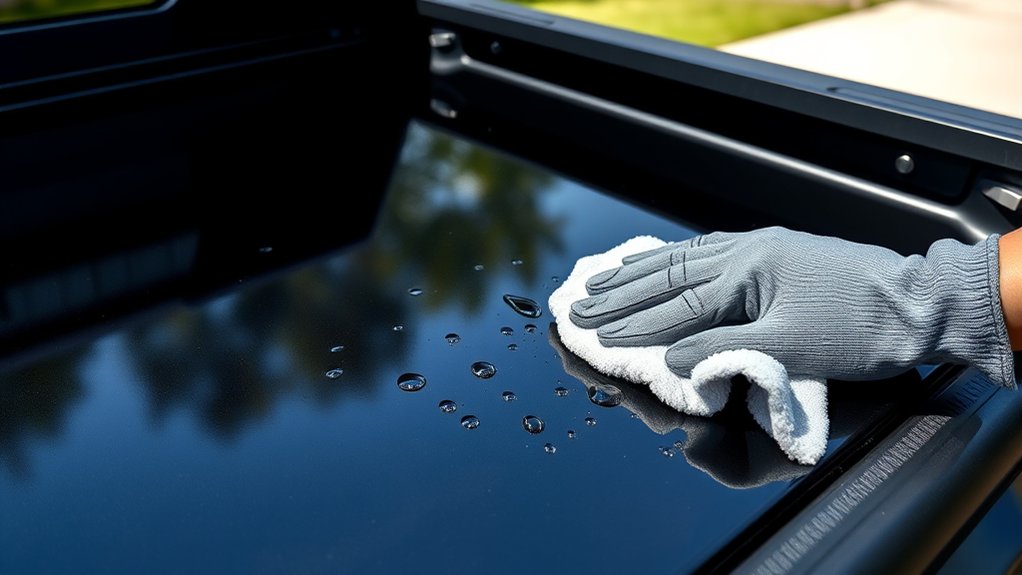
Why should you clean your tonneau cover regularly? Regular dust removal is essential to maintain the cover’s integrity and appearance. Dust particles can abrade the surface over time, leading to micro-scratches that degrade the material.
Regular dust removal protects your tonneau cover from surface abrasion and maintains its appearance over time.
Additionally, accumulated dirt can trap moisture, promoting mold or mildew growth that compromises the cover’s durability. Cleaning also ensures optimal UV protection performance.
Tonneau covers are designed with UV-resistant coatings to shield your truck bed, but these coatings can deteriorate if contaminants build up. By removing dust and debris consistently, you preserve the protective layer, preventing premature fading, cracking, or brittleness caused by prolonged sun exposure.
Maintaining a clean cover extends its lifespan, enhances its effectiveness, and keeps it looking professional, so you get the best value from your investment.
How to Clean Different Types of Tonneau Covers
How do you approach cleaning different types of tonneau covers to ensure their longevity and performance? Each material demands a tailored method to maintain its integrity and appearance.
To optimize your page layout and boost audience engagement, clearly segment your instructions:
- Vinyl Covers: Use mild soap and water; avoid harsh chemicals that degrade the surface.
- Aluminum Covers: Clean with a non-abrasive cleaner and soft cloth to prevent scratches.
- Fiberglass Covers: Employ specialized automotive cleaners; avoid excessive water pressure.
- Fabric Covers: Use a soft brush and fabric cleaner, then rinse thoroughly for mildew prevention.
How to Remove Stubborn Stains and Debris From Your Tonneau Cover
When stubborn stains and debris resist basic cleaning, you need targeted techniques to restore your tonneau cover’s surface. Use specialized stain removers formulated for the cover’s material to break down grime without causing damage.
Applying the right product with proper agitation ensures effective removal while preserving the cover’s integrity.
Effective Cleaning Techniques
What methods deliver the best results for removing stubborn stains and debris from your tonneau cover? Effective cleaning hinges on understanding material durability and avoiding common maintenance myths, like using harsh chemicals that degrade fabric or vinyl. Follow these precise steps:
- Rinse thoroughly with low-pressure water to loosen dirt without damaging the surface.
- Apply a mild soap solution specifically designed for tonneau materials, avoiding abrasive cleaners.
- Gently scrub with a soft-bristle brush, focusing on stained or embedded debris areas.
- Rinse again to remove all soap residue, preventing buildup that can attract dirt.
Sticking to these techniques ensures optimal stain removal while preserving your cover’s integrity. Remember, aggressive methods compromise material durability and accelerate wear, so always opt for gentle, targeted cleaning practices.
Best Stain Removal Products
Which stain removal products deliver the most effective results without compromising your tonneau cover’s material? Successful stain removal hinges on careful product selection tailored to your cover’s fabric—vinyl, canvas, or leather. Avoid harsh chemicals that degrade coatings or stitching.
Here’s a concise guide to optimal stain removal products:
| Product Type | Suitable Material |
|---|---|
| Vinyl Cleaner | Vinyl Covers |
| Mild Detergent | Canvas Covers |
| Leather Cleaner | Leather Covers |
Use soft brushes or microfiber cloths with these products for precise debris removal. Test any product on a small, inconspicuous area first to ensure compatibility. Consistent maintenance with the right stain removal agents preserves your tonneau cover’s integrity and extends its lifespan.
How to Protect Your Tonneau Cover From Sun and Weather Damage
How can you ensure your tonneau cover withstands prolonged exposure to harsh sun and unpredictable weather conditions? Implementing effective sun protection and weatherproofing strategies is essential to maintain its integrity and appearance.
Start by applying a UV-resistant protectant designed specifically for tonneau covers to prevent fading and cracking. Next, use a high-quality waterproof sealant to reinforce the cover’s resistance against moisture infiltration.
Begin with a UV-resistant protectant, then add a waterproof sealant to guard against sun damage and moisture.
Additionally, always store your vehicle in a shaded area or use a cover when parked for extended periods. Finally, regularly inspect and clean the cover to remove debris that can trap moisture and accelerate wear.
Follow these steps consistently:
- Apply UV-resistant protectant monthly
- Use waterproof sealant biannually
- Park in shaded or covered areas
- Clean and inspect regularly for damage
When to Lubricate Your Tonneau Cover and How to Do It
When should you lubricate your tonneau cover to ensure smooth operation and prevent premature wear? The optimal lubrication frequency depends on usage and environment but generally, you should lubricate every three to six months. If you drive frequently in dusty or wet conditions, increase lubrication frequency accordingly.
Use lubrication methods that apply a silicone-based spray or a dry lubricant to the hinges, latches, and seals, avoiding oil-based products that attract dirt. Before lubricating, clean these components thoroughly to remove debris. Apply lubricant sparingly to prevent buildup, then operate the cover several times to distribute the lubricant evenly.
Regular, precise lubrication extends the cover’s lifespan by reducing friction and preventing corrosion, ensuring reliable performance without compromising the material or mechanical parts.
How to Spot and Fix Common Tonneau Cover Problems
Why does your tonneau cover sometimes fail to operate smoothly or seal properly? Common issues include frame misalignment, worn seals, and surface damage. First, inspect the frame for bends or loose components. Second, check seals for cracks or hardening, which compromise waterproofing.
Common issues like frame misalignment, worn seals, and surface damage can cause your tonneau cover to malfunction.
Third, clean and lubricate hinges to restore smooth operation. Finally, examine the cover’s surface for abrasions or UV damage.
- Inspect frame alignment and tighten bolts.
- Replace damaged or hardened seals promptly.
- Lubricate moving parts with manufacturer-recommended products.
- Consider exploring aftermarket topcoats to enhance surface durability.
If problems persist, review your tonneau cover warranties to ensure coverage for repairs or replacements. Staying vigilant helps maintain optimal function and prolongs your cover’s lifespan.
Best Practices for Storing Your Tonneau Cover Off-Season
Properly storing your tonneau cover during the off-season prevents damage and extends its lifespan. Start by thoroughly cleaning and drying the cover to avoid mold and mildew.
Use specialized storage solutions, such as padded bags or custom racks, to maintain the cover’s shape and protect it from UV rays, dust, and temperature fluctuations. Store the cover in a cool, dry place away from direct sunlight and sharp objects.
If you plan to travel with the cover off, secure it properly to maintain travel safety and prevent accidental damage or loss. Avoid folding the cover tightly; instead, roll it to minimize creases.
Following these best practices ensures your tonneau cover remains functional and ready for use when the season returns.
How Proper Tonneau Cover Care Improves Your Truck’s Fuel Efficiency
You’ll improve your truck’s fuel efficiency by keeping your tonneau cover properly maintained, as this reduces air drag and optimizes aerodynamic flow. Ensuring the cover’s seal remains tight prevents turbulence that increases fuel consumption.
Additionally, regular cleaning and inspection help avoid unnecessary weight gain from dirt or damage that can negatively impact mileage.
Reducing Air Drag
Although many truck owners focus on engine performance to improve fuel efficiency, maintaining your tonneau cover plays an essential role in reducing air drag. A well-cared-for cover optimizes air flow over the truck bed, minimizing turbulence and drag forces that decrease fuel economy.
To ensure effective drag reduction:
- Keep the cover clean to prevent debris from disrupting smooth air flow.
- Regularly inspect for wrinkles or sagging that can increase drag.
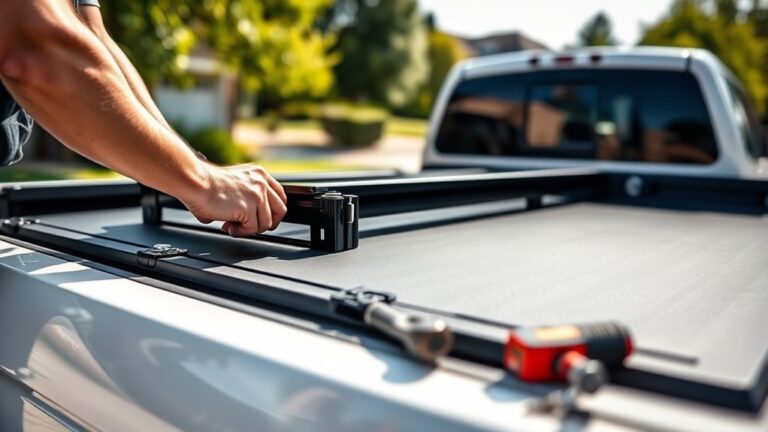
- Tighten fasteners to maintain a taut surface, reducing air pockets.
- Lubricate hinges or rails to ensure the cover closes flush, preserving aerodynamic efficiency.
Maintaining Cover Seal
How does maintaining a tight seal on your tonneau cover directly impact your truck’s fuel efficiency? A secure seal minimizes air turbulence and drag, allowing your truck to glide more aerodynamically. This reduces fuel consumption by preventing air from entering the bed and disrupting airflow.
To maintain this seal, regularly inspect the gasket and latch mechanisms for wear or damage. Clean the sealing surfaces with mild soap and water to prevent dirt buildup that can compromise the seal.
Proper seal maintenance also enhances paint protection by preventing dirt and moisture intrusion, which can cause corrosion and paint degradation. Neglecting seal upkeep may void your tonneau cover’s warranty, as manufacturers require evidence of routine care.
Keeping the seal intact ensures optimal performance, fuel savings, and longevity of both your cover and truck bed.
Minimizing Weight Increase
Why does the weight of your tonneau cover matter for fuel efficiency? Extra weight increases drag and fuel consumption, so minimizing it through proper care is essential.
Heavy duty materials often add durability but can also increase weight if not maintained correctly. Focus on weight reduction without sacrificing protection by following these steps:
- Regularly clean debris and moisture that add unnecessary weight.
- Inspect seals and fasteners to prevent sagging, which increases drag.
- Lubricate moving parts to maintain smooth operation and reduce strain.
- Store the cover properly when not in use to avoid warping or water retention.
Best Tools and Products for Tonneau Cover Maintenance
Selecting the right tools and products is essential for maintaining your tonneau cover’s durability and appearance. Avoid wasting time on irrelevant topics or unrelated subjects that don’t address specific care needs.
Start with a soft-bristle brush or microfiber cloth to gently remove dirt without damaging the surface. Use a pH-balanced cleaner designed for automotive vinyl or fabric covers to prevent chemical degradation.
For seals and hinges, apply a silicone-based lubricant to maintain flexibility and prevent cracking. Avoid harsh solvents or abrasive tools that can erode protective coatings.
Additionally, invest in a UV protectant spray approved for tonneau covers to shield against sun damage. Using these precise tools and products ensures optimal longevity and performance, keeping your cover functional and visually intact over time.
Frequently Asked Questions
Can I Install a Tonneau Cover Myself or Should I Hire a Professional?
You can choose DIY installation for cost savings and control, but professional installation ensures optimal security and flawless aesthetics.
Weigh DIY installation vs. professional installation carefully, prioritizing security needs over just looks for best results.
Will a Tonneau Cover Fit on All Truck Models?
A tonneau cover won’t fit all truck models universally. You’ll find universal fit options, but for precise alignment and durability, choosing vehicle specific alternatives tailored to your truck’s dimensions and features is essential for peak performance.
How Does a Tonneau Cover Affect My Truck’s Security?
A tonneau cover enhances your truck’s security by concealing cargo, but its effectiveness depends on installation considerations like proper fit and locking mechanisms.
Poor installation can weaken security implications, making your truck vulnerable to theft.
Are There Warranty Considerations for Tonneau Covers?
Picture your tonneau cover shielded by a warranty scope that protects against material defects. You’ll want to scrutinize coverage limitations carefully, ensuring it includes weather damage and hardware faults for prime, long-term security and performance.
Can Tonneau Covers Be Customized or Painted?
You can customize tonneau covers with custom finishes, but you must assure paint compatibility to avoid damage. Use automotive-grade paints designed for the cover’s material, and always prep the surface thoroughly to guarantee durable, professional results.
Conclusion
Caring for your tonneau cover isn’t just maintenance—it’s an investment in longevity and performance. Remember, “a stitch in time saves nine.” Regular cleaning and protecting against UV and weather damage are essential steps to keep your cover in top shape.
Additionally, lubricating hinges and ensuring proper storage help prevent costly repairs and maintain your truck’s efficiency. These simple habits go a long way in preserving the durability and functionality of your cover.
By following these detailed steps, you ensure your cover stays durable, functional, and visually sharp season after season. Don’t wait for problems—act proactively for optimal results with your tonneau cover.