What Does Tsi Stand for Volkswagen
Did you know that Volkswagen’s TSI engines can improve fuel efficiency by up to 20% compared to traditional engines? If you’re curious about what TSI stands for Volkswagen, you’re not alone. Understanding this acronym is key to appreciating the technology behind these powerful yet economical engines.
TSI stands for “Turbocharged Stratified Injection.” This advanced engine technology combines turbocharging and direct fuel injection to deliver impressive performance and fuel economy. There’s more to TSI than just a name—its design impacts performance in ways you might not expect.
By optimizing fuel combustion and boosting power output, TSI engines offer a dynamic driving experience without sacrificing efficiency. This balance is why TSI has become a crucial part of Volkswagen’s lineup, appealing to drivers who want both power and economy.
Key Takeaways
- TSI stands for “Turbocharged Stratified Injection” in Volkswagen engines.
- It combines turbocharging with direct fuel injection for improved engine performance.
- TSI engines focus on compact design with high power output and fuel efficiency.
- Turbocharging boosts power on demand while direct injection ensures precise fuel delivery.
- Volkswagen uses TSI technology in models like Golf, Jetta, Tiguan, and Passat for balanced performance.
What Does TSI Stand For in Volkswagen Engines?
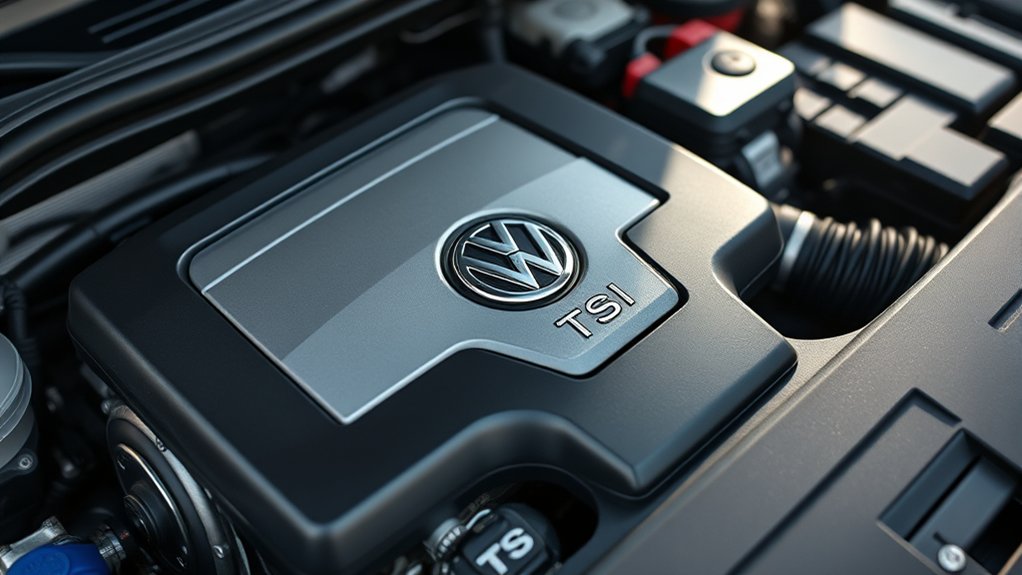
What exactly does TSI stand for in Volkswagen engines? TSI refers to “Turbocharged Stratified Injection,” a technology Volkswagen uses to optimize engine performance. Understanding TSI naming helps you recognize how VW differentiates its engine variants.
Each variant combines turbocharging with direct fuel injection, enhancing power output while maintaining fuel efficiency. When you look at Volkswagen’s lineup, TSI engines vary in displacement and tuning, catering to different driving needs.
This naming convention signals a focus on compact, high-performance engines that deliver more torque and responsiveness than traditional naturally aspirated engines. By grasping the TSI naming system, you can better appreciate how Volkswagen classifies these engine variants, emphasizing a blend of power and advanced fuel delivery technology without diving into how they balance power and efficiency.
How Volkswagen’s TSI Engines Balance Power and Efficiency
Volkswagen’s TSI engines achieve a careful balance between power and efficiency by combining turbocharging with direct fuel injection. This synergy allows you to enjoy turbocharged efficiency without sacrificing performance, thanks to a compact displacement design that maximizes output from a smaller engine.
| Feature | Benefit |
|---|---|
| Turbocharging | Increases power on demand |
| Direct Fuel Injection | Enhances fuel atomization |
| Compact Displacement | Reduces engine weight, improves efficiency |
You’ll find that this balance helps reduce fuel consumption while delivering responsive acceleration. The compact displacement keeps the engine lightweight, which lowers emissions and improves handling. Overall, Volkswagen’s TSI engines give you an efficient, powerful driving experience by smartly combining these technologies.
Why TSI Engines Boost Performance and Fuel Efficiency
How do TSI engines manage to deliver both impressive performance and remarkable fuel efficiency? They use advanced turbocharged efficiency to extract more power from smaller engine displacements, meaning you get strong acceleration without guzzling fuel.
By carefully optimizing performance tuning, Volkswagen ensures the engine responds quickly while maintaining smooth operation. This balance allows you to enjoy spirited driving and lower emissions simultaneously.
Volkswagen’s finely tuned engines deliver quick response and smooth drive with reduced emissions.
The turbocharger forces extra air into the combustion chamber, improving combustion quality and power output. Meanwhile, precise fuel injection and engine management systems adjust parameters in real-time to maximize efficiency under varying conditions.
As a result, TSI engines give you the best of both worlds: energetic performance when you want it and fuel savings when you don’t. This synergy sets TSI apart from traditional engines.
Key Components That Make TSI Engines Unique
The impressive balance of power and efficiency in TSI engines comes from several innovative components working together. When you explore Volkswagen’s engine tech, you’ll find that turbocharging, direct fuel injection, and variable valve timing are key.
These elements, often referenced in brand jargon, optimize combustion and boost performance without sacrificing fuel economy. Understanding these parts helps you appreciate why TSI engines stand out.
| Component | Function | Benefit |
|---|---|---|
| Turbocharger | Increases air intake | More power, less lag |
| Direct Injection | Injects fuel directly | Precise fuel use, cleaner |
| Variable Valve Timing | Adjusts valve operation | Improved efficiency |
This synergy is what makes TSI engines uniquely effective.
Volkswagen Models With TSI Engines Today
Which Volkswagen models feature TSI engines today? You’ll find TSI technology powering several popular models, including the Golf, Jetta, Tiguan, and Passat. These engines combine direct fuel injection with turbocharging to deliver impressive turbo response and enhanced fuel economy.
When you drive a Volkswagen with a TSI engine, you’ll notice quick acceleration without sacrificing efficiency, making it ideal for both city driving and highway cruising. The turbo response ensures power is available when you need it, while the engine’s design maintains optimal fuel consumption.
Whether you prioritize performance or economy, TSI engines offer a balanced solution across Volkswagen’s lineup. So, choosing a TSI-equipped model means you won’t have to compromise on power or fuel savings.
Frequently Asked Questions
How Often Should TSI Engines Have Their Timing Belts Replaced?
You should replace your timing belt every 60,000 to 100,000 miles to avoid costly repairs.
Regular timing belt maintenance helps control maintenance costs and guarantees your engine runs smoothly without unexpected failures.
Are TSI Engines More Expensive to Maintain Than Non-Tsi Engines?
You’ll spend around 10-15% more maintaining TSI engines due to advanced turbo tech. Understanding TSI terminology helps, as VW engine history shows these powerful units demand pricier parts but offer better performance and efficiency overall.
Can TSI Engines Run on Alternative Fuels Like Ethanol?
You can run TSI engines on ethanol blends, but motor reliability depends on fuel quality and mixture.
For two-word discussion ideas, consider “fuel compatibility” and “engine longevity” to evaluate performance differences with alternative fuels like ethanol.
Do TSI Engines Require Premium Gasoline for Optimal Performance?
You don’t always need premium gasoline for TSI engines, but using fuel with higher octane can boost performance.
Around 90% of drivers notice smoother acceleration and better fuel efficiency when they choose higher fuel octane.
What Common Issues Do Volkswagen TSI Engines Face Over Time?
You’ll notice TSI engines sometimes face issues like carbon buildup and high-pressure fuel pump failures. Don’t fall for maintenance myths; proper care boosts fuel efficiency and reliability ratings. This helps you avoid costly repairs over time.
Conclusion
You might expect a small engine to struggle, but Volkswagen’s TSI technology flips that idea on its head—delivering surprising power without guzzling fuel. By blending turbocharging with direct injection, TSI engines give you quick acceleration alongside impressive efficiency.
So, you don’t have to choose between performance and economy; TSI lets you enjoy both. In your Volkswagen, that means a drive that’s thrilling yet responsible, proving smart engineering can truly change the game.
Understanding what TSI stands for Volkswagen highlights how this technology balances power and efficiency perfectly, making every drive more enjoyable and economical.