How to Use Oil Filter Wrench
You’ll need to prepare your vehicle, select the right oil filter wrench, and apply steady force to remove the oil filter effectively. Each step requires attention to detail and proper technique to avoid damage or injury.
Understanding how to secure the wrench and turn it correctly sets the foundation for a smooth process. Before you start, consider the specific challenges you might face with tight or stubborn filters and how to handle them.
Key Takeaways
- Ensure the engine is cool, and the vehicle is securely elevated with a drain pan placed beneath the oil filter.
- Select the correct oil filter wrench type based on filter size and surface, such as strap, cap, or claw wrench.
- Position the wrench securely around the filter, aligning it properly to prevent slipping during removal.
- Turn the wrench counterclockwise with steady, controlled force while maintaining a firm grip and stance.
- After loosening, remove the filter by hand, clean the mounting surface, and prepare for new filter installation.
Preparing Your Vehicle and Workspace for Oil Filter Wrench Use
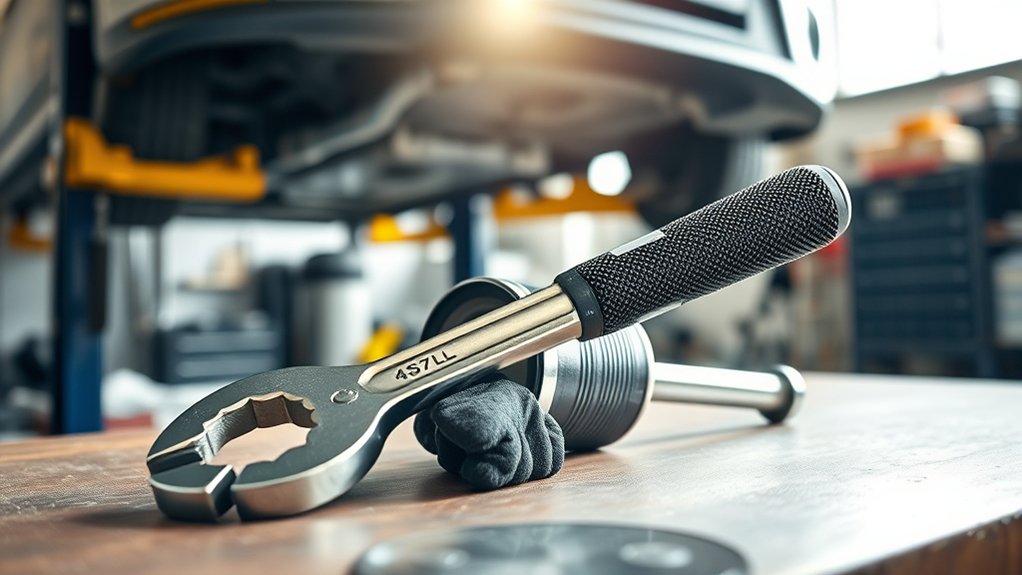
Before you start using the oil filter wrench, how should you prepare your vehicle and workspace? First, ensure the engine is cool to avoid burns. This is essential for preparation safety.
Always make sure the engine is cool before beginning to use the oil filter wrench for safety.
Park your car on a flat, stable surface and engage the parking brake to prevent movement. Next, elevate the vehicle securely using jack stands rather than relying solely on a jack.
Organize your workspace by clearing the area beneath the car, placing a drain pan under the oil filter to catch any spills. Keep your oil filter wrench, gloves, and rags within easy reach.
Proper workspace organization minimizes risks and streamlines the oil change process. Taking these steps guarantees a safer, more efficient experience when you begin loosening the oil filter with your wrench.
Choosing the Right Oil Filter Wrench for Your Car
Once your vehicle and workspace are properly prepared, selecting the correct oil filter wrench becomes the next step. Choosing wrong can damage the filter or wrench, complicating removal. First, verify filters compatibility by checking your car’s manual or the filter’s specifications.
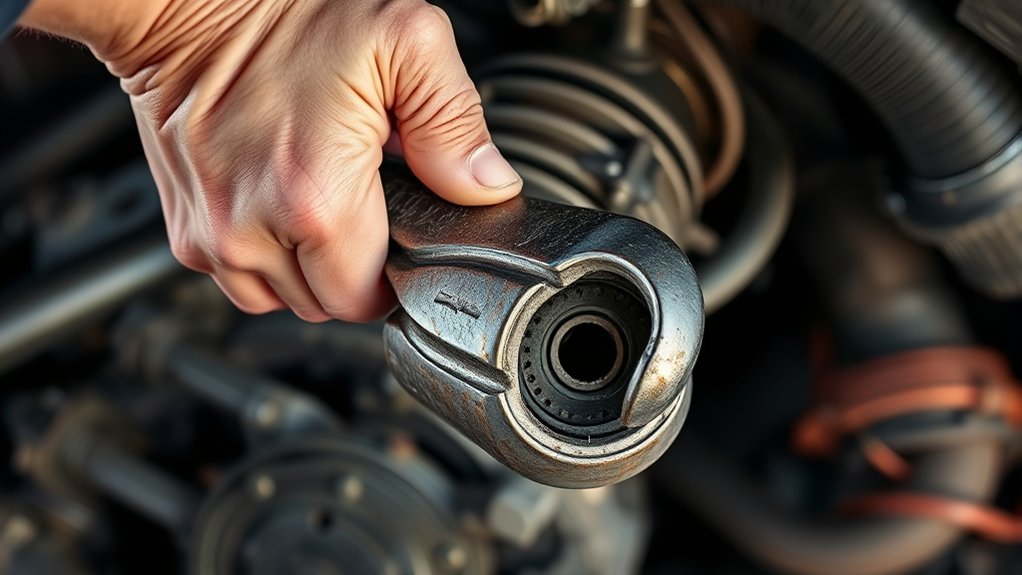
Oil filter wrenches come in various types: strap, cap, claw, and pliers style. Strap wrenches suit larger, smooth-surfaced filters, while cap wrenches fit specific filter sizes precisely. Claw wrenches adapt to multiple sizes but require adequate clearance.
Pliers-style wrenches offer adjustable grip but may deform filters if over-tightened. Match the wrench type to your filter’s size, shape, and clearance constraints to ensure effective torque application. Prioritize durability and grip quality to avoid slippage or damage during use.
Using an Oil Filter Wrench Safely, Step-by-Step
How exactly do you use an oil filter wrench without risking injury or damaging components? First, ensure wrench compatibility by selecting one that fits your oil filter size precisely. Position the wrench securely around the filter, aligning it to avoid slipping.
Grip firmly and turn counterclockwise to loosen the filter, applying steady, controlled force. Maintain a firm stance and use gloves to protect your hands. As you unscrew the filter, tilt it slightly to capture residual oil, carefully avoiding spillage onto engine parts or the floor.
Once loosened, remove the filter by hand. Clean the mounting surface thoroughly before installing a new filter. Following these steps ensures safe removal, protects your vehicle’s components, and minimizes mess during your oil change process.
Tips for Removing Stubborn or Tight Oil Filters
After loosening the oil filter with your wrench, you might encounter filters that remain tightly stuck due to heat, grime, or over-tightening. Addressing challenging hard to remove filters requires specific techniques to avoid damage or injury. Here are key tips to consider:
- Apply penetrating oil around the filter base to loosen grime buildup and reduce friction.
- Use a strap-style or chain oil filter wrench for better grip on rounded, stubborn filters.
- Tap the filter gently with a rubber mallet to break the seal without denting the canister.
- Avoid common oil filter wrench misconceptions like applying excessive force, which can worsen the situation.
These discussion ideas help clarify proper removal methods and prevent frustration when facing tough filters.
Cleaning Up and Replacing Your Oil Filter
Where should you focus your attention when cleaning up and replacing your oil filter? Start by applying proper cleaning techniques to the filter mounting surface. Use a lint-free cloth to remove old oil, dirt, and gasket remnants, ensuring a clean, smooth surface for the new filter.
Focus on cleaning the filter mounting surface with a lint-free cloth to ensure a smooth, debris-free area.
Inspect the filter gasket area carefully for damage or debris. Next, organize your workspace efficiently: keep the new filter, oil, and tools within easy reach to avoid unnecessary movement that can cause spills or contamination.
When installing the new filter, lubricate the gasket lightly with fresh oil to ensure a proper seal. Screw the filter by hand until snug, then tighten according to manufacturer specifications, avoiding over-tightening.
Proper cleaning and workspace organization will prevent leaks and ensure optimal filter performance.
Frequently Asked Questions
Can an Oil Filter Wrench Damage My Oil Filter?
Yes, using an incompatible oil filter wrench or one with poor wrench durability can damage your oil filter. Always ensure oil filter compatibility and apply controlled torque to avoid crushing or deforming the filter during removal or installation.
How Often Should I Replace My Oil Filter Wrench?
Don’t wait for the other shoe to drop. Replace your oil filter wrench every 2-3 years or sooner if you notice wear.
Regularly check material durability and follow maintenance intervals to assure reliable, safe performance during use.
Are Oil Filter Wrenches Compatible With All Oil Filter Brands?
Oil filter wrenches aren’t universally compatible due to brand specific fit requirements. You’ll face incompatibility concerns if the wrench doesn’t match filter size or design.
Always verify fit specifications before selecting your tool.
Can I Use an Oil Filter Wrench Without Changing the Oil?
You can use an oil filter wrench without changing the oil, but ensure oil filter compatibility to avoid damage. Optimize wrench leverage carefully to prevent stripping the filter or housing during removal or inspection.
What Materials Are Oil Filter Wrenches Typically Made From?
You know, “the devil is in the details.” Oil filter wrenches use materials overview like steel, aluminum, or plastic for durability and grip.
Ensure brand compatibility, as some materials suit specific filters better for efficient removal.
Conclusion
Now that you’ve mastered using your oil filter wrench, think of it as your trusty key opening smooth engine performance. With the right tool in hand and careful steps followed, you’ll effortlessly break free from stubborn filters, ensuring a clean, efficient oil change.
Every twist you make is a step toward prolonging your engine’s life—precision and patience are your allies. Keep your workspace prepared and your technique sharp, and you’ll drive with confidence every time.
Remember, mastering how to use an oil filter wrench is essential for maintaining your vehicle’s health and achieving hassle-free oil changes.