How Long for a Car Battery Charger to Fill
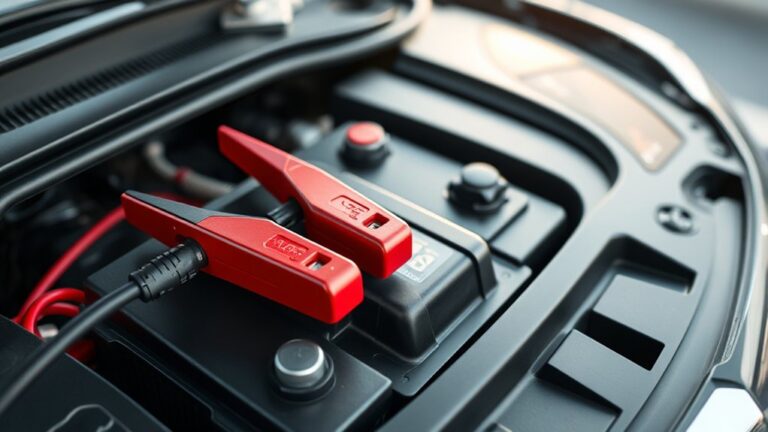
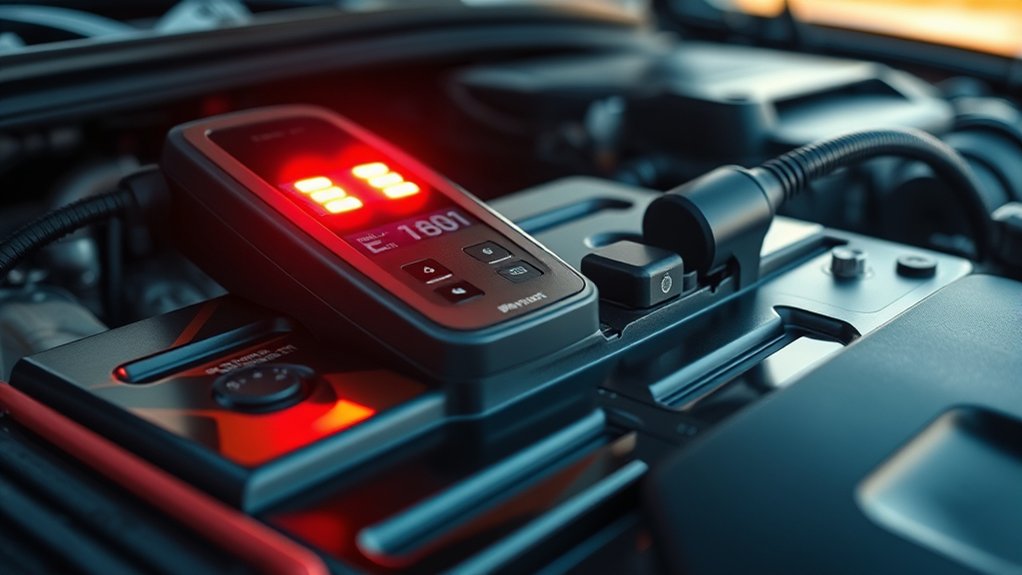
If you’ve ever wondered how long for a car battery charger to fill a battery, the answer isn’t straightforward. Charging time depends on several factors, including battery capacity, charger output, and the battery’s condition.
Using the wrong charger or an improper charging method can lead to inefficiency or even damage to the battery. Understanding these variables is key to optimizing charging time and maintaining battery health.
It’s worth examining how different chargers and battery types impact the charging process to ensure the best results.
Key Takeaways
- Typical car battery charging takes 4 to 24 hours with a conventional charger depending on battery capacity and charge level.
- Fast chargers can fill a battery in 1 to 2 hours but may reduce battery lifespan if used frequently.
- Charging time is estimated by dividing battery capacity (Ah) by charger output (A), e.g., 60Ah battery with 6A charger ≈ 10 hours.
- Battery condition affects charging speed; older or sulfated batteries take longer and may not fully charge.
- Always follow manufacturer guidelines and use compatible chargers to ensure safe and efficient charging.
How Long Does It Take to Charge a Car Battery?
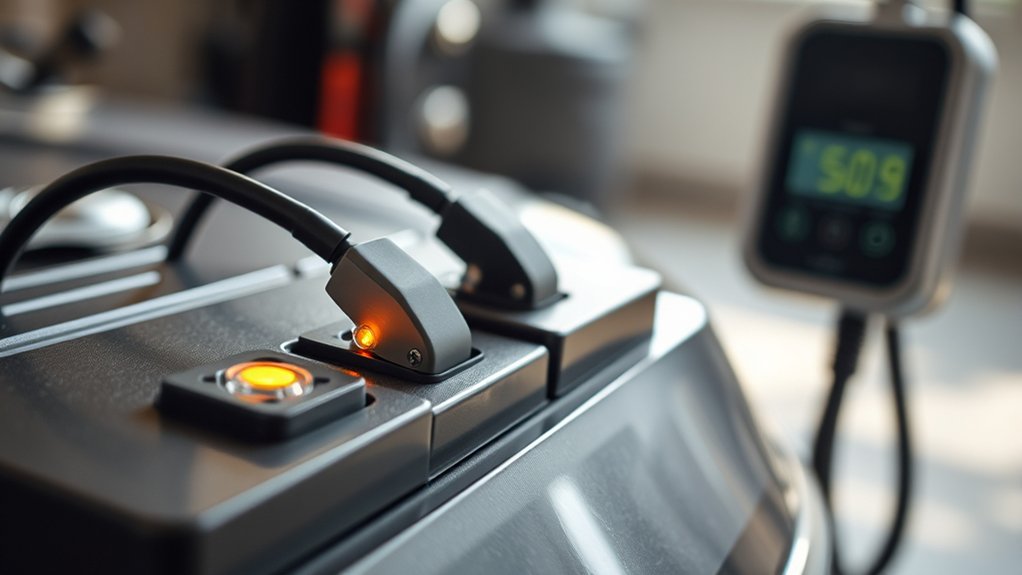
How long does it take to charge a car battery? Typically, it depends on the battery’s capacity and charger output. A standard 12-volt car battery usually requires 4 to 24 hours to fully charge using a conventional charger.
Faster chargers can reduce this to 1-2 hours but may risk battery longevity. Proper charging ensures your vehicle maintains optimal gas mileage and fuel efficiency by supporting efficient engine starts and electrical system operation.
If your battery is partially discharged, charging time shortens proportionally. Keep in mind, maintaining a fully charged battery prevents strain on your alternator, indirectly preserving fuel efficiency.
Always follow manufacturer guidelines to avoid overcharging, which can damage the battery and affect your car’s overall performance.
What Affects Car Battery Charging Time?
You’ll notice charging time varies based on your battery’s capacity, with larger batteries requiring more time. The type of charger you use also plays a critical role, as different chargers deliver current at varying rates.
Additionally, the battery’s condition affects how quickly it accepts a charge, so a worn or damaged battery will take longer to fill.
Battery Capacity Impact
A car battery’s capacity directly influences the time required to recharge it. Larger capacity batteries hold more charge, extending the charging duration. You need to balance charging speed with battery lifecycle and charging safety to avoid damage.
Overcharging or rapid charging can shorten lifespan or cause hazards.
| Battery Capacity (Ah) | Approx. Charging Time (Hours) |
|---|---|
| 40 | 2 – 3 |
| 60 | 3 – 5 |
| 80 | 4 – 6 |
| 100 | 5 – 7 |
| 120 | 6 – 8 |
Always follow manufacturer guidelines for optimal charging to maintain battery health and ensure charging safety.
Charger Type Differences
Why does charging time vary so much between different chargers? It mainly depends on the charger’s design and output current. A high-amp fast charger delivers more current, reducing charge time significantly, while a trickle charger supplies low current, extending the process.
Chargers with smart technology optimize voltage and current based on battery condition, improving efficiency and preventing overcharging. Some chargers support battery recycling by conditioning old batteries, which can affect overall charging cycles and time.
Additionally, engine noise may influence your perception of charging speed, as a running engine can mask subtle sounds from the charger. Understanding these charger type differences helps you select the right device, balancing charging speed, battery health, and operational environment for optimal performance.
Battery Condition Effects
While charger type plays a significant role in charging time, the battery’s condition directly impacts how quickly it accepts and holds a charge. Battery aging reduces the internal capacity and increases resistance, meaning older batteries take longer to charge and may never reach full capacity.
Corrosion or sulfation on battery plates further slow charging by impeding current flow. You need to assess battery health before charging to optimize time and ensure charging safety. Damaged or degraded batteries can overheat or leak acid during charging, posing safety risks.
Regular maintenance and testing help identify issues early, allowing you to adjust charging protocols or replace the battery as needed. Ultimately, a well-maintained battery charges faster and safer, minimizing downtime and extending battery life.
How Car Battery Chargers Work
Because car battery chargers convert electrical energy into chemical energy, they restore your battery’s charge by supplying a controlled current. When you connect the charger, it delivers a steady flow of electrons to reverse the chemical reactions that occur during battery discharge.
The charger’s voltage and current are regulated to prevent overcharging, which can damage the battery. Understanding this process helps you avoid unrelated concepts like assuming the charger directly replenishes mechanical energy or irrelevant topics such as external power sources unrelated to the battery’s chemistry.
Chargers typically monitor voltage levels and adjust output accordingly, ensuring safe and efficient charging. By controlling current flow, they reverse sulfation and restore electrolyte balance, bringing your battery back to an optimal charge state without causing harm.
Slow Trickle vs. Fast Smart Chargers: Charging Times Explained
You’ll notice that slow trickle chargers deliver a steady, low current, which can take hours to fully charge your battery but helps maintain its health.
Fast smart chargers, on the other hand, adjust their output to speed up charging while protecting against overcharging and battery damage.
Understanding these differences helps you choose the right charger based on how quickly you need your battery ready and how you want to preserve its lifespan.
Trickle Charger Charging Speed
How quickly can a trickle charger fill your car battery? Trickle chargers supply a low, steady current, ideal for maintaining batteries rather than rapid charging. They usually take 12 to 24 hours or more to fully charge a depleted battery.
Despite curious myths suggesting otherwise, trickle chargers won’t overcharge if used correctly, respecting proper charging etiquette.
| Battery Capacity (Ah) | Charging Current (A) | Estimated Time (Hours) |
|---|---|---|
| 40 | 1 | 12-16 |
| 50 | 1 | 15-20 |
| 60 | 2 | 10-15 |
| 70 | 2 | 12-18 |
| 80 | 3 | 8-12 |
Trickle chargers excel in battery maintenance but aren’t designed for fast fills.
Fast Smart Charger Benefits
Why settle for slow charging when fast smart chargers offer significant advantages? These chargers optimize charging by adjusting current and voltage in real-time, reducing total fill time dramatically compared to trickle chargers.
You’ll appreciate how fast smart chargers prepare batteries for long term storage by maintaining optimal charge levels without overcharging, preventing capacity loss. They also support battery recycling efforts by ensuring batteries reach full charge efficiently, extending lifecycle and reducing waste.
Unlike slow trickle chargers, smart chargers provide diagnostic feedback, alerting you to battery health and faults early. When you need quick turnaround times or must manage multiple batteries, fast smart chargers deliver precision and speed, making them an essential tool for maintaining battery performance and sustainability.
Battery Health Considerations
Battery longevity hinges on the charging method you choose, as slow trickle chargers and fast smart chargers impact battery health differently. Slow trickle chargers deliver a low, steady current, minimizing stress on the battery and supporting optimal battery maintenance.
This method reduces the risk of overheating and sulfation, prolonging battery life despite longer charging times. In contrast, fast smart chargers optimize charging efficiency by adjusting current and voltage dynamically, reducing charge time while preventing overcharging.
However, excessive use of rapid charging can accelerate wear if not properly managed. To maximize battery health, balance charging speed with your battery’s specifications. Regularly monitor voltage and temperature during charging to ensure neither method compromises your battery’s long-term performance and reliability.
Typical Charging Times by Battery Type
When charging your car’s power source, the time required varies substantially depending on the battery type. Lead-acid batteries typically take 4 to 12 hours to reach full charge, while AGM (Absorbent Glass Mat) batteries often charge faster, usually within 2 to 6 hours.
Lithium-ion batteries, common in electric vehicles, can recharge in as little as 1 to 3 hours with proper chargers. Avoid common charging myths, such as overcharging improving battery life; it risks damaging the battery and compromising battery safety.
Always use chargers compatible with your battery chemistry to prevent overheating or reduced capacity. Understanding these timeframes helps you optimize charging without risking battery health or safety, ensuring reliable performance and longevity.
How to Estimate Your Car Battery’s Charging Time
How long does it take to fully charge your car battery? To estimate charging time, divide your battery’s capacity (Ah) by the charger’s output current (A). For example, a 60Ah battery with a 6A charger takes roughly 10 hours.
Remember, actual times vary due to battery condition and charger efficiency.
| Battery Capacity (Ah) | Charger Current (A) | Estimated Time (hours) |
|---|---|---|
| 40 | 4 | 10 |
| 60 | 6 | 10 |
| 80 | 8 | 10 |
Avoid common DIY mistakes like overcharging or using incompatible chargers. Always prioritize battery safety by monitoring voltage and temperature to prevent damage or hazards during charging.
Tips to Speed Up Car Battery Charging Safely
Looking to charge your car battery faster without risking damage? First, ensure the alternator is dry; moisture can cause short circuits and reduce charging efficiency. Use a high-quality charger with adjustable current settings to safely increase the charge rate, but never exceed the manufacturer’s recommendations.
Avoid exceeding jump start limits, as excessive attempts can damage your battery and electrical system. Disconnect non-essential electrical loads to maximize charging current to the battery. Maintain good cable connections, cleaning terminals to reduce resistance and improve current flow.
If using a rapid charger, monitor battery temperature closely to prevent overheating. Finally, avoid charging in extreme temperatures, which can impair battery chemistry and reduce charging speed. These steps help you safely reduce charging time without risking battery or alternator damage.
How to Know When to Replace Your Car Battery
Wondering if your car battery still holds enough charge to perform reliably? Proper battery maintenance helps extend its life, but recognizing when to replace it is crucial. Don’t fall for charging myths that suggest a weak battery will fully recover after charging. Instead, monitor voltage and physical signs.
| Indicator | What It Means |
|---|---|
| Voltage below 12.4 V | Battery is weak or failing |
| Slow engine crank | Battery can’t hold charge |
| Corroded terminals | Poor connection affects charge |
| Battery age over 3-5 yrs | Near end of lifespan |
| Swollen battery case | Internal damage, replace ASAP |
If you notice these signs despite regular battery maintenance, it’s time to replace your battery to avoid unexpected failures.
Frequently Asked Questions
Can I Charge a Car Battery With a Portable Solar Charger?
Yes, you can charge a car battery with a portable solar charger, but your solar efficiency depends on panel placement and sunlight intensity. Optimize placement to maximize energy capture for effective charging, especially during peak sun hours.
Is It Safe to Charge a Car Battery Indoors?
You can safely perform indoor charging if you ensure proper ventilation and avoid sparks or flames. Prioritize battery safety by monitoring temperature and following manufacturer guidelines, preventing hazardous gas buildup and potential battery damage during indoor charging.
How Often Should I Charge a Car Battery to Maintain It?
Like watering a plant, you should charge your car battery every few weeks to ensure optimal battery maintenance. Regular two word discussion ideas like “preventive charging” keep your battery healthy and extend its lifespan effectively.
Can a Car Battery Charger Damage My Vehicle’s Electronics?
A car battery charger won’t damage your vehicle’s electronics if it has proper electrical protection. Always use a charger with built-in safeguards like voltage regulation and reverse polarity protection to ensure safe, stable charging without harm.
What Should I Do if My Battery Won’T Charge at All?
If your battery won’t charge at all, don’t panic. Perform a two-step diagnostic: check voltage levels and connection integrity.
Use a multimeter and inspect terminals for corrosion, ensuring proper two-phase troubleshooting to identify faults accurately.
Conclusion
Charging your car battery can take anywhere from 1 to 12 hours depending on the charger and battery type. For example, a 40–60 Ah battery with a 4–6 A charger typically needs about 10 hours. Knowing this helps you avoid overcharging or damage.
Using the right charger and estimating time precisely ensures efficiency and battery health. This approach saves you from unexpected breakdowns and costly replacements. Always monitor your battery’s condition closely during charging.
Understanding how long for a car battery charger to fill is essential for maintaining your vehicle’s reliability and extending battery life.