How Does 2019 f150 Hill Decent Controll Work
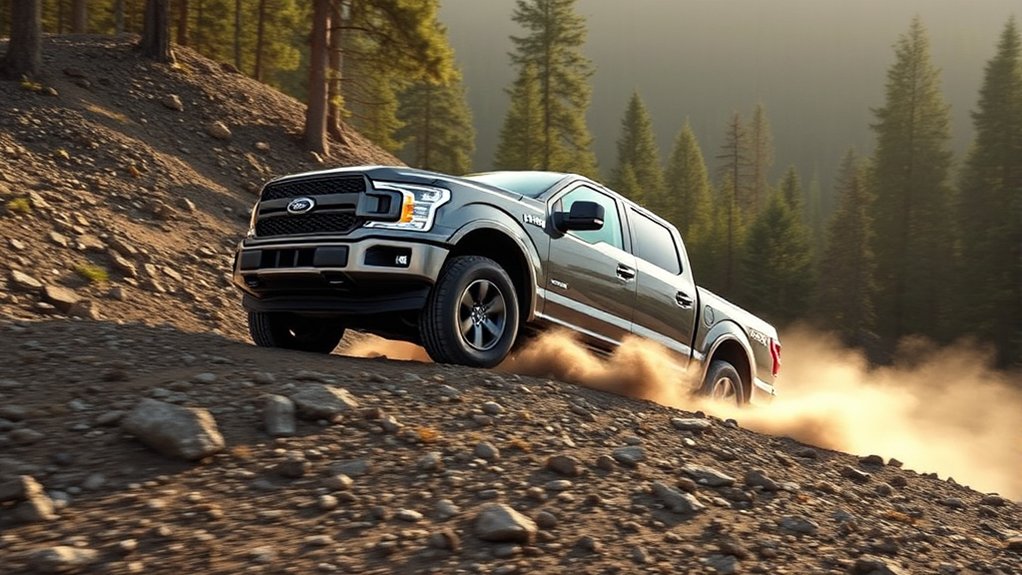
When you tackle steep descents in your 2019 Ford F-150, Hill Descent Control works to manage speed and stability without your direct braking input. This feature uses a network of sensors and the vehicle’s ECU to precisely modulate brake pressure on individual wheels while adjusting engine torque.
Understanding how these systems collaborate reveals why Hill Descent Control enhances safety and control on challenging terrain. Yet, there’s more to how and when it activates that you should know.
Key Takeaways
- The 2019 F-150 Hill Descent Control automatically manages braking to maintain a steady speed on steep downhill slopes without driver brake input.
- It uses wheel speed sensors and vehicle pitch data to modulate brake pressure individually and prevent wheel lockup or skidding.
- Activation requires engaging the system before descent at low, steady speeds, often integrated with cruise control for automatic braking force.
- The system works independently from traction control, coordinating engine torque and brake pressure for smooth, controlled downhill navigation.
- Manual override is possible via brake or accelerator pedals, allowing driver speed adjustments while maintaining optimal descent stability.
What Is Hill Descent Control on the 2019 Ford F-150
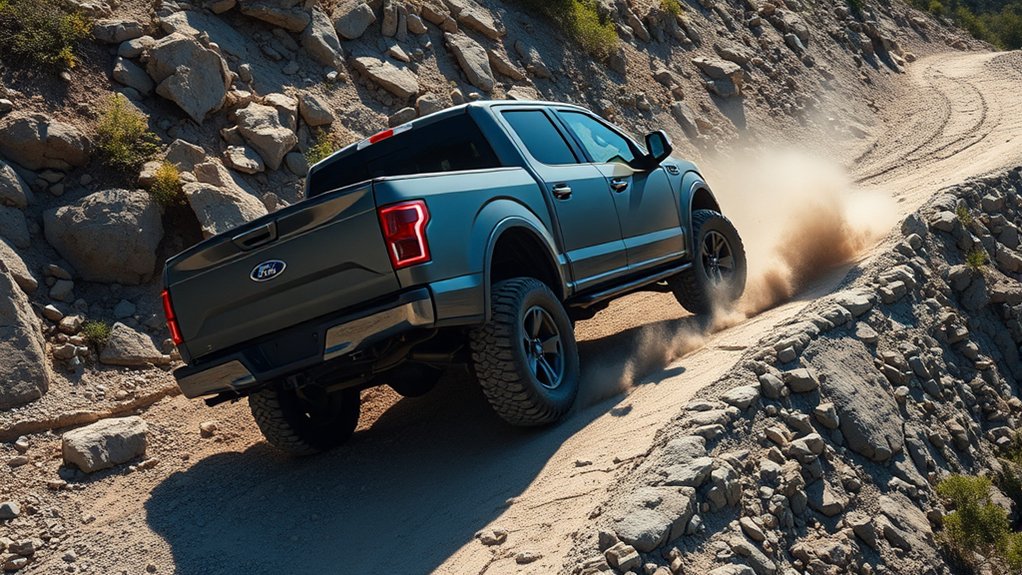
How exactly does Hill Descent Control (HDC) function on the 2019 Ford F-150? HDC is a driver-assist feature designed to maintain a controlled speed when descending steep slopes by automatically modulating the braking system.
Hill Descent Control on the 2019 Ford F-150 automatically manages braking to keep a steady speed on steep downhill slopes.
You don’t need to manually apply the brakes; instead, the system uses sensors to detect wheel speed and vehicle pitch, adjusting brake pressure individually to prevent wheel lockup and loss of traction.
It’s important to focus on this functionality without veering into unrelated concepts or off-topic discussion, such as general traction control or engine braking mechanisms. HDC operates independently from those systems, specifically targeting downhill stability.
Understanding this distinction ensures you grasp what HDC is: an automated, precision-controlled braking aid that enhances safety during descents without requiring driver input beyond activation.
How Hill Descent Control Helps on Steep Terrain
When you engage Hill Descent Control on steep terrain, it manages your speed precisely without requiring constant brake input. It maintains enhanced traction stability by modulating brake pressure to individual wheels as needed.
This integration with the brake system ensures controlled, safe descents even on challenging slopes.
Controlled Speed Management
Why does controlled speed matter on steep terrain? When descending sharp inclines, maintaining a steady, manageable speed is crucial for safe driving dynamics. The 2019 F150’s Hill Descent Control system automatically modulates braking pressure to keep your speed consistent without requiring manual input.
This precise regulation allows you to focus on steering, enhancing off-road precision by preventing wheel lockup or skidding. By controlling speed independently of throttle and brake pedals, the system optimizes vehicle stability and ensures smooth navigation over uneven surfaces.
This technical approach minimizes abrupt speed changes that could compromise control, enabling you to confidently tackle steep slopes while preserving traction and vehicle integrity. Controlled speed management is essential for effective, predictable descent performance in challenging off-road conditions.
Enhanced Traction Stability
Where does Hill Descent Control make the most difference on steep terrain? It markedly enhances traction stability by automatically modulating braking to each wheel, preventing slip and maintaining grip.
When you descend rough, uneven grades, the system continuously adjusts to guarantee controlled off road pacing, allowing you to focus on steering rather than throttle or brake inputs. This precise intervention minimizes wheel lockup or spin, which is critical for emergency stopping scenarios on loose or slippery surfaces.
Brake System Integration
How exactly does Hill Descent Control integrate with the 2019 F150’s brake system to manage steep terrain? The system uses precise brake modulation to maintain a controlled descent speed on off-road terrain, preventing wheel lockup. It automatically applies individual wheel brakes, optimizing traction without driver input.
However, you retain a manual override to adjust speed via the brake pedal or accelerator, ensuring adaptability to varying conditions.
| Feature | Functionality |
|---|---|
| Automatic Brake Modulation | Controls descent speed by modulating brakes |
| Individual Wheel Braking | Enhances traction on uneven off-road terrain |
| Manual Override | Allows driver control for speed adjustments |
| Stability Monitoring | Continuously assesses terrain for optimal braking |
This integration ensures safe, stable descents on steep slopes with minimal driver effort.
Which Sensors and Systems Enable Hill Descent Control
You rely on a combination of sensors like wheel speed sensors and accelerometers to monitor your vehicle’s descent. The Hill Descent Control system integrates these inputs with the anti-lock braking system and electronic stability control to manage brake pressure precisely.
This coordination guarantees controlled, steady descent without requiring manual brake input.
Key Sensors Involved
Which components enable the 2019 F150’s Hill Descent Control to function seamlessly? The system relies primarily on the wheel speed sensors, throttle position sensor, brake pressure sensors, and the accelerometer.
Wheel speed sensors monitor each wheel’s rotational velocity, ensuring the control system can modulate braking precisely to prevent wheel lockup. The throttle position sensor aids in managing engine output, which ties directly to engine maintenance and fuel efficiency by optimizing power delivery during descent.
Brake pressure sensors provide real-time feedback on hydraulic pressure, allowing the system to apply the right braking force dynamically. Lastly, the accelerometer detects the vehicle’s pitch and descent angle, enabling the system to adjust accordingly.
Together, these sensors deliver the data necessary for smooth, controlled downhill navigation without compromising engine performance or fuel economy.
Integrated Control Systems
Why does the 2019 F150’s Hill Descent Control operate so effectively? It’s due to its sophisticated integrated systems that coordinate multiple sensors and control modules. The system relies on data from wheel speed sensors, accelerometers, and the brake control unit to precisely monitor vehicle dynamics during hill descent.
These integrated systems communicate via the vehicle’s central electronic control unit (ECU), which modulates braking force and engine torque in real time. This seamless coordination maintains a steady, controlled speed without driver input on the accelerator or brake.
How the 2019 F-150 Automatically Activates Hill Descent Control
How does the 2019 F-150 determine when to engage Hill Descent Control automatically? The system relies on integrated sensors that continuously monitor vehicle pitch, wheel speed, and throttle input.
When descending a steep slope, the onboard control unit assesses these parameters alongside the auto transmission’s gear state. If the truck detects a significant downhill gradient and low engine torque demand, it signals the Hill Descent Control to activate without driver intervention.
This proactive engagement ensures controlled deceleration by modulating engine braking and coordinating with drivetrain components. The system’s precision in evaluating real-time data allows it to seamlessly intervene, maintaining stability and preventing excessive speed during descents, all while you focus on steering.
How Hill Descent Control Controls Braking on Each Wheel
When descending a steep hill, controlling braking on each wheel is essential for maintaining stability and traction. The 2019 F-150’s Hill Descent Control (HDC) system uses sensors to monitor wheel speed and adjusts braking pressure individually.
By modulating the brake force on each wheel, it optimizes tire grip to prevent slip and maintain consistent driving dynamics. This selective braking counters wheel lockup, especially on uneven or slippery surfaces, ensuring that traction is maximized without driver intervention.
The system continuously assesses terrain feedback and dynamically balances braking distribution, allowing you to focus on steering while the HDC manages controlled deceleration. This precise control of brake application on each wheel enhances safety and vehicle stability during steep descents.
When and Where to Use Hill Descent Control Safely
Where should you engage Hill Descent Control to maximize safety and performance? You should activate descent control primarily on steep, uneven terrain where maintaining a consistent, slow speed is critical. This feature optimizes off road safety by automatically modulating braking, preventing wheel lockup and loss of traction.
Use descent control in these scenarios:
- Steep downhill slopes with loose gravel or dirt
- Slippery surfaces like wet rocks or mud
- Off-road trails with unpredictable gradients
- Situations where you need controlled speed without constant brake input
Avoid using descent control on flat or paved roads, as it can interfere with normal braking dynamics. By engaging it only in appropriate off-road conditions, you preserve vehicle stability and maximize the system’s effectiveness in enhancing off road safety.
Tips to Get the Most From Hill Descent Control on Your F-150
Why maximize Hill Descent Control on your 2019 F-150? Independent testing shows that optimizing this feature enhances vehicle stability and safety on steep declines.
To get the most from Hill Descent Control, engage the system before starting your descent, ensuring your speed is low and steady. Use the cruise control settings integrated with the system to maintain consistent braking force automatically, reducing driver fatigue.
Pay attention to terrain feedback. User perceptions indicate smoother control occurs on moderate slopes rather than extreme grades. Avoid abrupt steering inputs during activation to maintain system efficacy.
Regularly check tire condition, as optimal traction complements the system’s precision. Following these technical guidelines ensures you leverage Hill Descent Control’s full capabilities for controlled, safe descents.
Frequently Asked Questions
Can Hill Descent Control Be Manually Overridden on the 2019 F-150?
Yes, you can manually override hill descent control on the 2019 F-150, enhancing off-road capability. This manual override lets you maintain full control, especially on varied terrain, ensuring precise speed management without automatic braking interference.
Does Hill Descent Control Affect Fuel Efficiency?
Hill Descent acts like a gentle brake on a steep slope, slightly reducing your fuel economy by increasing engine load. While it stabilizes speed, you’ll notice a minor dip in fuel efficiency during active control.
How Does Hill Descent Control Interact With Trailer Towing?
Hill descent adjusts braking to maintain control on slopes, and with trailer interaction, it compensates for added weight and trailer sway. You’ll experience smoother descents since the system modulates trailer braking precisely for stability.
Can Hill Descent Control Be Used on Icy or Snowy Roads?
You can use hill descent control on icy or snowy roads, but understand its technology limitations. It aids in maintaining speed, yet for ice safety, you must still drive cautiously and rely on traction control and proper tires.
Is Hill Descent Control Available on All 2019 F-150 Models?
No, hill descent control isn’t available on all 2019 F-150 models; it’s typically on 4×4 trims. For unrelated topics, always follow the manufacturer’s gear recommendation to ensure optimal performance and safety on declines.
Conclusion
You might think conquering steep descents requires constant brake work and tense control, but with the 2019 F-150’s Hill Descent Control, you barely have to lift a finger. Ironically, the system’s precise coordination of sensors, engine torque, and individual wheel braking does all the hard work for you—so you can focus on the drive, not the descent.
In other words, your truck’s tech is smarter than your nerves on the hill. This makes navigating tricky downhill terrain safer and much less stressful.
That’s the advantage of the 2019 F-150 Hill Descent Control system in action.