How to Measure Truck Bed for Tonneau Cover
When preparing to measure your truck bed for a tonneau cover, you’ll need to start by identifying your bed style and accounting for any liners or rail caps that could affect fit.
Using the right tools, you’ll measure length, width, and height carefully to guarantee accuracy. Missing a detail here can lead to an improper fit, so precision is key—but before you begin, there are essential measurement steps you shouldn’t overlook.
Key Takeaways
- Measure the truck bed length from inside the bulkhead to inside the fully closed tailgate for accurate fit.
- Measure width inside the bed rails at front, middle, and rear, recording the narrowest point to accommodate tapering.
- Identify side rail type (flush, raised, or bed rail) and measure vertical height from bed floor to top of rails precisely.
- Use a rigid tape measure and measure straight, avoiding angles, and measure inside edges, not over side rails.
- Account for bed liners or rail caps by measuring twice and subtracting their thickness for correct tonneau cover sizing.
Identifying Your Truck Bed Type
How do you determine the type of truck bed you have? Start by identifying bed style. Common types include step-side, fleet-side, and dually beds. Check the bed’s side panel shape and wheel well design; for example, step-side beds have pronounced rear fenders, while fleet-side beds feature flat panels.
Understanding the bed style is important for choosing bed dimensions accurately, as style impacts length and width measurements. Next, consult your vehicle’s specifications or owner’s manual to confirm bed dimensions, ensuring you consider any variations like short, standard, or long bed lengths.
Properly identifying bed style and choosing bed dimensions precisely sets the foundation for selecting a tonneau cover that fits securely and functions effectively.
Tools You Need to Measure Your Truck Bed
After identifying your truck bed type and dimensions, gathering the right tools guarantees accurate measurements. Start with a reliable tape measure, ensuring it has clear, durable markings. Confirm tools calibration by checking the tape’s accuracy against a known standard to avoid errors.
A straight edge or ruler helps verify precise linear measurements, especially around corners or edges. You might also need a caliper for measuring narrower gaps or rail thicknesses. If your bed has custom upholstery options or liners, bring a flexible measuring tape to accommodate curves and contours accurately.
Avoid makeshift tools, as imprecise measurements lead to ill-fitting tonneau covers. Proper calibration and selection of measuring tools streamline your process, ensuring your measurements reflect your truck bed’s true dimensions for optimal tonneau cover fit.
Measuring Your Truck Bed Length and Width
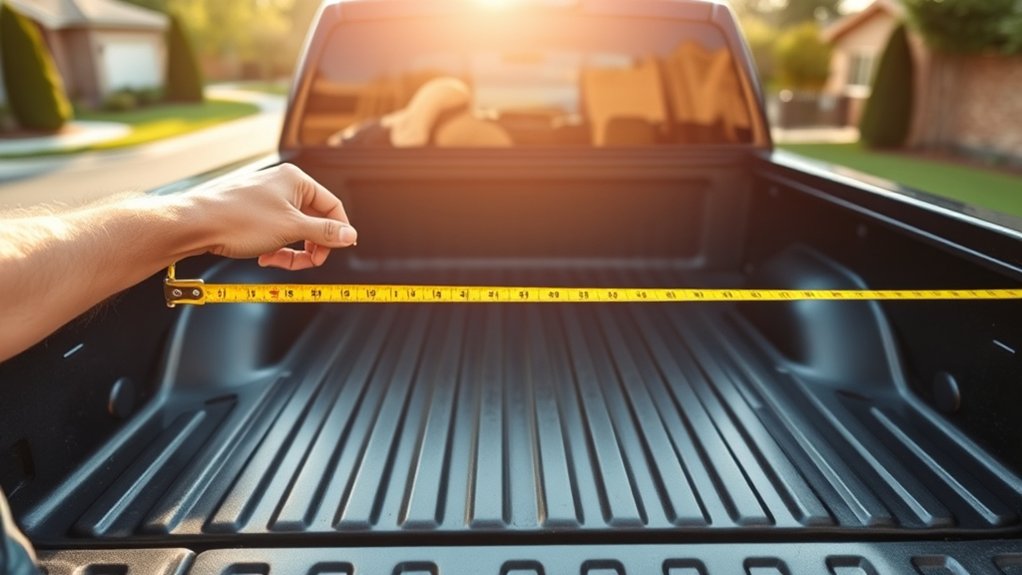
Where exactly should you measure to get the correct length and width of your truck bed? Start by determining length from the inside edge of the bulkhead (the wall behind the cab) to the inside edge of the tailgate. Ensure the tailgate is fully closed for an accurate measurement.
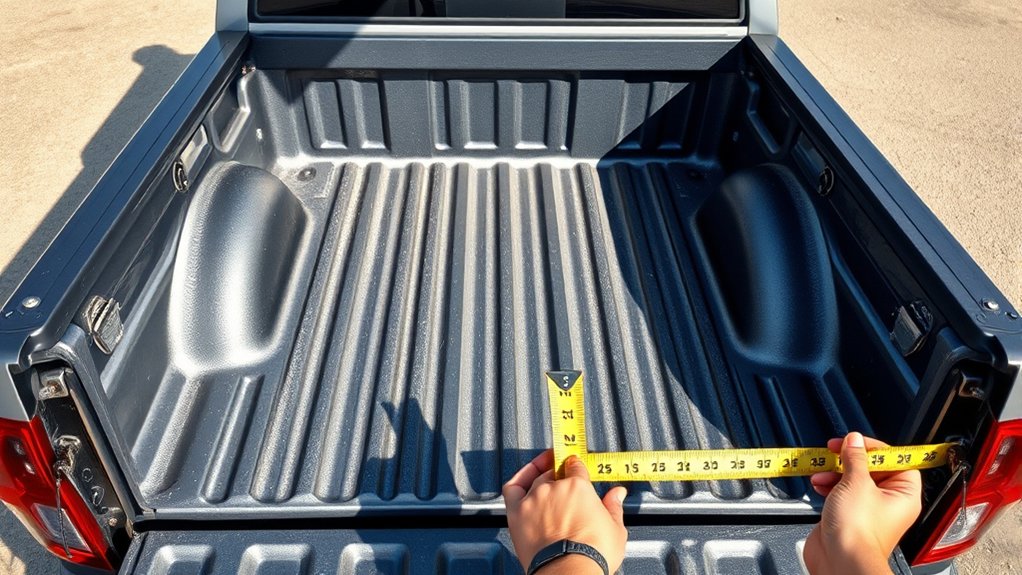
For measuring width, take measurements at three points: front (near the bulkhead), middle, and rear (near the tailgate). Record the narrowest measurement since truck beds can taper.
Always measure inside the bed rails, not over them, because tonneau covers rest within this space. Use a steel tape measure for precision. By carefully determining length and measuring width this way, you’ll ensure a proper fit for your tonneau cover without gaps or overhangs.
Measuring Truck Bed Height and Side Rails for a Tonneau Cover
Why is measuring the height of your truck bed and side rails critical for fitting a tonneau cover? Accurate rail height ensures proper cover alignment, sealing, and functionality.
Start by identifying types of side rails: flush, raised, or bed rail, as each affects cover compatibility. Use precise measuring tools like a tape measure or calipers to record the vertical distance from the bed floor to the top of the side rails.
Measure at multiple points along the rails to account for any variations. Incorrect measurements can lead to ill-fitting covers, increased wind noise, or water leakage. Document your findings carefully, focusing on consistent rail height data.
This step complements your earlier length and width measurements, enabling you to select a tonneau cover that fits securely and performs optimally.
Common Truck Bed Measurement Mistakes to Avoid
How can you ensure your truck bed measurements are accurate and avoid costly errors? Avoid common mistakes like measuring the bed at an angle or neglecting to account for side rails and tailgate height.
Use a rigid tape measure, hold it straight, and measure from the inside edges of the bed walls for measurement precision. Don’t assume standard sizes; verify your truck model’s specific dimensions.
Overlooking obstructions such as bed liners or rail caps can distort your results, so factor these into your measurements. Also, double-check your numbers by measuring twice.
These steps prevent ordering the wrong tonneau cover size, saving you time and money. Focus on precise, consistent methods to achieve a perfect fit and optimal coverage for your truck bed.
Frequently Asked Questions
What Materials Are Tonneau Covers Typically Made From?
You’ll find tonneau covers made from synthetic fabrics, aluminum frames, and heavy-duty polymers. These materials provide UV resistance and weather sealing, ensuring durability and protection against harsh elements.
At the same time, they maintain a sleek, functional design.
How Do Tonneau Covers Affect Fuel Efficiency?
Think of your truck as a boat cutting through water; a tonneau cover improves aerodynamics.
Tonneau durability guarantees consistent airflow, reducing drag, which can improve fuel economy impact by up to 10%, saving you money on gas.
Can I Install a Tonneau Cover Myself or Need Professional Help?
You can install a tonneau cover solo if you follow instructions carefully and have basic tools. However, hiring a pro guarantees precise alignment and secure fitting, reducing potential installation errors and enhancing durability.
Are Tonneau Covers Compatible With All Truck Bed Accessories?
Tonneau covers aren’t compatible with all truck bed accessories due to incompatibility concerns. You’ll need to check for potential accessory interference, especially with bed rails, toolboxes, or tie-down systems, to ensure proper fit and function.
How Do I Maintain and Clean My Tonneau Cover?
You’ll want to establish cleaning routines so strict they’d impress a scientist. Use mild soap and water, avoid harsh chemicals, and schedule maintenance every few months to check seals and hardware, ensuring long-lasting protection and performance.
Conclusion
Picture your truck bed as a perfectly tailored box, where every inch counts. By carefully measuring length, width, and height—avoiding common pitfalls—you assure your tonneau cover fits like a glove.
Using a rigid tape and calipers, note the narrowest widths and account for liners or rail caps. This precision turns guesswork into certainty, protecting your cargo seamlessly.
In the end, accurate measurements are key to selecting the right tonneau cover, ensuring a sleek, custom fit that enhances your truck’s functionality.