How to Battery Charger Car
Getting your car battery back to full strength with a battery charger car is a delicate process that requires careful attention to detail. You’ll want to select the right charger for your battery’s specifications and follow a precise sequence when connecting the clamps to avoid damage or hazards.
Before you start, there are essential safety measures and preparatory steps that you can’t afford to overlook if you want a successful charge. Proper preparation ensures both your safety and the longevity of your battery.
Taking these precautions seriously will help you achieve the best results when charging your car battery.
Key Takeaways
- Inspect the battery for damage, clean terminals, and disconnect the negative terminal before charging.
- Connect the charger’s positive clamp to the battery’s positive terminal first, then the negative clamp to the negative terminal.
- Ensure the charger is off before plugging into power and select the appropriate charging mode for the battery type.
- Monitor voltage and amperage during charging to avoid overcharging and maintain safety gear like goggles and gloves.
- After charging, turn off and unplug the charger, remove clamps in reverse order, and store the battery in a cool, ventilated space.
Choosing the Right Charger for Your Car Battery
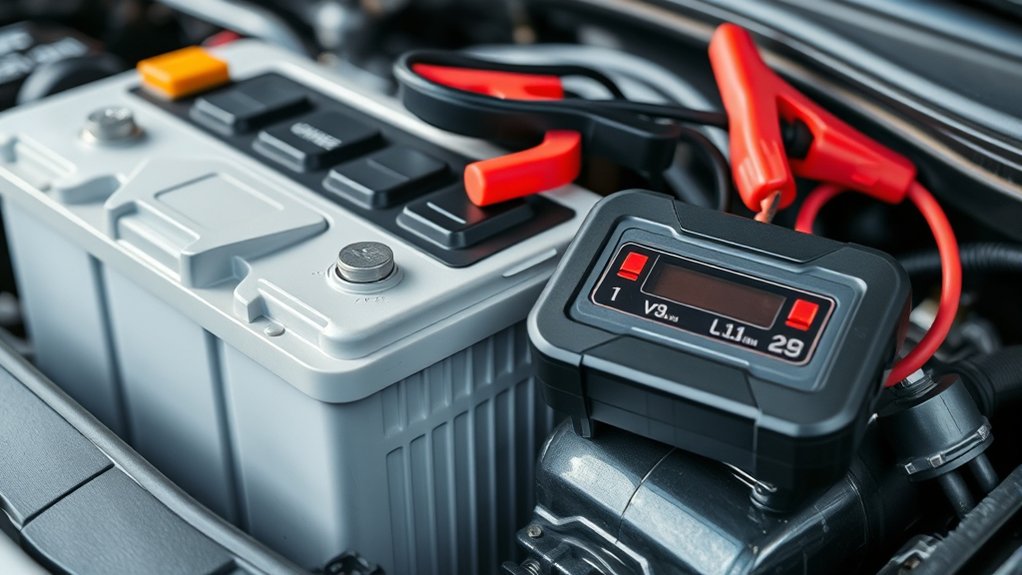
How do you select the right charger for your car battery? Start by understanding the difference between choosing versus testing chargers. Choosing involves evaluating specifications like amperage output, compatibility with your battery type, and charging modes.
Testing, however, requires hands-on operation to assess real-world performance, which you may not always have access to before purchase. Prioritize chargers with appropriate voltage and smart charging capabilities to prevent overcharging.
When considering warranty versus price, don’t simply opt for the cheapest model. A longer warranty often indicates better build quality and reliability, protecting your investment. Balance cost with features and warranty coverage to ensure durable, efficient charging.
Ultimately, select a charger that matches your battery’s requirements while offering solid manufacturer support.
Safety Gear You Need Before Charging
Before you start charging, make sure you have essential protective equipment like safety goggles and gloves to prevent acid burns and electrical shocks.
Always work in a well-ventilated area to avoid inhaling harmful gases released by the battery. These precautions will help you stay safe throughout the charging process.
Essential Protective Equipment
As you should ensure you prioritize wearing protective equipment when charging your car battery? Battery safety is critical because car batteries contain corrosive acid and can emit explosive gases.
Before connecting your charger, always wear acid-resistant gloves to protect your hands from potential spills. Use safety goggles to shield your eyes from acid splashes or sparks. Additionally, select insulated tools to reduce the risk of accidental short circuits during tool selection.
Avoid metal jewelry or loose clothing that might cause accidental contact with battery terminals. Proper protective gear minimizes injury risk and ensures safe operation.
Proper Ventilation Importance
In addition to wearing proper protective equipment, ensuring adequate ventilation is a key safety measure when charging your car battery. Batteries emit hazardous gases, including hydrogen, which can accumulate and pose explosion risks.
You must set up a reliable exhaust ventilation system to actively remove these gases from the charging area. This system should facilitate continuous air exchange, preventing dangerous fume buildup.
Additionally, employ fume capture devices near the battery to directly extract and neutralize emitted gases before they disperse. Positioning these devices effectively reduces inhalation hazards and enhances overall safety.
Always verify that your workspace complies with ventilation standards to maintain a safe environment. Proper ventilation not only protects you but also safeguards your vehicle and equipment during the charging process.
Preparing Your Car Battery for Charging
Although charging a car battery may seem straightforward, properly preparing it ensures safety and optimal performance. First, familiarize yourself with essential car battery terminology to understand the components and functions involved. This knowledge helps you avoid common charging myths that can lead to improper handling.
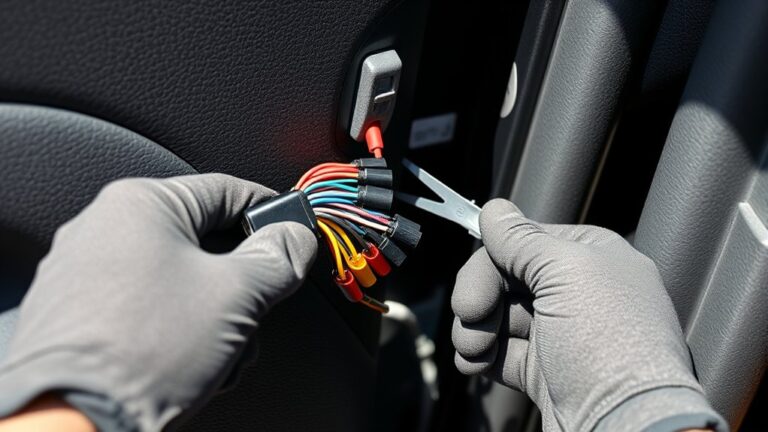
Before charging, inspect the battery for cracks, leaks, or corrosion on terminals. Clean the terminals using a mixture of baking soda and water, then dry thoroughly. Ensure the battery is securely mounted to prevent movement during charging.
Inspect for damage, clean terminals with baking soda, and secure the battery before charging for safety and efficiency.
Always disconnect the negative terminal first to reduce the risk of short circuits. These steps prepare your battery efficiently and safely while debunking misconceptions about charging.
- Understand car battery terminology to navigate instructions accurately.
- Inspect and clean terminals to ensure proper electrical contact.
- Disconnect the negative terminal before charging to prevent shorts.
Charging Your Car Battery: Step-by-Step
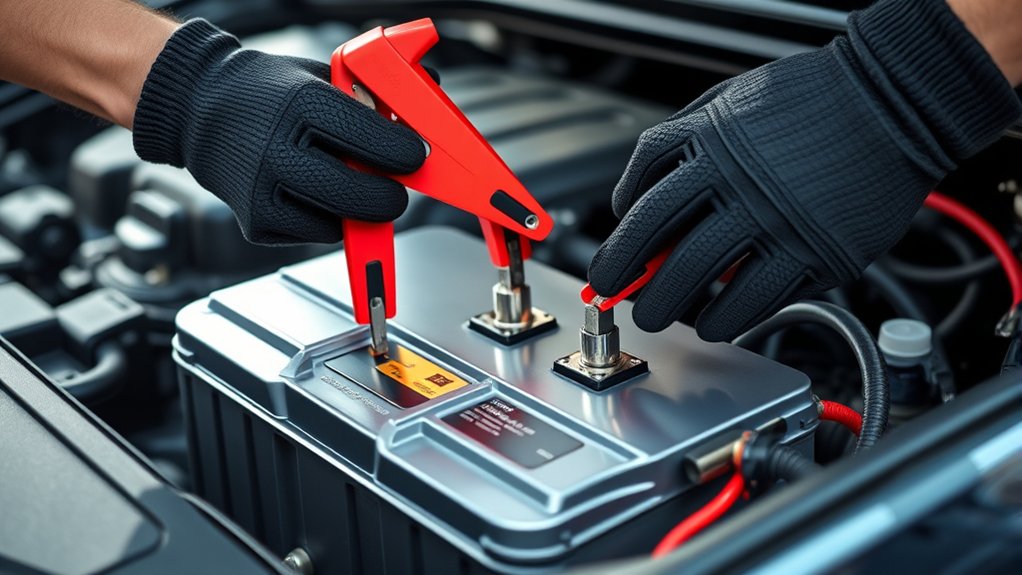
With your battery properly prepared and terminals clean, you can begin the charging process safely and effectively. First, connect the charger’s positive clamp to the battery’s positive terminal and the negative clamp to the negative terminal.
Ensure the charger is off before plugging it into a power source. Select the appropriate charging mode based on your battery type and capacity; slow charging is preferable for longevity.
Turn on the charger and monitor the voltage and current to prevent overcharging. Once fully charged, turn off and unplug the charger before removing the clamps in reverse order.
If you’re buying used batteries, verify their charge status and condition before use. Always follow local regulations for battery disposal to protect the environment and avoid hazards associated with improper handling.
Fixing Common Charging Problems
Why won’t your battery charger work as expected? Common issues often stem from overlooked causes. First, battery sulfation can prevent effective charging. Check if the battery plates have hardened lead sulfate deposits, which reduce conductivity.
Second, corrosion at the terminals disrupts current flow. Ensure you clean terminals thoroughly and apply corrosion protection grease to prevent buildup. Third, verify your charger connections: loose or reversed clamps will block charging.
To fix these problems:
- Desulfate the battery using a specialized charger mode or chemical additive.
- Remove corrosion with a baking soda solution and wire brush, then apply corrosion protection.
- Confirm all connections are secure and correctly polarized before starting the charge.
Addressing these issues will restore charger functionality and prolong your battery’s lifespan.
Maintaining Your Car Battery After Charging
After charging your car battery, you should perform regular inspections to check for corrosion, loose connections, and electrolyte levels. Store the battery in a cool, dry place to prevent self-discharge and damage.
Following these maintenance steps will extend your battery’s lifespan and guarantee reliable performance.
Regular Battery Inspections
Although charging restores your battery’s power, regular inspections are essential to guarantee its longevity and performance. By routinely checking your battery, you actively prevent issues like sulfation, which degrade capacity and shorten battery life.
Focus on these critical inspection points:
- Terminal Cleanliness: Remove corrosion buildup to maintain solid electrical contact and prevent resistance.
- Electrolyte Levels: Ensure fluid levels are adequate to avoid sulfation and sustain optimal chemical reactions.
- Physical Condition: Inspect the battery casing for cracks, bulges, or leaks that signal internal damage.
Perform these checks monthly, especially after charging sessions. Maintaining these inspection habits supports battery longevity and maximizes performance, ensuring your vehicle starts reliably.
Neglecting inspections allows sulfation and other problems to develop unnoticed, eventually compromising your battery’s effectiveness and lifespan.
Proper Storage Techniques
Where should you store your car battery once it’s fully charged? Store it in a cool, dry area with stable temperatures to prevent self-discharge and corrosion. Avoid direct sunlight and excessive heat, which can degrade battery performance.
Use a non-conductive surface to place the battery, preventing short circuits. In cold climate considerations, keep the battery insulated but ventilated; extreme cold can reduce capacity and cause electrolyte freezing.
If you expect extended storage, disconnect the battery and periodically charge it every 4-6 weeks to maintain optimal voltage. Ensure terminals are clean and coated with a protective spray to prevent oxidation.
Proper battery storage preserves charge, extends lifespan, and ensures readiness for your next use. Always follow manufacturer guidelines for specific storage recommendations.
Knowing When to Replace Your Car Battery
Even if your car battery seems fine, you should monitor its performance regularly to know when replacement is necessary. Consistent car maintenance and battery diagnostics reveal underlying issues before failure occurs. Watch for these key indicators:
- Difficulty starting the engine or slow cranking speed.
- Corrosion buildup on battery terminals despite cleaning.
- Battery warning light activation on the dashboard.
Use a multimeter to check voltage; a fully charged battery should read around 12.6 volts. If voltage drops below 12.4 volts repeatedly, it’s a sign the battery is weakening.
Additionally, batteries typically last 3-5 years; note the installation date during maintenance. Replace the battery promptly when diagnostics indicate reduced capacity, preventing unexpected breakdowns and maintaining optimal vehicle performance.
Frequently Asked Questions
Can I Charge a Car Battery in Freezing Temperatures?
Yes, you can charge a car battery in freezing temperatures, but cold weather charging requires a charger with temperature compensation to prevent damage.
Always ensure the battery is insulated and monitor voltage carefully for optimal performance.
How Long Does It Take to Fully Charge a Car Battery?
It typically takes 4 to 24 hours to fully charge a car battery, depending on charger type. You should ensure charging safety and optimize charging efficiency by using the correct charger settings and monitoring battery temperature closely.
Can a Charger Damage a Battery if Left Connected Too Long?
Leaving a charger connected too long can be a double-edged sword, risking battery health by overcharging.
To avoid charging risks, use a smart charger with automatic shutoff to maintain optimal battery performance and longevity.
Are Trickle Chargers Safe for All Types of Car Batteries?
Trickle chargers are generally safe for most car batteries, but you shouldn’t assume universal compatibility. Understand two-word ideas like “battery chemistry” and “charging voltage.”
Don’t fall for safety myths; always verify charger specs with your battery type.
Can I Use a Car Battery Charger for Other Types of Batteries?
You can’t use a car battery charger for non-vehicular charging without risking damage. These chargers lack household battery compatibility, so always check voltage and chemistry specifications before attempting to charge other battery types safely.
Conclusion
Charging your car battery is like tuning a delicate instrument—precision and care guarantee optimal performance. Always select the right charger, wear protective gear, and connect clamps in the correct order. Monitor voltage closely to avoid overcharging, and disconnect safely once done.
Regular maintenance extends battery life, while timely replacement prevents unexpected failures. Follow these steps carefully, and you’ll keep your battery reliable and ready for the road ahead. Proper technique when you battery charger car ensures safety and longevity for your vehicle’s power source.