How Many Quarts of Oil Does a Ford f150 Take
If you own a 2020 Ford F-150 with a 3.5L EcoBoost V6, you’ll typically need about 5.7 quarts of oil for a proper change. Knowing how many quarts of oil a Ford F150 takes is essential for maintaining your truck’s engine health.
However, oil capacity varies considerably depending on the engine type and model year, so using a generic number can lead to issues. Understanding how much oil your specific truck requires—and why it matters—helps you maintain optimal engine performance and avoid costly mistakes.
Key Takeaways
- Ford F-150 oil capacity varies by engine type and model year, typically ranging from about 5.7 to 7 quarts.
- The 3.3L V6 and 3.5L EcoBoost V6 engines usually require around 6 quarts of oil.
- The 2.7L EcoBoost V6 holds approximately 5.7 quarts of oil.
- The 5.0L V8 engine in the F-150 demands closer to 7 quarts of oil.
- Always consult the owner’s manual for exact oil capacity and specifications for your specific Ford F-150 model.
Ford F-150 Oil Capacity By Engine Type

How much oil does your Ford F-150 need? It depends on the engine type installed in your truck. Different engine types have varying oil capacities to guarantee optimal lubrication and performance.
For example, the 3.3L V6 engine typically requires around 6 quarts of oil. If you have the 2.7L EcoBoost V6, it holds approximately 5.7 quarts, while the 3.5L EcoBoost V6 requires about 6 quarts. The 5.0L V8 engine demands closer to 7 quarts.
Knowing your F-150’s specific engine type helps you determine the exact oil capacity, ensuring you add the right amount during oil changes. Always consult your owner’s manual for precise figures tailored to your model year and engine configuration.
Recommended Oil Types For Ford F-150 Engines
Selecting the correct oil type for your Ford F-150 engine is pivotal for maintaining performance and longevity. Ford typically recommends synthetic 5W-20 or 5W-30 motor oil, depending on your engine model and operating conditions. These oils ensure optimal viscosity, thermal stability, and protection against wear.
Avoid focusing on irrelevant topics or unrelated themes like generic oil types not suited for Ford engines, as these can lead to suboptimal lubrication and potential engine damage. Always consult your owner’s manual for the exact specifications, as some engines may require oils with specific certifications such as API SN or Ford WSS-M2C946-A.
Using the recommended oil type enhances fuel efficiency, reduces deposits, and supports emission control systems, ensuring your F-150 runs smoothly under various driving conditions.
How To Check And Add Oil To Your Ford F-150
Wondering when and why you should check your Ford F-150’s engine oil level? Regular checks ensure optimal engine performance and longevity. Here’s how to check and add oil correctly:
- Park on level ground, turn off the engine, and wait 5-10 minutes to let oil settle.
- Pull out the dipstick, wipe it clean, reinsert fully, then remove again to check the oil level.
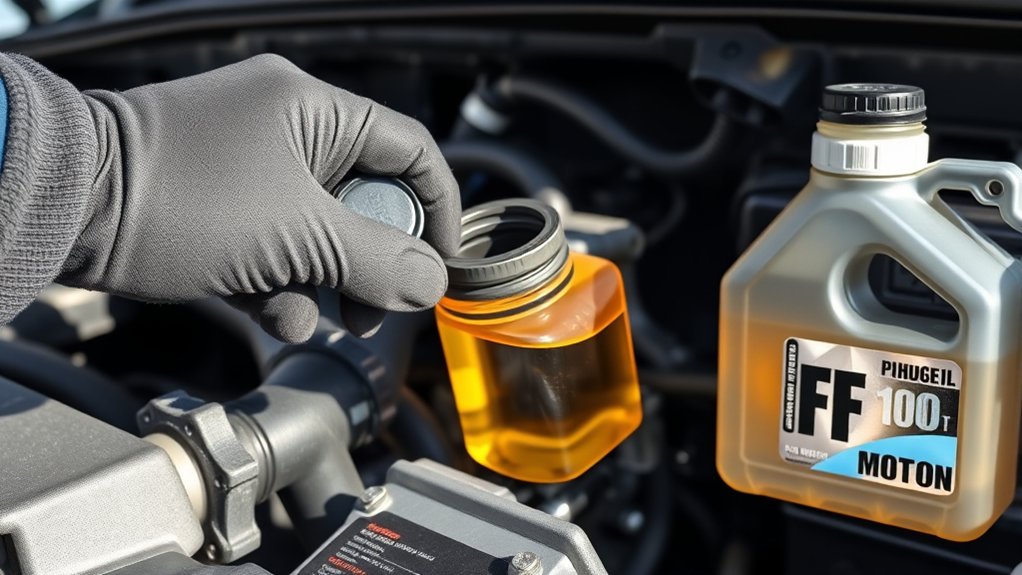
- If low, add oil gradually using a recommended oil brand, preferably synthetic blends for better protection.
- Pour oil slowly through the filler cap, checking the dipstick frequently to avoid overfilling.
Following these steps helps maintain proper lubrication, preventing engine wear. Always consult your owner’s manual for specific oil specifications and capacities.
What Happens If You Overfill Or Underfill Oil?
If you overfill your Ford F-150’s engine oil, you risk causing increased pressure that can damage seals and reduce engine performance.
Underfilling, on the other hand, can lead to insufficient lubrication, increasing wear and potentially causing engine failure. Both conditions negatively affect fuel efficiency and overall engine health, so maintaining the correct oil level is critical.
Engine Damage Risks
How does improper oil level affect your Ford F-150’s engine? Maintaining the correct oil quantity is essential for engine longevity and minimizing startup noise. If you overfill or underfill, you risk:
- Overfilling: Excess oil creates increased pressure, leading to oil foaming, which reduces lubrication efficiency and damages components.
- Underfilling: Insufficient oil causes increased friction, resulting in higher startup noise and accelerated wear on moving parts.
- Engine overheating: Both conditions impair oil’s cooling ability, risking thermal damage.
- Severe mechanical failure: Prolonged imbalance can cause piston or bearing damage, requiring costly repairs.
Keeping oil at the manufacturer-specified level ensures optimal protection and performance. Always check with the dipstick and add oil gradually to avoid these critical engine risks.
Oil Pressure Effects
Maintaining the correct oil level directly impacts your Ford F-150’s oil pressure, which is essential for proper engine operation. If you underfill the oil, the pressure drops, reducing lubrication and causing increased engine noise due to metal-on-metal contact.
Low oil pressure can also lead to overheating, accelerating wear and potential engine failure. Conversely, overfilling the oil increases pressure excessively, potentially causing oil foaming. This compromises the oil’s ability to lubricate effectively, as the oil color may appear lighter or frothy.
Excess pressure can damage seals and gaskets, leading to leaks. Monitoring the oil level precisely, using the dipstick and observing the oil color, helps maintain suitable pressure, ensuring smooth engine performance and longevity in your Ford F-150.
Fuel Efficiency Impact
Why does the oil level in your Ford F-150 affect fuel efficiency? Maintaining the correct oil level is crucial because both overfilling and underfilling disrupt fuel economy and reliability trends. Here’s how:
- Overfilling causes the crankshaft to churn excess oil, increasing engine drag and reducing fuel economy.
- Underfilling leads to inadequate lubrication, increasing friction and causing the engine to work harder, which lowers fuel efficiency.
- Both conditions elevate engine temperature, risking premature wear and impacting long-term reliability trends.
- Improper oil levels trigger engine sensors, potentially causing the computer to adjust fuel injection inefficiently.
Tips To Maintain Proper Oil Levels Between Changes
You should regularly check your Ford F-150’s oil level to ensure it stays within the recommended range. Always use high-quality oil filters to maintain proper engine lubrication and protect internal components.
Additionally, monitor engine performance for any signs of oil-related issues to catch problems early.
Regular Oil Level Checks
How often should you check your Ford F-150’s engine oil level to ensure optimum performance? Regular oil level checks prevent engine wear and maintain efficiency. Avoid distractions like irrelevant topics or random chatter when performing this task to focus on accuracy.
Follow these steps:
- Park your truck on level ground and turn off the engine.
- Wait a few minutes to let oil settle in the oil pan.
- Pull out the dipstick, wipe it clean, reinsert fully, then remove again to check the level.
- Ensure oil reaches between the minimum and maximum marks; add oil if below minimum.
Consistent checks every 1,000 miles or monthly help you catch leaks or consumption early, protecting your engine’s longevity.
Use Quality Oil Filters
Where does the quality of your oil filter fit into maintaining proper oil levels between changes? A high-quality oil filter ensures effective removal of contaminants, preventing sludge buildup that can compromise oil volume and flow.
Don’t fall for maintenance myths claiming all filters perform equally; filter materials vary significantly, from cellulose to synthetic blends, impacting filtration efficiency and lifespan. Choosing a filter with advanced media enhances particle capture, preserving oil integrity longer and stabilizing oil levels.
You should replace the filter at every oil change to avoid clogging, which can cause bypass valves to open, allowing unfiltered oil to circulate. By prioritizing quality oil filters, you maintain cleaner oil, reduce engine wear, and protect oil capacity, ensuring your Ford F-150’s engine runs smoothly between changes.
Monitor Engine Performance
Why does monitoring your Ford F-150’s engine performance play a pivotal role in maintaining proper oil levels between changes? Because it helps you detect early signs of oil degradation and consumption. To do this effectively, focus on these four key actions:
- Regularly check oil viscosity to ensure it matches manufacturer specifications; deviations indicate contamination or breakdown.
- Utilize synthetic oil’s advantages, such as better thermal stability and reduced sludge formation, to maintain optimal lubrication.
- Monitor oil pressure and engine temperature gauges closely; abnormal readings suggest oil flow issues or thinning oil.
- Inspect for leaks around seals and gaskets, as even minor leaks can cause significant oil loss between changes.
Common Ford F-150 Engines And Their Oil Volumes Explained
Which engine does your Ford F-150 have, and how much oil does it need? The oil capacity varies significantly by engine type. For instance, the 3.3L V6 requires about 6 quarts, while the 2.7L EcoBoost V6 needs roughly 5.7 quarts.
The 5.0L V8 engine demands around 7 quarts, and the 3.5L EcoBoost V6 calls for approximately 6 quarts. Knowing the exact oil volume is crucial to prevent engine noise caused by insufficient lubrication, which can signal increased friction or wear.
Overfilling can also lead to engine performance issues. Always consult your owner’s manual or manufacturer specifications to ensure you use the correct oil volume for your specific engine model. Proper oil levels maintain optimal engine function and reduce the risk of costly damage.
Frequently Asked Questions
How Often Should I Change the Oil in My Ford F-150?
You should change your Ford F-150’s oil every 7,500 miles or six months, whichever comes first.
Avoid irrelevant topics or off topic ideas; stick to manufacturer guidelines for optimal engine performance and longevity.
Can Synthetic Oil Be Used in All Ford F-150 Engines?
You know, “better safe than sorry” applies here. Most Ford F-150 engines support synthetic compatibility, but you must check oil viscosity and owner’s manual to ensure ideal performance and avoid voiding warranties.
What Are the Signs of Low Oil Pressure in a Ford F-150?
You’ll notice warning indicators like an oil pressure light or gauge drop when monitoring oil pressure.
Your Ford F-150 may also idle roughly, lose power, or make engine noises, signaling dangerously low oil pressure levels.
Does Towing Heavy Loads Affect Oil Change Intervals?
A stitch in time saves nine: towing impact markedly increases oil change frequency. You’ll need to change oil more often since heavy loads raise engine strain and temperature, accelerating oil degradation and reducing lubrication effectiveness.
How Do Extreme Temperatures Impact Ford F-150 Oil Performance?
Extreme temperatures degrade your Ford F-150’s oil performance by thickening it in cold or thinning it in heat, reducing lubrication efficiency.
You’ll need oil formulated for temperature extremes to maintain peak engine protection and performance.
Conclusion
You absolutely can’t wing it with Ford F-150 oil capacity—it’s not just pouring oil until the engine sighs relief. Whether you’re rocking a 3.3L V6 or a beastly 5.0L V8, getting that exact quart count nailed down is mission-critical. Overfill or underfill, and you’re flirting with engine chaos.
So, follow the specs, double-check oil type, and keep your truck running like a precision machine. Because your F-150 deserves nothing less than perfection when it comes to Ford F-150 oil capacity.