What Oil Filter Do I Need
When selecting an oil filter, you need to consider your vehicle’s specific make and model to ensure proper fit and function. Choosing the right oil filter is essential for maintaining your engine’s health and performance. Simply selecting a filter by price or brand won’t guarantee compatibility or effectiveness.
Factors like thread size, gasket diameter, and filtration efficiency play critical roles in protecting your engine. Understanding these details will help you avoid costly mistakes and maintain optimal engine health.
So, let’s explore how to identify the right filter for your needs.
Key Takeaways
- Verify your vehicle’s make, model, and engine type using the owner’s manual or manufacturer’s online compatibility tool.
- Choose an oil filter matching thread size, gasket dimensions, and pressure rating specified by the manufacturer.
- Select a filter type (spin-on or cartridge) aligned with your engine’s requirements and oil viscosity rating.
- Prioritize filters with appropriate micron ratings for effective filtration without restricting oil flow.
- Buy from authorized dealers or trusted brands to ensure authenticity, warranty coverage, and optimal engine protection.
Why Your Car’s Make and Model Matter for Oil Filters
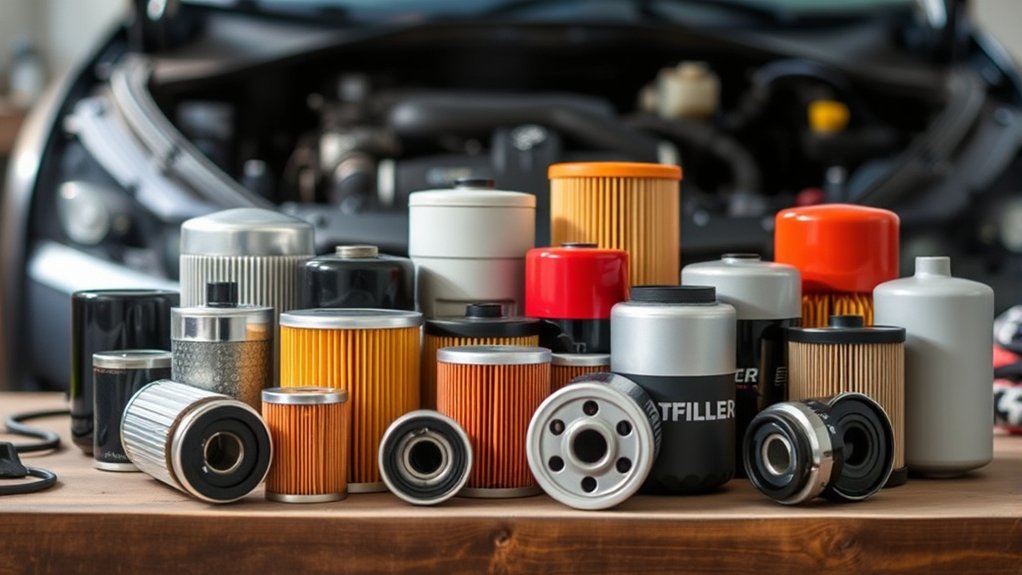
Why does your car’s make and model affect the oil filter you need? Because manufacturers design oil filters to fit specific engine configurations, flow rates, and pressure tolerances. Using the correct oil filter ensures optimal filtration, which directly impacts your engine’s fuel efficiency by maintaining clean oil circulation.
An incompatible filter may cause oil leaks or inadequate filtration, leading to engine wear and reduced performance. Additionally, your vehicle’s warranty coverage often requires adherence to manufacturer specifications, including oil filter type. Ignoring this can void warranty claims.
Different engines demand filters with precise dimensions and filtration media to handle varying oil capacities and operating conditions. So, matching the oil filter to your car’s make and model isn’t just about fit. It’s essential for maintaining efficiency, protecting your engine, and preserving warranty validity.
How to Check Oil Filter Compatibility With Your Vehicle
How can you quickly determine if an oil filter is compatible with your vehicle? First, avoid wasting time on irrelevant topics or unrelated focus like brand popularity or filter color. Instead, consult your vehicle’s owner manual or use the manufacturer’s online compatibility tool. These sources provide precise filter models tailored to your engine.
Use the table below to compare critical compatibility factors:
| Compatibility Factor | Why It Matters |
|---|---|
| Thread size | Ensures proper fit and seal |
| Gasket dimensions | Prevents oil leaks |
| Pressure rating | Matches engine oil pressure requirements |
Focusing on these technical specifications helps you avoid installation issues and engine damage. Always verify these details to ensure your oil filter fits perfectly and functions correctly.
Types of Oil Filters: Which One Fits Your Needs?
You’ll encounter several common oil filter types, including spin-on and cartridge filters, each designed for specific engine requirements. Choosing the right one depends on your vehicle’s make, model, and driving conditions.
Understanding these options ensures optimal engine protection and performance.
Common Oil Filter Types
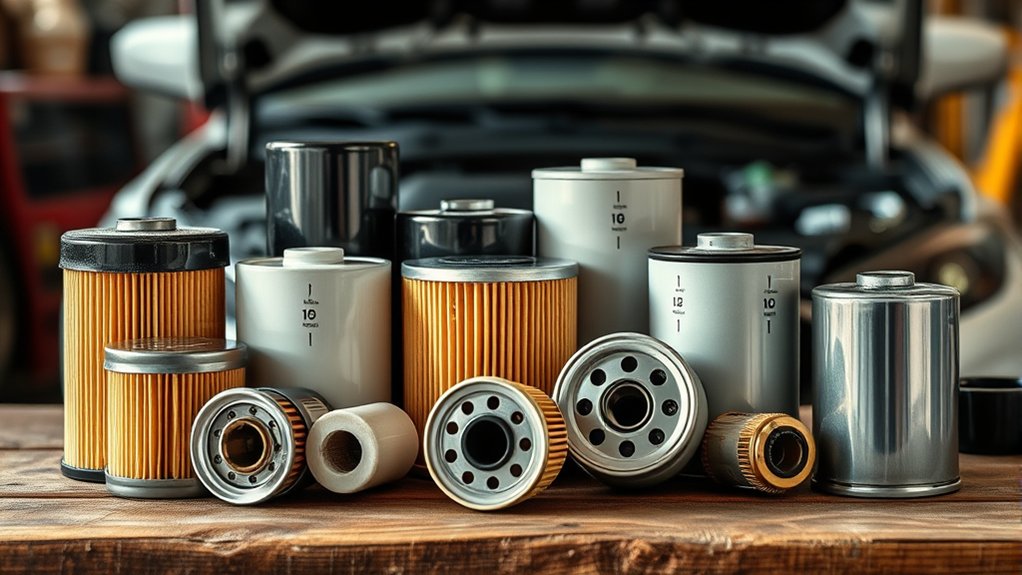
Which oil filter type suits your vehicle’s needs depends on several factors, including engine design, driving conditions, and maintenance preferences. You’ll find four common types: conventional, synthetic blend, high-efficiency, and cartridge filters. Each varies in filtration media, lifespan, and environmental impact.
Brand marketing often emphasizes synthetic blends for durability, but recycling practices for cartridge filters make them eco-friendly. Here’s a quick comparison:
| Filter Type | Key Feature |
|---|---|
| Conventional | Cost-effective, basic filtration |
| Synthetic Blend | Enhanced filtration, longer life |
| High-Efficiency | Superior contaminant removal |
| Cartridge | Reusable housing, eco-friendly |
| Magnetic | Captures metallic debris |
Selecting the right filter ensures optimal engine protection and aligns with your maintenance routine.
Choosing Based On Vehicle
When selecting an oil filter, consider the specific requirements of your vehicle’s engine and its operating conditions. Your choice must match the engine’s oil viscosity rating to ensure proper flow and filtration efficiency. Using a filter incompatible with your oil’s viscosity can reduce lubrication quality and increase wear.
Additionally, check your vehicle’s manual for manufacturer-recommended filters to maintain your engine warranty. Deviating from specified filters might void warranty coverage, especially in newer vehicles with sensitive emission controls.
Pay attention to filter construction. Metal canister filters are common, but some engines require cartridge-style filters for optimal fit and performance. By selecting an oil filter designed for your vehicle’s engine type, oil viscosity, and warranty conditions, you ensure reliable protection and comply with manufacturer standards.
How Different Oil Types Affect Your Oil Filter Choice
How do different oil types influence your choice of oil filter? The oil you use, whether conventional, synthetic blend, or full synthetic, directly impacts filter compatibility.
Synthetic oils have smaller molecules and superior detergency, which can expose your filter to finer contaminants and chemical additives. Therefore, you need a filter designed with high-efficiency media capable of trapping these smaller particles without restricting oil flow.
Conversely, conventional oils are less aggressive chemically, so standard filters often suffice. However, if you switch between oil types, ensure your filter can handle both viscosity and additive packages without degrading.
Always check manufacturer specifications for filter media composition and flow ratings to ensure optimal filtration performance tailored to your specific oil type. This approach maximizes engine protection and maintains oil cleanliness throughout service intervals.
Standard vs. High-Performance Oil Filters: Which to Pick?
Why choose between standard and high-performance oil filters? It boils down to your engine’s demands and operating conditions. Standard filters provide reliable irreversible filtration under typical driving, maintaining adequate filter pressure without compromising flow.
They’re cost-effective and sufficient for everyday use. High-performance oil filters, however, excel in extreme environments or high-stress engines by offering enhanced irreversible filtration media that traps finer contaminants.
They manage filter pressure more effectively, preventing pressure drop even during extended intervals or high RPMs. If you push your vehicle hard or drive in harsh conditions, a high-performance filter ensures superior protection.
Otherwise, a standard filter meets regular needs efficiently. Your choice should align with your engine’s workload and maintenance schedule to optimize filtration and performance.
What Oil Filter Ratings Mean for Your Engine’s Health
You need to understand oil filter ratings because they directly affect your engine’s protection. Filtration efficiency shows how well the filter removes contaminants, while micron ratings indicate the smallest particle size it can trap.
Choosing a filter with the right ratings ensures your engine stays clean and runs smoothly.
Understanding Filtration Efficiency
What makes an oil filter effective in protecting your engine? It’s all about filtration efficiency: how well the filter traps harmful particles without restricting oil flow. Don’t get sidetracked by irrelevant topics or unrelated concepts like brand popularity or filter color; focus instead on measurable performance factors:
- Particle Capture Rate – The percentage of contaminants the filter removes from the oil.
- Dirt-Holding Capacity – How much debris the filter can retain before flow is compromised.
- Bypass Valve Performance – Ensures oil still circulates if the filter clogs, preventing engine starvation.
Understanding these technical aspects helps you choose a filter that balances protection and oil flow, ensuring your engine runs smoothly and avoids premature wear.
Importance Of Micron Ratings
Filtration efficiency depends heavily on the oil filter’s micron rating, which indicates the smallest particle size the filter can capture. When choosing a filter, you need to focus on these ratings because particles smaller than the rated micron size will pass through, potentially causing engine wear.
Don’t get sidetracked by irrelevant tangents or unrelated topics like brand popularity or filter color. They don’t affect performance. A lower micron rating means better filtration, but keep in mind that extremely low micron ratings can reduce oil flow, stressing your engine.
Balance is key: select a filter with a micron rating that effectively removes harmful debris without restricting oil flow. Understanding micron ratings helps you protect your engine’s health by maintaining clean oil and preventing premature component damage.
Step-by-Step Guide to Installing Your New Oil Filter
Before installing your new oil filter, confirm the engine is cool and the vehicle is securely lifted or positioned for safe access. Avoid unrelated topic or off topic discussions during the process to maintain focus and safety. Follow these steps precisely:
Ensure the engine is cool and the vehicle is safely positioned before installing the new oil filter.
- Remove the old filter: Use an oil filter wrench to loosen and remove the old filter. Be prepared for residual oil drainage.
- Prepare the new filter: Lightly coat the rubber gasket of the new filter with fresh engine oil to ensure a proper seal.
- Install the new filter: Screw the new filter by hand until the gasket contacts the mounting surface, then tighten an additional ¾ turn. Avoid over-tightening to prevent damage.
Adhering to this guide ensures a secure fit and effective filtration.
Where to Buy Quality Oil Filters Without Overspending
Where can you find reliable oil filters that balance quality with cost-effectiveness? Start by consulting detailed buying guides that highlight trusted brands and model compatibility. These guides provide technical specifications, filtration ratings, and manufacturer certifications, ensuring you select filters that meet your engine’s requirements.
Use online platforms offering price comparisons to identify competitive deals without compromising on filter efficiency or durability. Avoid impulse purchases by cross-referencing user reviews and expert analyses found in reputable automotive forums and review sites.
Consider buying from authorized dealers or well-known retailers to guarantee authenticity and warranty support. By leveraging buying guides and price comparisons effectively, you’ll secure high-quality oil filters at optimal prices, safeguarding your vehicle’s performance without overspending.
How to Find the Right Oil Filter for Your Vehicle (Summary)
After identifying trusted sources and cost-effective options, the next step is to ensure the oil filter you choose matches your vehicle’s specifications. Understanding the oil filter history helps you appreciate modern designs that improve filtration and reduce environmental impact.
To find the right oil filter:
- Verify your vehicle’s make, model, and engine type to ensure compatibility.
- Consult the manufacturer’s manual or reliable databases for recommended filter part numbers.
- Consider filters with enhanced media and eco-friendly materials to minimize waste and emissions.
Frequently Asked Questions
How Often Should I Replace My Oil Filter?
You should replace your oil filter every 3,000 to 7,500 miles, depending on the time interval recommended by your vehicle.
Choose a filter material suited for your engine to ensure optimal filtration and protect engine performance.
Can I Reuse an Old Oil Filter?
Sure, you could reuse filters, like sipping old coffee hoping for freshness. But technically, reusing filters compromises filtration efficiency and risks engine damage.
Dispose of old filters properly; it’s a small step for long-term engine health.
What Happens if I Use the Wrong Oil Filter?
If you use the wrong oil filter or a wrong fit, you risk leaks, poor filtration, and engine damage. It can cause pressure issues or contaminants in oil, compromising engine performance and longevity.
Always choose the correct filter.
Are Oil Filters Recyclable?
Yes, oil filters are recyclable, but you’ll need to follow specific disposal regulations. Many recycling options require draining oil first.
Check local guidelines to ensure proper handling and avoid environmental contamination during disposal or recycling processes.
How Do Oil Filters Affect Fuel Efficiency?
You improve fuel economy impact by choosing quality oil filters. You sustain engine performance through consistent oil filter maintenance, and you prevent efficiency loss by avoiding clogged filters. All these combine to optimize your vehicle’s fuel efficiency and longevity.
Conclusion
Choosing the right oil filter is like selecting the heart for your engine—ensuring it beats smoothly and efficiently. By matching your car’s make and model, considering filter type and ratings, and following proper installation steps, you safeguard your engine’s vitality.
Treat your vehicle with care, and it’ll return the favor with longevity and performance. Remember, a well-chosen filter is the silent guardian that keeps your engine running strong, mile after mile.
In conclusion, knowing what oil filter do I need is essential to maintain your engine’s health and reliability on the road.