How to Jump a Car With a Battery Charger
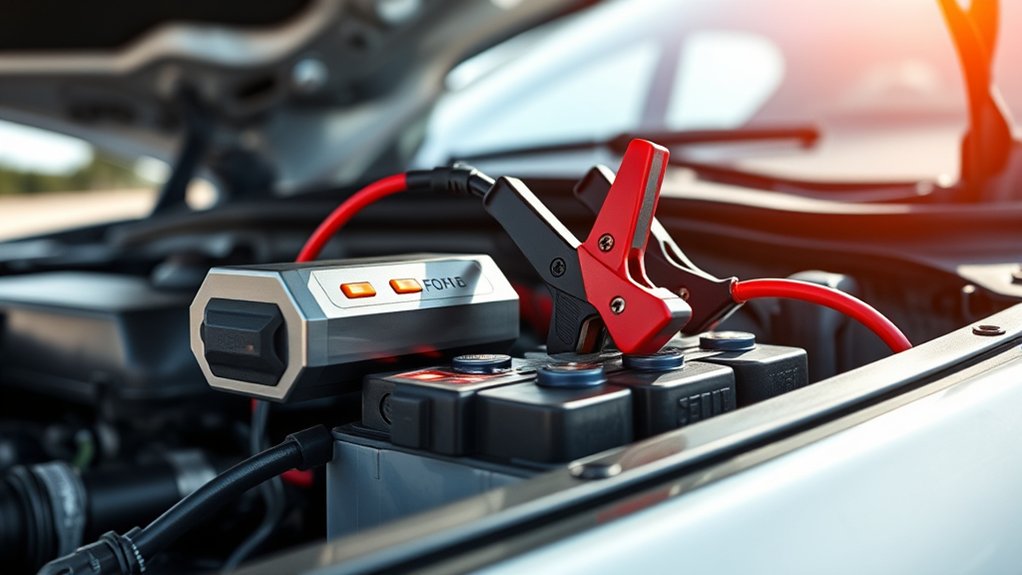
Jump-starting a car with a battery charger is like providing a controlled lifeline to your vehicle’s power source. You’ll need to approach the process methodically: choosing the right charger, preparing the battery properly, and connecting clamps in the correct order. Missing a step or misjudging the timing can cause damage or fail to start your car.
Before you begin, understanding these critical details will make all the difference. Taking your time and following each step carefully ensures a safe and effective jump-start. With the right knowledge, you can bring your car back to life using a battery charger without hassle.
Key Takeaways
- Ensure the charger matches the battery type and voltage, and position it on a stable, dry surface away from flammables.
- Connect the positive clamp to the battery’s positive terminal and the negative clamp to a solid metal ground on the vehicle.
- Set the charger to the correct voltage and charging mode before plugging it in and starting the charging process.
- Charge the battery for at least 30 minutes, monitoring for around 12.4 volts and a steady hum indicating readiness.
- After charging, attempt to start the vehicle once, then keep the engine running 15 to 20 minutes to fully recharge the battery.
What You’ll Need to Jump Your Car With a Battery Charger
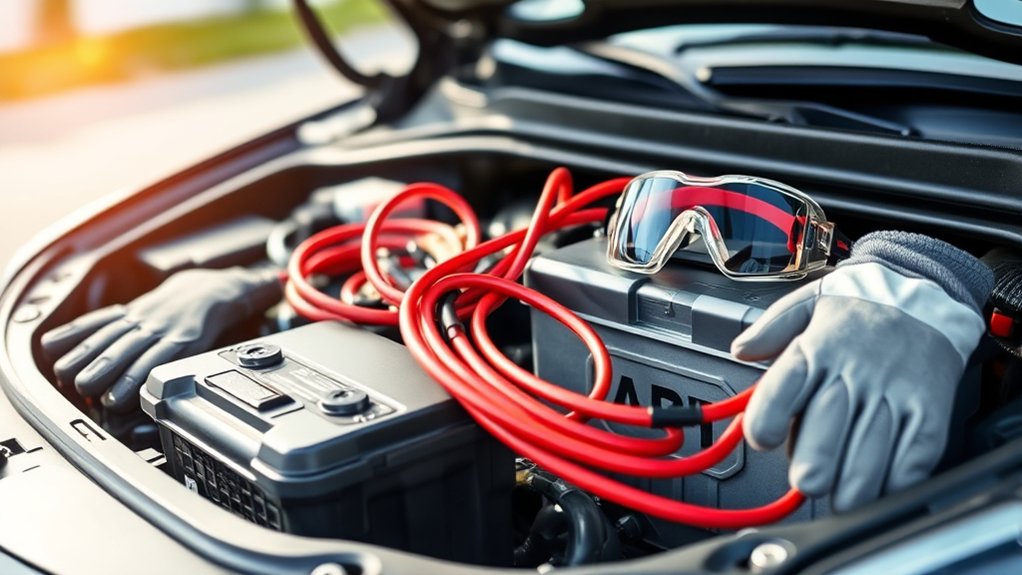
What tools and materials do you need to jump-start your car with a battery charger? First, obtain a compatible battery charger designed for automotive use, ensuring it matches your battery chemistry, typically lead-acid or AGM.
Start with a compatible automotive battery charger matched to your battery type, such as lead-acid or AGM.
You’ll also need insulated clamps to securely connect the charger terminals to the battery posts. A voltmeter or multimeter helps verify voltage levels before and after charging. Avoid cheap or damaged cables to prevent poor connections.
Be aware that improper charging can cause irreversible charging damage, harming battery cells and reducing lifespan. Consequently, choose a charger with automatic voltage regulation and reverse polarity protection.
Lastly, have safety gloves and goggles ready to protect yourself from potential acid splashes or sparks. With these materials, you’re prepared to jump-start efficiently and safely.
How to Safely Prepare Your Car Battery and Charger
Why must you take specific precautions before connecting your battery charger? Because improper handling can cause sparks, acid leaks, or electrical damage. Begin by ensuring your car is off, keys removed, and the charger unplugged.
Locate the battery and inspect it for cracks, corrosion, or leaks. These conditions require attention before proceeding. Use a wire brush to clean the terminals if needed.
Follow safety reminders: wear gloves and eye protection to guard against acid exposure. Confirm your charger matches your battery type and voltage.
Position the charger on a stable, dry surface away from flammable materials. Keep the charger disconnected until clamps are properly attached.
These two word discussion ideas, “terminal inspection” and “charger positioning,” highlight essential preparation steps that maintain safety and equipment integrity before you jump your car.
Step-by-Step: Jump Your Car With a Battery Charger
First, set your battery charger to the correct voltage and charging mode for your car battery.
Next, connect the positive clamp to the battery’s positive terminal and the negative clamp to a solid metal ground on the vehicle.
Finally, start the charging process and monitor the charger until the battery reaches sufficient charge for your car to start.
Preparing The Battery Charger
How do you guarantee your battery charger is set up correctly before jumping your car? First, ensure the charger is unplugged from the power source. Inspect the charger cables and clamps for damage or corrosion; replace if necessary.
Confirm the charger’s voltage matches your car battery’s specifications, typically 12 volts. Select the appropriate charging mode, avoiding irrelevant topics like unrelated chatter on unrelated devices or poor-quality chargers.
Position the charger on a stable, non-conductive surface near the battery to prevent accidental shorts. Double-check the charger’s settings, amperage and charging time, according to your battery’s condition and manufacturer guidelines.
Avoid distractions or irrelevant topics during setup to maintain focus. Only after these steps is your charger ready for safe connection and charging, which you’ll handle next.
Connecting And Charging Steps
When do you begin connecting the battery charger to your car? Start only after ensuring the charger is unplugged and the ignition is off. Position the car jack if you need better access to the battery.
Attach the positive (red) clamp to the battery’s positive terminal first. Then, connect the negative (black) clamp to a clean, unpainted metal surface away from the battery to prevent sparks. Double-check the connections.
Plug in the charger, set it to the correct voltage and amperage, then turn it on. Allow the battery to charge fully, monitoring the charger’s indicator.
Once charged, unplug the charger before removing clamps in reverse order: negative first, then positive. If issues arise, consider roadside assistance to avoid damage or injury.
How Long to Charge Your Car Battery for a Jump Start
You should charge your car battery for at least 30 minutes to provide enough power for a jump start, but exact times vary based on the battery’s condition and charger output.
Monitor voltage levels and listen for a steady hum to gauge when the battery is sufficiently charged. Once the battery reaches around 12.4 volts and shows stable signs, you’re ready to attempt starting the vehicle.
Optimal Charging Duration
Although the exact charging duration depends on your battery charger’s output and the battery’s condition, a general guideline is to charge for 30 minutes to an hour before attempting a jump start. This timeframe allows the charger to replenish sufficient charge relative to the battery capacity, ensuring enough power to crank the engine.
Always monitor the charging process closely to maintain charging safety; avoid overcharging, which can damage the battery or cause overheating. Use a charger with an automatic shutoff or timer if possible.
If you notice excessive heat or swelling, disconnect immediately. After the initial charge, test the battery voltage to confirm adequate charge before attempting a jump. Following these steps ensures you optimize charging duration while protecting both the battery and your vehicle’s electrical system.
Factors Affecting Charging Time
Because several variables influence how long you need to charge your car battery for a jump start, understanding these factors guarantees effective and safe charging. First, the battery’s initial charge level directly impacts recharge efficiency; a deeply discharged battery requires a longer charging time.
Temperature also plays a crucial role. Cold conditions slow chemical reactions inside the battery, extending charge duration. The charger’s amperage setting affects how quickly energy transfers; higher amperage reduces charging time but demands strict adherence to charging safety protocols to avoid overheating or damage.
Additionally, battery age and condition influence acceptance rate; older or sulfated batteries recharge less efficiently. Always monitor the charger’s indicators and avoid overcharging to preserve battery health and ensure optimal jump-start performance without compromising safety.
Signs Battery Is Ready
Typically, a car battery needs to charge for at least 15 to 30 minutes before it’s ready for a jump start. To confirm readiness, monitor the battery charger’s indicator or use a multimeter to check voltage. It should read around 12.6 volts or higher.
Proper battery maintenance ensures consistent voltage levels, which directly supports reliable jump starts and optimal fuel efficiency by allowing your engine to operate smoothly. Avoid premature attempts to start the car, as insufficient charge can strain the alternator and reduce fuel efficiency.
Also, inspect for signs like stable charger lights or a full charge indicator on digital devices. Once these signs appear, disconnect the charger carefully and proceed with the jump start, ensuring your battery is adequately charged to prevent damage and maintain vehicle performance.
What to Do After Your Car Starts Running
What steps should you take immediately after your car starts running? First, disconnect the battery charger carefully, adhering to battery safety protocols: remove the negative clamp before the positive to prevent sparks. Avoid touching clamps together or to metal surfaces.
Once disconnected, keep your engine running for at least 15 to 20 minutes to allow the alternator to recharge the battery fully. Confirm your jump start legality by ensuring you followed local regulations regarding battery charging and jump starting, as some areas have restrictions.
Finally, test electrical components like headlights and radio to verify stable power. If your car stalls or fails to hold a charge, seek professional assistance promptly to avoid further damage. Maintaining these steps ensures safety and extends battery life after jump-starting.
Common Mistakes to Avoid When Jump-Starting
How can you guarantee a safe and effective jump-start without causing damage? Avoid common mistakes like connecting the battery charger clamps incorrectly. Always attach the positive clamp to the positive terminal and the negative clamp to an unpainted metal surface away from the battery.
Never connect clamps to the negative terminal; this risks sparks and battery damage. Ensure the charger is off before making connections to prevent electrical surges. Avoid jump-starting if your battery is cracked or leaking, as this compromises roadside safety and vehicle integrity.
Skipping regular car maintenance checks can increase jump-start risks. Finally, never lean over the battery during the process, and keep sparks, flames, and smoking materials away to prevent ignition of battery gases. Following these steps ensures a safe, effective jump-start and protects your vehicle.
How to Troubleshoot If Your Car Won’t Start
Why won’t your car start even after a jump? First, verify car model compatibility with your battery charger. Some models require specific settings. Check the charger warranty to ensure it’s functioning optimally.
Next, inspect all cable connections for corrosion or looseness. If the engine still fails to crank, test the battery voltage. A severely discharged or damaged battery won’t respond to charging.
| Symptom | Possible Cause | Action Required |
|---|---|---|
| No engine crank | Incorrect charger settings | Verify car model compatibility |
| Dim dashboard lights | Weak battery or bad cables | Tighten/clean connections |
| Clicking sound | Starter motor issue | Consult a mechanic |
| No response | Faulty charger or battery | Check charger warranty status |
Follow these steps methodically to identify the issue and avoid unnecessary repairs.
When to Replace Your Car Battery Instead of Charging
If your battery fails to respond after thorough troubleshooting and charging attempts, it may be time to contemplate replacement. Persistent issues such as slow engine cranking, frequent jump starts, or the battery’s age exceeding 3-5 years indicate diminished capacity.
You should also check for physical signs like corrosion, swelling, or leakage, which compromise safety and performance. In car maintenance, replacing the battery promptly prevents unexpected failures and protects your vehicle’s electrical system.
After removal, ensure proper battery disposal by taking it to designated recycling centers or automotive shops to handle hazardous materials responsibly. Avoid repeated charging cycles on a defective battery, as this can lead to further damage and potential safety hazards.
Prioritize replacement when reliability and safety are in question.
How a Battery Charger Gets Your Car Started
Connecting a battery charger to your car’s battery supplies a controlled flow of electrical current that revives the battery’s charge. This steady input replenishes the battery’s stored energy, restoring voltage to levels necessary for engine ignition.
Contrary to common jump start myths, a charger does not provide an instant surge of power; instead, it gradually restores battery life, preventing damage from rapid current spikes. Once the battery reaches adequate voltage, it can effectively power the starter motor and ignite the fuel system.
It’s crucial to monitor the charger’s settings to match your battery specifications, ensuring optimal charging without overloading. Proper use extends battery life and avoids the pitfalls of traditional jump-start attempts, making this method both safer and more reliable for starting your vehicle.
Frequently Asked Questions
Can I Use Any Battery Charger Brand for Jump-Starting?
You shouldn’t use just any battery charger brand for jump-starting. Choose one meeting reliability standards to ensure safety and performance.
Using incompatible chargers can void warranty implications and damage your vehicle’s battery or electrical system.
Is It Safe to Jump-Start a Hybrid or Electric Vehicle?
Jump-starting a hybrid or electric vehicle isn’t like using a telegraph; it requires strict safe handling and electrical safety protocols. Always follow manufacturer guidelines to avoid damage or injury, ensuring proper isolation of high-voltage components first.
How Often Should I Maintain My Car Battery to Avoid Jumps?
You should perform battery maintenance every three to six months to prevent jumps. Follow proper charging etiquette to avoid overcharging.
Additionally, monitor voltage levels and inspect terminals for corrosion regularly to guarantee optimal battery health and performance.
Can Extreme Weather Affect Jump-Starting Success?
Extreme weather impacts jump-starting like a gatekeeper, especially with battery cold sensitivity reducing charge acceptance. You’ll need to ensure connections are clean, use a fully charged charger, and allow extra time in cold conditions for success.
Are There Alternative Methods to Jump-Start Without a Charger?
Yes, you can use jumper cables with a donor vehicle or a portable jump starter as alternative methods. Always follow jump start safety protocols: connect cables correctly, avoid sparks, and wear protective gear to prevent accidents.
Conclusion
By following these careful steps, you’ll give your car battery the gentle nudge it needs to wake up and get you back on the road. Remember, a patient and precise approach ensures safety and success, turning what seems like a stubborn battery into a cooperative partner.
Keep your charger and battery in harmony, and you’ll avoid surprises—transforming a roadside hiccup into a smooth restart every time. Mastering how to jump a car with a battery charger will help you handle these situations confidently and efficiently.