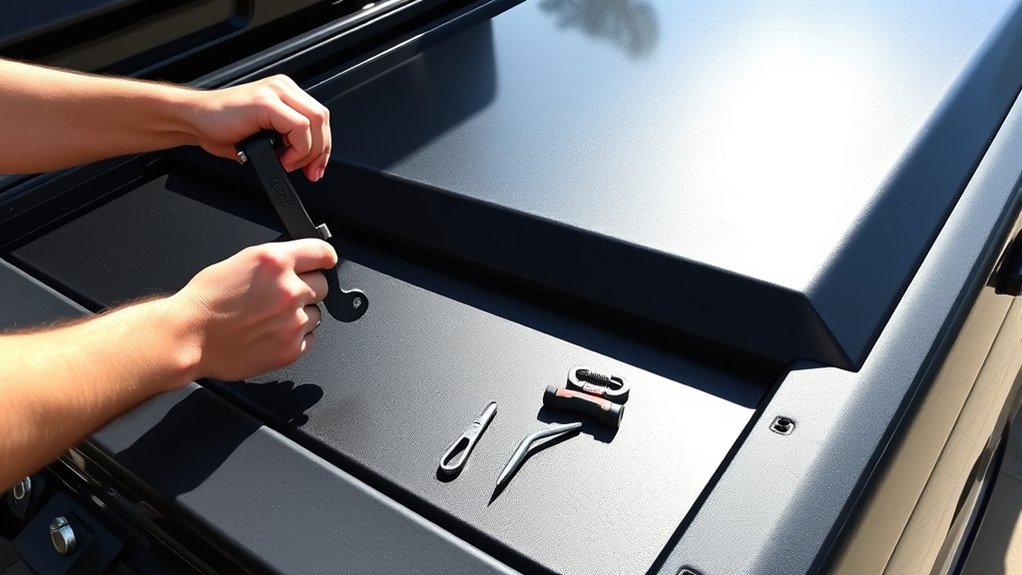
Are Fiberglass Tonneau Cover Installation Instructions
If you’re considering installing a fiberglass tonneau cover, following the right fiberglass tonneau cover installation instructions is essential to guarantee a proper fit and long-term durability. You’ll need to prepare your truck bed carefully, use specific tools, and align components precisely. Missing any step can lead to leaks, misalignment, or damage.
Understanding these instructions upfront can save you time and frustration—but what exactly sets fiberglass cover installation apart from other types? Proper preparation and attention to detail make all the difference in achieving a secure and lasting installation.
Key Takeaways
- Thoroughly clean and inspect the truck bed surface, removing dirt, rust, and contaminants before installation.
- Align the fiberglass cover carefully with bed rails, ensuring even gaps and flush contact with tailgate and sides.
- Secure mounting brackets and latches according to manufacturer torque specs, avoiding damage to the matte finish and seals.
- Use recommended non-abrasive cleaners and lubricate seals and hinges regularly to maintain cover durability and function.
- Consider professional installation for precision alignment, minimizing downtime, and ensuring warranty and insurance compliance.
Overview of Fiberglass Tonneau Cover Installation
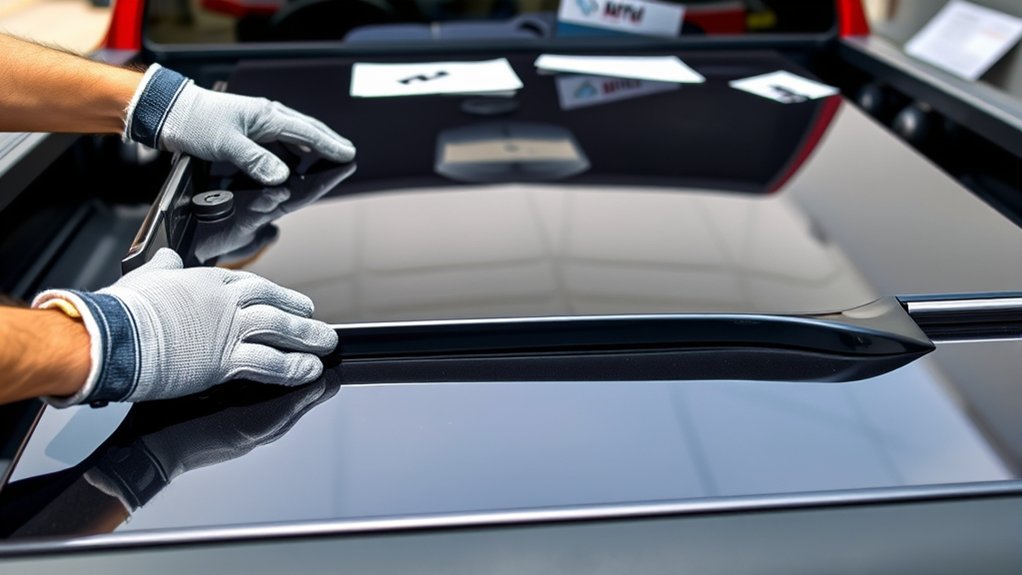
How do you guarantee a secure and efficient installation of a fiberglass tonneau cover? Start by thoroughly preparing the truck bed surface, ensuring it’s clean, dry, and free of debris.
Pay special attention to non gel coat surfaces; these require careful handling to avoid damage or improper adhesion. Proper truck bed prep includes removing any wax, oil, or contaminants that could interfere with mounting.
Use recommended cleaners designed for your truck bed material to enhance bonding strength. Next, align the cover precisely with the bed rails to ensure a snug fit.
Secure mounting brackets following manufacturer torque specifications. Double-check seal integrity to prevent water intrusion.
What Makes Fiberglass Covers Different From Other Tonneau Covers
You’ll notice fiberglass covers offer superior durability compared to soft or aluminum options, resisting dents and corrosion effectively. Their installation process requires specific steps due to weight and fit, differing from lighter covers.
Plus, fiberglass provides a sleek finish that enhances both aesthetics and aerodynamic function.
Material Durability Comparison
Durability defines the value of a tonneau cover, especially when comparing materials like fiberglass, vinyl, and aluminum. When you evaluate material aging and wear resistance, fiberglass stands out due to its rigid structure and resistance to cracking under stress.
Vinyl, while flexible, tends to degrade faster under UV exposure. Aluminum offers excellent corrosion resistance but can dent easily.
| Material | Durability Highlights |
|---|---|
| Fiberglass | High rigidity, resists cracking |
| Vinyl | Flexible but UV-sensitive |
| Aluminum | Corrosion-resistant, dents easy |
| Composite | Balanced durability and weight |
This durability comparison helps you select a cover that maintains integrity over time, ensuring your investment withstands the elements and daily use.
Installation Process Variations
What sets fiberglass tonneau covers apart during installation is their rigid, pre-formed structure, which demands precise alignment and secure fastening. Unlike soft or folding covers, you can’t simply roll or snap these into place.
You’ll need to carefully position the cover on the truck bed, ensuring all mounting points line up perfectly to avoid gaps or stress points. This isn’t an unrelated topic or off topic discussion; it’s critical to the installation process.
Fiberglass covers often require drilling or specialized clamps, so you must follow instructions meticulously to prevent damage. Unlike flexible covers, adjustments post-installation are limited, so accuracy at each step is essential.
Understanding these differences helps you install your fiberglass tonneau cover efficiently and securely.
Aesthetic and Functional Benefits
A fiberglass tonneau cover offers distinct aesthetic and functional advantages compared to other types of truck bed covers. You’ll notice its rigid structure provides enhanced durability and superior protection against weather and theft.
Unlike soft covers, fiberglass maintains its shape, resisting sagging or warping over time. Its smooth surface integrates seamlessly with your truck’s motor paint finishes, preserving the vehicle’s sleek appearance. This compatibility with factory colors and finishes aligns with recent sales trends favoring high-quality, visually appealing accessories.
Functionally, fiberglass covers improve aerodynamics, potentially enhancing fuel efficiency by reducing drag. They also allow for custom molding and paint options, letting you match or complement your truck’s design precisely. When you choose fiberglass, you get a cover that balances robust protection with refined aesthetics, setting it apart from other tonneau options.
Tools Needed for Fiberglass Tonneau Cover Installation
Before you begin installing your fiberglass tonneau cover, gather the essential tools to ensure a smooth process. You’ll need a cordless drill with a variety of drill bits for precise hole drilling, a torque wrench to tighten bolts to manufacturer specifications, and a screwdriver set for securing clamps and fasteners.
Measuring tape and a marker are crucial for accurate alignment, while a rubber mallet helps seat components without damage. Two word discussion ideas like “tool checklist” and “installation steps” will keep your fiberglass installation organized.
Additionally, wearing safety glasses and gloves protects you during the process. Having these tools ready minimizes delays and guarantees precision, allowing you to efficiently complete your fiberglass tonneau cover installation with confidence and professional results.
Preparing Your Truck Bed for Installation
How should you prepare your truck bed to ensure a secure and proper fit for the fiberglass tonneau cover? First, thoroughly clean the bed surface to remove dirt and debris; this prevents damage to the fiberglass composition during installation.
Inspect the bed for rust or dents that could misalign the cover. Next, verify that the bed rails are straight and free of damage, guaranteeing optimal sealing and fit.
Pay special attention to gel coat maintenance by avoiding abrasive cleaners that could degrade the finish. Use the following checklist to streamline preparation:
| Step | Action | Purpose |
|---|---|---|
| Clean Bed | Remove dirt, grease | Prevent scratches, ensure fit |
| Inspect Rails | Check for damage, straightness | Secure sealing, alignment |
| Address Rust/Dents | Repair as needed | Avoid misalignment |
| Maintain Gel Coat | Use gentle cleaners | Preserve finish, durability |
How Long Does Fiberglass Tonneau Cover Installation Take
Wondering how long the fiberglass tonneau cover installation will take? Typically, you can expect the process to last between 1 to 3 hours, depending on your experience and tools. While it won’t involve actual time travel, being prepared will make it feel like you’re bending time to your advantage.
Installing a fiberglass tonneau cover usually takes 1 to 3 hours with the right prep and tools.
Avoid distractions like lens flare from bright sunlight by working in shaded areas or during overcast conditions to maintain precision.
Here’s what affects installation time:
- Familiarity with the cover’s components and instructions
- Availability of proper tools and workspace
- Environmental conditions impacting visibility and focus
Step-by-Step Guide to Installing a Fiberglass Tonneau Cover
Start by thoroughly cleaning and preparing your truck bed to ensure a secure fit. Next, carefully align the fiberglass cover with the bed rails for proper placement.
Finally, fasten all latches and seals tightly to prevent water and debris from entering.
Preparing Your Truck Bed
Why is preparing your truck bed essential before installing a fiberglass tonneau cover? Proper preparation ensures a secure fit, prevents damage, and guards against shipping delays caused by weather exposure.
Start by thoroughly cleaning the bed to remove dirt and debris that could interfere with installation. Next, inspect for rust or dents that might compromise the cover’s seal or alignment. Finally, check all mounting surfaces and hardware areas to confirm they’re free of obstructions or damage.
- Clean the truck bed thoroughly to remove dirt and debris.
- Inspect for rust, dents, or damage that could affect sealing.
- Verify mounting surfaces are clear and intact for hardware installation.
This preparation minimizes installation issues and protects your truck bed from weather exposure and potential delays in cover fitting.
Aligning The Cover Properly
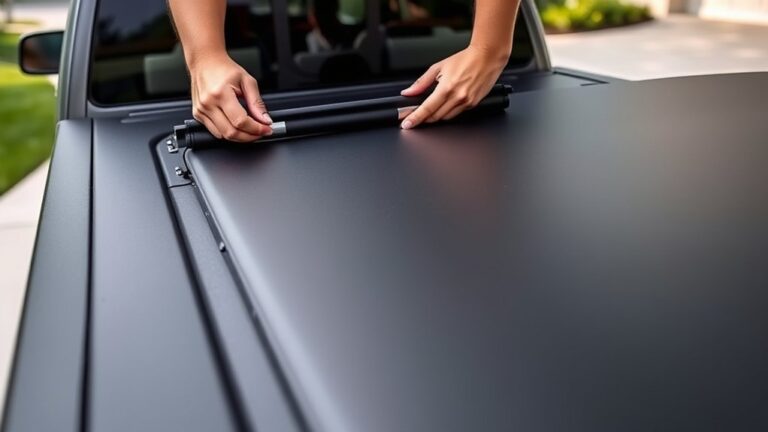
Proper alignment of your fiberglass tonneau cover is critical to guarantee a secure fit and prevent leaks or damage during use. Begin by placing the cover gently on the truck bed, ensuring it sits evenly without forcing it.
Check all edges for uniform gaps, as alignment issues can lead to poor sealing or structural stress. Use slight adjustments forward, backward, or side-to-side to achieve perfect positioning.
Pay attention to the tailgate and side rails to confirm flush contact. If minor misalignments persist, apply cosmetic tweaks such as gentle pressure or repositioning clamps before final securing.
Avoid forcing the cover as it may cause warping or cracking. Taking time here ensures durability and optimal performance of your tonneau cover.
Securing Latches And Seals
How do you guarantee your fiberglass tonneau cover stays firmly in place and sealed against the elements? Focus on securing the latches and seals with precision to maintain the cover’s integrity and protect the truck bed. Follow these steps:
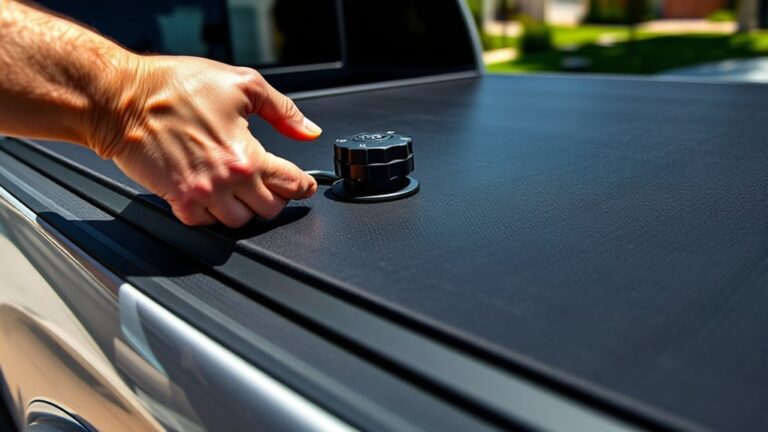
- Inspect the fiberglass weave surface and matte finish for any imperfections that could affect latch alignment.
- Engage each latch fully, ensuring it locks securely without forcing, preserving the matte finish and fiberglass weave structure.
- Check the perimeter seals for consistent contact with the truck bed; adjust latches as needed to compress seals evenly, preventing water and dust ingress.
When Professional Installation Is Better Than DIY
When should you consider professional installation over a DIY approach for your fiberglass tonneau cover? If you’re part of the gig economy, relying on your vehicle daily, minimizing downtime is crucial. Professionals bring specialized tools and expertise, ensuring precise alignment and secure fitting that DIY attempts might lack.
Additionally, the insurance implications matter: improper installation can void coverage or lead to denied claims if damage occurs. Professionals provide documented proof of correct installation, safeguarding your investment and liability.
If you lack experience with fiberglass materials or don’t have the right equipment, professional installation reduces risk of damage to both cover and vehicle. In these cases, investing in expert service saves time, prevents costly errors, and maintains your insurance protection, making it the superior choice over DIY.
Most Common Installation Challenges and How to Fix Them
You’ll often face three main challenges during installation: aligning the cover properly, securing the clamps effectively, and managing the seal fit. Misalignment can cause gaps, while loose clamps compromise stability.
Addressing these issues early guarantees a tight, secure installation.
Aligning Cover Properly
Why does proper alignment of your fiberglass tonneau cover matter so much? Misalignment compromises installation aesthetics, affects sealing, and can lead to functional issues. To ensure precision, follow these discussion ideas during setup:
- Visual Check: Before securing, position the cover evenly along the truck bed rails, ensuring uniform gaps on both sides for balanced aesthetics.
- Test Fit: Open and close the cover several times to detect any binding or uneven movement, adjusting alignment as needed.
- Measurement Verification: Use a tape measure to confirm the cover sits flush with the bed rails and tailgate, preventing water ingress and wind noise.
Maintaining accurate alignment is crucial for functionality and appearance, avoiding costly adjustments later and ensuring a professional installation finish.
Securing Clamps Effectively
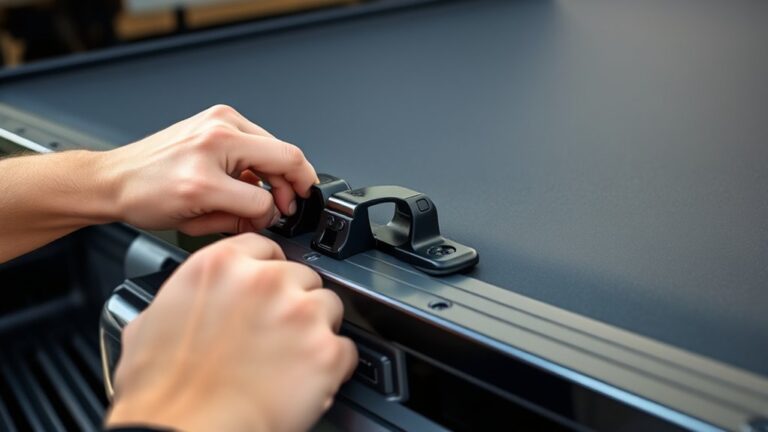
After aligning your fiberglass tonneau cover properly, securing the clamps effectively guarantees it stays firmly in place during use. Begin by applying the correct install clamp technique: position each clamp evenly along the cover’s edge, ensuring consistent pressure without overtightening, which can damage components.
Focus on latch alignment; confirm the latches engage smoothly with their corresponding anchor points before fully tightening clamps. If you encounter resistance or misalignment, adjust the cover slightly and recheck latch alignment to prevent strain or gaps.
Tighten clamps incrementally, alternating sides to maintain even tension. This method prevents cover shifting and maintains a secure seal. Following these steps ensures your clamps hold firmly, maximizing the cover’s durability and performance.
Managing Seal Fit
How can you guarantee a tight, reliable seal when installing your fiberglass tonneau cover? Managing seal fit hinges on understanding adhesive chemistry and ensuring optimal weather resistance. Follow these steps:
- Clean and Prepare Surfaces: Remove all dirt and oils to maximize adhesive bonding strength, critical for weather-resistant seals.
- Apply Adhesive Evenly: Use the recommended adhesive chemistry to avoid gaps. Uneven application compromises seal integrity and reduces weather resistance.
- Adjust Seal Compression: Ensure the seal compresses uniformly along the frame without over-tightening clamps, which can deform seals and create leaks.
Tips for Maintaining Your Fiberglass Tonneau Cover
When should you perform routine maintenance on your fiberglass tonneau cover to guarantee its longevity? Conduct fiberglass upkeep every three months or after extreme weather exposure. Regularly clean the surface with a mild detergent and soft cloth to prevent dirt buildup and maintain finish integrity.
Inspect seals and hinges for wear, lubricating moving parts with a silicone-based lubricant to ensure smooth operation. Avoid harsh chemicals that can degrade the gel coat or seals.
For two word discussion ideas, focus on “surface protection” and “seal condition” to prioritize tasks. Store the cover properly when not in use, keeping it elevated and away from direct sunlight to prevent warping or fading.
Following these precise maintenance steps ensures your cover remains functional and visually appealing over time.
Troubleshooting Fit and Seal Problems After Installation
Why might your fiberglass tonneau cover not fit or seal properly after installation? Common issues often stem from misaligned components or improper sealing techniques. To troubleshoot effectively, focus on these key areas:
- Check Alignment: Ensure the cover aligns perfectly with the truck bed rails. Misalignment causes gaps that prevent a proper seal.
- Inspect Seal Integrity: Examine all rubber seals for damage or improper placement. Replace or reposition seals to eliminate leaks.
- Verify Installation Steps: Review installation instructions carefully. Skipping steps or mixing discussion ideas with unrelated topics can lead to errors affecting fit.
Avoid confusing unrelated topics during installation, as precision is essential. If problems persist, revisit your installation process with fresh eyes, focusing strictly on fit and seal parameters. This approach prevents overlooking subtle issues that compromise performance.
Frequently Asked Questions
Can I Install a Fiberglass Tonneau Cover on Any Truck Model?
You can’t install a fiberglass tonneau cover on every truck model due to install compatibility issues. Check your truck’s specifications and explore customization options to guarantee a precise fit and secure installation for optimal performance.
Are Fiberglass Tonneau Covers Compatible With Truck Bed Liners?
Like puzzle pieces snapping together, fiberglass compatibility with truck bed liners ensures secure tonneau fitment. You’ll want to verify liner thickness and mounting style to guarantee a precise, durable seal without damaging either component during installation.
How Does Weather Affect the Durability of Fiberglass Tonneau Covers?
Weather effects like UV exposure, temperature fluctuations, and moisture impact fiberglass tonneau covers’ durability factors. You’ll need proper coatings and maintenance to prevent fading, cracking, or warping. This ensures long-term strength and functionality in varied climates.
Do Fiberglass Tonneau Covers Impact Fuel Efficiency?
You might expect fiberglass efficiency to improve fuel economy by reducing drag, but its added weight can offset gains. Overall, the weight impact usually lessens any aerodynamic benefits, resulting in minimal or no significant fuel efficiency change.
Can I Paint or Customize My Fiberglass Tonneau Cover?
You can paint your fiberglass tonneau cover using automotive-grade paint options designed for fiberglass. Use proper surface prep and primers.
For customization ideas, consider decals, wraps, or textured finishes to enhance appearance and durability precisely.
Conclusion
Installing your fiberglass tonneau cover is like tuning a fine instrument—each adjustment guarantees harmony between cover and truck bed. Just as a musician’s precision shapes sound, your careful alignment and secure fastening create a seamless fit that protects and performs.
Approach the process with focus and the right tools, and you’ll strike the perfect balance of durability and function. When in doubt, professional help keeps your investment playing smoothly, preserving its value and warranty.
For the best results, always follow the specific fiberglass tonneau cover installation instructions to ensure a proper fit and long-lasting protection.