How to Check Tire Pressure on Volkswagen Dashboard
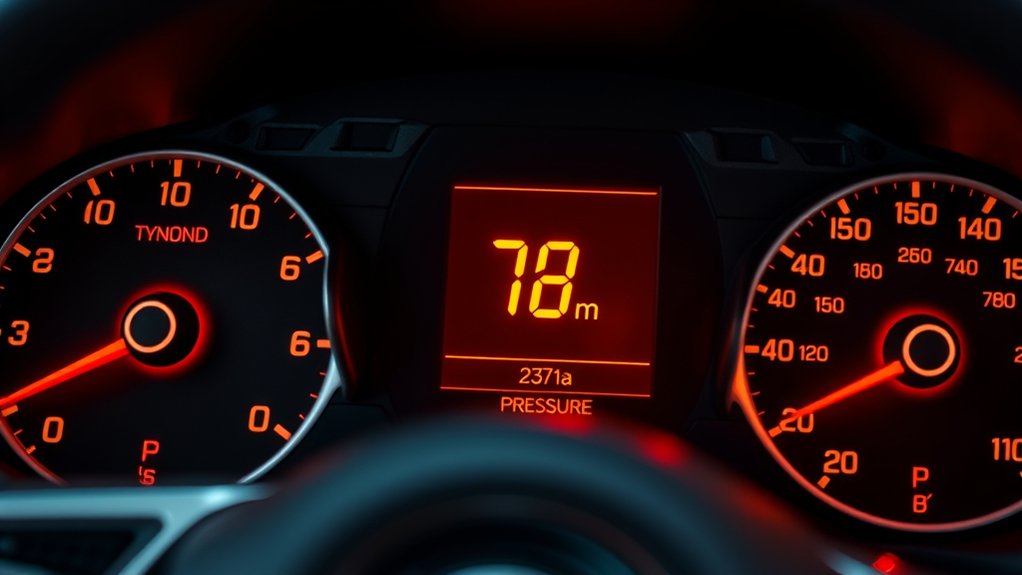
Imagine you’re preparing for a long drive and want to check tire pressure on your Volkswagen dashboard to ensure your tires are properly inflated. Start by locating the Tire Pressure Monitoring System (TPMS) within the instrument cluster or infotainment screen.
Next, access the specific section that displays each tire’s PSI. This allows you to monitor the pressure levels accurately.
Understanding how to interpret these readings and respond to warnings is crucial for safe driving. There’s more to consider beyond just spotting low-pressure alerts, such as recognizing uneven tire pressures or system malfunctions.
Key Takeaways
- Locate the tire pressure display in the instrument cluster or infotainment system via the vehicle status or tire pressure menu.
- The dashboard shows individual tire pressures for each tire, updated in real-time during driving.
- Compare displayed PSI to Volkswagen’s recommended pressure found in the owner’s manual or driver’s door jamb.
- A tire pressure warning light indicates underinflation; stop safely and inflate tires to recommended levels promptly.
- Regularly check tire pressures monthly and before trips, especially during seasonal temperature changes affecting pressure readings.
Finding the Tire Pressure Display on Your VW Dashboard
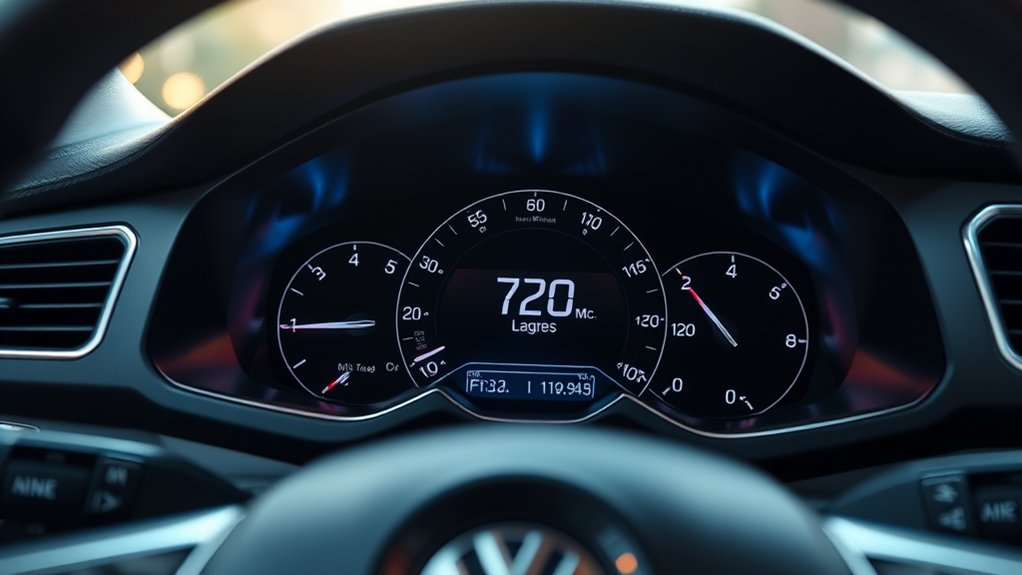
Where can you find the tire pressure display on your Volkswagen dashboard? Typically, Volkswagen integrates this information within the instrument cluster or infotainment system, depending on the model’s dashboard design.
The tire pressure display in Volkswagen vehicles is usually found in the instrument cluster or infotainment system.
The tire pressure display is often accessible via the vehicle status menu, where real-time tire pressure data is presented for each tire. Volkswagen’s dashboard design prioritizes clear visibility and user-friendly navigation, allowing you to quickly locate tire pressure indicators without distractions.
Unlike physical tire storage compartments, this digital display eliminates guesswork by providing precise pressure readings. Familiarizing yourself with the specific layout of your VW model’s dashboard design ensures you can promptly monitor tire conditions.
Understanding where this display resides forms the foundation before actively checking and maintaining proper tire pressure for safe driving.
How to Check Tire Pressure on Your VW Dashboard
Once you locate the tire pressure display on your Volkswagen dashboard, checking the pressure is straightforward. The system continuously monitors each tire’s pressure, compensating for variations due to tire materials and road conditions. You just need to focus on the displayed values for each tire. These readings help you ensure optimal performance and safety.
Here’s what you’ll appreciate about this process:
- Immediate feedback on pressure changes caused by temperature or terrain shifts
- Clear alerts that allow timely adjustments before issues escalate
- Confidence in maintaining proper tire inflation for better fuel efficiency and tire longevity
Interpreting VW Tire Pressure Readings
How do you accurately interpret the tire pressure readings displayed on your Volkswagen dashboard? First, compare the displayed PSI values to the manufacturer’s recommended pressure found in your owner’s manual or on the driver’s door jamb.
If the readings fall below the specified range, your tires require inflation. Consistently low pressure can affect wheel alignment, leading to uneven tire wear and compromised handling.
For proper car care, regularly monitor these readings, especially before long trips or seasonal changes. Volkswagen’s system shows individual tire pressures, allowing you to identify which tire needs adjustment.
What the Tire Pressure Warning Light Means on Your VW
Monitoring your Volkswagen’s tire pressure readings helps you stay ahead of potential issues, but the tire pressure warning light gives immediate alerts when pressure drops to unsafe levels. When this light illuminates on your dashboard, it signals that one or more tires may be underinflated, increasing risks such as reduced handling, uneven tire wear, and decreased fuel efficiency.
Ignoring this warning can lead to hazardous driving conditions.
Remember, this warning is not an irrelevant subtopic to dismiss but a critical alert demanding prompt attention. Avoid confusing it with two word discussion ideas like “maintenance schedule,” which don’t address immediate safety concerns.
If the warning light comes on, you should:
- Stop driving as soon as safely possible
- Check tire pressures with a reliable gauge
- Inflate tires to the manufacturer’s recommended levels immediately
How VW’s Tire Pressure Monitoring System Works
Why does your Volkswagen’s tire pressure monitoring system (TPMS) matter? It continuously measures your tires’ pressure to ensure optimal safety, performance, and fuel efficiency. Unlike pilot training, where real-time data is vital, VW’s TPMS leverages sensors integrated into tire design to provide accurate readings.
These sensors send data to your dashboard, alerting you immediately if pressure deviates from recommended levels.
| Component | Function | Benefit |
|---|---|---|
| Pressure Sensor | Measures tire pressure | Accurate, real-time data |
| Control Module | Processes sensor signals | Quick alerts on dashboard |
| Dashboard Light | Displays warning | Immediate driver notification |
This system helps you maintain proper tire pressure, preventing uneven tire wear and enhancing driving safety.
Fixing Low or High Tire Pressure in Your VW
When should you address tire pressure issues in your Volkswagen? Immediately after your dashboard signals low or high pressure, or during routine checks to maintain optimal performance. Correct tire pressure prevents uneven wear, ensures tire cosmetics remain pristine, and optimizes fuel efficiency.
To fix low pressure, use a reliable air compressor to inflate tires to the manufacturer’s recommended PSI. For high pressure, release air gradually until reaching the proper level. Always check pressure when tires are cold for accuracy.
Remember:
- Ignoring pressure risks tire damage and unsafe handling
- Proper maintenance extends tire life and appearance
- A bit of pressure humor can ease the stress of routine checks
Staying proactive keeps your VW safe and your tires looking their best.
Resetting the Tire Pressure Warning in Your VW
To reset the tire pressure warning in your VW, first locate the reset button, usually found under the steering wheel or inside the glove compartment. Once you’ve found it, press and hold the button until the indicator light blinks, signaling the reset process has started.
This procedure recalibrates the system after you’ve adjusted the tire pressures.
Locating The Reset Button
Where exactly can you find the reset button for the tire pressure warning on your Volkswagen? Typically, the reset button is located beneath the steering wheel or near the glove compartment. It’s designed for easy access so you can promptly recalibrate the system after checking tire tread and verifying proper wheel alignment.
Knowing its location saves time and prevents unnecessary worry when the warning light appears.
Look for the reset button in these areas:
- Below the steering column, close to the fuse box
- Near the glove compartment on the passenger side
- Integrated into the dashboard menu via the infotainment system
Locating this button accurately ensures you can maintain paramount tire performance and safety without delay.
Performing The Reset Procedure
After locating the reset button on your Volkswagen, you can initiate the tire pressure warning reset procedure. Ensure all tires are inflated to the recommended pressure before starting. Press and hold the reset button until the dashboard indicator blinks, signaling the system is recalibrating. Ignore any irrelevant topic or random brainstorm that might distract from this precise process.
| Step | Action | Indicator Feedback |
|---|---|---|
| 1 | Inflate tires to spec | Pressure stable |
| 2 | Turn ignition to ON | System ready |
| 3 | Press and hold reset button | Warning light blinks |
| 4 | Release button when blinking | System recalibrates |
| 5 | Drive to confirm reset | Light turns off |
This method ensures accurate tire pressure monitoring and warning system functionality.
Troubleshooting VW Tire Pressure Display Issues
Why isn’t your Volkswagen’s tire pressure display showing accurate readings or any data at all? Several factors can interfere with the system’s functionality. Faulty tire pressure sensors, often caused by poor tire design or damage, may fail to transmit data correctly.
Several factors like faulty sensors or tire damage can cause inaccurate or missing tire pressure readings in your Volkswagen.
Incorrect wheel alignment can also affect sensor accuracy by causing uneven tire wear, leading to inconsistent pressure readings. Additionally, low battery levels in sensor units might disrupt communication with the dashboard display.
You might feel frustrated if you notice:
- Confusing or missing tire pressure alerts
- Inconsistent readings despite manual checks
- Persistent warning lights even after resetting
Start troubleshooting by inspecting sensor integrity, verifying wheel alignment, and checking sensor batteries. Addressing these issues ensures reliable tire pressure monitoring on your Volkswagen.
How Often You Should Check Tire Pressure in Your VW
How frequently should you check your Volkswagen’s tire pressure to maintain peak performance and safety? You should inspect it at least once a month and before any long trips. Regular tire care ensures optimal handling, fuel efficiency, and tire longevity.
Additionally, tire pressure naturally decreases over time and with temperature fluctuations, so it’s critical to perform seasonal maintenance during colder and warmer months. Cold weather can cause a significant drop in tire pressure, while heat can increase it, both affecting vehicle stability.
Using your Volkswagen dashboard’s tire pressure monitoring system (TPMS) alongside a manual gauge helps maintain precise readings. Staying proactive with these checks reduces the risk of uneven tire wear and potential blowouts, keeping your VW safe and running efficiently.
Frequently Asked Questions
Can I Use Any Tire Pressure Gauge With My Volkswagen?
You can use any tire pressure gauge, but ensure gauge compatibility with your Volkswagen’s sensors. Incorrect gauges may affect sensor calibration, leading to inaccurate readings.
Always choose a precise gauge designed for your vehicle’s TPMS system.
Does Temperature Affect Tire Pressure Readings on My VW Dashboard?
Yes, temperature fluctuations affect tire pressure readings on your VW dashboard. Cold air contracts, lowering pressure, while heat expands it.
These changes can impact sensor accuracy, so always check tire pressure when tires are cold for precise readings.
Are Tire Pressure Sensors Covered Under VW Warranty?
You’ll be glad to know Volkswagen’s tire warranty typically includes sensor coverage for up to 5 years or 60,000 miles. This guarantees your tire pressure sensors remain reliable, protecting your safety and vehicle performance effectively.
How Does Tire Pressure Impact Fuel Efficiency in My VW?
You’ll see reduced fuel efficiency when tire pressure drops because poor tire performance increases rolling resistance.
Underinflated tires also accelerate tire wear, forcing your VW’s engine to work harder and consume more fuel than necessary.
Can I Manually Calibrate Tire Pressure Sensors on Older VW Models?
You can’t manually calibrate tire pressure sensors on older VW models due to calibration limitations. If sensors malfunction, you’ll need sensor replacement.
Professional tools or dealership service are typically required for accurate recalibration and system reset.
Conclusion
Just like a pilot trusts their instruments, you can rely on your Volkswagen’s tire pressure display to keep your ride safe and smooth. Regularly checking and maintaining the correct tire pressure ensures optimal performance and prevents unexpected issues.
By understanding and using your VW’s TPMS, you take control of your vehicle’s health with precision and confidence—avoiding the pitfalls of underinflation or overinflation before they become road hazards.
Stay vigilant, stay safe, and make it a habit to check tire pressure on Volkswagen dashboard to ensure your journey is always secure.