How to Use the Car Battery Charger
When you need to use the car battery charger, safety and accuracy come first. You’ll want to start by inspecting the battery and wearing proper protective gear. Connecting the charger correctly is essential to avoid damage or injury.
Choosing the right charging mode impacts both efficiency and battery health. Each step requires attention to detail—missing one can affect the outcome.
Understanding these essentials will help you manage the process confidently and effectively.
Key Takeaways
- Ensure the vehicle is off and wear protective gloves and eyewear before connecting the charger.
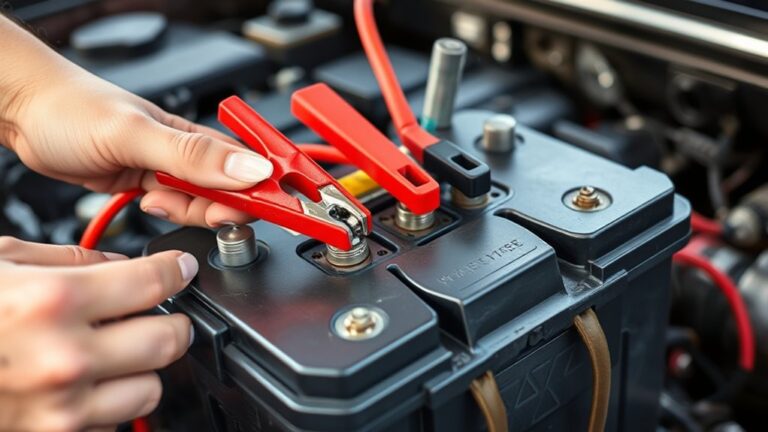
- Connect the red clamp to the positive (+) battery terminal and the black clamp to the negative (–) terminal or grounded chassis.
- Confirm clamps have secure contact, do not touch each other, and avoid slipping during charging.
- Select the appropriate charging mode (trickle, fast, or maintenance) based on battery condition and manufacturer recommendations.
- Charge in a well-ventilated area, monitor indicator lights, and unplug charger by removing the negative clamp first after charging.
Preparing Your Car Battery: Cleaning and Safety Checks
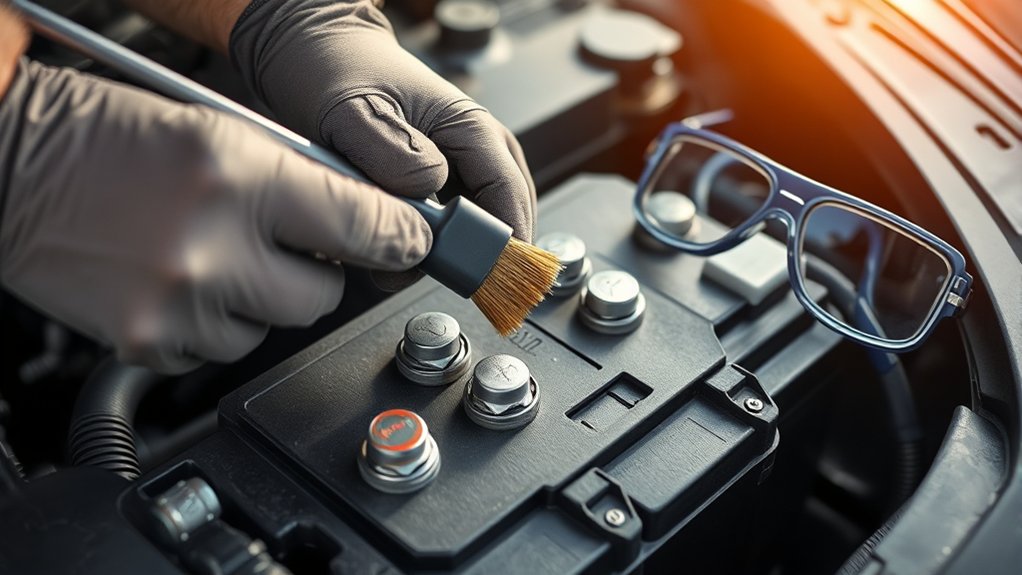
Before you connect the charger, thoroughly inspect and clean your car battery to ensure optimal performance and safety. Start by performing safety checks: wear protective gloves and eyewear, and ensure the vehicle is off with the keys removed.
Examine the battery terminals for corrosion, which appears as a white or blue powdery substance. For cleaning corrosion, disconnect the negative terminal first, then the positive.
Use a battery cleaning brush or a mixture of baking soda and water to scrub the terminals and cable ends, neutralizing acid buildup. Rinse with distilled water and dry completely.
Check the battery case for cracks or leaks, which indicate replacement is necessary. Proper cleaning corrosion removal and safety checks prevent electrical shorts and improve charger connection, ensuring efficient and safe battery charging.
How to Connect Your Car Battery Charger Step-by-Step
After completing the cleaning and safety checks on your battery, you’re ready to connect the charger. First, ensure your charger is unplugged to maintain security awareness. Identify the positive (+) and negative (–) terminals on your battery.
Start by cleaning your battery and confirming the charger is unplugged before connecting terminals safely.
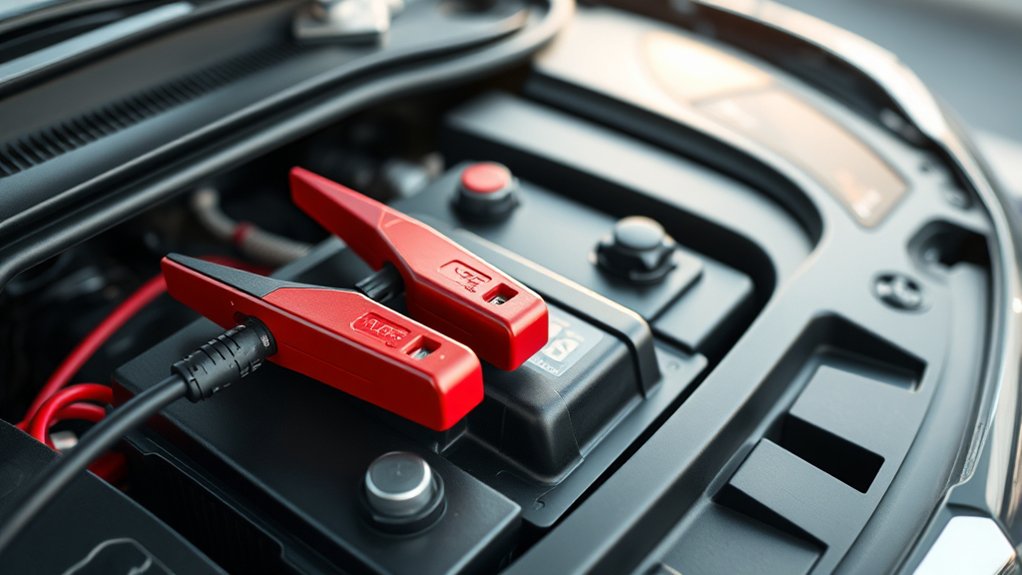
Attach the red clamp to the positive terminal, then connect the black clamp to the negative terminal or a grounded metal part of the car’s chassis to avoid sparks. Confirm clamps have secure contact without touching each other.
Double-check your battery and charger manuals to confirm warranty coverage isn’t voided by improper connection. Only after verifying all connections should you plug in and power on the charger.
Following this step-by-step method reduces risk, protects your equipment, and ensures safe, effective charging.
How to Choose the Right Charging Mode on Your Charger
How do you determine the right charging mode for your car battery charger? Start by evaluating your battery’s condition and voltage requirements. Most chargers offer modes like trickle, fast, and maintenance charging.
Choosing modes depends on the battery’s state: use trickle mode for slow, steady charging that preserves battery health over time, especially for older or partially discharged batteries. Fast mode suits fully discharged batteries needing rapid charge but risks overheating if used improperly.
Maintenance mode keeps a fully charged battery topped up without overcharging, ideal for long-term storage. Consult your battery’s specifications and charger manual to match the mode precisely.
Prioritizing proper mode selection ensures optimal battery health, extends battery lifespan, and prevents damage from overcharging or undercharging during the charging process.
Monitoring Your Battery Charger Safely
You need to regularly check the charger’s indicator lights to track the charging status accurately. Make sure the area around the battery is well-ventilated to prevent gas buildup.
Always monitor the process closely to avoid overcharging, which can damage the battery and reduce its lifespan.
Checking Charger Indicators
Why is it essential to monitor your charger’s indicators during the charging process? Checking indicators ensures the charger operates within safe parameters, preventing overcharging or undercharging your battery.
Charger indicators provide real-time feedback on voltage levels, charging status, and fault conditions. You should regularly observe these indicators to verify the charger delivers the correct current and voltage.
If the indicator signals an error or abnormal reading, immediately disconnect the charger to avoid damaging the battery or causing safety hazards. Accurate interpretation of charger indicators helps you maintain peak battery health and prolongs its lifespan.
Ensuring Proper Ventilation
Where should you place your battery charger to guarantee safety and peak performance? Proper ventilation is critical to avoid ventilation hazards and reduce fumes exposure. Follow these guidelines:
- Position the charger in a well-ventilated area, away from enclosed spaces.
- Ensure at least 3 feet of clearance around the charger for adequate airflow.
- Avoid placing the charger near combustible materials or flammable vapors.
- Use fans or open windows to improve air circulation if indoors.
These steps minimize the risk of hydrogen gas buildup, a common ventilation hazard during charging. Fumes exposure can cause health issues and increase fire risk, so maintaining fresh airflow is essential. Always monitor the charging environment and never operate the charger in confined or poorly ventilated spaces to ensure your safety and optimal charger function.
Avoiding Overcharging Risks
How can you prevent damage and extend your battery’s lifespan during charging? To avoid overcharging risks, always use a charger with an automatic shut-off or float mode. These features stop charging once the battery reaches full capacity, preventing excessive current flow that can cause overheating or electrolyte loss.
Monitor the charger’s indicators regularly to ensure proper operation and disconnect the charger promptly when charging completes. Avoid leaving the charger connected unattended for extended periods, as this increases overcharging risks and compromises battery safety.
Additionally, maintain clean and secure connections to ensure accurate charging voltage. By actively managing the charging process and using modern chargers with built-in safeguards, you protect your battery from damage and enhance its overall reliability and lifespan.
Steps to Take After Charging Your Car Battery
Once the charging process is complete, you need to disconnect the charger carefully to prevent sparks or damage. Begin by unplugging the charger from the power source, then remove the clamps from the battery terminals, starting with the negative terminal.
After disconnecting, allow the battery to undergo aftermath cooling to stabilize its temperature. Proper post charge maintenance ensures battery longevity and optimal performance.
Follow these steps:
- Turn off and unplug the charger from the power outlet.
- Remove the negative clamp first, then the positive clamp from the battery.
- Let the battery cool for at least 15 minutes before starting the car.
- Inspect terminals for corrosion and clean if necessary to maintain connectivity.
These steps help prevent damage and prepare your battery for reliable use.
Troubleshooting Your Car Battery Charger
If your charger isn’t working properly, start by checking common issues like power supply and indicator lights. Verify all connections are secure and free of corrosion to diagnose connection problems.
If needed, reset the charger according to the manufacturer’s instructions to restore normal function.
Common Charger Issues
Although car battery chargers are generally reliable, you may encounter issues such as failure to start, slow charging, or error indicators. Avoid unused topics and irrelevant considerations to focus on practical troubleshooting. Here are common charger issues to check:
- Power Source: Ensure the outlet supplies consistent voltage; unstable power causes charger malfunction.
- Charger Settings: Verify correct voltage and amperage settings; incorrect settings slow or prevent charging.
- Internal Fuse: Some chargers have internal fuses that blow to protect circuitry; inspect and replace if necessary.
- Overheating Protection: Chargers may shut down or reduce output if they overheat; allow cooling before retrying.
Addressing these points helps you resolve typical problems without wasting time on unrelated factors.
Diagnosing Connection Problems
Connection integrity plays a vital role in ensuring your car battery charger functions correctly. When diagnosing battery connections, start by inspecting the terminals for corrosion, looseness, or damage. Clean any corrosion with a wire brush and ensure clamps fit securely.
Next, evaluate charging cables for cuts, fraying, or exposed wires that could disrupt current flow. Use a multimeter to check cable continuity and resistance. Poor connections or damaged cables often cause charging failures or inconsistent performance.
Additionally, verify that the charger’s clamps make firm contact with the battery posts without slipping. If you notice any irregularities during this process, replace faulty cables or connectors promptly to maintain optimal charging efficiency.
Precise evaluation of these components prevents misdiagnosis and ensures your charger operates reliably.
Resetting The Charger
Why might your car battery charger stop working correctly despite proper connections? It often requires resetting the charger to clear faults or overloads. Follow these steps carefully, keeping safety reminders in mind to avoid injury or damage:
- Disconnect the charger from both the power source and the battery.
- Wait at least 30 seconds to allow internal circuitry to discharge completely.
- Inspect the charger and cables for visible damage or corrosion.
- Reconnect the charger to the battery and power source, ensuring correct polarity.
If the charger still malfunctions, consult the manual for specific reset instructions or error codes. Always wear protective gear and work in a well-ventilated area to adhere to safety reminders when resetting the charger.
Frequently Asked Questions
Can I Use a Car Battery Charger on Other Types of Batteries?
No, this charger can’t run on AA batteries and isn’t designed for charging different chemistries. It’s built specifically for car batteries, so using it on other types risks damage or ineffective charging.
How Long Does a Typical Full Battery Charge Take?
Charging a typical car battery takes about 4 to 24 hours, longer than waiting for a snail to finish a marathon!
Always follow safety guidelines and use non-technical language to avoid mistakes and protect yourself.
What Are the Signs of a Failing Car Battery?
You’ll notice slow engine cranks, dim lights, and frequent jump starts, signs of a failing battery. Don’t trust charging myths; always prioritize battery safety by testing voltage and avoiding overcharging to extend battery life efficiently.
Can Cold Weather Affect Charging Efficiency?
Cold weather acts like a thick blanket, slowing chemical reactions inside your battery. This reduces charging efficiency, meaning your battery charges slower and holds less energy.
As a result, you’ll need more patience and possibly a longer charging time.
Is It Safe to Leave the Charger Connected Overnight?
It is safe to leave the charger connected overnight if it has an automatic shut-off or float mode, preventing overcharging.
Without these features, overnight charging risks battery damage and reduced lifespan, so use chargers with proper safety mechanisms.
Conclusion
Using a car battery charger might seem intimidating, but with careful steps, it’s straightforward and safe. Remember, every connection you make powers more than just your battery—it powers your journey ahead. Always wear proper PPE, double-check connections, and choose the right charging mode to avoid mishaps.
By following these precise steps, you’ll keep your battery healthy and ready when you need it most. Your car’s heartbeat depends on it—charge wisely. Proper use of a car battery charger ensures your vehicle starts smoothly and reliably every time.