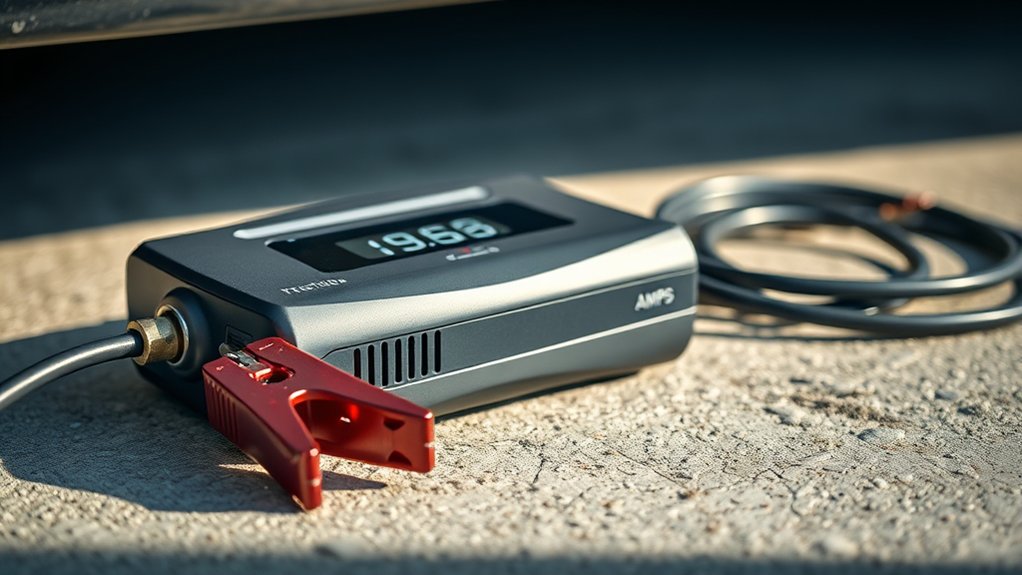
How Many Amps Is a Car Battery Charger
You might think all car battery chargers deliver the same amperage, but that’s far from true. Chargers can range from as low as 1 amp for gentle maintenance to 50 amps for rapid charging of large batteries. Choosing the right amperage isn’t just about speed—it directly affects your battery’s health and longevity.
Understanding these differences is essential before you connect your charger and risk damaging the battery. Knowing how many amps a car battery charger provides helps you select the best option for your needs. This ensures safe and efficient charging every time.
Key Takeaways
- Car battery chargers typically provide between 1 and 50 amps depending on charging speed and battery size.
- Low amp chargers (1–5 amps) are for slow, safe charging and routine battery maintenance.
- Medium amp chargers (6–20 amps) balance faster charging with safety for most automotive batteries.
- High amp chargers (21–50 amps) enable rapid charging for large or deeply discharged batteries but require careful monitoring.
- The recommended charging amperage is usually 10-30% of the battery’s amp-hour (Ah) rating for optimal safety and efficiency.
What Does the Amp Rating Mean for Your Car Battery Charger?
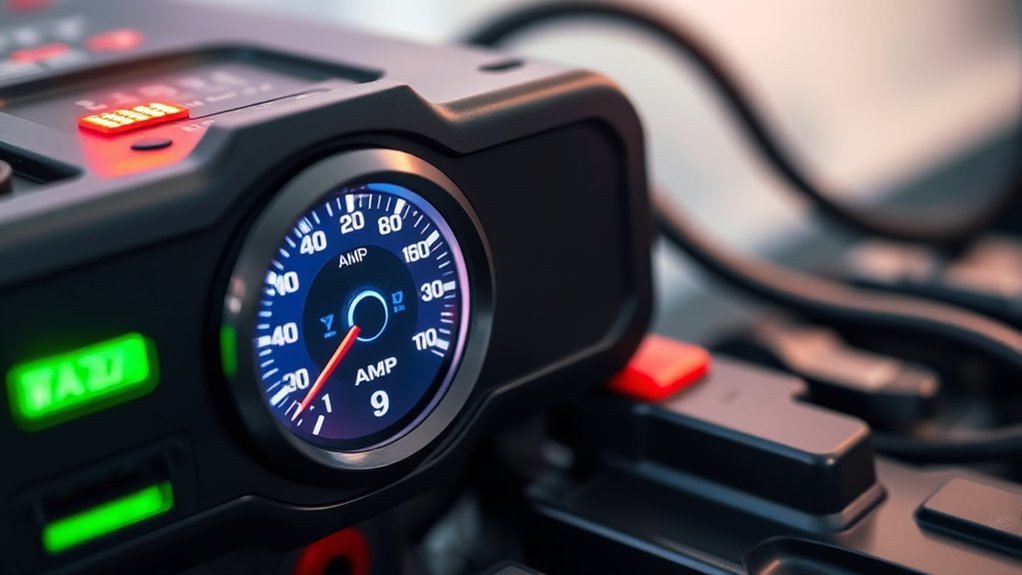
How exactly does the amp rating affect your car battery charger’s performance? The amp rating indicates the maximum current your charger can supply, directly influencing how effectively it interacts with your battery’s chemistry.
Different battery chemistries, such as lead-acid, AGM, or lithium-ion, have varying optimal charging currents. Selecting a charger with an appropriate amp rating ensures compatibility and safety.
If the charger provides too high a current, it risks overheating cells or accelerating degradation, compromising charging safety. Conversely, a rating too low may prolong charging unnecessarily.
Understanding this, you can match the amp rating to your battery type, maintaining chemical stability and preventing thermal stress. This precise alignment helps protect battery integrity throughout the charge cycle, ensuring both efficiency and safety.
How Amps Affect Car Battery Charger Speed and Battery Health
Why does the amp rating especially influence both charging speed and battery health? The charger’s amp output directly controls the current flow into your battery. Higher amps accelerate charging, reducing downtime, but excessive current risks overheating and degrading internal battery components, impacting longevity and warranty status.
Conversely, lower amps provide a gentler charge, preserving battery health but extending charging time, which can affect cost efficiency if you need quicker turnaround. Balancing amp rating is essential; using a charger with an amp rating matched to your battery’s specifications optimizes charging speed without compromising warranty conditions.
Ignoring this balance may lead to premature battery failure or voided warranties, costing you more in replacements. Understanding amp effects lets you maximize both performance and cost efficiency effectively.
How Slow and Fast Charging Amps Impact Your Car Battery
Charging your car battery at different amperage levels directly impacts both the rate at which the battery replenishes and its overall longevity. Slow charging amps reduce heat generation, preserving battery life, while fast charging amps restore capacity quickly but increase the risk of overheating and sulfation.
Ensuring charger compatibility is essential; using an incompatible charger can damage your battery or pose safety hazards. Always consider safety considerations like proper ventilation and monitoring during fast charging.
| Charging Speed | Impact on Battery |
|---|---|
| Slow (Low Amps) | Enhanced longevity, safer |
| Fast (High Amps) | Rapid charge, higher risk |
Balancing charging speed with safety and compatibility optimizes performance and extends your car battery’s lifespan.
Different Amp Levels on Car Battery Chargers: 1 to 50 Amps
You’ll find car battery chargers categorized by amp levels: low (1-5 amps), medium (6-20 amps), and high (21-50 amps). Each range serves specific charging needs, balancing speed and battery health.
Understanding these distinctions helps you select the right charger for your vehicle’s condition and charging goals.
Low Amp Chargers
Low amp chargers typically deliver between 1 and 50 amps, offering controlled and gradual charging suitable for various battery types. Using these chargers helps ensure charging safety by preventing overheating and overcharging, which can damage battery chemistry.
When selecting a low amp charger, consider:
- Charging rate compatibility with your battery’s chemistry (lead-acid, AGM, gel).
- Extended charging duration to maintain battery health without stress.
- Built-in safety features like automatic shutoff and reverse polarity protection.
- Suitability for maintaining batteries during storage without inducing sulfation.
Medium Amp Chargers
While low amp chargers provide a steady and safe charging process, medium amp chargers offer increased power output, typically ranging from 10 to 30 amps. This range is ideal when you need a faster recharge without risking battery damage.
You can effectively restore moderately discharged batteries in less time compared to low amp chargers. It’s important not to confuse this with irrelevant topic distractions or random thoughts about charging capacity, as medium amp chargers balance speed and safety precisely.
You’ll find these chargers useful for routine maintenance on vehicles that require quicker turnaround without the aggressive current of high amp options. Their controlled output minimizes overheating and electrolyte loss, ensuring battery longevity.
Medium amp chargers suit both standard automotive and some deep-cycle batteries, making them a versatile choice for many users.
High Amp Chargers
How much power do high amp chargers deliver, and when should you use them? High amp chargers typically range from 20 to 50 amps, providing rapid charging for depleted or large-capacity batteries. You should use them when immediate battery restoration is critical, but always respect battery safety and proper charging etiquette to avoid damage.
Consider these points when using high amp chargers:
- Confirm battery compatibility to prevent overheating or damage.
- Use in short bursts to minimize risks associated with high current flow.
- Monitor voltage and temperature continuously to maintain battery safety.
- Disconnect once charging is complete to avoid overcharging and extend battery life.
Adhering to these guidelines ensures efficient, safe charging without compromising battery integrity.
How to Compare Amp Ratings on Common Car Battery Chargers
When comparing amp ratings on car battery chargers, you need to understand how the amps affect charging speed and battery compatibility. Higher amp chargers deliver faster charging but may risk battery damage if not matched correctly.
You’ll want to choose a charger with an amp rating that aligns with your battery’s capacity and condition for optimal performance.
Understanding Amp Ratings
Why do amp ratings matter when choosing a car battery charger? Amp ratings determine how quickly and effectively a charger delivers current to your battery. Ignoring this can lead you into irrelevant topics or unrelated subtopics that don’t affect charging performance.
To understand amp ratings precisely, consider these points:
- Charging Speed: Higher amps charge faster but risk overheating if not matched properly.
- Battery Compatibility: Different batteries require different amp levels; mismatches cause damage.
- Float vs. Bulk Charging: Amp ratings affect whether a charger maintains or quickly replenishes charge.
- Safety Features: Chargers with appropriate amp ratings include safeguards against overcurrent and short circuits.
Choosing Charger Amps
Which amp rating suits your car battery charger depends largely on your battery’s size, type, and how quickly you need it charged. When choosing charger amps, compare the amp-hour (Ah) capacity of your battery against the charger’s output amps.
A higher amp charger reduces charging time but risks overheating if mismatched. For example, a 10A charger suits a 40Ah battery for moderate charging speed, while a 2A charger provides a slow, maintenance charge.
Pay attention to INDUSTRY ACRONYMS like CCA (Cold Cranking Amps) and MCA (Marine Cranking Amps), which indicate battery performance under load and influence charger selection. Avoid OFF TOPIC CLARIFICATIONS by focusing on two word discussion ideas such as “charge rate” and “battery compatibility” to make precise, informed decisions.
How to Choose the Right Amp Setting for Your Battery Size
How do you determine the optimal amp setting for charging your car battery? Avoid confusing this with an unrelated topic or random concept; the process is straightforward. To properly match your charger’s amps to your battery size, follow these steps:
- Identify your battery’s amp-hour (Ah) rating. This is key for setting current.
- Calculate 10-30% of the Ah rating to find the safe charging amps.
- Select a charger amp setting within this range to ensure efficient, safe charging.
- Adjust settings if your battery is deeply discharged or requires maintenance charging.
This method balances charging speed with battery longevity, preventing damage from excessive current or prolonged charge times due to too low an amp setting.
When to Use High- vs. Low-Amp Car Battery Chargers
When should you opt for a high-amp charger instead of a low-amp one? Use a high-amp charger primarily when you need to revive a deeply discharged or large-capacity battery quickly, such as in emergency situations or for commercial vehicles. High-amp chargers deliver a faster current, reducing downtime but require careful monitoring to prevent damage.
Conversely, low-amp chargers suit routine maintenance and slow charging, preserving battery longevity. Avoid off topic ideas or unrelated discussion like brand preferences here; focus strictly on charger output relative to battery condition and urgency. By analyzing battery state and desired charge speed, you can strategically select between high and low amperage, ensuring effective and safe charging without risking battery integrity or wasting energy.
Why Too Many Amps Hurt Your Car Battery
Why does applying too many amps during charging damage your car battery? Excessive current overwhelms the battery’s chemical balance, causing permanent harm. Here are four key reasons:
- Heat Generation: High amps raise internal temperature, accelerating plate corrosion and electrolyte evaporation.
- Plate Damage: Rapid charging stresses the lead plates, causing shedding and reduced surface area for reactions.
- Gas Production: Excessive amps increase hydrogen and oxygen gas release, risking pressure buildup and case damage.
- Uneven Charging: Heavy current may cause localized overcharging, leading to sulfation and capacity loss.
This two word discussion ideas approach clarifies why unrelated motorsports experiences don’t translate to battery charging. Unlike high-performance engines, car batteries require controlled amperage to maintain longevity and function.
Safe Tips for Adjusting Charger Amps by Battery Condition
Determining the appropriate charger amperage hinges on your battery’s current condition and state of discharge. If your battery is deeply discharged, start with a lower amp setting to prevent overheating and battery damage. Conversely, a mildly discharged battery can tolerate a higher amp setting for faster charging.
Always consult supervisor guidelines to ensure compliance with workplace safety protocols. Additionally, consider legal considerations related to electrical equipment usage and battery disposal to avoid regulatory violations.
Use a charger with adjustable amperage and monitor the battery’s temperature and voltage throughout the process. Avoid exceeding manufacturer-recommended amperage to prevent reduced battery life.
Frequently Asked Questions
Can I Leave My Car Battery Charger Plugged in Overnight?
You can leave your car battery charger plugged in overnight only if it has automatic shutoff or smart features to prevent overcharging risks.
Ensure charger compatibility with your battery to avoid damage and maintain optimal charging performance.
Are Car Battery Chargers Compatible With All Battery Types?
You’ll find most chargers compatible with lead-acid and AGM batteries, but not all suit lithium-ion. Always verify compatibility to guarantee charging safety and avoid damaging your charged battery during the process.
How Do Temperature Extremes Affect Car Battery Charging?
Temperature extremes reduce your car battery’s charging efficiency by slowing chemical reactions in cold or accelerating degradation in heat.
You’ll need to adjust charging rates and monitor battery health carefully under these conditions to optimize performance.
Can a Car Battery Charger Damage My Vehicle’s Electronics?
Think of your vehicle’s electronics as delicate dancers; improper volt regulation can trip them up. However, using a charger with safety lockout features prevents damage, ensuring stable power flow and protecting your car’s systems effectively.
What Safety Precautions Should I Take When Using a Car Battery Charger?
You should always wear safety gear like gloves and goggles, guarantee proper ventilation to prevent gas buildup, and double-check connections for sparks. Keep a fire extinguisher nearby for fire prevention when using a car battery charger.
Conclusion
Choosing the right amp setting for your car battery charger is like tuning an instrument—you want just the right current to harmonize speed and safety. Too high, and you risk overheating; too low, and charging drags on.
By matching amps to your battery’s size and condition, you guarantee efficient energy flow without damage. Always monitor voltage and temperature, because a well-calibrated charge keeps your battery performing at peak capacity.
Understanding how many amps is a car battery charger supplies is key to ensuring your battery is charged safely and efficiently, ready to power your journey.