What Size Tonneau Cover Do I Need
Did you know that over 60% of tonneau cover returns happen due to sizing issues? Choosing the right size tonneau cover starts with precise measurements of your truck bed’s length and width. It’s also important to consider any variations in depth or rail shape.
Selecting the wrong size can lead to poor fit, leaks, or latch problems. Understanding how to measure and match your truck’s specific dimensions is essential before making a purchase decision. Taking the time to get accurate measurements will save you hassle and ensure your cover fits perfectly.
Key Takeaways
- Measure your truck bed length from inside bulkhead to inside tailgate edge for accurate cover length.
- Measure bed width between the rails at the widest point, using the smallest width for best fit.
- Account for bed depth to ensure proper seal alignment and prevent sagging or interference.
- Match measured dimensions to your truck model’s standard bed size for compatible cover options.
- Choose cover style (roll-up, folding, retractable) and consider material thickness when finalizing size.
Why Getting the Right Tonneau Cover Size Matters
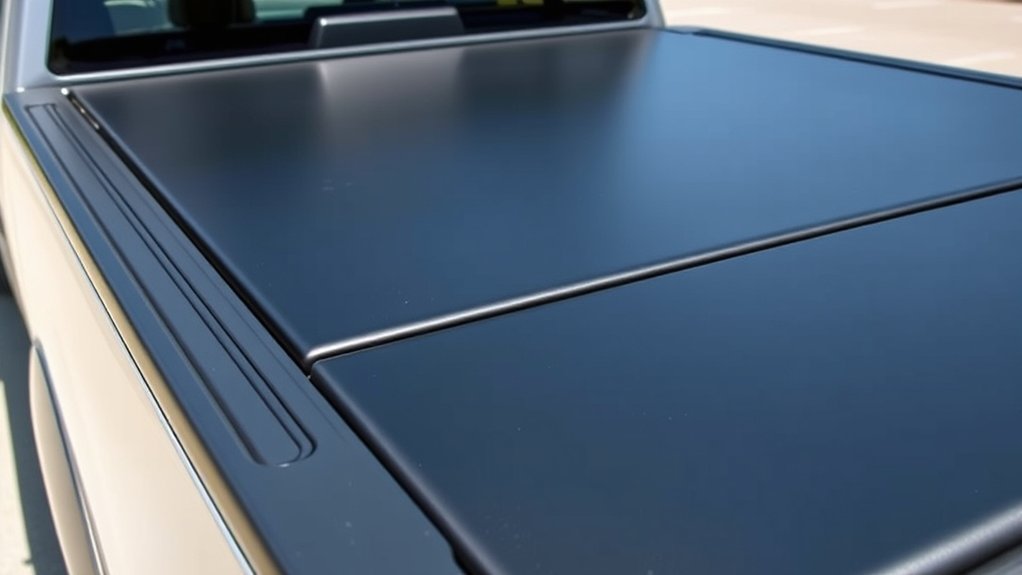
Why does the size of your tonneau cover matter so much? Choosing the correct size ensures a secure fit, preventing water leaks and wind drag that compromise your truck bed’s protection and fuel efficiency.
Using irrelevant topic or off topic reasoning, like focusing on style over fit, can lead to poor coverage or damage. A cover too small leaves gaps, exposing cargo to elements and theft, while one too large may not latch properly or cause installation issues.
Precision in sizing guarantees optimal performance, weather resistance, and durability. By prioritizing exact dimensions, you avoid these practical problems and maximize your investment’s longevity. Understanding the importance of size helps you select a cover that functions reliably and safeguards your truck bed as intended.
How to Measure Your Truck Bed for a Tonneau Cover
To find the right tonneau cover, start by measuring the length of your truck bed from the bulkhead to the tailgate edge. Next, determine the width by measuring between the bed rails at the widest point.
Finally, account for the bed depth to ensure the cover fits securely without gaps or interference.
Measure Truck Bed Length
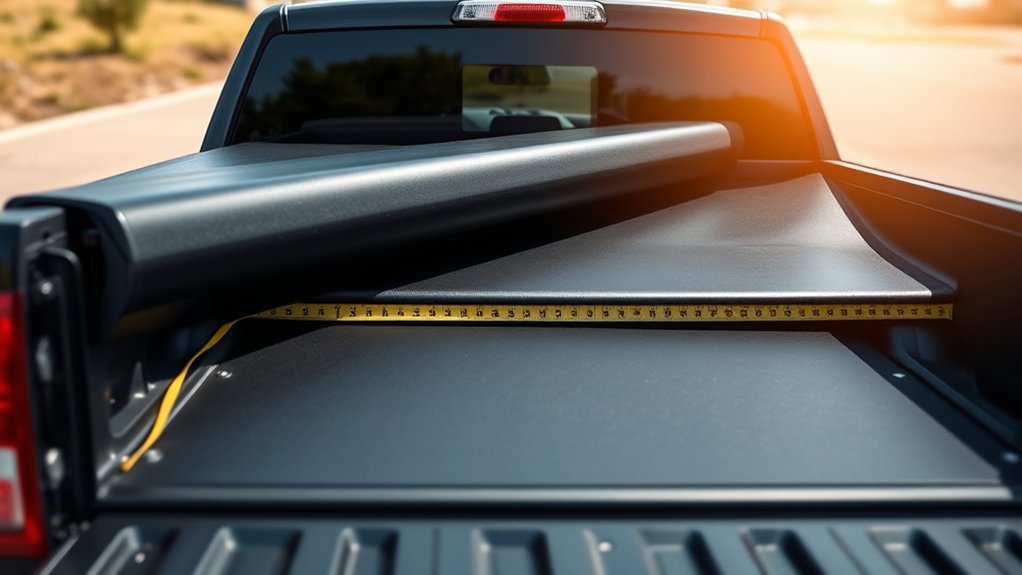
How do you accurately measure your truck bed length for a tonneau cover? First, position a tape measure at the inside edge of the bulkhead, where the bed meets the cab. Extend the tape straight to the inside edge of the tailgate, ensuring it’s taut and level.
This exact measurement determines the cover length you need, essential for tuning aesthetics and guaranteeing a snug fit. Avoid measuring over the tailgate’s edge, as this can skew sizing and affect marketing relevance. Accurate dimensions ensure compatibility with popular tonneau cover models.
Recording this precise length helps you select a cover that maintains your truck’s streamlined look while providing effective protection. This step lays the foundation for selecting the right size before moving on to bed width measurements.
Determine Bed Width
Where exactly should you measure to determine your truck bed’s width for a tonneau cover? Start by measuring the inside width between the bed rails, not the outside edges. This ensures an accurate fit, as tonneau covers sit on the rails.
Use a tape measure to record the distance at the front, middle, and rear of the bed. Note any variations, and use the smallest measurement as your bed width to avoid fit issues.
| Measurement Point | Description |
|---|---|
| Front | Inside width near cab |
| Middle | Inside width at midpoint |
| Rear | Inside width near tailgate |
| Narrowest Width | Smallest of above values |
Measuring precisely avoids interference with bed depth and ensures your tonneau cover fits securely.
Account For Bed Depth
Why does bed depth matter when choosing a tonneau cover? Bed depth directly affects the fit and function of your cover. You need to measure from the truck bed’s floor to the top edge of the bed rails precisely. This measurement ensures the cover accommodates your bed’s vertical dimensions without interference.
If you overlook bed depth, you risk selecting a cover that cannot handle the bed weight efficiently, potentially causing sagging or damage. Also, proper bed depth measurement guarantees weather seals align correctly, preventing water and debris intrusion.
Use a tape measure for accuracy, and record the depth at multiple points to account for any irregularities. This step ensures your tonneau cover fits tightly, functions optimally, and protects your cargo from environmental elements.
Tips for Measuring Irregular or Modified Truck Beds for Tonneau Covers
When dealing with irregular or modified truck beds, obtaining accurate measurements requires extra attention to detail. Start by carefully inspecting the bed for any hidden compartments or custom features that could affect the tonneau cover fit. Use a steel tape measure for precision, and measure length, width, and depth at multiple points to account for inconsistencies.
Avoid forcing tools or parts that may cause irreversible damage to the bed or modifications. Document all measurements meticulously, noting any deviations from standard dimensions. If possible, remove accessories or liners temporarily to measure the bare bed surface.
Cross-check with manufacturer specifications for your truck model and modifications. Taking these steps ensures you select a tonneau cover that fits securely, protects your cargo, and respects your truck’s unique design.
Common Tonneau Cover Sizes and What Fits Each
Accurate measurements of your truck bed set the foundation for choosing the right tonneau cover size. Common sizes typically range from 5 to 8 feet, matching standard truck bed lengths. For instance, a 6.5-foot cover fits midsize trucks, while an 8-foot cover suits full-size models.
Selecting a precise fit ensures optimal sealing, which improves fuel economy by reducing aerodynamic drag. Additionally, a correctly sized cover maintains driving ergonomics by preventing interference with tailgate operation and cargo access.
Narrower covers fit compact beds, but you must verify width and height to avoid fitment issues. In summary, knowing these standard sizes lets you pick a cover that enhances both vehicle performance and usability, supporting efficient fuel consumption and comfortable driving ergonomics.
Which Tonneau Cover Size Fits Your Truck Model?
To find the right tonneau cover for your truck, start by measuring your truck bed’s length and width accurately. Next, consider the cover type that best suits your needs, as different models require specific fits.
Finally, compare your measurements to common truck model sizes to ensure compatibility and a secure fit.
Measuring Your Truck Bed
How do you determine the exact size of your truck bed to select the right tonneau cover? Start by measuring the length and width of the bed precisely, accounting for any wheel wells or bed liners. Use a steel tape measure for accuracy, avoiding any jumbo magnetism effects from strong magnets that could distort measurements. Think of measuring like underwater biking. Precision and steady control matter to avoid errors.
Focus on these key dimensions:
- Measure from the inside of the bulkhead to the inside of the tailgate
- Measure width at the widest point between the bed rails
- Note any irregularities such as wheel wells or bed liners
- Measure tailgate height for fit confirmation
- Double-check measurements to ensure consistency
Accurate measurements guarantee a perfect fit for your tonneau cover.
Matching Cover Types
Which tonneau cover size fits your specific truck model depends on several key factors, including the make, model, and bed configuration. To match cover types accurately, you must consider the exact bed length and width, as well as the side rail design unique to your truck.
Avoid incorporating unrelated topics or extraneous details, such as generic measurements or universal claims, since these don’t account for model-specific variations. Different cover styles, such as roll-up, folding, or retractable, may require slightly different sizing or mounting hardware, so verify compatibility with your truck’s specifications.
Common Truck Model Sizes
Where do you start when identifying the correct tonneau cover size for your truck? First, you need to know your truck bed’s exact dimensions, as sizes vary widely across models. This knowledge guarantees a perfect fit without compromising functionality or aesthetics. Whether you’re customizing your ride with airbrushed accents or pursuing careers in trucking that demand reliable gear, fit matters.
Here are common truck bed sizes to consider:
- Ford F-150: 5.5, 6.5, or 8 feet
- Chevrolet Silverado: 5.8, 6.6, or 8.2 feet
- Ram 1500: 5.7, 6.4, or 8 feet
- Toyota Tacoma: 5 or 6 feet
- Nissan Frontier: 5 or 6 feet
Measure carefully to match your tonneau cover precisely to your truck model.
How to Choose Between Full-Size and Custom Tonneau Covers
When selecting a tonneau cover, you’ll need to decide between full-size and custom options based on your truck’s bed dimensions and intended use. Full-size covers fit standard bed lengths, offering convenience and easier replacement.
However, if your truck bed has non-standard dimensions or modifications, a custom cover ensures precise fit and optimal protection. Avoid considering irrelevant topics like unrelated concepts of style or accessories when determining size.
Custom covers provide a precise fit and protection, especially for non-standard or modified truck beds.
Focus strictly on accurate measurements of bed length, width, and height. Custom covers may cost more but prevent gaps or overhangs that compromise security and aerodynamics.
Weigh your priorities: if your truck matches common sizes, full-size covers provide efficiency; if not, custom covers deliver tailored performance and durability.
How Different Tonneau Cover Styles Affect Sizing
When selecting a tonneau cover, you need to consider how the style impacts sizing requirements. Roll-up covers typically require precise bed width and length measurements to ensure proper fit and smooth operation.
Hard folding covers, on the other hand, may need additional clearance allowances due to their segmented panels and hinge mechanisms.
Roll-Up Covers Dimensions
How do roll-up tonneau covers influence the dimensions you need to contemplate? These covers require precise measurements since their flexible design depends on the truck bed’s exact length and width. Unlike rigid covers, roll-ups need extra consideration for the thickness of the rolled material when calculating usable bed space. Accurate sizing ensures seamless attachment and functionality.
Consider these factors when measuring:
- Bed length from bulkhead to tailgate edge
- Bed width at the widest points
- Height clearance for the rolled cover
- Frame mounting area dimensions
- Material thickness and roll diameter
Roll-up covers’ sizing precision impacts marketing strategies by highlighting ease of installation and fit, enhancing social media engagement through user-shared accurate fit reviews and demonstrations.
Hard Folding Cover Sizes
Why does the style of your tonneau cover matter for sizing? Hard folding covers require precise size matching to ensure proper fit and functionality. Unlike roll-up covers, hard folding models consist of multiple hinged panels that fold neatly, so accurate measurements of your truck bed’s length, width, and side rail height are critical.
When selecting a hard folding cover, consider the thickness and hinge design, as these affect how the cover sits on the bed rails. Installation tips include verifying that the cover’s dimensions align with your truck’s specific bed model and checking for any protrusions or bed accessories that might interfere.
Proper size matching guarantees a secure seal, optimal protection, and smooth operation, making hard folding covers a reliable and durable choice when measured and installed correctly.
Where to Find Accurate Tonneau Cover Size Information
Where can you reliably obtain the exact measurements needed for your tonneau cover? Precise sizing avoids mismatches and guarantees a snug fit, much like how understanding weather patterns avoids errors in forecasting.
You can find accurate dimensions from:
- Your truck’s owner’s manual specifying bed length and width
- Manufacturer websites offering detailed size charts
- Measuring your truck bed directly with a steel tape measure
- Authorized dealers who provide model-specific guidance
- Online forums where experienced users share verified measurements
Avoid relying on unrelated topics like coffee brewing tips or general truck specs. Instead, focus on these technical sources to guarantee your tonneau cover matches your truck bed precisely, preventing costly returns or poor coverage.
Accurate data is essential, as even minor discrepancies can impact fit and performance.
What to Do If Your Truck Bed Size Falls Between Standard Tonneau Cover Sizes
When your truck bed size falls between standard tonneau cover dimensions, selecting the right fit requires careful consideration to avoid gaps or excessive tension. You should measure your bed precisely and compare those measurements against available cover sizes. Avoid relying on irrelevant topics or unrelated concepts like generic vehicle size charts; they won’t help here.
Consider these options:
| Option | Description |
|---|---|
| Smaller Size | May cause tension, risking damage |
| Larger Size | Could leave gaps, reducing security |
| Custom Cover | Tailored fit, higher cost |
| Adjustable Covers | Flexible sizing, moderate price |
| Professional Consultation | Expert advice to match exact dimensions |
Choosing between these involves balancing fit accuracy and cost. Custom or adjustable covers often provide the best solution when your truck bed size doesn’t match standard options.
How to Install a Tonneau Cover That Fits Perfectly
Although installing a tonneau cover might seem straightforward, ensuring a perfect fit requires careful alignment and secure fastening. To avoid concept misalignment, focus solely on installation specifics rather than unrelated topics.
Start by measuring your truck bed accurately to confirm compatibility. Then, follow these steps:
Position the cover evenly along the bed rails.
Secure clamps or fasteners as per manufacturer instructions.
Check for gaps or uneven tension indicating misalignment.
Adjust the cover tension to prevent sagging or flapping.
Test the cover’s operation to ensure smooth opening and closing.
Frequently Asked Questions
How Do Tonneau Covers Impact Fuel Efficiency?
Tonneau covers improve fuel efficiency by reducing aerodynamic drag on your truck bed. When you use one, it cuts air turbulence, helping your engine work less and saving fuel, especially at highway speeds.
Can Tonneau Covers Be Locked for Security?
You can lock tonneau covers with locking security mechanisms so tight they’d keep out a hurricane. These locks maintain weather resistance, ensuring your cargo stays safe from theft and harsh elements with precision-engineered durability and reliability.
Are Tonneau Covers Weather-Resistant?
Yes, tonneau covers offer excellent weather durability and wind resistance. They’re designed with materials that repel water, resist UV damage, and withstand strong winds.
This keeps your truck bed protected from harsh weather conditions effectively.
How Much Do Tonneau Covers Typically Cost?
Tonneau covers typically cost between $150 and $1,200, depending on material and features. You’ll want to check installation compatibility with your truck, ensuring secure locking mechanisms for ideal lock security and weather resistance.
Can I Use a Tonneau Cover With a Bed Liner?
You can definitely use a tonneau cover with a bed liner, like a knight’s armor complementing a shield. Just assure size compatibility and consider bed liner interaction to avoid fit issues or damage over time.
Conclusion
Choosing the correct cover calls for careful calculation. By confidently capturing your truck’s true truck bed size—from bulkhead to tailgate and rail to rail—you can curb costly cover complications. Consider cover styles and custom configurations to ensure seamless sealing and secure snapping.
Stay sharp, select smartly, and sidestep sizing snafus for a snug, sturdy, and stylish tonneau cover. With the right measurements and choices, you’ll enjoy a tonneau cover that performs perfectly every time. Remember, knowing what size tonneau cover do I need is key to achieving the best fit and function.