
What Lug Pattern Is a Ford f150
If wheels are the shoes for your Ford F-150, then the Ford F-150 lug pattern is the essential lace that holds everything together. You can’t just pick any wheel and expect a perfect fit—knowing the exact lug pattern is vital for safety and performance.
Since the pattern varies by model year and trim, understanding how to identify your truck’s specific configuration will save you time and prevent costly mistakes.
Key Takeaways
- Ford F-150 typically uses a 6×135 mm lug pattern with six evenly spaced lug nuts on a 135 mm bolt circle.
- Early F-150 models primarily feature a 5-lug pattern with a 4.75-inch (120.65 mm) bolt circle diameter.
- From 2004 to present, modern F-150s mostly use a 5×5.5 inches (5×139.7 mm) lug pattern for wheel fitment.
- Lug pattern measurement involves counting lug holes and measuring the bolt circle diameter between opposite lug centers.
- Correct lug pattern ensures safe wheel fitment, compatibility, and proper performance for Ford F-150 vehicles.
What’s the Ford F-150’s Lug Pattern?
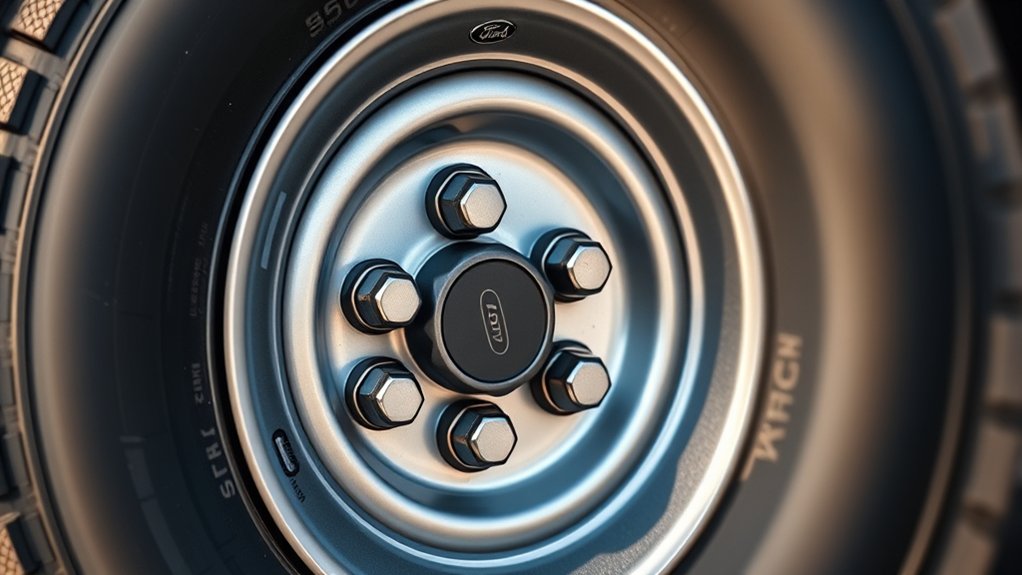
When you’re selecting wheels or replacement parts for your Ford F-150, knowing the exact lug pattern is essential. The F-150 typically uses a 6×135 mm lug pattern, meaning six lug nuts spaced evenly on a 135-millimeter diameter circle.
This specification ensures proper fitment and safety. While some might confuse this with unrelated topic measurements like bolt circle diameters on other vehicles, it’s critical to focus on the precise Ford F-150 configuration.
If you’re exploring two word discussion ideas like “lug pattern” or “bolt circle,” remember this standard applies broadly to F-150 models but varies in detail by year and trim. Sticking to this technical data prevents mistakes when upgrading or maintaining your truck’s wheels.
Common Lug Patterns by Model Year for the F-150
You’ll find that early Ford F-150 models typically used a 5×5.5-inch (5×139.7 mm) lug pattern. Modern F-150s have largely standardized on a 6×135 mm pattern for improved strength and compatibility.
Knowing the exact model year helps you select the correct lug size for your wheels.
Early Model Lug Patterns
How have lug patterns evolved in early Ford F-150 models? From the late 1970s through the 1990s, Ford primarily used a 5-lug pattern with a 4.75-inch (120.65 mm) bolt circle diameter. This pattern ensured lug compatibility across many wheel sizes, simplifying replacements and upgrades.
Early F-150s featured smaller wheel sizing, often 14 or 15 inches, which paired well with this lug pattern. As these models progressed, minor adjustments in wheel offset and lug nut specifications occurred but maintained the 5×4.75-inch standard.
Understanding these early lug patterns helps you select compatible wheels without risking fitment issues. When dealing with vintage F-150s, always verify the lug pattern, as aftermarket wheels may vary in sizing and bolt patterns, impacting both safety and performance.
Modern F-150 Lug Sizes
While early Ford F-150 models largely used a 5×4.75-inch lug pattern, modern F-150s have shifted to accommodate increased performance demands and wheel design changes. If you’re looking for a non technical overview, here’s what you need to know about common lug sizes by model year:
- 2004–2014: 5×5.5 inches (5×139.7 mm), popular for heavier-duty versions
- 2015–2020: Maintains 5×5.5 inches but with updated wheel compatibility
- 2021–present: Continues 5×5.5 inches, optimized for aluminum wheels
After 2015, Ford emphasized marketing angles highlighting durability and style. Lug nut sizes typically remain consistent, easing aftermarket upgrades.
Knowing these patterns helps when selecting wheels or replacement parts, ensuring fitment and safety without deep technical knowledge.
How Do You Measure Your F-150’s Lug Pattern?
To measure your F-150’s lug pattern, start by counting the number of lug nut holes on the wheel. Next, determine the bolt circle diameter, which is the distance between the centers of two opposite lug holes.
Identifying these measurements accurately ensures you select the correct lug pattern type for your truck.
Identifying Lug Pattern Types
Where exactly do you measure when determining your Ford F-150’s lug pattern? It’s essential to understand the lug pattern history to guarantee proper wheel compatibility. The lug pattern refers to the number of lug holes and the diameter of the circle they form.
For F-150s, you’ll commonly encounter a 6-lug pattern. To identify the type, focus on these key points:
- Count the number of lug holes (typically 5 or 6 for F-150s)
- Note the shape and spacing of the lug holes
- Recognize the bolt circle diameter without measuring here
- Understand that patterns evolved for load and design changes
- Confirm compatibility with aftermarket or OEM wheels
Measuring Bolt Circle Diameter
How do you accurately measure the bolt circle diameter (BCD) on your Ford F-150’s lug pattern? First, understand that the bolt circle is the imaginary circle formed by the centers of the lug nut holes.
To measure it, use a caliper or a ruler. For an even number of lug holes, measure the distance between the centers of two opposite lug nuts directly across from each other. For an odd number, measure from the center of one lug hole to the outer edge of the lug hole directly across the circle.
This measurement in millimeters or inches is the bolt circle diameter. Accurately measuring the bolt circle ensures you select wheels that fit your Ford F-150’s lug pattern perfectly.
Counting Lug Nut Holes
Once you’ve measured the bolt circle diameter, the next step is to determine the number of lug nut holes on your Ford F-150’s wheel. This count is essential because it directly affects the lug pattern and wheel compatibility.
To accurately count the lug nut holes, follow these guidelines:
- Inspect the wheel closely in good lighting.
- Count only the holes designed for lug nuts, not any decorative or valve holes.
- Common Ford F-150 lug patterns include 5-lug and 6-lug configurations.
- Use a flashlight if necessary to ensure no holes are missed.
- Cross-reference your count with manufacturer specifications for accuracy.
Accurate lug nut hole counting ensures you select wheels that fit perfectly, maintaining safety and performance on your Ford F-150.
How the Lug Pattern Affects Wheel and Tire Compatibility
Why does the lug pattern matter when choosing wheels and tires for your Ford F150? The lug pattern directly determines wheel compatibility because it specifies the number of lug holes and their precise spacing. If your wheel’s lug pattern doesn’t match your F150’s hub, you simply can’t mount the wheel securely.
This mismatch compromises safety and performance. Additionally, tire fitment depends on wheel size, which is influenced by the lug pattern. A correct lug pattern ensures that the wheels align properly with your vehicle’s brakes, suspension, and hub assembly, allowing tires to fit without rubbing or clearance issues.
Understanding your F150’s lug pattern is crucial for selecting wheels and tires that maintain proper functionality and driving stability.
Where Can You Find Wheels for Your F-150’s Lug Pattern?
Where should you look to find wheels that match your Ford F150’s lug pattern? The key is to focus on specialized sources that provide accurate fitment information and avoid unrelated topic or off-topic discussions that can confuse your search.
Reliable options include:
- Authorized Ford dealerships with OEM wheel options
- Reputable aftermarket wheel manufacturers specifying Ford F150 lug patterns
- Online wheel retailers offering detailed filtering by lug pattern and bolt circle
- Automotive forums dedicated to Ford trucks, ignoring unrelated topic threads
- Local tire and wheel shops experienced with F150 specifications
Tips for Safely Changing or Upgrading Your F-150 Wheels
Changing or upgrading your Ford F-150 wheels requires careful attention to fitment specifications and safety protocols. First, understand the lug pattern history to ensure compatibility with your model year, as Ford has maintained a consistent 6×135 mm pattern for most F-150s.
When selecting aftermarket wheel fitment, verify the bolt circle, center bore, and offset match factory specs to avoid alignment issues or stress on suspension components. Always use a calibrated torque wrench to tighten lug nuts to the manufacturer’s recommended torque, preventing wheel loosening or warping.
Inspect the wheels and lug nuts for damage before installation. Finally, test drive cautiously after installation, checking for vibrations or noises, and re-torque lug nuts after 50-100 miles for optimal safety and performance.
Frequently Asked Questions
What Tools Do I Need to Remove Lug Nuts on a Ford F-150?
You’ll need a lug wrench or impact wrench with the correct socket size to remove lug nuts safely.
Always verify wheel lug safety and avoid lug pattern inaccuracies by confirming your Ford F-150’s specific lug pattern before starting.
Can I Use Aftermarket Lug Nuts on My Ford F-150?
Yes, you can use aftermarket lug nuts on your Ford F-150, but ensure they match your aftermarket wheels’ specifications. Choose ones with proper paint protection to prevent corrosion and maintain a secure, durable fit for safe driving.
How Often Should I Check the Lug Nut Torque on My F-150?
After a recent tire change, Jake checked his lug nut torque weekly for two weeks, then monthly.
You should follow a regular maintenance schedule, using a torque wrench to guarantee safe, consistent tightening and prevent wheel damage or accidents.
What Is the Recommended Torque Specification for Ford F-150 Lug Nuts?
You should torque Ford F-150 lug nuts to 150 lb-ft, ensuring proper thread alignment. Apply wheel torque evenly in a crisscross pattern to secure the wheel safely and prevent uneven stress or damage during driving.
Are There Any Safety Risks With Incorrect Lug Pattern Installation?
Yes, using an incorrect lug pattern creates lurking hazards like wheel detachment or vibration issues. You’ll also damage wheel aesthetics and compromise safety, so always verify lug patterns before installation to ensure proper fit and performance.
Conclusion
You might think all F-150s share the same lug pattern, but the reality is quite different. Early models often sport a 5-lug 4.75-inch setup, while modern ones use a 6×135 mm pattern. Knowing this distinction is essential—mismatched wheels can lead to unsafe driving conditions.
Always measure your bolt circle precisely before upgrading. By understanding these differences, you’ll guarantee a perfect fit, optimal performance, and safe handling every time you hit the road.
In conclusion, knowing the exact lug pattern of your Ford F150 is crucial for selecting the right wheels and ensuring safety.