Does Oil Filter Brand Matter
Imagine you choose a budget oil filter for your high-performance engine, only to find it clogged prematurely, causing oil starvation and accelerated wear. Does oil filter brand matter? Absolutely.
That scenario highlights why the brand you trust isn’t just about logo recognition—it reflects differences in filter media, sealing quality, and construction standards. Understanding these distinctions can help you avoid costly damage and maintain engine health.
But which factors truly separate one filter from another?
Key Takeaways
- Oil filter brand matters due to differences in manufacturing quality, materials, and engineering precision affecting durability and filtration performance.
- High-quality brands meet OEM standards, ensuring optimal contaminant removal and protecting engine components from wear and damage.
- Premium filters typically offer superior filtration efficiency, capturing smaller particles and extending engine oil life compared to budget options.
- Evaluating filtration efficiency ratings (microns, beta ratios) and construction features is more reliable than relying solely on brand reputation.
- Compatibility with vehicle specifications and oil type is crucial, regardless of brand, to maintain proper oil flow and engine protection.
How Oil Filters Keep Your Engine Running Smoothly
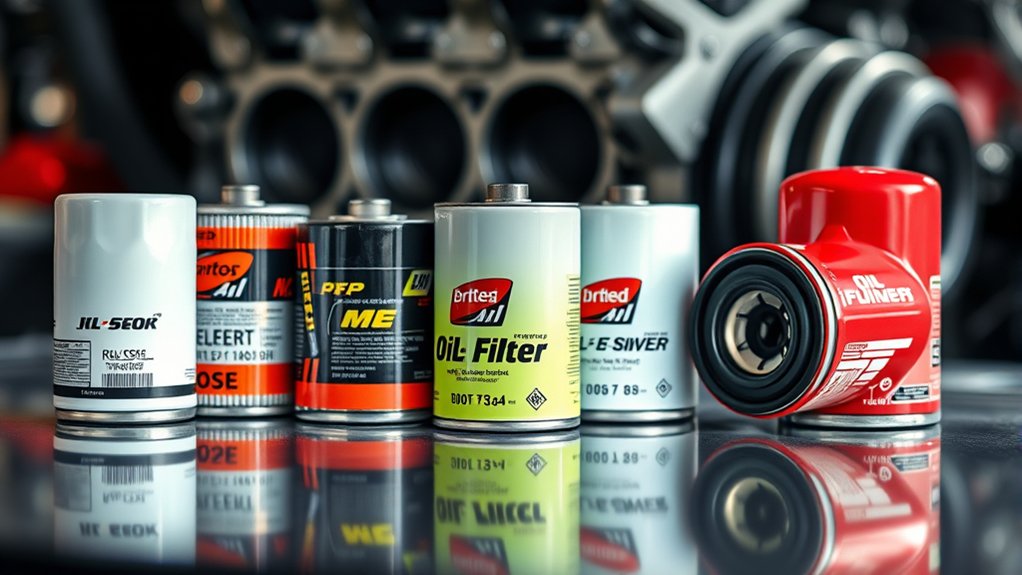
How exactly do oil filters keep your engine running smoothly? They trap contaminants like dirt, metal particles, and sludge from the engine oil, preventing these impurities from circulating and causing wear or damage.
You might encounter irrelevant topic suggestions or random ideas online about oil filters, but the core function remains straightforward: maintaining clean oil flow. The filter media inside captures microscopic debris while allowing oil to pass freely, ensuring consistent lubrication.
This process reduces friction, heat, and engine wear, directly impacting performance and longevity. Without an effective oil filter, contaminants would accumulate, impairing your engine’s efficiency and potentially leading to costly repairs.
What Makes Oil Filter Brands Different?
Why do oil filter brands vary so much in quality and performance? It comes down to manufacturing standards, material selection, and engineering precision. When choosing a filter, you want to ensure brand reliability. Trusted brands consistently deliver filters that meet strict tolerances and withstand high operating pressures.
Pricing transparency also plays a key role. Reputable brands clearly communicate costs relative to materials and technology used, helping you avoid hidden compromises. Lower-priced filters often cut corners on critical components, impacting durability and protection.
Why Filter Media Quality Matters for Your Engine
You need filter media that efficiently captures contaminants without restricting oil flow to protect your engine. Quality media withstands high pressure and heat, maintaining filtration performance over time.
Choosing the right filter media directly reduces engine wear and extends your engine’s lifespan.
Filtration Efficiency Impact
What impact does the quality of filter media have on your engine’s performance? Filtration efficiency directly influences how well your oil filter removes contaminants like dirt, metal particles, and sludge from the engine oil.
Higher filtration efficiency means fewer abrasive particles circulate through your engine, markedly reducing engine wear and prolonging component life. Poor-quality filter media allow contaminants to bypass the filter, accelerating wear on critical parts such as bearings and camshafts.
By choosing a filter with superior filtration efficiency, you ensure cleaner oil flow, maintaining optimal lubrication and preventing premature engine damage. In short, the filter media’s ability to trap contaminants effectively protects your engine’s internal surfaces, preserving performance and reliability over time.
Don’t underestimate this critical factor when evaluating oil filter brands.
Durability Under Pressure
Filtration efficiency plays a vital role in protecting your engine from contaminants, but the filter media must also withstand the demanding conditions inside the engine. When you compare durability, pressure resistance is a key factor. Inferior filter media can collapse or deform under high pressure, compromising oil flow and engine protection.
Here’s a durability comparison highlighting pressure resistance among common filter media:
| Filter Media Type | Max Pressure (psi) | Durability Rating |
|---|---|---|
| Cellulose | 15 | Low |
| Synthetic | 30 | High |
| Blended | 22 | Medium |
Choosing a filter with high pressure resistance ensures consistent performance and protects your engine during peak operating conditions.
Engine Wear Prevention
How effectively does your oil filter protect your engine from wear? The quality of the filter media directly influences your engine’s longevity by removing contaminants during each oil change.
High-grade filter media captures microscopic particles that cause abrasion, reducing friction and preventing premature engine component wear. Using a subpar filter allows debris to circulate, accelerating engine deterioration and shortening engine life.
When selecting an oil filter, focus on media efficiency, permeability, and durability under pressure to ensure optimal filtration without restricting oil flow. Investing in a reputable filter brand means your engine oil remains cleaner between changes, maintaining lubrication quality and minimizing wear.
Ultimately, a superior oil filter safeguards your engine’s internal parts, supporting reliable performance and extending engine life.
How Oil Filter Construction Affects Performance
Why does the construction of an oil filter play such a pivotal role in its performance? The design directly influences flow rate, contaminant retention, and durability under pressure. You’ll notice performance tradeoffs between filter media density and oil flow; denser media trap finer particles but can restrict flow, impacting engine lubrication.
Construction quality also affects resistance to collapse during high pressure or temperature spikes. Additionally, installation quirks, like gasket material and housing threading, impact sealing integrity and ease of replacement. Poorly designed filters might leak or be difficult to install, increasing maintenance time and risk.
When choosing a filter, pay attention to structural elements such as pleat count, end cap material, and anti-drainback valves, as these components collectively determine efficiency and reliability in real-world conditions.
Understanding Filtration Efficiency Ratings
What makes one oil filter more effective than another at trapping harmful particles? It boils down to filtration efficiency ratings, a key metric in filtering fundamentals. These ratings quantify how well a filter captures contaminants of specific sizes, typically measured in microns.
When you evaluate filters, look for ratings like Beta ratios or ISO standards. They provide objective data on particle retention. Brand misperceptions often lead people to assume well-known labels guarantee superior filtration, but efficiency depends on media quality and design, not just brand.
Understanding these ratings empowers you to select filters that genuinely protect your engine by removing microscopic debris. Focus on proven filtration efficiency metrics rather than marketing claims to make informed choices that optimize engine performance and longevity.
Budget vs. Premium Oil Filters: What’s the Difference?
When choosing between budget and premium oil filters, you need to contemplate differences in construction quality, filtration media, and durability. Budget filters often use thinner filter media and less robust housing materials, which can compromise filtration efficiency and structural integrity under high pressure.
Their filtration media may trap fewer contaminants, increasing engine wear risk over time. In contrast, premium filters incorporate advanced synthetic or blended media designed for finer particle capture and higher dirt-holding capacity. They feature reinforced housings and improved anti-drain back valves to maintain consistent oil flow and prevent contamination during engine shutdown.
While budget filters may save upfront costs, premium filters provide better long-term protection by maintaining cleaner oil and withstanding harsher operating conditions, ultimately supporting engine longevity and performance. Your choice depends on balancing cost against filtration effectiveness and reliability.
Which Oil Filter Brand Is Best for Your Vehicle?
Selecting the right oil filter brand goes beyond just comparing budget and premium options; it requires matching the filter’s specifications and performance with your vehicle’s engine requirements. When deciding which brand is best, focus on filtration efficiency, micron rating, and media quality rather than solely on price.
Cheap synthetic filters can offer adequate protection if they meet OEM standards, but don’t assume all low-cost options perform equally. Conducting a cross brand comparison helps you evaluate durability, bypass valve pressure, and anti-drainback features critical for your engine type.
Check compatibility with your vehicle’s oil viscosity and operating temperature. Prioritize brands that provide detailed technical data and comply with industry certifications, ensuring optimal engine longevity and performance tailored to your driving conditions and maintenance schedule.
Real User Reviews: Do Oil Filter Brands Perform Differently?
Many drivers find real user reviews invaluable for evaluating whether oil filter brands truly differ in performance under everyday conditions. When you analyze user reviews, you’ll notice patterns in filtration efficiency, durability, and fitment quality that impact engine protection.
While some users report consistent performance from specific brands, others highlight occasional failures or reduced filter life, suggesting variability. Brand loyalty often influences perceptions, so it’s essential to distinguish objective feedback from bias.
Should You Pay More for a Premium Oil Filter?
You want to compare filtration efficiency and build quality when deciding if a premium oil filter is worth the extra cost. Consider how durability impacts your engine’s protection over time.
Balancing upfront price against long-term value helps you make a practical choice.
Filtration Efficiency Comparison
How much difference does the brand of an oil filter make in filtration efficiency? When you evaluate brand reliability, filtration science shows that premium filters often capture smaller particles more effectively. This precision reduces engine wear and extends oil life.
Here’s a comparison of filtration efficiency among popular brands:
| Brand | Efficiency (%) | Particle Size Captured (microns) |
|---|---|---|
| Premium A | 98.7 | 15 |
| Premium B | 97.9 | 18 |
| Mid-Range C | 94.5 | 25 |
| Budget D | 89.2 | 35 |
| Budget E | 86.7 | 40 |
You’ll notice premium brands excel at filtering finer particles, reinforcing why paying more often means better protection through advanced filtration science.
Durability and Build Quality
What sets premium oil filters apart beyond filtration efficiency is their durability and build quality. When you examine durability comparisons, you’ll notice premium filters often feature reinforced steel end caps and thicker filter media, enhancing structural integrity under high pressure and temperature.
Build quality factors such as precision pleat spacing and superior sealing materials reduce the risk of bypass and leaks, ensuring consistent performance. You’ll find that premium filters also use robust anti-drainback valves made from durable silicone, which maintain oil flow during cold starts better than cheaper alternatives.
These technical improvements contribute to longer service life and better protection for your engine. So, paying more means you get a filter built to withstand harsher operating conditions with less risk of failure.
Cost Versus Long-Term Value
While premium oil filters come with higher upfront costs due to their superior materials and construction, evaluating their long-term value requires looking beyond the initial price tag. You shouldn’t fall for irrelevant comparisons that focus solely on cost without considering performance, longevity, and protection.
Brand loyalty can cloud judgment, but choosing a filter based on proven durability and filtration efficiency pays off over time. Investing in a quality filter reduces engine wear and maintenance frequency, ultimately saving money.
How to Choose the Right Oil Filter Brand for Your Car
When selecting an oil filter brand for your car, consider the compatibility with your vehicle’s engine specifications first. Choosing the right oil filter isn’t just about brand loyalty; it’s about ensuring optimal performance and longevity.
Prioritize engine compatibility over brand loyalty to ensure your oil filter delivers optimal performance and longevity.
Here’s how to decide:
- Verify the oil filter’s specifications match your engine requirements.
- Assess durability considerations like filter media quality and sealing efficiency.
- Evaluate pricing strategies, balancing cost with expected filter lifespan and protection level.
- Research brand reputation and user feedback on performance consistency.
Frequently Asked Questions
How Often Should I Replace My Oil Filter?
You should replace your oil filter every 3,000 to 7,500 miles, depending on oil type and vehicle. Ensure oil filter fitment matches your model, and prioritize manufacturing quality for optimal engine protection and performance.
Can Using the Wrong Oil Filter Damage My Engine?
Yes, using the wrong oil filter can damage your engine. You should examine filtration efficiency and filter material quality, as inferior filters may fail to trap contaminants properly, leading to increased engine wear and reduced performance.
Are Oil Filters Recyclable or Environmentally Friendly?
Oil filters aren’t a walk in the park for recycling; you’ll face recycling challenges due to oil residue and mixed materials. However, choosing eco friendly options with biodegradable elements can minimize environmental impact and simplify disposal processes effectively.
Do Oil Filters Affect Oil Change Intervals?
Yes, your oil filter brand can affect oil change intervals by influencing filtration efficiency and durability. Choosing a high-quality brand guarantees consistent performance, allowing you to safely extend intervals without risking engine wear or contamination buildup.
What Tools Are Needed to Remove an Oil Filter?
You’ll need basic tools to remove an oil filter: an oil filter wrench, a socket set, and a drain pan. Understanding oil filter basics helps you choose the right wrench type for efficient, clean removal.
Conclusion
When you pick an oil filter, imagine it as your engine’s first line of defense—trapping harmful particles before they wear down essential parts. While brand reputation matters, focus on clear specs like filtration efficiency and media quality. Don’t just chase price tags; choose a filter proven to meet OEM standards and handle your engine’s demands.
That way, you guarantee smooth performance and long-lasting protection, keeping your engine running like a well-oiled machine. Ultimately, the oil filter brand does matter, but what counts most is selecting a filter that delivers reliable filtration and durability for your engine’s needs.