How to Make a Tonneau Cover Waterproof
If you want to protect your truck bed from water damage, making your tonneau cover waterproof is essential. Start by identifying the material you’re working with—vinyl, aluminum, fiberglass, or canvas—since each requires a different approach.
Proper cleaning and repair set the foundation, but selecting the right sealant and application method is where most people get it wrong. Understanding these steps will help you extend your cover’s lifespan and keep your cargo dry under any conditions.
Key Takeaways
- Clean the tonneau cover with mild soap and water, avoiding harsh chemicals that can damage waterproof coatings.
- Inspect and repair any tears, cracks, or worn areas before applying waterproofing products for better adhesion.
- Use silicone or fluoropolymer-based sprays for soft covers, and polyurethane or acrylic sealants for hard covers.
- Apply waterproofing evenly along seams, edges, and any potential leak points after the cover is completely dry.
- Maintain proper tension and slope on the cover to prevent water pooling and reapply waterproofing spray after each cleaning.
Benefits of Waterproofing Your Tonneau Cover
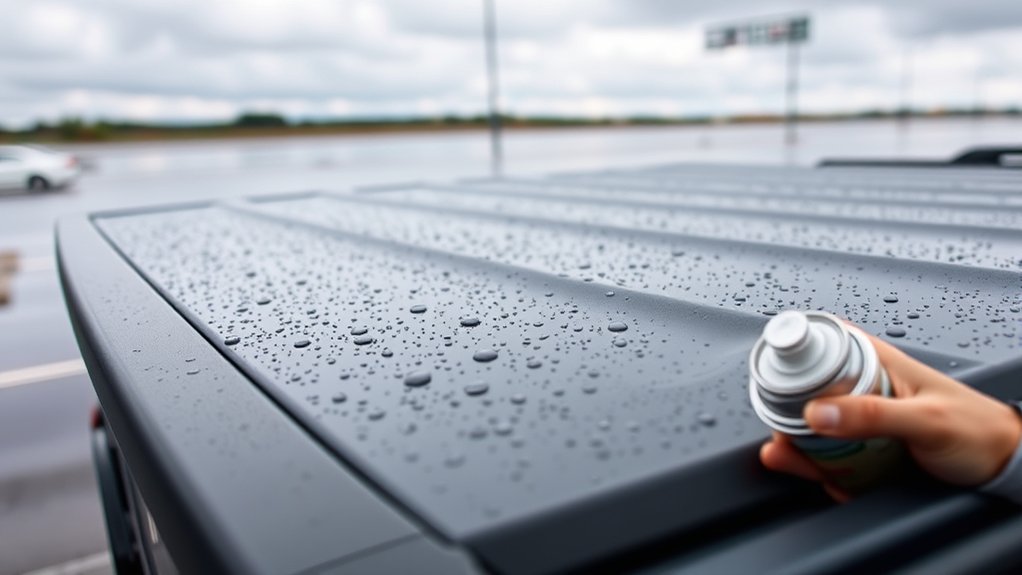
Although tonneau covers provide basic protection, waterproofing them considerably enhances their ability to shield your truck bed from water damage. You’ll gain significant benefits of waterproofing, such as preventing moisture seepage that can cause rust, corrosion, and mildew buildup.
By ensuring a watertight seal, you protect not only your cargo but also the structural integrity of your truck bed. Additionally, waterproofing improves cover durability by reinforcing materials against UV exposure, temperature fluctuations, and physical wear.
This prolongs the lifespan of your cover, reducing maintenance costs and the need for frequent replacements. Waterproofing also maintains the cover’s appearance and functional performance under harsh weather conditions, allowing you to rely on it year-round without compromising protection or aesthetics.
How to Identify Your Tonneau Cover Type
How can you determine the type of tonneau cover you have? Start by identifying cover material, as this guides selecting sealing method. Common materials include vinyl, aluminum, fiberglass, and canvas, each requiring specific waterproofing techniques. Inspect your cover closely for texture and rigidity to classify its type accurately.
| Cover Material | Key Characteristics |
|---|---|
| Vinyl | Flexible, smooth surface |
| Aluminum | Rigid, metallic finish |
| Fiberglass | Hard, painted surface |
| Canvas | Soft, fabric-like texture |
| Plastic | Lightweight, molded shape |
Once you’ve identified the material, you can choose the appropriate sealing method, optimizing waterproofing effectiveness and durability.
Cleaning and Preparing Your Cover for Waterproofing
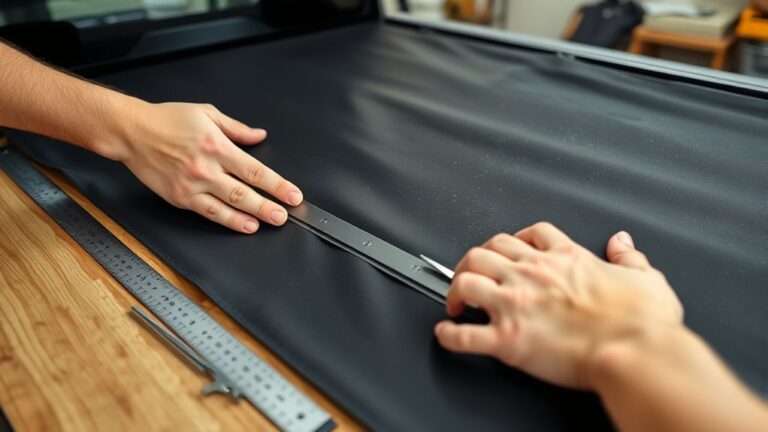
Start by thoroughly removing all dirt and debris from your tonneau cover using a soft brush or cloth.
Next, inspect the cover carefully for any tears, holes, or worn areas that could compromise waterproofing. Addressing these issues before applying any treatment guarantees a more effective seal.
Remove Dirt And Debris
Why is removing dirt and debris critical before waterproofing your tonneau cover? Dirt removal ensures the waterproofing agent adheres properly, preventing compromised protection. Debris clearing eliminates particles that could create gaps or uneven surfaces, reducing the effectiveness of the waterproof seal.
Start by thoroughly brushing off loose dirt and leaves with a soft-bristle brush. Follow up by rinsing the cover with clean water to wash away finer particles. Use a mild soap solution if necessary, but avoid harsh chemicals that might degrade the material.
After washing, let the cover dry completely to prevent trapping moisture under the waterproof coating. By systematically performing dirt removal and debris clearing, you create an optimal surface condition that maximizes the longevity and performance of your tonneau cover’s waterproofing.
Inspect For Damage
Before applying any waterproofing treatment, carefully inspect your tonneau cover for damage such as tears, holes, or worn areas. Start by examining the entire surface under good lighting, focusing on seams and edges where wear is most common.
Use the inspection basics: look for damage indicators like frayed stitching, punctures, or areas where the material feels thin or brittle. Run your hands gently over the cover to detect subtle imperfections you might miss visually.
Addressing these issues before waterproofing ensures optimal adhesion and effectiveness of the treatment. If you find significant damage, repair it with appropriate patch kits or consult a professional.
Skipping this step could result in water infiltration despite the waterproofing, so thorough inspection is essential for lasting protection.
Best Waterproofing Products for Soft and Hard Covers
Several high-quality waterproofing products are specifically designed to protect both soft and hard tonneau covers from water damage. For soft fabrics, opt for silicone or fluoropolymer-based sprays that create a durable, water-repellent barrier without compromising breathability.
These products also aid in color preservation, preventing fading caused by UV exposure. When treating hard covers, look for polyurethane or acrylic sealants that provide a flexible, transparent coating, enhancing water resistance while maintaining the cover’s finish.
Avoid products that leave a sticky residue or alter the texture. Always choose formulations compatible with your cover’s material to ensure optimal adhesion and longevity. Selecting the right waterproofing product tailored for soft fabrics or rigid surfaces is essential to maintain functionality and appearance over time.
How to Apply Waterproof Sealants
Choosing the right waterproofing product sets the foundation, but applying the sealant correctly ensures maximum protection. First, verify sealant compatibility with your tonneau cover material to avoid degradation.
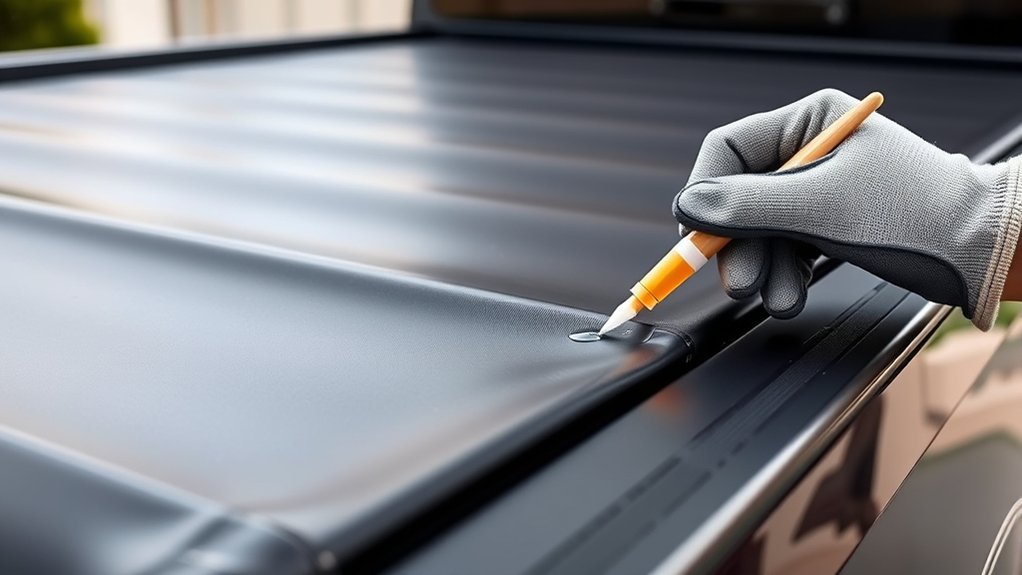
Clean the surface thoroughly, removing dirt and oils that hinder adhesion. Use a high-quality applicator to apply an even, continuous bead along seams and edges, focusing on seam maintenance to prevent water infiltration points.
Thoroughly clean surfaces and apply sealant evenly along seams to prevent water infiltration.
Allow the sealant to cure fully according to manufacturer instructions, avoiding premature exposure to moisture. Inspect the coverage for gaps or thin spots, and reapply if necessary.
Proper application not only enhances durability but also extends the lifespan of your waterproofing efforts, ensuring your tonneau cover remains watertight under varying weather conditions.
Fixing Leaks and Sealing Gaps on Your Tonneau Cover
You’ll start by carefully inspecting your tonneau cover for any visible leaks or gaps, paying close attention to seams and edges. Once you’ve pinpointed the problem areas, clean them thoroughly to ensure proper adhesion.
Then, apply a high-quality waterproof sealant evenly, making sure to cover all openings to prevent future water infiltration.
Identifying Leak Sources
Where exactly is your tonneau cover leaking? Pinpointing leak sources is essential before you fix or seal gaps. Start by inspecting seams, fasteners, and hinges. These are common weak points.
Look for cracks, worn areas, or misaligned edges where water might infiltrate. Next, check the drainage planning around your cover. Poor drainage can cause water to pool and seep through vulnerable spots.
Use a hose to simulate rainfall and observe where water accumulates or penetrates. Pay attention to corners and overlapping sections, as these areas often lack proper sealing or drainage channels.
Identifying precise leak sources allows you to target repairs effectively, ensuring your waterproofing efforts address the root of the problem rather than just the symptoms.
Applying Sealant Effectively
Although identifying leak sources is critical, applying sealant effectively requires careful surface preparation and precise application to ensure a durable, watertight seal. Start by thoroughly cleaning and drying the area. Use a compatible sealant designed for your tonneau cover material to overcome common waterproofing challenges.
Apply the sealant smoothly along seams and gaps, avoiding excess that could cause buildup or peeling.
| Step | Best Practice |
|---|---|
| Surface Preparation | Clean, dry, remove debris |
| Sealant Application | Use bead, smooth with tool |
| Curing Time | Allow 24 hours, avoid moisture |
These two-word discussion ideas, “surface prep” and “curing time,” are essential for a successful seal. Addressing these ensures your tonneau cover stays leak-free and durable under various conditions.
Maintaining Your Tonneau Cover’s Waterproofing
Regular inspections and timely maintenance play an essential role in preserving your tonneau cover’s waterproofing. Check the seams, latches, and fabric for signs of wear or damage at least monthly. Address cracks or small tears immediately with appropriate sealants to prevent water intrusion.
Clean the cover using mild soap and water, avoiding harsh chemicals that degrade waterproof coatings. After cleaning, reapply a waterproofing spray to reinforce protection. While it might be tempting to think about an unrelated topic like vehicle aesthetics or a random thought during maintenance, stay focused on functional checks to guarantee longevity.
Properly stored when not in use, your cover will resist environmental stress better. Consistent care prevents minor issues from escalating, maintaining the cover’s integrity and ensuring reliable waterproof performance.
Preventing Water Pooling on Your Tonneau Cover
Why does water often pool on your tonneau cover, and how can you stop it? Water pools primarily due to flat surfaces or sagging areas where runoff is obstructed. To prevent this, you need to maintain proper tension and slope on your tonneau cover.
Regularly adjust the tensioning system to eliminate dips that collect water. Incorporate ne852 waterproofing strategies by applying a high-quality, flexible sealant that repels water and enhances material resilience. Additionally, inspect and clear drainage channels or seams where water can accumulate.
You can also install support bows or braces to maintain a convex surface, encouraging water runoff. By combining these practical adjustments with ne852-grade waterproofing products, you’ll minimize water pooling, prolong your cover’s life, and keep your truck bed dry under all conditions.
When to Replace Your Tonneau Cover to Keep It Dry
How can you tell when it’s time to replace your tonneau cover to maintain optimal dryness? Inspect for persistent leaks despite regular DIY maintenance. Check for material degradation like cracks, tears, or warped seals that compromise waterproofing.
If water pooling recurs after proper cleaning and tension adjustments, replacement is necessary. Evaluate your tool selection to ensure thorough inspection. Use a moisture meter, seal tester, and inspection light for accuracy.
DIY repairs may temporarily address minor damage, but extensive wear demands a new cover to guarantee dryness. Timely replacement prevents water damage to the truck bed and preserves cargo integrity.
Prioritize a cover with durable materials and reliable sealing mechanisms to reduce future maintenance needs and enhance waterproof performance.
Frequently Asked Questions
Can a Tonneau Cover Improve My Truck’s Fuel Efficiency?
Yes, a tonneau cover can improve your truck’s fuel efficiency by reducing aerodynamic drag. Understanding how tonneau efficiency influences fuel savings impact helps you realize modest but practical improvements, especially at highway speeds.
Are Tonneau Covers Compatible With All Truck Bed Sizes?
You can’t fit a square peg in a round hole. Tonneau covers often face incompatible sizes and universal fit limitations.
You’ll need to check your truck bed’s exact dimensions to ensure proper compatibility and avoid installation issues.
How Do Tonneau Covers Affect Truck Bed Security?
You’ll enhance truck bed security by using a tonneau cover, as it provides theft mitigation through concealed storage and locking mechanisms. This effectively secures truck bed contents against unauthorized access and reduces theft risk.
Can I Install a Tonneau Cover by Myself?
Picture yourself tightening bolts under bright sunlight. Yes, you can handle DIY installation of a tonneau cover.
Follow precise steps and weatherproofing tips to ensure a secure, durable fit that keeps your truck bed protected and dry.
What Are Common Materials Used in Tonneau Covers?
You’ll find common fabrics like vinyl, canvas, and leatherette used in tonneau covers. They rely on durable mounting hardware such as clamps, rails, and snaps to ensure secure, precise attachment and optimal performance during use.
Conclusion
So, you want a dry tonneau cover without turning into a DIY disaster?
First, identify your cover type and clean it thoroughly like a germaphobe. Next, seal those sneaky seams to keep water out. Then, spray on the right waterproofing like it’s your new perfume.
Test your work, fix any leaks, and repeat as needed—because puddles don’t belong on your truck or your patience.
Follow these steps precisely, or embrace the soggy sadness of a leaky cover. Your truck deserves better, and so do you.
Making your tonneau cover waterproof is the key to protecting your gear and keeping your truck looking sharp.