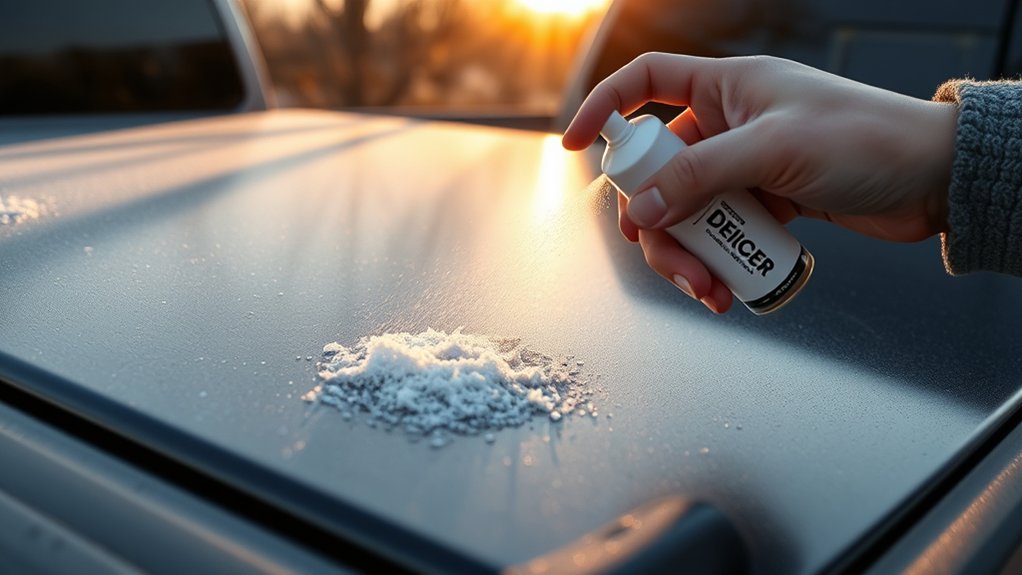
How to Keep Tonneau Cover From Freezing
If your tonneau cover freezes solid every winter, it might feel like you’re battling an immovable ice block rather than protecting your truck bed.
Keeping your tonneau cover from freezing is essential to maintain easy access and prevent damage.
Freezing not only makes access frustrating but also risks cracking seals and warping materials.
By understanding the key causes and applying targeted maintenance, you can keep your cover flexible and secure all season long.
Let’s explore the essential steps to prevent ice buildup and preserve your cover’s integrity.
Key Takeaways
- Regularly clean and dry the tonneau cover to remove moisture and debris that contribute to ice formation.
- Apply silicone-based lubricants on seals and hinges to repel moisture and maintain flexibility.
- Inspect and repair seals and edges to prevent gaps where moisture can accumulate and freeze.
- Use weather-resistant covers with tight seals and proper ventilation to reduce condensation buildup.
- Avoid harsh ice removal. Instead, use safe, alcohol-based de-icing sprays tested on a small area first.
Understanding Why Tonneau Covers Freeze and What Damage to Expect
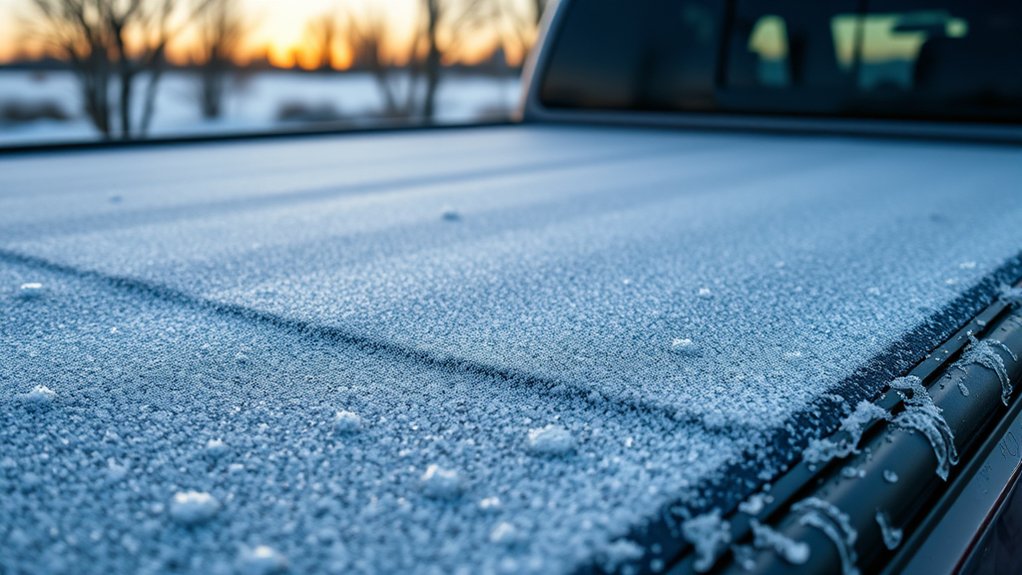
Why do tonneau covers freeze, and what risks does this pose? When moisture accumulates on your cover, it can freeze due to low temperatures, creating ice bonds. Contrary to common winter myths, freezing doesn’t only occur from snow but also from condensation and trapped humidity.
Cold myths suggest all covers resist freezing equally; however, material type and seal quality significantly influence ice buildup. Ice can cause your cover to warp, crack, or damage the seals, compromising its protective function.
Moreover, attempting to force open a frozen cover can damage hinges or latches. Understanding these technical factors helps you anticipate potential damage and avoid costly repairs. Recognizing the real causes behind freezing dispels winter myths and guides you toward effective preventative measures.
How to Inspect Your Tonneau Cover for Ice and Winter Damage
You should start by examining the seals and edges for cracks or gaps where ice can form. Next, look closely for any ice buildup that might compromise the cover’s function.
Finally, assess the material for signs of brittleness or tears caused by freezing temperatures.
Check Seals and Edges
How do you guarantee your tonneau cover remains functional during freezing conditions? Start with a thorough seals inspection and edge maintenance routine. Frozen or damaged seals compromise the cover’s ability to keep moisture out, leading to ice buildup.
Focus on these key checks: Inspect seals for cracks, brittleness, or gaps that can trap moisture. Examine edges for warping or tears that may affect the cover’s fit. Clean seals and edges regularly to prevent debris buildup, which accelerates wear in cold weather.
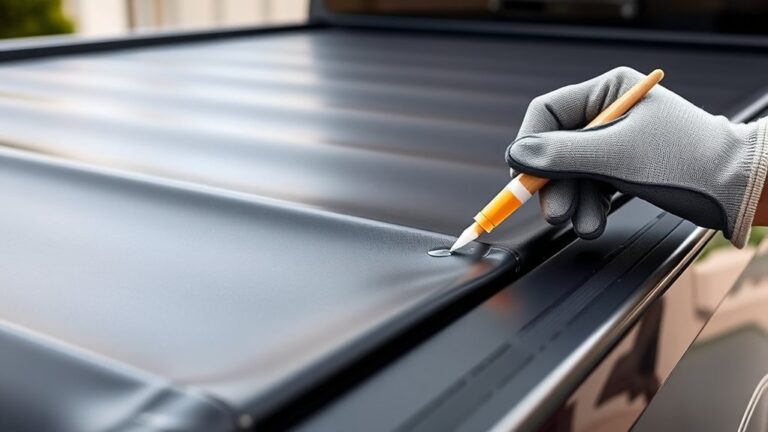
Use a silicone-based lubricant to keep seals flexible and prevent freezing. Address any minor damage promptly to avoid costly repairs. Regular, precise inspections ensure your tonneau cover remains tightly sealed and operational throughout winter.
Look for Ice Buildup
When should you inspect your tonneau cover for ice buildup to prevent winter damage? Ideally, check it daily during freezing temperatures, especially after snowfall or freezing rain. Ice hazards can compromise your cover’s functionality and make opening or closing difficult.
Examine all cover materials closely, focusing on seams, hinges, and any textured surfaces where ice tends to accumulate. Use a soft brush or cloth to detect hidden ice layers without damaging the materials.
Pay attention to uneven ice patches that could cause stress points or warp the cover. Early detection allows you to safely remove ice before it causes cracks or deformation.
Regular inspection minimizes the risk of permanent damage and ensures your tonneau cover remains reliable throughout winter conditions.
Assess Material Integrity
Although ice and cold can seem harmless on the surface, they can substantially compromise your tonneau cover’s material integrity over time. Conducting a reality check is essential to ensure your cover remains functional through winter.
Address common user questions by inspecting for:
- Cracks or brittleness in vinyl or plastic surfaces caused by freezing temperatures
- Loose or corroded fasteners that may worsen with ice expansion
- Delamination or peeling of layered materials, which reduces waterproofing
Use a flashlight and gently flex the cover to detect hidden weaknesses. Early detection prevents costly replacements and maintains optimal protection.
Regularly performing these checks will help you identify winter damage before it escalates, ensuring your tonneau cover performs reliably year after year.
Storing Soft and Hard Tonneau Covers for Winter
Before storing your soft or hard tonneau cover for winter, clean it thoroughly to remove dirt, debris, and moisture that can cause damage.
Choose a cool, dry place with minimal temperature fluctuations to prevent material degradation. Proper storage conditions will help maintain the cover’s integrity and extend its lifespan.
Cleaning Before Storage
Proper cleaning guarantees your tonneau cover remains functional and prevents damage during winter storage. Before you store the cover, remove all debris buildup to avoid trapping moisture that causes ice formation. Use a soft brush or cloth and mild detergent to clean the surface thoroughly.
Rinse off any soap residue with clean water and dry the cover completely to prevent mold and mildew.
Focus on these critical cleaning steps:
- Eliminate dirt, leaves, and other debris to minimize ice formation.
- Inspect seams and latches for trapped particles that could freeze.
- Use plastic-safe cleaners to avoid damaging soft or hard cover materials.
Optimal Storage Conditions
Where should you store your tonneau cover to prevent freezing and damage during winter? For both soft and hard covers, select a dry, temperature-controlled environment away from direct solar exposure. Solar exposure can degrade materials and affect the cover’s flexibility.
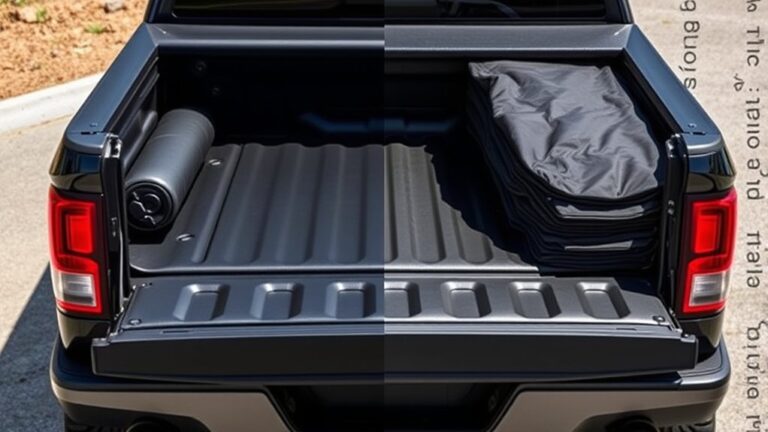
Understanding ice physics helps: moisture trapped on or inside the cover can freeze, causing expansion and potential cracking. Soft covers should be loosely rolled or folded to avoid creases that become stress points when frozen. Hard covers need support to prevent warping.
Ensure the storage area maintains stable temperatures above freezing to minimize ice formation. Avoid placing covers on cold concrete floors, which conduct cold and promote condensation. Using breathable storage bags can regulate humidity, reducing ice buildup and preserving the cover’s integrity throughout winter.
Simple Ways to Remove Ice From a Frozen Tonneau Cover
How can you efficiently remove ice from a frozen tonneau cover without causing damage? Addressing ice formation and frost removal requires careful techniques to protect the material’s integrity. Avoid sharp tools that could tear or puncture the cover. Instead, try these practical methods:
Use lukewarm water to slowly melt the ice, preventing sudden temperature shocks. Gently lift and flex the cover to break up thin ice layers without straining the fabric. Apply a soft plastic scraper designed for automotive surfaces to ease off residual frost.
These steps minimize mechanical stress and avoid abrasive damage. Consistently using controlled frost removal techniques helps maintain the cover’s waterproof seal and prolongs its lifespan. Remember to perform these actions patiently to ensure effective ice removal without compromising the tonneau cover’s durability.
Using De-Icing Sprays Without Hurting Your Cover
You’ll want to select de-icing sprays formulated to be safe on tonneau cover materials, avoiding harsh chemicals that cause damage. Apply the spray evenly and sparingly to prevent buildup or weakening of the cover’s surface.
Taking these precautions helps maintain your cover’s integrity while effectively removing ice.
Choosing Safe De-Icers
Which de-icing sprays can effectively prevent your tonneau cover from freezing without causing damage? You need products formulated to protect synthetic materials and avoid harsh chemicals.
Avoid standard ice melt products designed for pavement, as they often contain corrosive salts that degrade covers. Instead, select de-icers specifically made for automotive use. Consider these options:
- Silicone-based windshield spray: creates a protective barrier, repelling ice without harming vinyl or fabric.
- Propylene glycol ice melt: less corrosive than sodium chloride, suitable for delicate surfaces.
- Commercial tonneau-safe de-icers: formulated to dissolve ice gently without cracking or discoloration.
Proper Application Techniques
When applying de-icing sprays to your tonneau cover, what steps guarantee effective ice removal without causing damage? First, always test the spray on a small, inconspicuous area to avoid unexpected reactions.
Avoid over-saturating the cover, as excessive moisture can weaken materials. Apply evenly, focusing on icy spots, and allow the spray to work before gently removing ice with a soft tool. Avoid harsh scrubbing.
| Step | Action | Note |
|---|---|---|
| 1 | Test spray on small area | Prevents damage from unrelated topic chemicals |
| 2 | Spray evenly | Ensures consistent ice melting |
| 3 | Wait a few minutes | Allows chemical reaction (not a random concept) |
| 4 | Remove ice gently | Avoid scratches or tears |
Follow these techniques for safe, efficient de-icing.
Preventing Material Damage
How can you apply de-icing sprays without compromising your tonneau cover’s material integrity? The key lies in selecting products designed for automotive fabrics and following precise procedures. Avoid random speculation about using household chemicals, as unrelated topics in de-icing can lead to irreversible damage.
To protect your cover:
Use alcohol-based sprays specifically labeled safe for vinyl or fabric tonneau covers. Apply in light, even coats, avoiding saturation that can degrade seams or coatings. Test on a small, inconspicuous area before full application to detect adverse reactions.
Applying Protective Lubricants on Tonneau Covers to Prevent Ice
Why does your tonneau cover freeze, and what can you do to stop it? Ice forms when moisture contacts cold surfaces, causing your cover to stick or become rigid. Applying protective lubricants creates a barrier that repels moisture and prevents ice adhesion.
Use silicone-based sprays or specialized rubber protectants designed for automotive use. Avoid oil-based products, as they attract dirt and degrade material over time. Regular application, especially after washing or using ice melt near your truck, ensures consistent protection.
Incorporate this step into your fleet maintenance routine to reduce downtime caused by frozen covers. Proper lubrication maintains flexibility and extends the life of seals and hinges, preventing costly repairs. This proactive approach minimizes ice buildup without introducing corrosive chemicals, ensuring optimal tonneau cover performance in freezing conditions.
Using Truck Bed Covers to Prevent Ice Build-Up
Where does most ice accumulate on your truck during freezing weather? It often builds up directly on the truck bed, making your tonneau cover prone to freezing shut. Using a truck bed cover effectively minimizes this by creating a barrier against moisture and cold air.
For optimal winter storage, choose covers that:
- Seal tightly to prevent moisture intrusion
- Are made from durable, weather-resistant materials
- Allow ventilation to reduce condensation buildup
These features reduce ice accumulation and protect your cover’s mechanism. Avoid relying solely on chemical deicers without considering deicer safety, as some can damage cover materials or truck paint.
Proper use of truck bed covers ensures you prevent ice build-up efficiently, keeping your tonneau cover functional throughout winter without additional risks.
Best Weatherproofing Products to Stop Tonneau Covers From Freezing
Which products offer the most reliable protection against your tonneau cover freezing in cold weather? Start with silicone-based sprays designed to repel moisture and prevent ice buildup. These sprays form a thin, waterproof barrier that reduces ice melting and refreezing cycles.
Additionally, using specialized ice melting agents safe for truck bed materials can help clear frozen areas quickly, but avoid salt-based products that may corrode metal parts. For winter storage, applying a high-quality weatherproof sealant on seams and edges enhances resistance to moisture intrusion.
You can also consider waterproof covers with thermal insulation to minimize temperature fluctuations. Combining these products ensures your tonneau cover stays ice-free, maintains flexibility, and extends its lifespan throughout harsh winter conditions. Always follow manufacturer guidelines for optimal application and safety.
How to Maintain Your Tonneau Cover Throughout Winter
When should you perform routine checks on your tonneau cover during winter to crucial performance? Ideally, inspect it weekly to prevent damage from freezing or debris buildup. Don’t fall for common winter myths that suggest neglecting your cover during colder months; ensure maintenance is crucial.
Monitor your cover through heat cycles, as repeated freezing and thawing can stress materials.
Focus on these key maintenance tasks:
Clear snow and ice promptly to avoid excessive weight and moisture.
Apply a silicone-based lubricant to seals to maintain flexibility.
Tighten fasteners and check for cracks or tears that cold may exacerbate.
When and How to Replace a Winter-Damaged Tonneau Cover
Even with regular upkeep, winter’s harsh conditions can take a toll on your tonneau cover, leading to cracks, warping, or compromised seals. If you notice persistent leaks, stiffness, or visible damage after winter, it’s time to replace the cover.
Don’t fall for winterization myths that suggest simple treatments can restore extensive damage. These often overlook material fatigue caused by frost myths, such as the false belief that frost itself causes direct material failure.
To replace your winter-damaged tonneau cover, first remove all mounting hardware carefully to avoid frame damage. Then, select a replacement designed for cold climates with reinforced seals and UV-resistant materials.
Proper installation ensures a secure fit, preventing future freezing issues and maintaining optimal protection through winter.
Frequently Asked Questions
Can a Tonneau Cover Improve My Truck’s Fuel Efficiency?
Yes, a tonneau cover can improve your truck’s fuel efficiency by reducing aerodynamic drag. Its freezing mitigation features don’t affect performance, but the fuel efficiency impact depends on cover type, fit, and driving conditions.
Are Tonneau Covers Compatible With All Truck Bed Sizes?
You’ll find most tonneau covers don’t offer universal fit due to varying truck bed sizes. Check size compatibility carefully to ensure a secure, precise fit tailored for your specific truck model and bed dimensions.
How Do Tonneau Covers Affect Truck Bed Security?
Tonneau covers enhance truck bed security by concealing cargo and deterring theft. They’re not foolproof but add a layer of protection, especially when combined with lockable features and sturdy materials that resist tampering effectively.
Can I Install a Tonneau Cover by Myself?
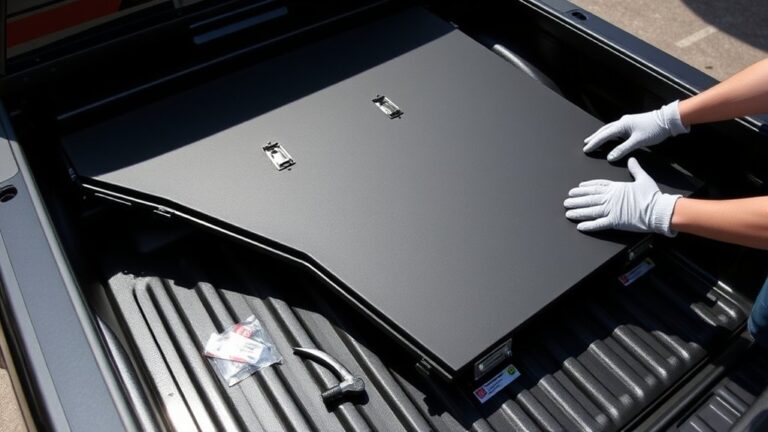
You can install tonneau covers yourself, you can master DIY installation, and you can save money. Follow precise steps, use proper tools, and guarantee accurate measurements to achieve a secure, functional, and professional tonneau cover installation every time.
What Materials Are Tonneau Covers Commonly Made From?
Tonneau materials typically include vinyl, aluminum, fiberglass, and ABS plastic. You’ll find durability testing focuses on weather resistance and impact strength, ensuring each cover withstands harsh conditions while protecting your truck bed efficiently.
Conclusion
Don’t let winter’s icy grip turn your tonneau cover into a frozen fortress. By inspecting seals like a skilled mechanic and applying silicone lubricants as a protective shield, you’ll keep frost at bay. Choosing weatherproof materials also adds an extra layer of defense against freezing conditions.
Think of your cover as a living barrier—nurture it with care, and it will guard your truck bed through the harshest cold. Regular maintenance not only prevents damage but also ensures smooth, reliable use throughout the season.
With these precise steps, you’ll prevent damage and ensure smooth, reliable use all winter long. Following these tips is key to how to keep tonneau cover from freezing effectively.