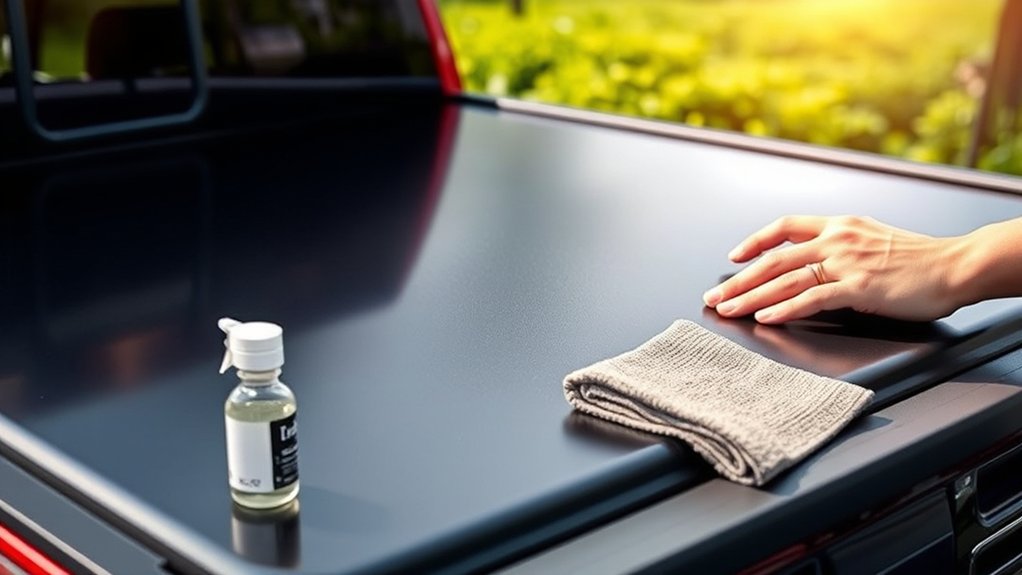
How to Protect a Tonneau Cover
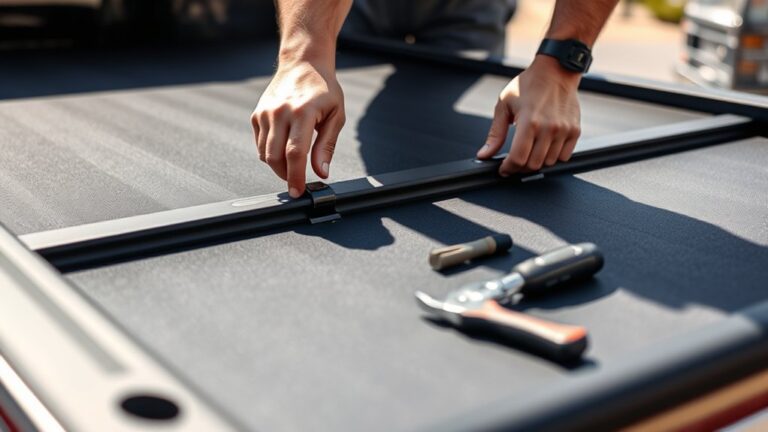
Just as a well-fitted glove protects your hand without restricting movement, a properly maintained tonneau cover shields your truck bed from the elements and wear. Protecting a tonneau cover starts with ensuring it is tightly installed to prevent gaps and potential damage.
You’ll also want to focus on thorough cleaning using the right products designed specifically for your cover material. Routine inspections are essential to catch any issues early before they become costly repairs.
Neglecting these simple steps can lead to damage that shortens the life of your cover. However, with the right approach, you’ll extend your cover’s lifespan markedly.
Let’s explore how to keep your investment in peak condition.
Key Takeaways
- Clean the tonneau cover regularly with mild, non-abrasive cleaners and rinse thoroughly to avoid material damage.
- Apply UV protectant sprays compatible with the cover material every 3 to 4 months to prevent fading and sun damage.
- Inspect seams, latches, and mounting points periodically for wear, corrosion, or looseness to catch damage early.
- Dry the cover completely before storage and keep it in a cool, dry place away from direct sunlight to prevent mildew and UV damage.
- Use breathable storage bags or covers to protect against dust while allowing air circulation during off-season storage.
Why Tonneau Covers Keep Your Truck Bed Safe
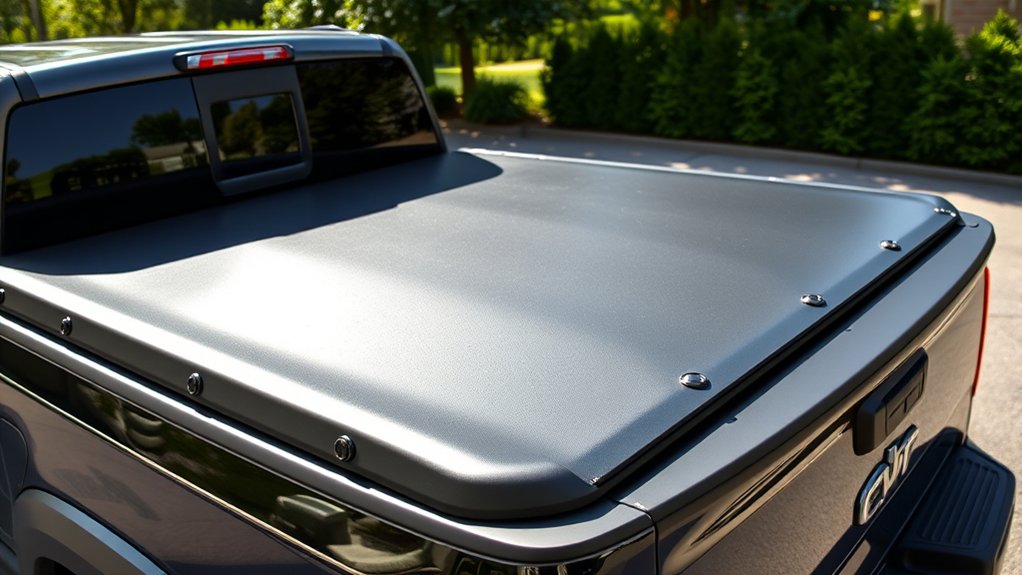
How exactly do tonneau covers protect your truck bed? They create a secure barrier against external elements like rain, dirt, and debris, preventing damage to your cargo and truck bed surface. The cover’s tight fit, especially around the rear notch, ensures minimal exposure to moisture and dust, reducing corrosion risks.
Proper installation is crucial; if you don’t align the cover correctly, you might cause a fabric tear near the rear notch due to excessive tension or friction. Using durable materials and regularly inspecting high-stress areas, like edges and seams, helps prevent premature wear.
How to Clean Your Tonneau Cover Without Causing Damage
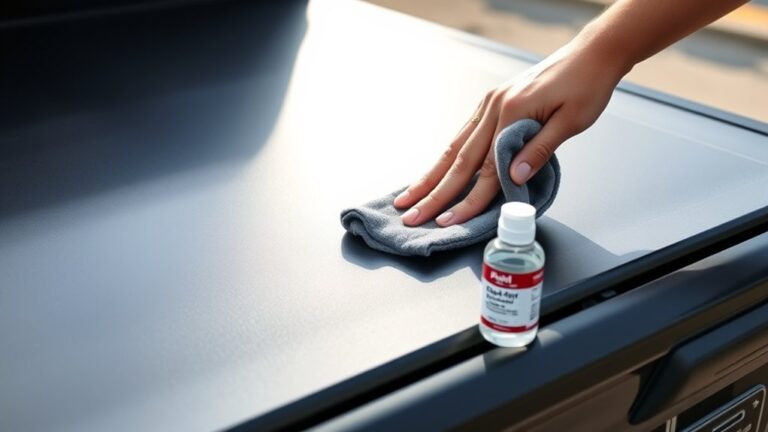
You’ll want to use mild, non-abrasive cleaners specifically designed for vinyl or fabric surfaces to avoid degrading your tonneau cover. When washing, apply gentle pressure with a soft cloth or sponge and rinse thoroughly to remove all residue.
Avoid high-pressure water or harsh scrubbing, as these can damage the material and reduce its lifespan.
Choosing Gentle Cleaning Products
Why does choosing the right cleaning product matter when maintaining your tonneau cover? Using harsh chemicals or abrasive cleaners can degrade the material, causing premature wear or discoloration.
You should always select gentle cleaners formulated specifically for vinyl, leather, or fabric, depending on your cover type. These products effectively remove dirt and grime without breaking down protective coatings. Pair them with nonabrasive tools, like microfiber cloths or soft brushes, to prevent scratching the surface.
Avoid household detergents or solvents, as they often contain harsh ingredients that can strip UV protectants and compromise waterproofing. By opting for specialized, gentle cleaners and appropriate tools, you preserve your tonneau cover’s integrity, extend its lifespan, and maintain its appearance.
This approach ensures effective cleaning without causing unintended damage.
Proper Washing Techniques
Several key steps guarantee you clean your tonneau cover effectively without causing damage. Begin by rinsing the cover with water to remove loose dirt and debris. Use a soft-bristle brush and a mild, non-abrasive cleaner specifically designed for tonneau covers.
Apply the cleaner gently, avoiding harsh scrubbing that can compromise the material. Rinse thoroughly to eliminate soap residue, preventing buildup that degrades the cover. Dry the cover with a microfiber cloth to avoid water spots and mildew.
When washing, prioritize careful handling to maintain the cover’s integrity. After cleaning, employ proper storage tactics. Store the cover in a cool, dry place away from direct sunlight to prevent UV damage and warping.
Following these washing techniques preserves your cover’s functionality and extends its lifespan.
How to Apply Protectants to Prevent UV Fading
You’ll want to select a protectant specifically designed for tonneau covers, focusing on UV blockers to prevent fading. Apply it evenly using a clean, soft cloth or applicator pad to guarantee full surface coverage without streaks.
Reapply the protectant every few months or after heavy exposure to sunlight for the best protection.
Choosing The Right Protectant
Although many protectants claim to shield your tonneau cover from UV damage, selecting one specifically formulated for automotive vinyl or fabric is essential. You want a product that ensures optimal material compatibility to avoid degradation or discoloration.
Check repair guidelines for your cover’s material; some protectants may interfere with adhesives or seams, complicating future repairs. Look for protectants with UV inhibitors and antioxidants designed to maintain flexibility and prevent cracking.
Avoid general household products, as they might cause buildup or attract dirt, accelerating wear. Using a protectant tailored to your tonneau cover’s material improves longevity and preserves appearance.
Always verify the product’s technical data sheet to confirm suitability and compliance with manufacturer recommendations before application.
Application Techniques For Coverage
How do you guarantee even coverage when applying protectants to your tonneau cover? Start by thoroughly cleaning the surface to remove soil buildup and contaminants, especially in creases where dirt accumulates. Use a soft brush and mild detergent to avoid damaging weathered vinyl.
After rinsing and drying completely, apply the protectant in small, manageable sections to prevent streaks and uneven layers. Use a microfiber applicator pad or spray bottle for controlled distribution, ensuring you work the product into the surface evenly.
Avoid oversaturation, which can cause pooling and reduce effectiveness. Finally, allow the protectant to absorb fully without exposure to direct sunlight or moisture. Consistent, methodical application maximizes UV protection and extends the lifespan of your tonneau cover.
Frequency Of Reapplication
Maintaining the protective qualities of your tonneau cover requires regular reapplication of protectants to combat UV fading effectively. For optimal frequency maintenance, apply protectants every 3 to 4 months under normal conditions.
If you live in high UV exposure areas or frequently wash your truck, increase reapplication to every 2 months. This schedule ensures the protective layer remains intact, preventing material degradation and color loss.
Use two word discussion ideas like “surface inspection” and “wear assessment” before reapplication to check for fading or dryness. Clean the cover thoroughly before each application to enhance protectant adhesion.
Sticking to this frequency maintenance routine extends your tonneau cover’s lifespan and maintains its appearance, offering consistent UV protection throughout the year without over-application or neglect.
How to Secure Your Tonneau Cover Properly
Where should you focus to secure your tonneau cover effectively? Prioritize areas vulnerable to security risks to enhance theft prevention. Follow these steps precisely:
- Lock Mechanisms: Choose covers with robust built-in locks or install aftermarket lock kits to deter unauthorized access.
- Latch Points: Ensure all latches engage fully and securely. Test them regularly for looseness or wear that compromises security.
- Frame Attachment: Verify the frame mounts tightly to the truck bed rails, minimizing gaps that could be exploited. Tighten bolts as needed.
- Cover Tension: Adjust tension systems to keep the cover taut, preventing slippage or lifting by thieves.
Avoiding Common Causes of Tonneau Cover Wear and Tear
Why does your tonneau cover show signs of wear prematurely? Often, it’s due to neglecting two word discussion ideas like “dust accumulation” and “UV exposure.” Dirt and debris cause abrasion, while prolonged sunlight weakens material fibers.
Avoid dragging heavy objects across the cover, as this causes tears and punctures. Novelty considerations like unconventional loading techniques can accelerate damage. Also, don’t leave the cover unsecured during high winds; flapping stresses seams and fasteners.
Regularly inspect for small cracks or broken latches that, if ignored, lead to larger issues. Use manufacturer-recommended cleaning agents to prevent chemical degradation. By addressing these factors proactively, you can maintain your tonneau cover’s integrity and extend its lifespan significantly.
Avoiding common causes of wear isn’t complicated—it just requires consistent, informed care.
How to Store Your Tonneau Cover During the Off-Season
After addressing daily wear factors, you’ll want to focus on proper storage when the cover isn’t in use. Effective off-season care preserves the material integrity and functionality. Consider these storage solutions to maintain your tonneau cover:
- Clean thoroughly to remove dirt and debris, preventing mold and mildew during storage.
- Dry completely to avoid moisture buildup that can degrade fabrics and hardware.
- Store in a cool, dry place away from direct sunlight to prevent UV damage and warping.
- Use a breathable storage bag or cover designed for tonneau covers to protect against dust while allowing air circulation.
Following these steps ensures your cover stays in excellent condition, reducing the risk of cracks, fading, and mechanical failures when you reinstall it next season.
How to Inspect Your Tonneau Cover for Early Issues
Although regular use can mask minor problems, inspecting your tonneau cover periodically helps you catch early signs of wear or damage before they worsen. Start by examining seams, latches, and hinges for fraying, corrosion, or looseness.
Check the surface for punctures, cracks, or fading that may compromise waterproofing. When inspecting, keep teardown considerations in mind. Avoid dismantling components unless necessary, as improper teardown can void your warranty.
Document any issues with photos and notes to support potential warranty claims. Also, verify the cover’s mounting points and seals for tightness and integrity, as loose fittings can accelerate damage.
Regular, methodical inspections ensure you address concerns proactively, preserving functionality and avoiding costly repairs or warranty disputes down the line.
Repairing Minor Tonneau Cover Damage Before It Gets Worse
When you spot minor damage on your tonneau cover, addressing it promptly prevents deterioration that could lead to costly repairs or replacement. Start by carefully lifting any loose edges with a minor prybar to access underlying damage without causing further harm.
Then, clean the affected area thoroughly to ensure proper adhesion. Next, apply a resin epoxy specifically designed for tonneau covers to fill cracks or small punctures, ensuring a watertight seal.
Finally, smooth the epoxy and allow it to cure fully according to the manufacturer’s instructions before using the cover again. Following these steps maintains structural integrity and extends your tonneau cover’s lifespan, minimizing the risk of worsening damage and costly fixes down the road.
Top Products to Keep Your Tonneau Cover in Shape
Which products will best preserve your tonneau cover’s condition and functionality? Start with a UV protectant spray designed for vinyl or fabric covers to prevent sun damage during outdoor storage. These sprays maintain flexibility and reduce cracking.
Use a specialized cleaner formulated for your cover’s material to remove dirt and contaminants without degrading the surface. For enhanced wind resistance, consider installing additional clamps or straps rated for high wind loads; these accessories stabilize the cover and prevent flapping that accelerates wear.
Silicone-based lubricants applied sparingly on hinges and locks ensure smooth operation and prevent rust. Finally, a breathable tonneau cover storage bag protects your cover from moisture buildup and dust when not in use, extending its lifespan.
Consistent use of these products keeps your cover durable and functional.
Frequently Asked Questions
Can Tonneau Covers Improve My Truck’s Fuel Efficiency?
Yes, tonneau covers can improve your truck’s fuel efficiency by reducing aerodynamic drag. They streamline airflow over the bed, decreasing turbulence and drag, which helps your engine use less fuel during highway driving and enhances overall efficiency.
Are Tonneau Covers Compatible With All Truck Models?
Like fitting Excalibur to its rightful hand, tonneau covers rarely offer universal compatibility. You’ll find most require a model-specific fit, ensuring precise sealing and secure attachment tailored to your truck’s unique dimensions and features.
Do Tonneau Covers Affect My Truck’s Warranty?
You won’t usually void your truck’s warranty by installing a tonneau cover, but improper installation causing wear and tear might.
Properly fitted covers can protect your truck, potentially enhancing resale value by reducing damage.
How Do Tonneau Covers Handle Extreme Weather Conditions?
Tonneau covers handle extreme weather with durable materials and tight weather sealing, preventing water and debris intrusion. You’ll find UV-resistant coatings and reinforced edges guarantee reliable protection against harsh sun, rain, snow, and wind conditions.
Can I Install a Tonneau Cover Myself or Need Professional Help?
You can install a tonneau cover yourself by carefully following manufacturer instructions and using proper tools. However, professional installation ensures precise fit and durability, especially for complex models or if you lack experience with vehicle accessories.
Conclusion
To protect your tonneau cover, prioritize proper placement and conduct periodic inspections to prevent pesky problems. Clean carefully using compatible cleaners to avoid damage. Clamp securely to combat harsh conditions and keep your cover in place.
Consistently apply UV protectants to curb cracking and fading. Store the cover smartly in shaded, dry spots using breathable bags to safeguard against sun and moisture.
Staying steady with these simple steps ensures your cover’s strength, style, and sturdiness stay sharp season after season. Proper care is essential to protect your tonneau cover effectively.