Does Ford f150 Qualify for Section 179
Navigating the tax code can feel like steering through a dense fog, especially when it comes to deductions like Section 179 and whether your Ford F-150 qualifies. If you’re considering this deduction for your vehicle, you need to understand specific criteria such as weight requirements and business use percentages.
These details can considerably impact your eligibility and potential savings. The nuances go beyond the surface—making it essential to examine the rules carefully before proceeding.
Key Takeaways
- The Ford F-150 typically qualifies for Section 179 if its GVWR exceeds 6,000 pounds.
- Business use over 50% is required to claim the Section 179 deduction for the F-150.
- Both new and used Ford F-150 trucks can be eligible for Section 179 deductions.
- Deduction amounts depend on GVWR and the percentage of business use of the vehicle.
- Proper documentation, including purchase invoices and mileage logs, is essential for eligibility.
Does the Ford F-150 Qualify for Section 179?
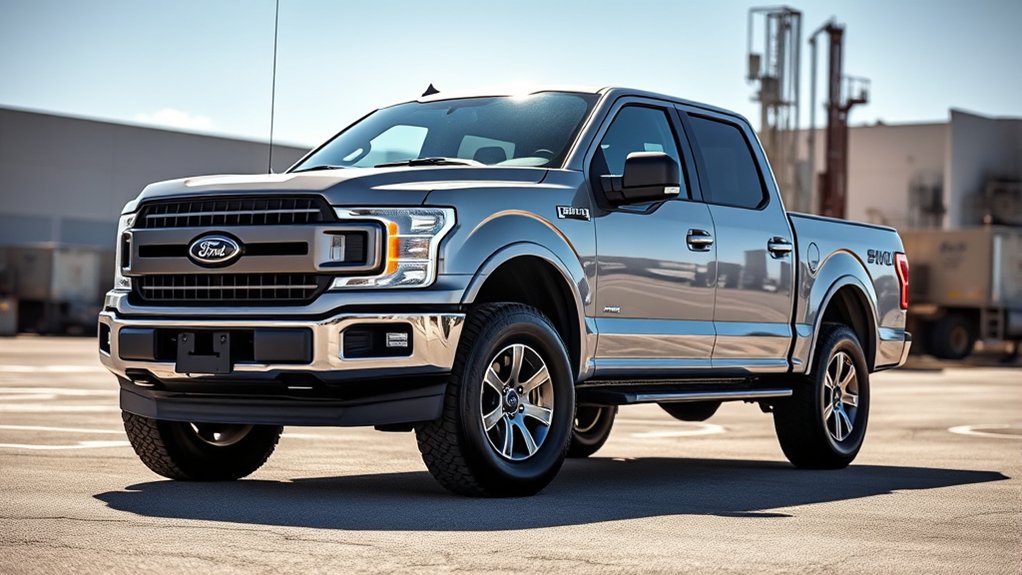
How does the Ford F-150 fit within the parameters of Section 179? You’ll find that this vehicle often qualifies due to its classification as a light truck with a gross vehicle weight rating (GVWR) exceeding 6,000 pounds.
This distinction is essential because Section 179 incentives generally exclude passenger cars, especially luxury vehicles, which fall under an unrelated topic of passenger vehicle depreciation limits. The F-150’s utilitarian design and commercial appeal position it differently from luxury vehicles, which typically don’t meet the stringent weight and use criteria for Section 179.
Consequently, if you purchase an F-150 primarily for business use, you can likely benefit from the Section 179 deduction, unlike with luxury vehicles that are subject to strict caps and disallowed deductions under this tax code provision.
What Is Section 179 and How Does It Work for Vehicles?
Section 179 allows you to deduct the full purchase price of qualifying business vehicles, including certain trucks, from your taxable income. To benefit, you need to ensure the vehicle meets specific eligibility criteria set by the IRS.
Understanding these requirements helps you maximize your tax deduction efficiently.
Section 179 Overview
Why should you consider Section 179 when purchasing a vehicle like the Ford F-150? Section 179 allows you to deduct the full purchase price of qualifying business equipment, including vehicles, in the year you buy them. This can substantially reduce your taxable income.
Here’s how it works for vehicles:
- You can expense the cost of the vehicle up to a specific limit rather than depreciating it over several years.
- This deduction applies only if the vehicle is used more than 50% for business purposes.
- The deduction reduces your current tax liability, improving cash flow.
Focusing on Section 179 avoids irrelevant topic discussions, ensuring your analysis stays clear from discussion ideas that don’t apply to vehicle deductions.
Vehicle Eligibility Criteria
When determining if your Ford F-150 qualifies for the Section 179 deduction, you must carefully evaluate specific eligibility criteria related to vehicle type, weight, and business use. Section 179 allows immediate deductions on qualifying vehicles used more than 50% for business.
The Ford F-150 typically meets criteria due to its gross vehicle weight rating (GVWR) exceeding 6,000 pounds, a key threshold. However, you should avoid distractions from irrelevant topics or random ideas that do not affect eligibility, such as color or aftermarket modifications.
Focus strictly on the vehicle’s classification. Light trucks and SUVs generally qualify if they meet IRS weight and usage requirements. Ensuring compliance with these precise standards is essential before claiming the deduction, maintaining accuracy and adherence to tax regulations.
Tax Deduction Benefits
Understanding the eligibility of your Ford F-150 sets the stage for exploring the financial advantages it can offer through tax deductions. Section 179 allows you to deduct the full purchase price of qualifying vehicles used for business purposes, such as eco friendly operations or ride sharing services.
Here’s how it works for vehicles:
- You can deduct up to the maximum limit allowed by the IRS for the year you place the vehicle in service.
- The vehicle must be used more than 50% for business to qualify.
- The deduction reduces your taxable income, lowering your overall tax liability.
Ford F-150 Section 179 Eligibility: Business Use Requirements
To qualify your Ford F-150 for Section 179, you must use it primarily for business, meeting the required business use percentage. The IRS has specific vehicle qualification criteria that determine eligibility based on usage and weight class.
Understanding these requirements ensures you maximize the deduction without risking noncompliance.
Business Use Percentage
How much you use your Ford F-150 for business directly impacts its eligibility for Section 179 deduction. The IRS requires that the vehicle be used more than 50% for business to qualify. You should carefully track your usage to substantiate this percentage.
Consider these three key points:
- Document your mileage: Maintain accurate logs distinguishing business from personal use to support your business use percentage.
- Evaluate financing options: Some financing plans affect your ability to claim Section 179, so consult your financial advisor before purchase.
- Review insurance considerations: Insurance policies may vary based on business use; ensure your coverage aligns with your vehicle’s business use percentage.
Vehicle Qualification Criteria
What specific criteria must your Ford F-150 meet to qualify for the Section 179 deduction? Primarily, your vehicle must be used more than 50% for qualified business purposes. The IRS requires detailed documentation to substantiate this business use percentage.
Additionally, the truck must meet weight and usage thresholds defined under the tax code. It’s essential to disregard ridiculous myths and irrelevant tangents that often confuse taxpayers, such as misinterpretations about passenger capacity or cosmetic modifications.
Your focus should remain on the actual business use and compliance with IRS rules. By meeting these criteria and maintaining precise records, you ensure your Ford F-150 qualifies for Section 179. This analytical approach avoids guesswork, maximizing your legitimate tax benefits.
IRS Weight Limits for Ford F-150 Section 179 Qualification
Why does the IRS impose specific weight limits on vehicles like the Ford F-150 for Section 179 qualification? The rationale centers on ensuring that deductions apply to vehicles primarily used for business rather than personal use. These weight limits help distinguish qualifying vehicles effectively, avoiding confusion with unrelated topics such as passenger cars. From an offbeat angle, the IRS focuses on gross vehicle weight rating (GVWR) rather than curb weight.
Here’s what you need to know:
- The IRS typically sets the minimum GVWR at 6,000 pounds for trucks to qualify.
- Vehicles above this threshold can claim larger Section 179 deductions.
- The Ford F-150’s eligibility depends on its GVWR meeting or exceeding this limit.
Understanding these weight parameters is critical before pursuing the deduction.
Which Ford F-150 Models Qualify for the Deduction?
You’ll want to focus on specific Ford F-150 trim levels that meet the IRS weight requirements to qualify for the Section 179 deduction. It’s essential to verify that the vehicle’s gross vehicle weight rating (GVWR) aligns with the allowed threshold.
Additionally, your business use percentage must satisfy the IRS criteria to maximize eligibility.
Eligible Trim Levels
Which Ford F-150 trim levels qualify for the Section 179 deduction depends on their gross vehicle weight rating (GVWR) and intended business use. You’ll want to focus on trims that satisfy the criteria to maximize your tax benefits, especially if your business involves hauling materials for tiny homes or addressing climate change initiatives.
Here are three trims to evaluate:
- XL and XLT: These base trims often have GVWRs suitable for Section 179, ideal for general business use.
- Lariat: With higher GVWR options, it supports heavier payloads, fitting construction or environmental projects.
- Raptor: Though powerful, verify GVWR limits; it may qualify if used primarily for business.
Check each trim’s specifications to confirm compliance with deduction requirements.
Weight Requirements Overview
After identifying the trims that may qualify based on their intended use, the next step is to examine the weight requirements that determine eligibility for the Section 179 deduction. To qualify, the Ford F-150 must have a gross vehicle weight rating (GVWR) exceeding 6,000 pounds.
This weight threshold is essential; models below this limit do not meet the IRS criteria. It’s important to focus solely on GVWR and not confuse it with curb weight or payload capacity, as those are irrelevant topics when evaluating Section 179 eligibility.
Avoid considering unrelated concepts such as fuel efficiency or passenger capacity, which do not impact the deduction. By concentrating strictly on GVWR, you can accurately determine which Ford F-150 models meet the weight requirements necessary for the Section 179 deduction.
Business Use Criteria
How does business use affect the eligibility of your Ford F-150 for the Section 179 deduction? To qualify, your vehicle must be used for business purposes more than 50% of the time. Here’s what you need to consider for tax planning and vehicle financing:
- Usage Percentage: Only the portion used for business counts. If your F-150 is 70% business, you can deduct 70% of the eligible cost.
- Model and Configuration: Certain F-150 models, especially those with a Gross Vehicle Weight Rating (GVWR) over 6,000 lbs, often qualify, but business use remains crucial.
- Documentation: Keep detailed mileage logs and financing records to substantiate business use.
Accurate vehicle financing details and strict adherence to business use criteria ensure you maximize your Section 179 deduction efficiently.
How Much Section 179 Deduction Can You Get for Your Ford F-150?
Determining the exact amount of Section 179 deduction you can claim for your Ford F-150 depends on several factors, including the truck’s gross vehicle weight rating (GVWR) and its use in your business.
If your F-150 supports activities like eco travel or wildlife photography, the business use percentage plays a critical role in the deduction amount. Here’s a simplified illustration:
| GVWR (lbs) | Max Deduction Limit | Business Use Requirement |
|---|---|---|
| Under 6,000 | Up to $11,160 | At least 50% |
| 6,001 – 14,000 | Up to $26,200 | At least 50% |
| Over 14,000 | Up to $1,080,000 | At least 50% |
Your deduction scales with business use intensity, so accurate record-keeping is essential.
Calculating Your Ford F-150 Section 179 Deduction
Calculating your Ford F-150 Section 179 deduction starts with understanding your vehicle’s gross vehicle weight rating (GVWR) and the percentage of business use. To determine your deduction accurately, focus on these key steps:
- Identify the GVWR of your Ford F-150, as vehicles over 6,000 pounds may qualify for higher Section 179 limits.
- Calculate the percentage of time you use the truck for business purposes, including activities like disaster relief efforts or charity planning, which can justify legitimate business use.
- Apply the Section 179 dollar limits to the business-use portion of the vehicle’s cost, ensuring your deduction aligns with IRS guidelines.
Claiming Section 179 on New vs. Used Ford F-150 Trucks
When considering Section 179 deductions for your Ford F-150, does the vehicle’s age affect your eligibility? Whether you choose a new or used Ford F-150, you can claim the Section 179 deduction, provided the truck meets IRS requirements and is used more than 50% for business.
New trucks may offer higher depreciation benefits initially, but used vehicles still qualify, offering flexibility in budget planning. Selecting between new and used impacts your cash flow and tax strategy, which should align with your broader marketing strategy to maximize overall business expenses.
Analyzing the trade-offs ensures you maximize tax savings while maintaining operational efficiency. Ultimately, your decision should integrate financial considerations and strategic marketing goals for optimal Section 179 utilization.
Documentation You Need to Claim Section 179 for Your Ford F-150
Although claiming the Section 179 deduction for your Ford F-150 can provide significant tax benefits, you’ll need to maintain thorough documentation to ensure compliance with IRS regulations. Proper records ensure your claim withstands scrutiny and differentiates this topic from unrelated Ford F 150 Section 179 discussion points.
To support your deduction, keep these key documents:
- Purchase Invoice: Shows the vehicle price and date, essential for verifying eligibility and cost basis.
- Proof of Use: Records demonstrating the Ford F-150’s business use percentage, such as mileage logs or usage reports.
- Tax Forms: Copies of IRS Form 4562 and your tax return, documenting the deduction claimed.
Combining Section 179 and Bonus Depreciation on the Ford F-150
Maintaining accurate documentation sets the foundation for maximizing your tax benefits on the Ford F-150. When combining Section 179 and bonus depreciation, you can accelerate deductions, but you must avoid unrelated discussion or off-topic chatter to ensure compliance.
Section 179 allows immediate expensing up to a limit, while bonus depreciation applies to remaining costs, creating a strategic tax advantage.
| Tax Strategy | Description |
|---|---|
| Section 179 | Deduct up to $1,160,000 (2024 limit) immediately |
| Bonus Depreciation | Deduct 80% of remaining cost after Section 179 |
| Documentation | Essential for proving business use and eligibility |
| Compliance | Avoid unrelated discussion or off-topic chatter in records |
This combination requires careful record-keeping to substantiate your deductions fully.
Frequently Asked Questions
Can I Lease a Ford F-150 and Still Qualify for Section 179?
You can’t claim Section 179 depreciation on a leased Ford F-150, as leasing eligibility requires ownership. Consider alternative financing like purchasing to qualify, since leasing disqualifies you from taking the Section 179 deduction.
Are There State-Specific Differences in Section 179 for the Ford F-150?
Yes, state tax considerations and vehicle depreciation rules vary, so you should analyze your state’s specific Section 179 regulations carefully. Differences can affect your Ford F-150’s eligibility and the deduction amount, requiring precise local tax compliance.
How Does Financing Affect My Section 179 Deduction on a Ford F-150?
Financing terms influence your Section 179 deduction by determining when you can claim tax depreciation. You can only deduct the financed amount you’ve paid during the tax year, affecting your immediate tax benefits and cash flow management.
Can Modifications to the Ford F-150 Impact Section 179 Eligibility?
Just like Sherlock examines every clue, you must scrutinize modification limitations carefully. Certain changes might affect your Ford F-150’s eligibility under Section 179, so understanding tax form nuances is vital before making adjustments.
Is There a Deadline for Purchasing the Ford F-150 to Claim Section 179?
You must purchase the Ford F-150 by December 31 to meet timing considerations for Section 179. This deadline ensures favorable tax treatment, so timely acquisition is essential for maximizing your deduction within the tax year.
Conclusion
Navigating Section 179 with your Ford F-150 is like steering a powerful truck through tax terrain—you need precision and the right conditions. Ensure your truck’s GVWR exceeds 6,000 pounds, business use tops 50%, and documentation is thorough. By meeting these criteria, you can confidently maximize your deduction.
Stay analytical and deliberate, and you’ll effectively leverage Section 179 to accelerate your business savings while complying with IRS requirements. Understanding these key factors will help you determine if your Ford F-150 qualifies for Section 179 and how to take full advantage of the tax benefits.