How Much Weight Can a Tonneau Cover Hold
You might not realize that not all tonneau covers can support weight equally, and some are designed simply to protect cargo rather than bear loads.
How much weight can a tonneau cover hold depends heavily on materials, construction, and how that weight is distributed.
Understanding these factors is essential if you plan to use your cover for anything beyond basic protection.
Before placing anything on top, it’s important to know what your specific cover can handle to avoid damage or safety risks.
Key Takeaways
- Most tonneau covers aren’t designed to bear heavy loads; weight capacity depends on distribution and manufacturer specifications.
- Soft covers support only light loads, suitable for small bags or tools, and are not meant for sitting or heavy cargo.
- Hard covers typically hold between 200 to 600+ pounds due to their reinforced frames and rigid panels.
- Even weight distribution is essential to prevent damage, sagging, or deformation of the cover.
- Material choice, like aluminum or reinforced fiberglass, impacts load capacity and durability under weight.
How Much Weight Can a Tonneau Cover Hold?
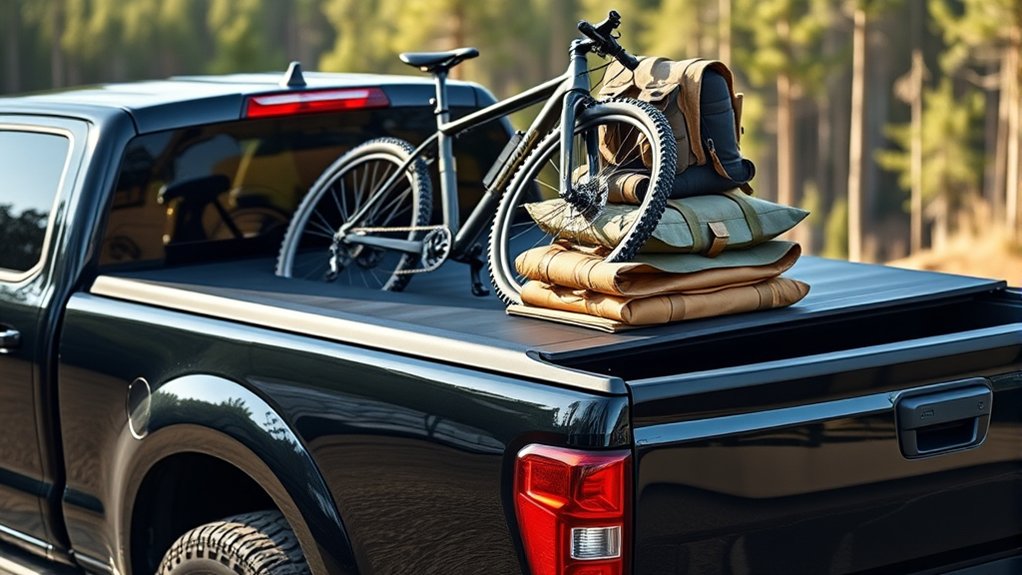
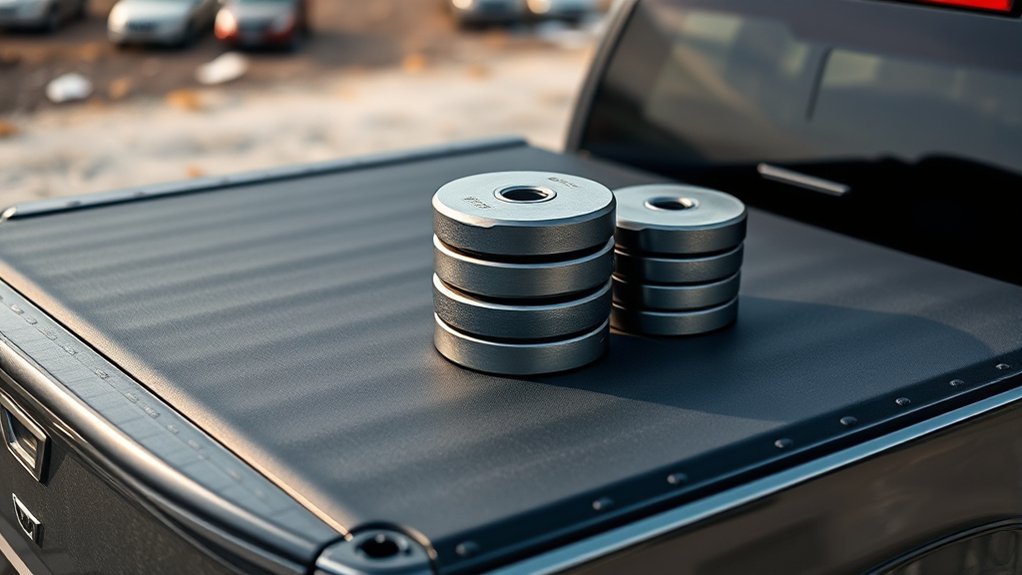
How much weight can a tonneau cover actually support? That depends largely on weight distribution and load placement. Most tonneau covers aren’t designed as load-bearing surfaces, so you shouldn’t place heavy or concentrated weight on them.
Even if a cover can hold light items, uneven load placement risks damaging the cover’s frame or fabric. For optimal support, distribute weight evenly across the entire surface rather than focusing it in one spot.
Generally, soft roll-up or folding covers hold less weight compared to hard covers with reinforced frames. Always check the manufacturer’s specifications for maximum load capacity.
Proper weight distribution and careful load placement ensure you don’t exceed limits, preventing damage and maintaining your tonneau cover’s integrity.
What Materials Affect Tonneau Cover Strength?
The ability of a tonneau cover to support weight depends considerably on the materials used in its construction. Different materials offer varying degrees of strength, durability, and flexibility, directly influencing load capacity. While some might engage in an unrelated topic or random weight discussion, focusing on material specifics helps clarify structural limits.
Key materials affecting strength include:
Aluminum: Lightweight yet strong, providing excellent support without adding excessive weight.
Fiberglass: Rigid and durable, capable of holding more weight but prone to cracking under extreme pressure.
Vinyl with Reinforced Frames: Offers flexibility but depends heavily on the underlying frame’s material for weight support.
Understanding these materials helps you evaluate how much weight your tonneau cover can realistically hold.
How Different Tonneau Covers Handle Weight Loads
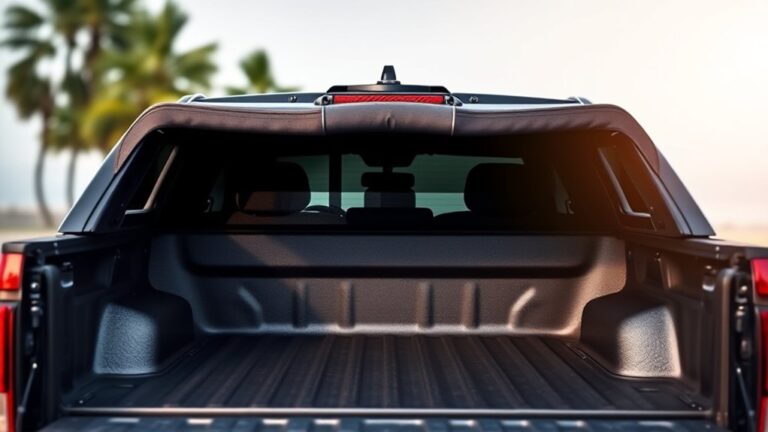
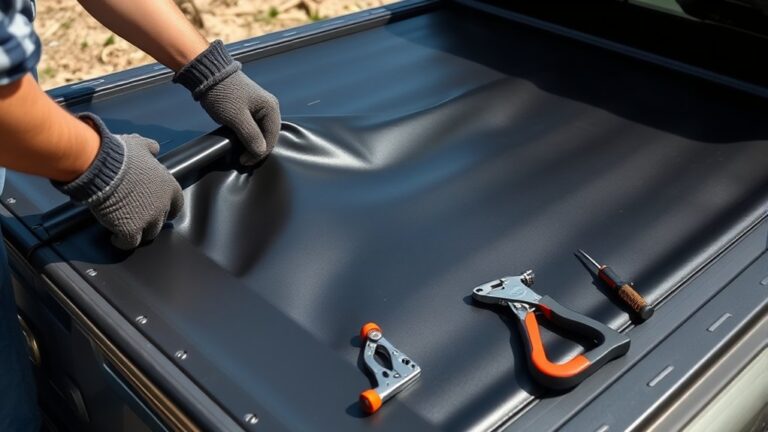
You’ll find that soft tonneau covers typically support only light loads due to their flexible materials and frame design.
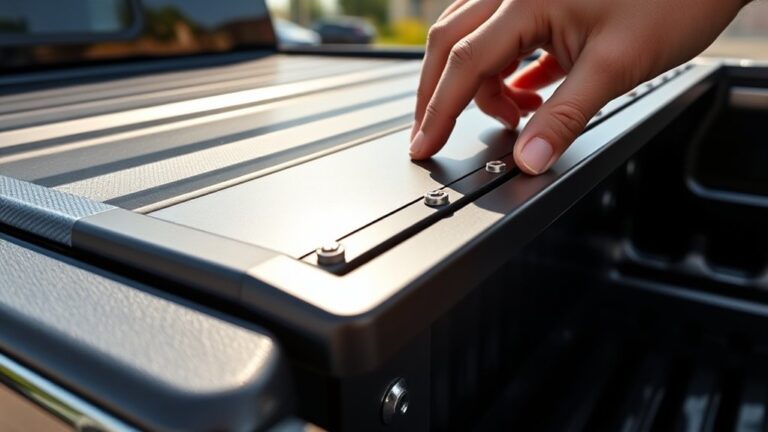
In contrast, hard covers provide considerably higher load capacities, often reinforced with rigid panels and sturdy frames. Understanding how material choices impact strength helps you select the right cover for your specific weight requirements.
Soft Covers Weight Limits
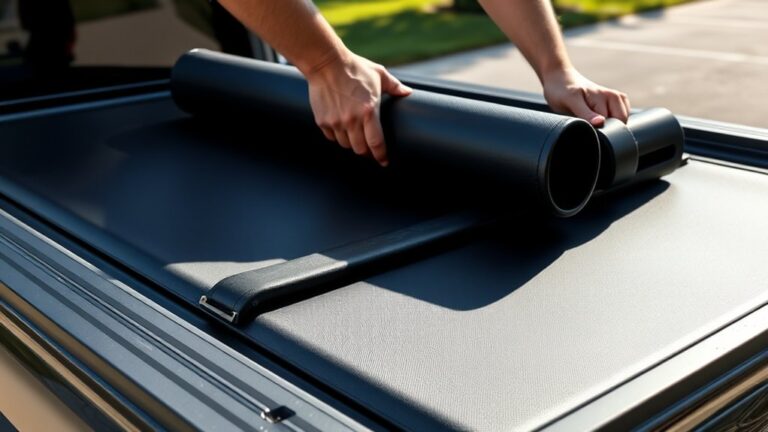
When considering soft tonneau covers, you might wonder how much weight they can realistically support. Soft covers are made from flexible soft materials like vinyl or fabric, which inherently limit their load-bearing capacity. Unlike rigid covers, they rely heavily on proper weight distribution to avoid damage or sagging.
Here’s what you should know:
- Soft materials provide minimal structural support, making them unsuitable for heavy loads.
- Evenly distributing weight across the cover helps prevent localized stress points.
- Most soft covers can hold light loads such as small bags or tools but are not designed for sitting or heavy cargo.
Understanding these limits ensures you maintain the cover’s integrity while optimizing its practical use for lightweight protection.
Hard Covers Load Capacity
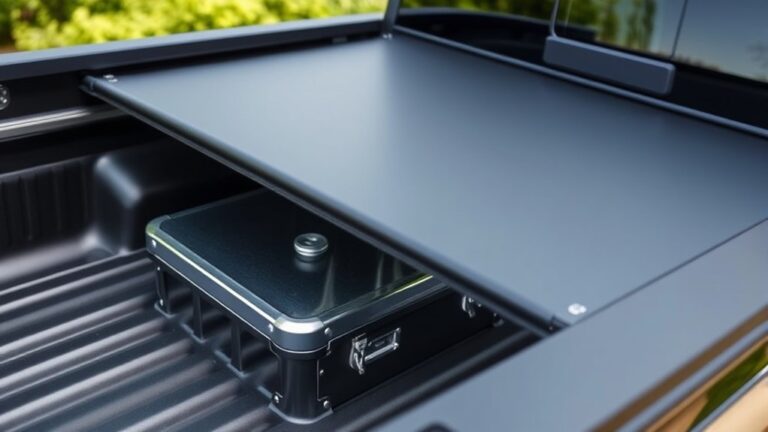
How much weight can hard tonneau covers support compared to their soft counterparts? Hard covers generally offer a significantly higher load capacity due to their rigid construction. Unlike soft covers, which rely on flexible materials, hard covers use solid panels that distribute weight more evenly across the surface.
Depending on the design and build, you can expect hard covers to support anywhere from 200 to 600 pounds or more. This makes them suitable for carrying additional cargo or even supporting a person standing or sitting on top.
When assessing hard covers’ load capacity, consider their frame reinforcement and locking mechanisms, as these components contribute to structural integrity. Overall, hard covers provide superior support, enhancing both protection and utility beyond what soft covers typically offer.
Material Impact On Strength
Why does the material of a tonneau cover play an essential role in its weight-bearing capacity? The type of material directly affects how well the cover manages weight distribution and ensures material safety under load. Different materials respond uniquely to stress, impacting durability and performance.
Consider these factors:
- Aluminum: Offers high strength to weight ratio, excellent for even weight distribution and resisting dents.
- Fiberglass: Strong but less flexible, can bear significant loads but risks cracking under uneven pressure.
- Vinyl: Lightweight and flexible, suitable for light loads but poor at supporting heavy or concentrated weight.
Understanding these material characteristics helps you choose a tonneau cover that balances weight capacity and safety effectively.
Why Manufacturer Weight Limits Matter for Your Tonneau Cover
You need to follow the manufacturer’s weight limits to ensure your tonneau cover performs safely and effectively. Exceeding these limits can compromise structural integrity and lead to damage or accidents.
Additionally, ignoring weight ratings may void your warranty, leaving you unprotected against defects or failures.
Importance of Weight Ratings
When should you pay close attention to the weight ratings provided by your tonneau cover’s manufacturer? You must respect these limits because they result from rigorous weight testing designed to ensure structural integrity under specific conditions. Ignoring weight ratings risks damage or failure, especially if improper repairs weaken the cover’s framework.
Understanding weight ratings helps you:
- Prevent overloading that exceeds tested thresholds, maintaining durability
- Avoid voiding warranties by adhering to manufacturer guidelines
- Recognize signs of wear or damage that could reduce load capacity
Safety Considerations for Loads
How much weight can your tonneau cover safely support without compromising its structure? Adhering to the manufacturer’s specified weight limits is essential for maintaining structural integrity and ensuring your safety.
Exceeding these limits risks deformation, material failure, and accidents. Proper safety training helps you understand load distribution and secure placement, reducing the chance of sudden shifts that could cause damage or injury.
Accident prevention depends on recognizing that tonneau covers aren’t designed to bear excessive weight like heavy equipment or multiple passengers. Always load within the advised parameters and avoid uneven weight that stresses certain sections.
Warranty Implications and Limits
Why do manufacturer weight limits matter for your tonneau cover’s warranty? Exceeding these limits can void your warranty, leaving you unprotected against defects or damage. Manufacturers design covers to handle specific weight distribution patterns; ignoring these can lead to structural failure not covered under warranty exclusions.
To maintain warranty validity, you should:
- Adhere strictly to the stated weight limits and distribution guidelines
- Avoid placing uneven or concentrated loads that stress the cover beyond its capacity
- Inspect your tonneau cover regularly to detect issues early and prevent voiding warranty claims
Understanding these parameters ensures your cover remains reliable and protected, avoiding costly repairs or replacements due to warranty denial from improper use.
How Weather and Wear Impact Tonneau Cover Durability
Did you know that exposure to extreme weather conditions can substantially reduce the lifespan of your tonneau cover? Repeated weathering cycles such as UV radiation, rain, snow, and temperature fluctuations degrade materials, causing brittleness and weakening load distribution across the cover. Over time, this compromises structural integrity and reduces durability.
| Weather Condition | Effect on Material | Impact on Load Distribution |
|---|---|---|
| UV Exposure | Fading, cracking | Uneven stress points |
| Rain & Moisture | Mold, corrosion | Reduced material strength |
| Snow & Ice | Freezing, stiffness | Increased localized loads |
| Temperature Swings | Expansion/contraction | Material fatigue |
| Wind | Abrasion, tearing | Load shifting |
To maintain durability, regularly inspect and protect your tonneau cover from harsh environments.
What Happens If You Overload a Tonneau Cover?
What occurs when you place too much weight on a tonneau cover? Overloading risk rises sharply, potentially damaging the cover’s structural integrity. The cover isn’t engineered to support excessive weight, and improper load distribution worsens this risk, causing stress points.
Here’s what you can expect if you overload your tonneau cover:
- Sagging or permanent deformation due to material fatigue
- Compromised sealing, leading to water ingress and cargo damage
- Accelerated wear or cracks in the frame and fabric
These effects reduce the cover’s durability and functionality. Overloading disrupts the balance designed to evenly distribute weight, so the cover can’t perform safely under excessive loads. Avoiding this ensures your tonneau cover maintains optimal protection and longevity.
Tips for Safely Loading Your Tonneau Cover
How should you load your tonneau cover to guarantee safety and longevity? Focus on even weight distribution and proper load securing to avoid damage or accidents. Ensure the load never exceeds the manufacturer’s specified limit. Use straps or tie-downs to stabilize cargo. Avoid placing sharp or heavy items directly on the cover.
| Step | Action | Purpose |
|---|---|---|
| 1. Inspect Cover | Check for damage | Ensure structural integrity |
| 2. Distribute Load | Spread weight evenly | Prevent stress points |
| 3. Secure Load | Use straps/tie-downs | Minimize shifting during transit |
| 4. Verify Limits | Confirm weight specs | Avoid overloading risks |
Following these steps preserves your tonneau cover’s function and safety.
How to Choose a Tonneau Cover Based on Weight Needs
When selecting a tonneau cover, understanding the weight capacity you require is essential to ensuring durability and safety. Start by evaluating how much load you’ll place on the cover regularly.
Consider the following factors to choose the right cover based on your weight needs:
- Material strength: Opt for covers made from robust materials like aluminum or reinforced fiberglass to handle heavier loads.
- Load distribution: Ensure the cover design promotes even load distribution to prevent stress points that could cause damage or failure.
- Manufacturer specifications: Always check the exact weight capacity ratings provided by the manufacturer and select a cover rated slightly above your maximum expected load.
Frequently Asked Questions
Can a Tonneau Cover Improve My Truck’s Fuel Efficiency?
Yes, a tonneau cover can improve your truck’s fuel efficiency by optimizing weight distribution and reducing aerodynamic drag. This minimizes air resistance, helping your engine work less.
Ultimately, this saves fuel during highway driving.
How Do I Clean and Maintain My Tonneau Cover?
Don’t let dirt and debris damage your tonneau cover. Follow cleaning tips like using mild soap and water, then rinse thoroughly.
Stick to a maintenance schedule. Inspect seals and lubricate hinges monthly to guarantee long-lasting performance.
Are Tonneau Covers Theft-Resistant?
Tonneau covers offer moderate theft resistance through security features like locking mechanisms and reinforced latches. Their material durability, often heavy-duty vinyl or aluminum, resists tampering but doesn’t guarantee full protection against determined thieves.
Can I Install a Tonneau Cover Myself?
Yes, you can install a tonneau cover yourself with basic tools and careful measurements. Many models support DIY installation.
If wiring integration is required for lights or locks, consider professional help to guarantee proper functionality and safety.
Do Tonneau Covers Affect Truck Bed Storage Capacity?
Yes, tonneau covers impact truck bed storage capacity by limiting vertical space and weight capacity.
Ensure mounting compatibility with your truck to maintain optimal function and avoid compromising storage or structural integrity during use.
Conclusion
You might think your tonneau cover is a secret trampoline, but it’s not designed for heavy loads or jumping contests. Even the toughest hard covers have limits you shouldn’t ignore—otherwise, you risk damage and voiding warranties.
So, instead of testing its strength like a weightlifter, follow manufacturer guidelines, distribute weight evenly, and secure your cargo properly. Your cover’s job is to protect, not perform stunts, no matter how tempting it seems.
Keep in mind that knowing how much weight a tonneau cover can hold will help you avoid unnecessary damage and ensure it lasts longer.