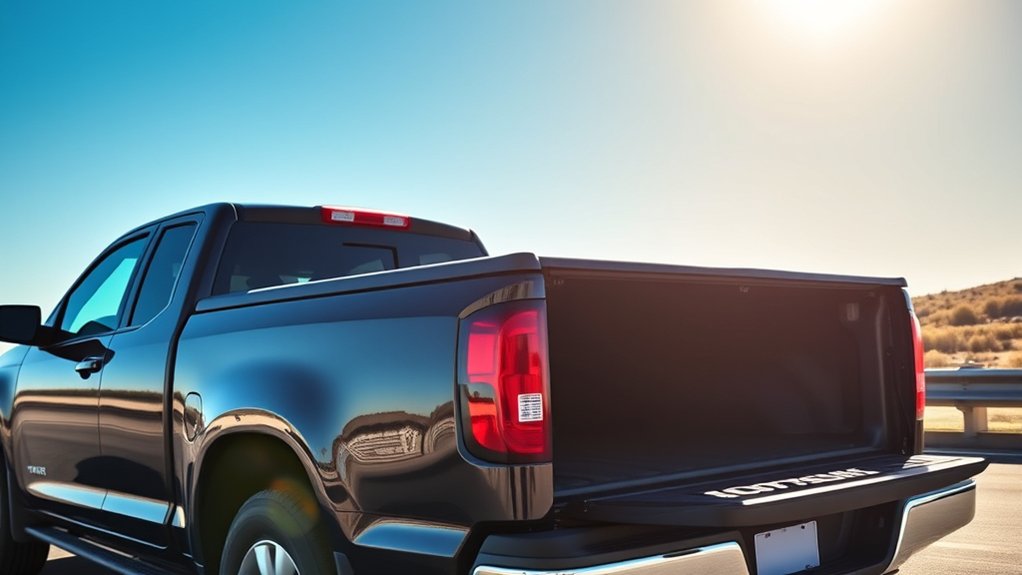
Does a Tonneau Cover Improve Gas Mileage
Think of a tonneau cover as a streamlined shield for your truck bed, subtly reshaping airflow to reduce drag. When considering whether a tonneau cover improves gas mileage, it’s important to look beyond assumptions.
You might expect this to lead to noticeable fuel savings, but the reality is more complex. Various designs and driving conditions influence the outcome, often resulting in modest improvements.
Understanding how these factors interplay can clarify whether adding a cover truly benefits your gas mileage.
Key Takeaways
- Tonneau covers can reduce aerodynamic drag by smoothing airflow over the truck bed, potentially improving gas mileage slightly.
- Hard folding tonneau covers generally provide better fuel efficiency gains than soft roll-up covers.
- Real-world fuel savings typically range from 2% to 5%, depending on cover type and driving conditions.
- Fuel economy benefits are minimal at low speeds or with an empty truck bed.
- Beyond mileage, tonneau covers offer cargo security, weather protection, and improved organization.
How a Tonneau Cover Changes Truck Aerodynamics
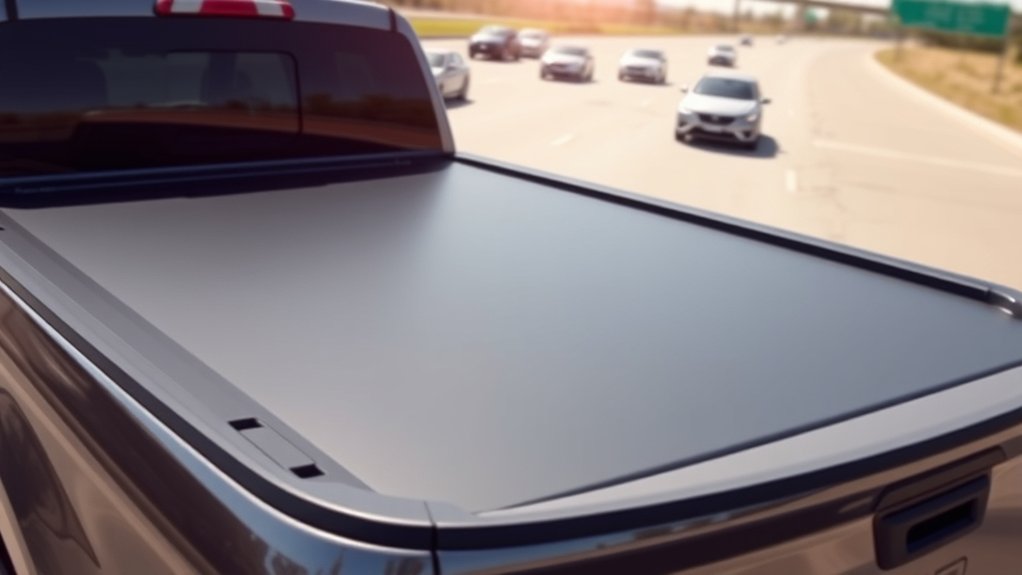
How exactly does a tonneau cover alter your truck’s aerodynamics? When you install one, it changes the airflow over your vehicle’s bed, smoothing turbulence caused by an open cargo area.
Many aerodynamics myths suggest these covers drastically reduce drag, but wind tunnel testing reveals more nuanced results. Instead of eliminating drag, the cover modifies the airflow pattern, reducing the vortex formed behind the cab.
This reduction can lead to a subtle decrease in aerodynamic resistance. However, the effectiveness depends on the cover’s design and fit. Not all tonneau covers perform equally, and some shapes may even disrupt airflow negatively.
What Studies Say About Tonneau Covers and Fuel Efficiency
Exactly what impact do tonneau covers have on fuel efficiency according to scientific studies? Research indicates that tonneau covers can improve gas mileage by reducing aerodynamic drag, but the degree of improvement varies widely.
Studies limitations include small sample sizes, inconsistent test conditions, and short test durations, which affect result reliability. Measurement variability also complicates comparisons; factors like vehicle type, speed, and cover design influence outcomes.
Some studies report modest gains of 2-5%, while others find negligible effects. You should interpret these results cautiously, understanding that real-world benefits depend on multiple interacting variables.
Fuel Economy Comparison of Different Tonneau Cover Types
Which type of tonneau cover delivers the best fuel economy gains? Hard folding covers generally outperform soft roll-ups due to their rigid structure, which minimizes aerodynamic drag more effectively. Their design reduces inertia effects caused by fluctuating airflow over an open bed, stabilizing air pressure and improving fuel efficiency.
Soft covers, while lighter, often allow more airflow turbulence, lessening their efficiency benefits. Retractable covers fall in between, balancing weight and aerodynamic improvements but sometimes adding payload impact due to heavier mechanisms.
When selecting a cover, consider how its weight influences payload impact; excess weight can offset fuel savings by increasing the truck’s load. Ultimately, hard covers provide superior drag reduction and minimize inertia effects, making them the optimal choice for enhancing fuel economy in most driving scenarios.
Real-World Fuel Savings Reported by Truck Owners
Understanding the theoretical fuel economy benefits of different tonneau cover types sets the stage for examining real-world data from truck owners. Owner-reported results vary but generally show modest improvements in fuel efficiency.
These real-world savings depend on driving conditions, cover design, and truck model.
| Cover Type | Average MPG Improvement | Sample Size |
|---|---|---|
| Hard Fold | 3-5% | 150 |
| Soft Roll-up | 1-3% | 120 |
| Retractable | 2-4% | 80 |
When Tonneau Covers Don’t Improve Fuel Economy
Why don’t some tonneau covers lead to better fuel economy despite their aerodynamic design? The answer lies in factors beyond the cover itself. Your driving conditions, vehicle type, and speed substantially influence fuel efficiency.
Fuel economy gains from tonneau covers depend more on driving conditions, vehicle type, and speed than the cover itself.
For example, at lower speeds, aerodynamic improvements from a tonneau cover have minimal impact. Additionally, if your truck bed is already empty and free of turbulence, the cover’s benefit diminishes.
Focusing solely on fuel savings without considering these variables is an unrelated topic, diverting attention from practical performance. Also, discussing aesthetic appeal or cargo security as reasons to install a cover is an irrelevant angle when evaluating fuel economy.
Ultimately, while tonneau covers can reduce drag, their effect on gas mileage isn’t guaranteed and depends on multiple interacting factors beyond the cover’s aerodynamic design.
Other Practical Benefits of Tonneau Covers Beyond Fuel Savings
How else can a tonneau cover enhance your truck’s functionality beyond fuel economy? It offers several practical benefits that improve your overall driving experience.
First, it provides practical privacy by concealing your cargo from view, deterring theft and maintaining discretion. Second, it enhances cargo security by protecting items from weather elements and reducing the risk of damage or loss during transit.
Third, it contributes to better organization by creating a flat, covered surface that prevents cargo from shifting or falling out. These advantages make tonneau covers a valuable addition for anyone prioritizing both efficiency and protection.
Frequently Asked Questions
How Do I Properly Install a Tonneau Cover?
To properly install a tonneau cover, you’ll align the rails on your truck bed and secure the clamps tightly. Guarantee a snug fit for bed protection.
Follow manufacturer instructions precisely for a durable, effective installation.
Are Tonneau Covers Compatible With All Truck Models?
Tonneau covers aren’t universally compatible; you’ll need to check availability compatibility for your truck model. Follow specific installation steps tailored to your vehicle to guarantee proper fit and function, avoiding common alignment and securing issues.
Can Tonneau Covers Protect Cargo From Weather Damage?
Yes, tonneau covers provide weatherproof cargo protection by sealing your truck bed against rain, snow, and dust. They ensure secure storage, preventing exposure to elements and maintaining the integrity of sensitive or valuable items during transit.
What Materials Are Tonneau Covers Typically Made From?
Think of tonneau covers as armor forged from materials used for strength and endurance: vinyl, aluminum, and fiberglass.
You’ll want to contemplate materials used and durability factors carefully to guarantee lasting protection and performance.
How Do Tonneau Covers Affect Truck Bed Security?
Tonneau covers enhance truck bed security by concealing cargo and deterring theft. For maximum security benefits, you should ensure proper installation, focusing on tight seals and sturdy locks. This helps prevent unauthorized access effectively.
Conclusion
When you drive with a tonneau cover, imagine slicing through air with less resistance, as airflow smooths over your truck bed. While the fuel savings are modest—typically 2–5%—they add up over miles, especially with hard, well-fitted covers.
Remember, your speed, payload, and cover type shape these gains. Though not a magic fix, a tonneau cover subtly sharpens your truck’s aerodynamics, helping you optimize efficiency with every journey.
In conclusion, a tonneau cover can improve gas mileage by reducing drag and enhancing fuel economy over time.