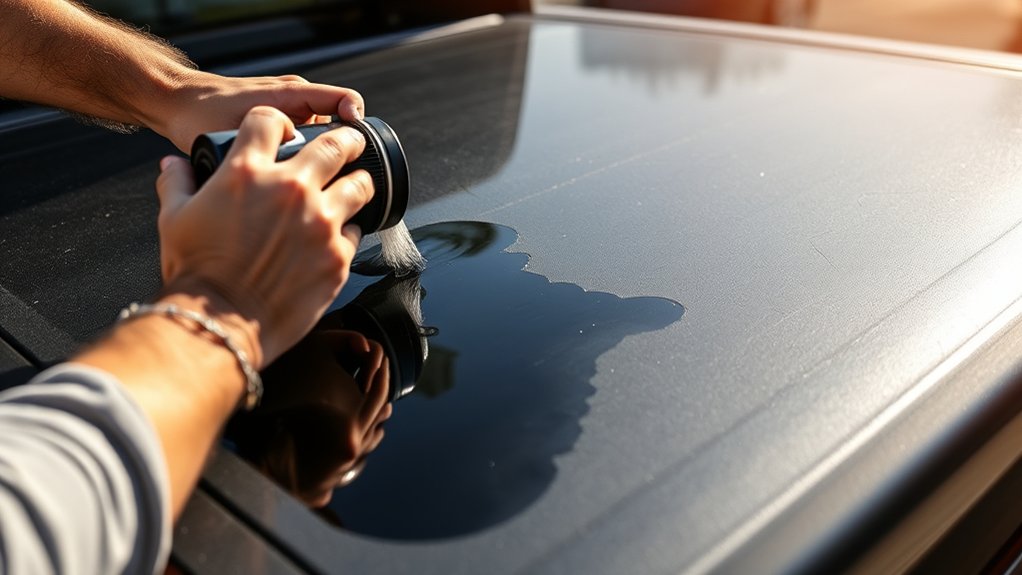
How to Restore Faded Hard Tonneau Cover
If your hard tonneau cover has faded and lost its original color, restoring it requires a careful approach. A hard tonneau cover needs proper care to bring back its vibrant look without causing damage. You can’t just scrub or paint it without risking harm to the material.
Instead, start by cleaning it thoroughly with the right products. Choosing the correct restoration supplies is essential for success. It’s also important to understand how UV exposure affects the cover’s material over time.
By following these steps, you can avoid common mistakes and achieve a durable, refreshed finish that protects your hard tonneau cover for years to come.
Key Takeaways
- Clean the cover thoroughly every two weeks using mild detergent and water to remove dirt before restoration.
- Use color-matched restorative products specifically designed for hard tonneau covers to ensure seamless color matching.
- Apply restorative products in thin, even coats, allowing full drying between layers to avoid uneven coloring and buildup.
- Test products on a small, inconspicuous area first to check for adverse reactions and compatibility.
- Seal the cover with a UV-resistant coating after restoration to prolong color life and protect against sun damage.
How to Clean Your Hard Tonneau Cover
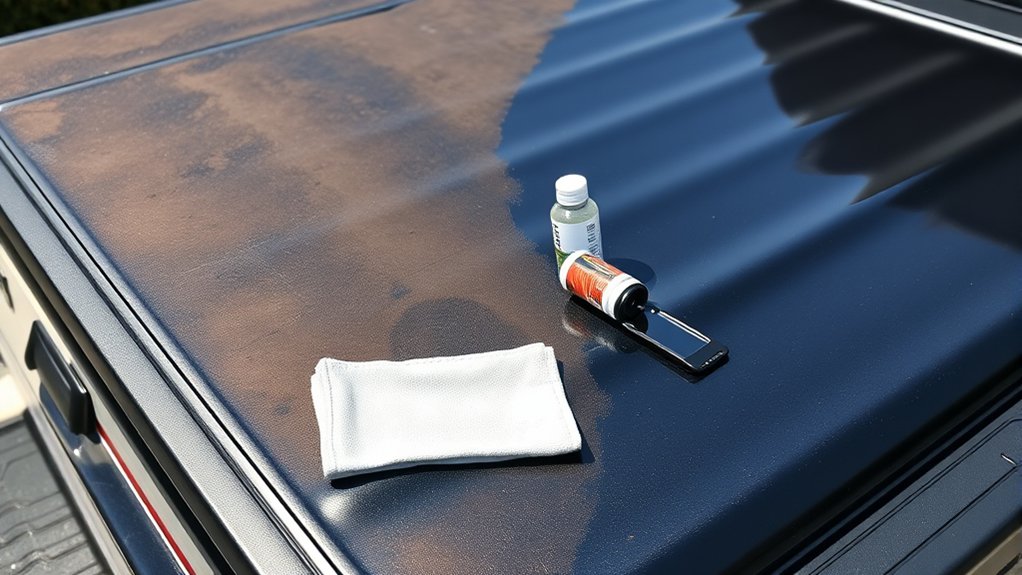
How often should you clean your hard tonneau cover to maintain its appearance? Ideally, you should clean it every two weeks, adjusting based on exposure to dirt and debris. Regular cleaning frequency prevents buildup that can degrade the cover’s surface.
Start by rinsing off loose dirt with water. Use a mild detergent mixed with water and a soft brush or microfiber cloth to scrub the surface gently. For stubborn stains, apply a specialized cleaner designed for hard tonneau materials and let it sit briefly before scrubbing.
Avoid harsh chemicals or abrasive tools that can damage the finish. After cleaning, rinse thoroughly and dry with a clean cloth to prevent water spots. Maintaining this routine helps preserve the cover’s look and functionality.
Why UV Rays and Weather Cause Tonneau Covers to Fade
Why do UV rays and weather conditions cause your hard tonneau cover to fade over time? UV fading occurs as ultraviolet light penetrates the cover’s surface, breaking down polymer chains in the material. This photodegradation weakens the pigments, causing colors to dull and lose vibrancy.
Simultaneously, weathering degradation from exposure to rain, wind, and temperature fluctuations accelerates this process. Moisture infiltrates micro-cracks, while thermal expansion and contraction strain the cover’s surface, promoting surface erosion and color loss.
Together, these factors compromise the hard tonneau cover’s protective coatings and structural integrity, leading to visible fading and brittleness. Understanding this helps you take appropriate preventive measures, focusing on shielding the cover from intense UV exposure and harsh weather to prolong its appearance and durability.
Top Products for Restoring Hard Tonneau Covers
You’ll want to choose restorative products specifically formulated for hard tonneau covers to ensure proper adhesion and durability. Look for UV-resistant coatings and conditioners that penetrate the surface without leaving residue.
Applying these products with clean, even strokes and allowing adequate drying time will maximize restoration results.
Best Restorative Products
Which products deliver the most effective restoration for faded hard tonneau covers? To avoid DIY mistakes and respect budget considerations, choose products designed specifically for automotive plastics and vinyl.
Opt for restoratives with UV protection and durable polymer blends to ensure longevity. Here’s a clear comparison of top products:
| Product Name | Key Features | Approximate Cost |
|---|---|---|
| 303 Aerospace | UV protection, non-greasy | $15 – $20 |
| Meguiar’s PlastX | Cleans and restores shine | $10 – $15 |
| Mothers Back-to-Black | Restores deep color | $12 – $18 |
| Armor All Extreme | UV shield, water-resistant | $8 – $12 |
| Chemical Guys VRP | Versatile, quick-drying | $14 – $20 |
Selecting the right product ensures effective restoration without overspending or common restoration errors.
Application Tips and Tricks
Applying restorative products to your hard tonneau cover requires careful preparation and technique to maximize effectiveness and durability. Begin by thoroughly cleaning the surface, but don’t fall for common cleanup myths. Avoid harsh detergents that can strip protective layers.
Instead, use a mild, pH-balanced cleaner and rinse well. When choosing a product, prioritize precise color matching to ensure the restored finish blends seamlessly with the original.
Apply the restorative solution in thin, even coats using a foam applicator or microfiber pad to prevent streaks and buildup. Allow each layer to dry fully before applying the next.
Finally, avoid rushing the curing process; proper drying time enhances adhesion and longevity. Following these steps ensures your hard tonneau cover regains both its appearance and protective function effectively.
How to Restore Your Cover’s Finish
How can you effectively bring back the original luster of your hard tonneau cover? Begin by thoroughly cleaning the surface with a mild detergent to remove dirt and contaminants.
Start by cleaning your hard tonneau cover with mild detergent to remove all dirt and contaminants.
Next, address sun damage by applying a UV-protective restorer designed for automotive plastics or vinyl, which penetrates the material to revive color and shine.
For metal components, remove any surface rust using a fine abrasive pad, then apply a rust-preventive primer to protect against future corrosion.
After treatment, polish the entire cover with a high-quality automotive polish to enhance the finish and provide a smooth, reflective surface.
This method not only restores appearance but also reinforces rust prevention, ensuring your cover maintains its durability and aesthetic appeal under harsh environmental exposure.
How to Protect Your Hard Tonneau Cover From Fading
Restoring your hard tonneau cover’s finish is only part of the equation; preventing future fading will extend its lifespan and maintain its appearance. Implement a consistent seasonal maintenance routine, including thorough cleaning and UV protectant application, to shield the cover from sun damage.
Use products specifically designed for hard tonneau covers to avoid degrading the surface or voiding warranty considerations. Store the cover in shaded or covered areas when not in use, especially during harsh weather seasons, to minimize UV exposure and environmental wear.
Regularly inspect seals and hardware to ensure proper fit and prevent moisture intrusion, which can accelerate material breakdown. By adhering to these technical steps, you’ll preserve your tonneau cover’s finish effectively, maintaining both its function and aesthetic over time.
Common Problems When Restoring Tonneau Covers
When restoring your hard tonneau cover, you’ll often face challenges with thorough surface cleaning due to embedded dirt and residues. Material degradation can complicate restoration, as cracks or brittleness limit repair options.
Additionally, applying effective color restoration techniques is essential to regain a uniform, lasting finish.
Surface Cleaning Challenges
Why does cleaning a faded hard tonneau cover often feel more complicated than expected? The surface accumulates stubborn dirt and contaminants, and unlike vehicle upholstery or recycled fabrics, it requires specialized cleaning agents and methods. You’ll face challenges such as uneven fading and embedded grime that simple washing won’t remove.
Common surface cleaning challenges include:
- Residue buildup from road debris and pollutants
- Difficulty distinguishing between dirt and surface oxidation
- Risk of damaging the finish with harsh chemicals
- Incomplete dirt removal from textured or matte finishes
Address these issues with appropriate cleaners and soft brushes to preserve the cover’s integrity and prepare it for restoration effectively.
Material Degradation Issues
After thoroughly cleaning your tonneau cover’s surface, you’ll often encounter deeper issues related to material degradation. Prolonged exposure to UV rays, moisture, and fluctuating temperatures accelerates wear and tear, causing cracks, brittleness, and loss of flexibility in the cover’s material.
Inspect for any delamination or weakened seams, as these compromise structural integrity. Addressing these problems early prevents further damage. Additionally, improper storage solutions can exacerbate degradation; storing the cover in direct sunlight or damp environments promotes mold growth and material breakdown.
To minimize wear, always store your cover in a cool, dry place, ideally covered and elevated to avoid contact with concrete or moisture. Understanding these degradation factors helps you make informed decisions to prolong your tonneau cover’s lifespan and maintain its protective function.
Color Restoration Techniques
How do you effectively restore the color of a faded hard tonneau cover without causing further damage? Start by selecting a restoration product that offers precise color matching to your cover’s original shade. Properly test the product on a small, inconspicuous area first.
After application, conduct durability testing by exposing the treated section to sunlight and water to ensure color retention and resistance. Avoid harsh chemicals or abrasive tools that can worsen fading or surface damage.
To optimize your restoration process:
- Use color-matched dyes or sprays specifically designed for tonneau covers
- Apply thin, even coats to prevent uneven coloring
- Perform durability testing under real-world conditions
- Seal the cover with a UV-resistant coating to prolong color life
These steps help you restore color effectively while maintaining cover integrity.
Frequently Asked Questions
Can a Faded Hard Tonneau Cover Affect My Truck’s Resale Value?
Yes, a fade impact on your hard tonneau cover can reduce your truck’s resale value by signaling neglect. Buyers often perceive faded covers as wear indicators, so maintaining appearance helps preserve overall vehicle value effectively.
Are There Specific Brands Known for More Fade-Resistant Tonneau Covers?
You want brand longevity, finish durability, and UV resistance. Brands like Retrax, BakFlip, and Extang excel in these areas, offering fade-resistant materials and coatings that preserve appearance while maintaining strength and functionality over time.
How Long Does a Typical Restoration Process Take?
The restoration duration typically ranges from 2 to 4 hours, depending on the cover’s condition. During this time, you’ll conduct a fade resistance analysis to determine necessary treatments, ensuring optimal color and material rejuvenation.
Can Restoring a Tonneau Cover Improve Its Waterproofing?
Yes, when you restore finish on your tonneau cover, it can improve waterproofing by sealing micro-cracks and surface wear.
After restoration, always test sealability by applying water to confirm enhanced protection and effectiveness.
Is Professional Restoration Worth the Cost Compared to DIY Methods?
You’ll find professional restoration extends cover lifespan by up to 50%, surpassing DIY methods. While DIY saves money initially, professional restoration offers precision and durability, making it worth the investment if you want lasting, high-quality results.
Conclusion
By following these steps, you’ll breathe new life into your hard tonneau cover, turning back the clock on dullness and wear. With the right care and protection, your cover will resist the harsh sun and elements, maintaining its fresh, vibrant appearance longer.
Think of it as giving your cover a fresh coat of confidence—ready to face every journey without showing its age. Regular upkeep ensures it stays as sharp as the day you restored it.
In conclusion, proper maintenance is key to restoring a faded hard tonneau cover and keeping it looking great for years to come.