Which Tonneau Cover Is Waterproof
When it comes to choosing a waterproof tonneau cover, not all options are created equal. You’ll want to focus on features like hard-shell construction, tightly sealed edges, and high-grade waterproof materials to guarantee lasting protection.
Understanding how these elements work together can save you from costly water damage. But what exactly sets the most waterproof covers apart from the rest?
Let’s explore the critical factors that make a tonneau cover truly waterproof.
Key Takeaways
- Hard tonneau covers offer superior waterproofing due to fewer seams and tighter seals compared to soft covers.
- Vinyl-coated polyester and marine-grade fabrics provide durable, water-resistant surfaces for tonneau covers.
- Sealed or heat-welded seams and water-blocking fasteners are crucial for preventing leaks in all tonneau cover types.
- Rubber and silicone seals along edges enhance waterproofing by creating flexible, UV-resistant barriers against moisture.
- Proper installation, including clean bed rails and sealed edges, is essential to maintain a tonneau cover’s waterproof integrity.
Key Features That Make a Tonneau Cover Waterproof
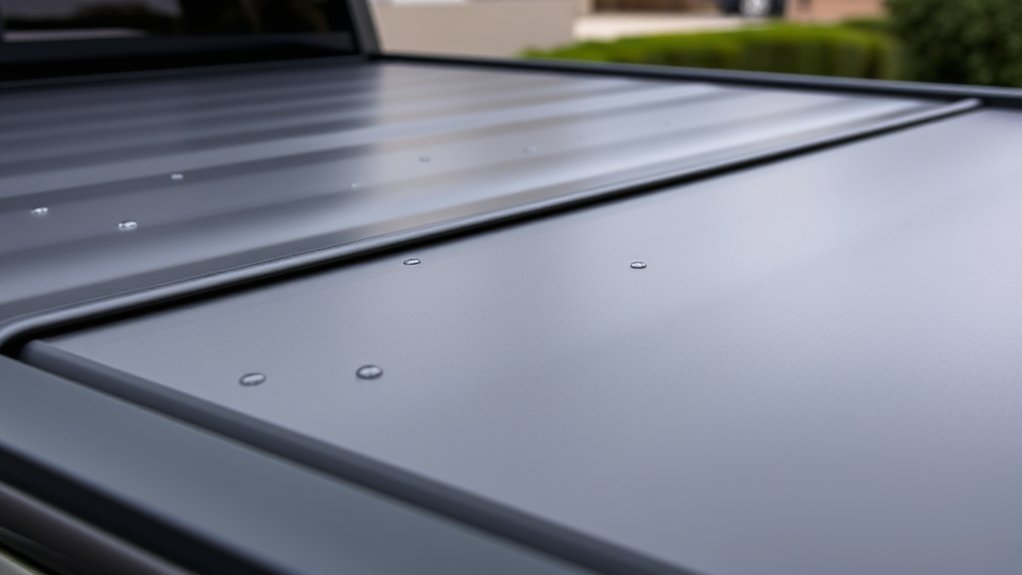
What exactly makes a tonneau cover waterproof? You need to focus on the materials and construction. Waterproof covers typically use high-grade vinyl or heavy-duty nylon with a waterproof coating. These materials resist water penetration effectively.
Additionally, the fabric’s tight weave and surface treatment prevent water absorption. Avoid irrelevant topic or off topic ideas like aesthetics or color, which don’t influence waterproof performance.
The backing material also matters; a polyurethane or PVC backing enhances waterproofing by blocking moisture. Furthermore, the cover’s stitching plays a critical role. Sealed or welded seams prevent water seepage through needle holes.
When evaluating waterproof features, concentrate on fabric composition, coating, backing, and seam integrity. These technical aspects are crucial to ensure your tonneau cover keeps water out under various weather conditions.
How Seals and Edges Affect Tonneau Cover Waterproofing
You need to consider the types of sealing materials used, as they directly influence water resistance and durability. The design and fit of edges determine how well the cover conforms to your truck bed, minimizing gaps where water can enter.
Additionally, weather stripping plays a crucial role in enhancing the seal’s effectiveness against rain and moisture.
Types Of Sealing Materials
How effectively a tonneau cover keeps water out often hinges on the quality and type of sealing materials used along its edges. You need to focus on materials designed specifically for waterproofing, avoiding non related discussion or irrelevant topic diversions.
Common sealing materials include rubber, foam, and silicone, each with distinct waterproofing properties and durability. Rubber seals offer flexibility and compression resilience, foam seals provide cushioning but may degrade faster, and silicone seals resist UV and temperature extremes better.
Here’s a quick comparison:
| Material | Waterproofing | Durability |
|---|---|---|
| Rubber | Excellent | High |
| Foam | Moderate | Moderate |
| Silicone | Excellent | Very High |
Choosing the right sealing material ensures your cover maintains a tight, water-resistant seal without compromising longevity.
Edge Design And Fit
Where the tonneau cover meets your truck bed plays a critical role in preventing water intrusion. The edge fit must be precise to create a continuous barrier along the water edge, effectively channeling water away from the bed.
A poorly aligned edge can allow water to seep through gaps, undermining waterproofing efforts. You should look for covers with molded edges or precision-cut seals that contour tightly against the truck’s frame. This tight edge fit minimizes water infiltration, especially during heavy rain or when driving through splashes.
Additionally, the design should accommodate slight bed variations without compromising the seal integrity. By ensuring the cover’s edges interface perfectly with the water edge, you maintain optimal waterproof performance and protect your cargo from moisture damage.
Impact Of Weather Stripping
Why does weather stripping play such a pivotal role in tonneau cover waterproofing? It forms the primary barrier that prevents water infiltration along the cover’s edges.
When combined with precise edge design, weather stripping ensures a tight seal, minimizing gaps where moisture could penetrate. Consider these factors:
- Material Quality: Durable, flexible weather stripping resists wear and maintains its seal over time.
- Placement Accuracy: Proper alignment along edges is critical to avoid leaks.
- Compression and Fit: Adequate compression balances sealing effectiveness without causing deformation.
You’ll find that high-quality weather stripping integrated with well-engineered edge design significantly improves water resistance. Ignoring these elements can let water seep under the cover, compromising the cargo area’s dryness and protection.
How Tonneau Cover Materials Impact Waterproofing
What makes a tonneau cover truly waterproof often comes down to the materials used in its construction. When you choose a cover, materials like vinyl, canvas, and aluminum each offer different levels of water resistance.
Vinyl’s dense, coated surface repels water effectively, ensuring dry storage by preventing moisture penetration. Canvas, while durable, usually requires additional waterproofing treatments to maintain dryness.
Aluminum covers, often powder-coated or anodized, provide a rigid, impermeable barrier that excels in water protection and enhances vehicle aesthetics with a sleek finish. Your choice impacts not only waterproofing performance but also the truck’s look and maintenance needs.
Understanding these material properties helps you select a tonneau cover that balances dry storage capability with the visual appeal you want for your vehicle.
Comparing Waterproofing: Hard vs. Soft Tonneau Covers
How does the waterproofing performance of hard tonneau covers compare to that of soft covers? When evaluating these two types, you must consider their distinct waterproofing limitations and material properties. Hard covers, typically made from fiberglass or aluminum, offer rigid protection and fewer seams, reducing water ingress points. Soft covers, often crafted from vinyl or fabric, rely on tension and sealing methods, which can be less effective under heavy rain.
Here are three key discussion ideas to assess:
- Sealing Integrity. Hard covers provide tighter seals, minimizing leak risks compared to soft covers’ flexible edges.
- Material Permeability. Soft covers may absorb moisture or degrade faster, impacting waterproofing.
- Maintenance Needs. Soft covers require regular care to maintain waterproof properties; hard covers are more durable.
Understanding these factors helps clarify waterproofing limitations for your choice.
Testing Your Tonneau Cover’s Waterproofing
After understanding the differences in waterproofing between hard and soft tonneau covers, you’ll want to verify your cover’s effectiveness under real conditions. Dismissing waterproofing myths is essential; some covers seem waterproof but fail under pressure.
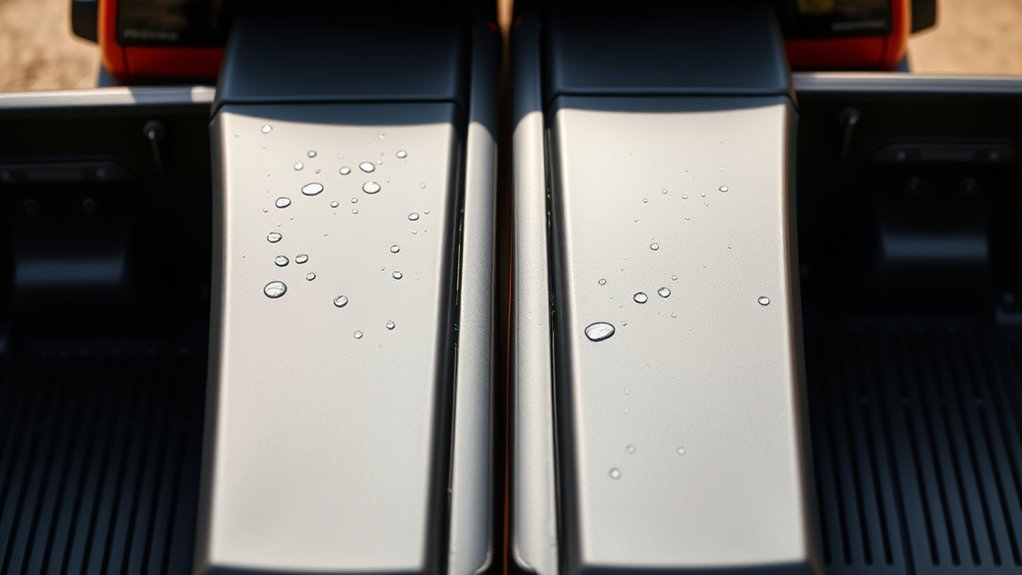
To test, simulate rain using a hose or bucket, then inspect for leaks or moisture buildup. Document results accurately to avoid falling for waterproofing myths.
| Test Step | Observation Criteria |
|---|---|
| Water Application | Even coverage, no pooling |
| Leak Inspection | Check seams and edges |
| Interior Dryness | No dampness or water spots |
| Seal Integrity | No gaps or loose fittings |
This methodical testing ensures you assess your tonneau cover’s true waterproof capabilities.
Top Waterproof Hard Tonneau Covers to Consider
When choosing a hard tonneau cover, you’ll want to focus on models engineered specifically for waterproof performance under various conditions. These covers feature advanced sealing systems and durable materials to prevent water intrusion. Consider these top waterproof hard tonneau covers:
- BakFlip MX4 Constructed from rugged aluminum panels with automotive-grade vinyl coloring, it offers superior water resistance and UV protection without compromising leather care if you store sensitive items.
- RetraxPRO MX This cover uses a one-piece, low-profile design with a patented sealed rail system, ensuring effective waterproofing and minimal maintenance.
- UnderCover Flex Features a fiberglass construction with a powder-coated finish, delivering excellent water resistance and long-term durability.
Each model balances strength, aesthetics, and sealing technology, ensuring your cargo stays dry regardless of weather.
Best Soft Tonneau Covers That Resist Water Effectively
You’ll want to focus on soft tonneau covers made from water-repellent materials like vinyl or marine-grade fabric to ensure effective resistance. Pay attention to covers with sealed seams, as these prevent water infiltration through stitching points.
Additionally, look for integrated weather resistance features such as reinforced edges and secure fastening systems to enhance overall waterproof performance.
Water-Repellent Material Types
How do soft tonneau covers achieve effective water resistance? It all comes down to the materials used. When you’re making a teaser comparison, you’ll find three primary water-repellent fabric types:
1. Vinyl-coated polyester
This fabric combines durability and water resistance, featuring a smooth surface that sheds water easily while maintaining a clean DIY aesthetics appeal.
2. Marine-grade canvas
Treated with water-repellent coatings, this material balances breathability with protection, ideal if you want a rugged yet effective barrier.
3. Synthetic leather (PU-coated)
Offering a sleek look, this material repels water through a polyurethane layer, providing a waterproof surface without sacrificing flexibility.
Choosing the right material ensures your soft tonneau cover resists water effectively without compromising style or function.
Seam Sealing Techniques
Why do seams often become the weak points in soft tonneau covers? Seams create potential entry points for water because stitching perforates the material, compromising its integrity. To counter this, manufacturers apply seam sealing techniques such as heat welding or specialized waterproof tapes, which reinforce these vulnerable areas.
When you choose a cover, avoid relying on random topic or unrelated concept approaches like simple stitching alone, as these often ignore the critical role of seam sealing. Instead, focus on designs where manufacturers replace placeholder idea methods with proven sealing solutions.
Keep in mind that ignoring seam treatment is an irrelevant theme that undermines water resistance. Proper seam sealing ensures your soft tonneau cover maintains a continuous barrier, preventing leaks and enhancing overall waterproof performance without sacrificing flexibility.
Weather Resistance Features
Where does your soft tonneau cover stand when it comes to weather resistance? You want a cover engineered to repel water effectively, not just for aesthetics but to protect your cargo. Consider these pivotal features:
- Material Composition: Look for high-density vinyl or marine-grade fabrics with waterproof coatings. These materials prevent water penetration, unlike cheaper fabrics prone to soaking.
- Seam Construction: Seams should be double-stitched and sealed with waterproof tape or heat welding. Poor seam treatment leads to leaks, an unrelated topic in miscellaneous discussion but pivotal here.
- Closure Systems: Weather-resistant covers integrate tight snap fasteners or Velcro with water-blocking designs to seal edges firmly.
Avoid covers lacking these features, as they perform poorly under rain and moisture. Unlike an unrelated topic, weather resistance is central to your cover’s functionality.
Choosing the Right Waterproof Tonneau Cover for Your Truck Bed
When selecting a waterproof tonneau cover for your truck bed, you need to evaluate factors such as material durability, sealing mechanisms, and compatibility with your vehicle model. Focus on covers made from high-grade vinyl, aluminum, or fiberglass, as these materials resist water infiltration effectively.
Check for advanced sealing systems like rubber gaskets or overlapping edges that prevent leaks. Ensure the cover fits your truck’s bed dimensions precisely; an ill-fitting cover compromises waterproofing.
Avoid distractions from irrelevant topics or random ideas that don’t impact waterproof performance. Instead, prioritize technical specifications like UV resistance and corrosion-proof hardware, which enhance longevity under harsh conditions.
Installation Tips to Maximize Tonneau Cover Waterproofing
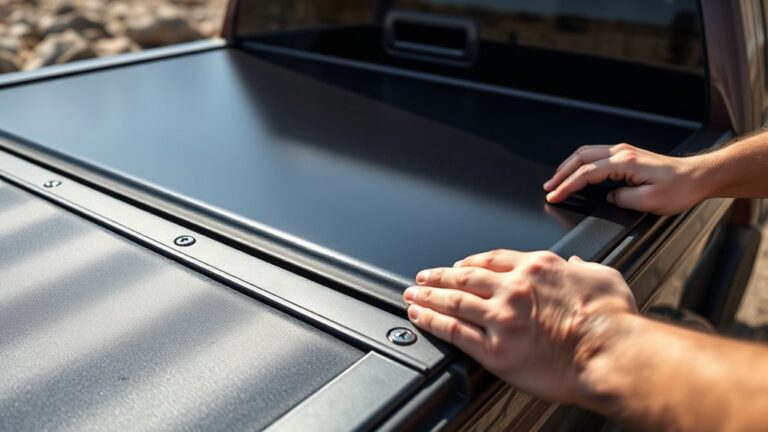
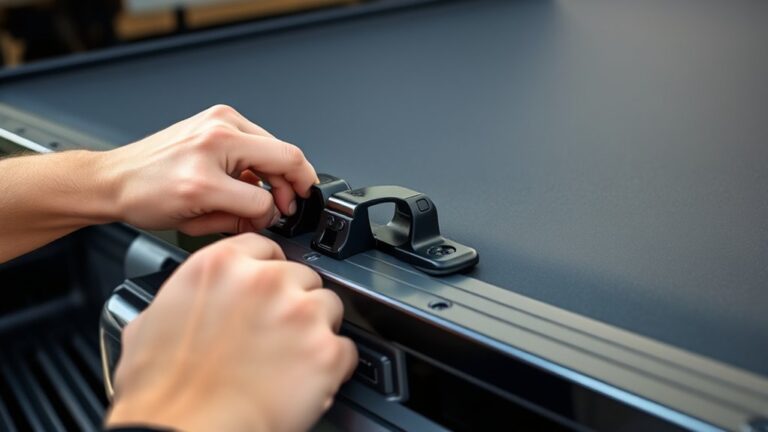
To maximize your tonneau cover’s waterproofing, start by thoroughly cleaning and drying the truck bed surface to guarantee proper adhesion.
Next, apply secure sealing techniques at all seams and edges to prevent water infiltration.
Finally, perform regular maintenance checks to identify and address any wear or damage that could compromise the seal.
Proper Surface Preparation
How do you ensure your tonneau cover provides a reliable waterproof seal? Proper surface preparation is critical before installation. Avoid unrelated discussion or off topic ideas that can distract from this technical step. Follow these precise actions:
- Clean Thoroughly: Remove all dirt, debris, and oil from the truck bed rails using a degreaser and lint-free cloth to ensure adhesion.
- Inspect for Damage: Check for rust, dents, or uneven surfaces; repair or sand down imperfections to create a flat, stable base.
- Dry Completely: Allow the surface to dry fully to prevent moisture from being trapped under the cover, which could compromise waterproofing.
Secure Sealing Techniques
Why does secure sealing make all the difference in waterproofing your tonneau cover? Because it prevents water ingress at vulnerable junctions, such as seams and edges. When installing, focus on precise edge sealing by applying high-quality weatherstripping or specialized sealants designed for automotive use.
Ensure the sealing material adheres evenly without gaps or bubbles, as these can compromise waterproof integrity. After installation, conduct waterproof testing by simulating rainfall or using controlled water sprays to detect leaks early.
If you spot moisture intrusion, reinforce the sealing at those points immediately. Proper edge sealing, combined with methodical waterproof testing, guarantees a durable, watertight barrier that protects your truck bed from water damage effectively. Skipping these steps risks undermining the cover’s waterproof performance.
Regular Maintenance Checks
When should you perform maintenance checks on your tonneau cover to assure peak waterproof performance? Regular inspections are crucial, ideally every three months or after severe weather exposure. Prioritize these three tasks:
- Seal Integrity: Check all seals and gaskets for cracks or wear, which compromise waterproofing. Replace damaged components promptly.
- Fastener Tightness: Verify that clamps, screws, and latches are secure to maintain consistent pressure on the cover, preventing water ingress.
- Surface Cleanliness: Remove dirt, debris, and residue that can degrade the waterproof coating or cause improper sealing.
These two word ideas, seal integrity and fastener tightness, are essential to your cover’s function. Avoid irrelevant distractions by focusing strictly on installation and maintenance factors that directly impact waterproofing. Consistent upkeep maximizes durability and prevents costly repairs.
Common Waterproofing Problems and Fixes
What challenges do you face in maintaining a truly waterproof tonneau cover? Common issues include seal deterioration, fabric punctures, and improper installation. These problems can compromise water resistance, unlike an unrelated topic or random discussion that doesn’t affect performance directly.
Addressing them promptly ensures longevity and reliability.
| Problem | Fix |
|---|---|
| Seal deterioration | Replace or apply sealant |
| Fabric punctures | Patch or replace fabric |
| Poor installation | Reinstall using manufacturer guidelines |
| Debris buildup | Regular cleaning |
Frequently Asked Questions
Can a Waterproof Tonneau Cover Protect Against UV Damage?
Yes, a waterproof tonneau cover can protect against UV damage if it has UV protection coatings. This enhances material durability by preventing fading and cracking, ensuring your truck bed stays shielded from harsh sunlight over time.
How Does Temperature Affect the Waterproofing of Tonneau Covers?
Temperature effects subtly influence your tonneau cover’s waterproofing by causing material expansion or contraction. This can create tiny gaps or stress points, slightly compromising the seal’s integrity.
Choosing flexible, high-quality materials helps maintain optimum protection.
Are Waterproof Tonneau Covers Compatible With Truck Bed Liners?
Yes, waterproof tonneau covers generally offer waterproof compatibility with truck bed liners. You’ll find liner interaction is minimal, but ensure your cover’s sealing system suits your liner type to prevent water pooling or damage over time.
Do Waterproof Tonneau Covers Require Special Cleaning Products?
You don’t necessarily need special cleaning products for waterproof tonneau covers, but considering UX considerations and maintenance terminology, using mild soaps and non-abrasive cleaners preserves waterproofing, prevents damage, and extends cover lifespan effectively.
Can a Waterproof Tonneau Cover Improve Fuel Efficiency?
Yes, a waterproof tonneau cover can improve fuel efficiency by reducing aerodynamic drag. Waterproof testing confirms its tight seal, minimizing air turbulence and positively impacting fuel economy by lowering resistance during driving conditions.
Conclusion
Choosing the right waterproof tonneau cover is like fitting a shield to your truck bed—each seal, seam, and material acts as a fortress wall against the elements. When you prioritize hard-shell designs with precision seals and durable, weather-resistant fabrics, you’re crafting a barrier that keeps moisture at bay.
With proper installation and maintenance, your cover won’t just protect—it’ll stand resilient, turning your truck bed into a dry, secure vault no storm can breach. Ultimately, selecting the best waterproof tonneau cover ensures your truck bed remains safe and dry in any weather condition.