What Is a Trickle Battery Charger
Did you know that a typical lead-acid battery loses up to 5% of its charge per month when left unused? A trickle battery charger is essential if you rely on equipment that sits idle for extended periods. It helps maintain the battery’s charge effectively.
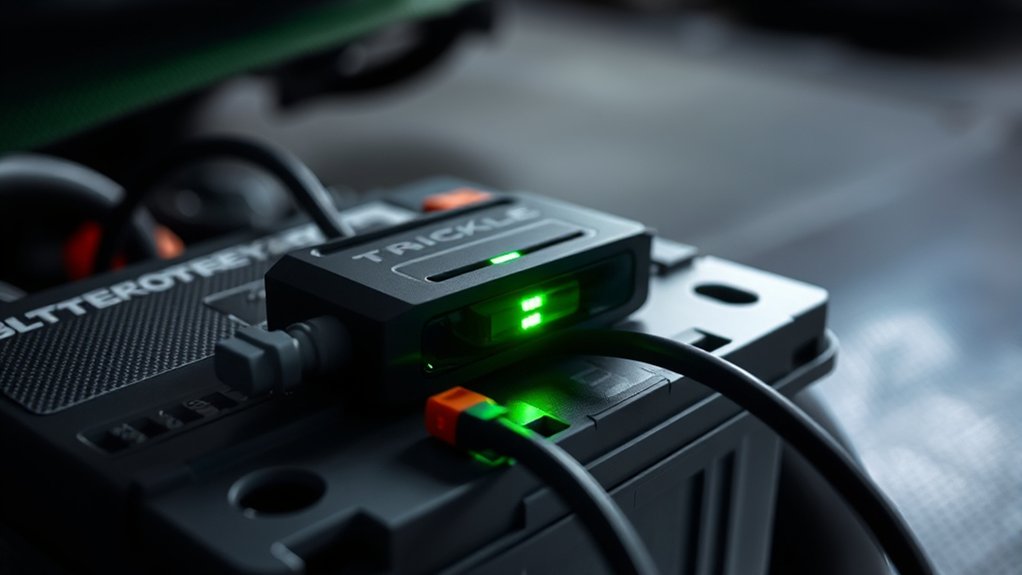
A trickle battery charger provides a controlled, low-level current to keep your battery topped off without risking overcharge or damage. Understanding how this device works can greatly extend your battery’s lifespan and performance.
Key Takeaways
- A trickle battery charger delivers a low, constant current to maintain battery charge without overcharging.
- It slowly charges batteries to prevent degradation and preserve battery lifespan.
- Designed mainly for lead-acid and similar batteries due to precise current regulation.
- Automatically regulates current or shuts off to avoid battery damage during continuous use.
- Ideal for maintaining batteries during long periods of inactivity or storage by countering self-discharge.
What Is a Trickle Battery Charger and How Does It Work?
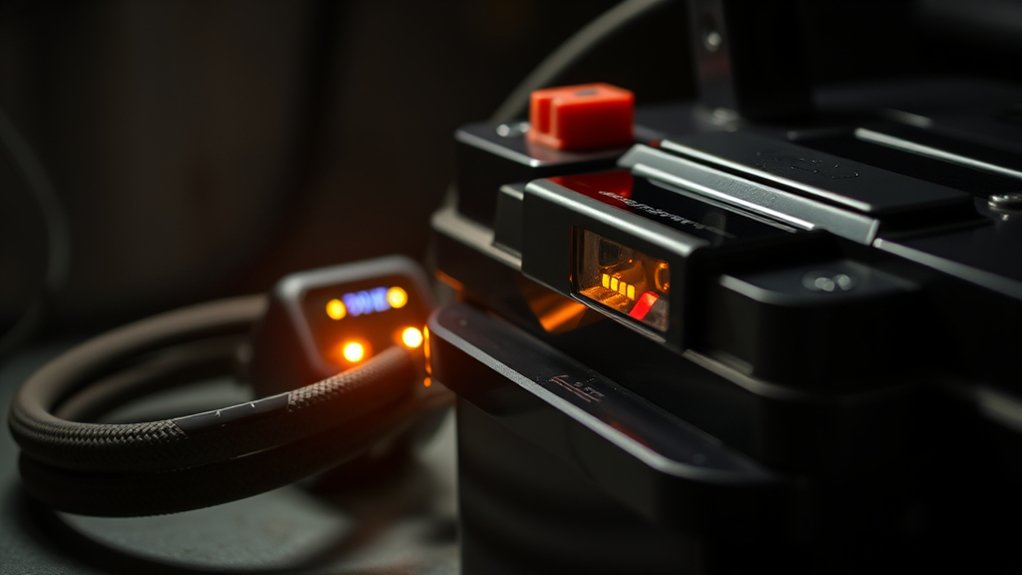
How exactly does a trickle battery charger function, and why might you choose it over other charging methods? A trickle charger delivers a low, constant current to your battery, maintaining its full charge without overcharging or damaging it.
Unlike standard chargers that supply high current for rapid charging, trickle chargers operate at a slow rate, preventing battery degradation. This dispels a common misconception about charging.
You might rely on a trickle charger to preserve battery life during extended inactivity, disproving battery myths that suggest batteries self-discharge irreparably. Its precise current regulation ensures safe, continuous charging ideal for lead-acid and similar batteries.
How to Tell If Your Battery Needs a Trickle Charger or Replacement
When should you consider using a trickle charger versus replacing your battery? You should assess your battery’s condition by checking voltage levels, physical state, and performance consistency. Two word ideas like “voltage drop” and “capacity loss” help identify if the battery holds charge or deteriorates. Unrelated topics such as charger type or environmental factors may mislead your decision.
| Battery Condition | Trickle Charger Use | Replacement Needed |
|---|---|---|
| Voltage ≥ 12.4 V | Maintain charge | No |
| Physical damage | No | Yes |
| Capacity loss > 20% | Possibly | Likely |
Use this table to guide your evaluation. If your battery sustains voltage but discharges slowly, a trickle charger suffices; otherwise, replacement is necessary.
Why Choose a Trickle Charger Over a Regular Charger?
You’ll benefit from a trickle charger’s ability to supply continuous low power, which prevents battery overcharging. This steady charge helps maintain optimal battery voltage without causing damage.
Choosing a trickle charger can significantly extend your battery’s overall lifespan compared to a regular charger.
Continuous Low Power Supply
Because trickle chargers deliver a continuous low power supply, they prevent battery discharge without the risk of overcharging. When you use trickle charging, the charger supplies a consistent, minimal current that compensates for the natural self-discharge of batteries.
This precise control ensures your battery remains at optimal charge levels, facilitating effective battery maintenance. Unlike regular chargers that provide higher current bursts and then stop, trickle chargers maintain a steady voltage, allowing you to keep batteries connected indefinitely without damage.
This continuous low power supply is ideal for batteries in storage or infrequently used equipment, as it sustains charge without stress. By choosing trickle charging, you ensure reliable performance and readiness while reducing the risk of battery degradation caused by overcharging or deep discharge.
Battery Longevity Benefits
How does using a trickle charger extend the life of your battery compared to a regular charger? Unlike regular chargers that deliver high current quickly, trickle chargers supply a continuous low power that prevents overcharging and excessive heat buildup.
This controlled charging enhances battery conditioning, preserving the chemical integrity and preventing capacity loss. You may have heard longevity myths suggesting any charger prolongs battery life; however, only trickle chargers maintain ideal voltage without stressing the battery.
| Charger Type | Charging Current | Impact on Battery Longevity |
|---|---|---|
| Regular Charger | High, rapid | Increased heat, reduced lifespan |
| Trickle Charger | Low, continuous | Maintains conditioning, extends life |
| No Charger | None | Battery discharges, sulfation risk |
Choosing a trickle charger ensures precise voltage management, essential for maximizing battery longevity.
Types of Trickle Battery Chargers
You’ll encounter two primary types of trickle battery chargers: wired and solar. Wired chargers connect directly to a power source, providing consistent voltage for long-term battery maintenance.
Solar trickle chargers, on the other hand, harness solar energy to sustain battery charge in off-grid or remote applications.
Wired Trickle Chargers
A wired trickle charger connects directly to a battery using cables and clamps, allowing for controlled, low-current charging over extended periods. When you use one, you ensure a consistent, gradual replenishment of the battery’s charge, which prevents overcharging and extends battery life.
Unlike irrelevant topics or off topic concepts that might confuse the core function of trickle chargers, wired variants focus strictly on stable electrical connection and precise current regulation. You’ll find these chargers particularly useful for maintaining batteries in vehicles or equipment that remain idle for long durations.
Solar Trickle Chargers
Where can you find a reliable, maintenance-free way to keep your battery charged in remote locations? Solar trickle chargers offer an effective solution by converting sunlight into electrical energy, maintaining battery voltage without overcharging.
When evaluating solar trickle chargers, solar efficiency is critical; higher efficiency panels generate more power in limited sunlight, ensuring consistent battery maintenance. Additionally, a cost comparison between solar chargers and wired alternatives reveals that, although initial investment in solar units is typically higher, their operational costs are minimal due to the absence of external power sources.
You’ll benefit from their autonomy and reduced maintenance needs, especially in off-grid scenarios. By selecting a solar trickle charger with optimal solar efficiency and considering long-term costs, you can reliably preserve battery life in diverse environments.
Which Batteries Work Best With Trickle Battery Chargers
Which types of batteries respond most effectively to trickle charging depends largely on their chemical composition and design. You’ll find that certain batteries maintain high efficiency and complement renewable energy systems better when paired with trickle chargers. The best candidates include:
- Lead-acid batteries Commonly used in vehicles and solar setups, they tolerate low, continuous charging well without damage.
- Gel cell batteries A subtype of lead-acid, gel cells handle trickle charging effectively due to their sealed design, minimizing maintenance.
- Nickel-cadmium (NiCd) batteries Known for durability, NiCd batteries accept trickle charge to prevent self-discharge and extend lifespan.
You should avoid lithium-ion batteries here, as their chemistry requires specialized charging protocols incompatible with standard trickle chargers. Selecting the right battery type ensures you achieve supreme performance with minimal energy loss.
How to Connect and Use a Trickle Charger Safely
How do you guarantee both safety and effectiveness when connecting a trickle charger? First, always ensure the charger is compatible with your battery type to uphold battery safety.
Begin by turning off the charger and disconnecting the vehicle’s ignition. Attach the positive (red) clamp to the battery’s positive terminal, then connect the negative (black) clamp to a grounded metal part away from the battery to avoid sparks.
Start with the charger off, connect positive clamp to battery, then negative clamp to grounded metal away from the battery.
Avoid common charging myths, such as the belief that trickle chargers can overcharge indefinitely; modern chargers typically include automatic shutoff features.
After connections, turn on the charger and monitor the charging process per manufacturer instructions. Always charge in a well-ventilated area to prevent gas accumulation.
Following these steps ensures safe, effective use of your trickle charger.
Common Trickle Charger Mistakes to Avoid
Why do some trickle charging attempts fail despite following basic procedures? The answer often lies in overlooked technical details. To ensure effective charging, avoid these common mistakes:
- Ignoring battery compatibility: Using a trickle charger not suited for your battery type can cause inefficient charging or damage. Always verify charger specifications match your battery’s voltage and chemistry.
- Neglecting charging etiquette: Failing to monitor charging intervals or leaving the charger connected indefinitely without proper automatic shutoff risks overcharging and shortens battery life.
- Poor connection practices: Loose or corroded terminals reduce current flow, leading to incomplete charging cycles. Ensure connections are clean, secure, and correctly polarized.
How to Maintain Your Battery Health With a Trickle Charger
Avoiding common trickle charger mistakes sets the foundation for preserving your battery’s longevity. To maintain optimum battery health, you must follow proper charging etiquette: connect the charger only when the battery voltage is low, avoid overcharging by using a charger with automatic shutoff, and ensure secure, corrosion-free connections.
Dispel battery myths, such as the belief that trickle chargers damage batteries by continuous charging; modern chargers regulate current to prevent harm. Regularly monitor electrolyte levels if applicable, and keep the battery clean and dry.
Frequently Asked Questions
Can Trickle Chargers Damage Lithium-Ion Batteries?
Yes, trickle chargers can damage lithium-ion batteries if not designed for them. You must guarantee charging safety by using chargers specifically compatible with lithium-ion chemistry to prevent overcharging, overheating, or capacity loss during prolonged charging.
How Long Can a Trickle Charger Be Left Connected?
You can leave a trickle charger connected indefinitely if it has proper charging safety features. This helps maintain battery longevity by preventing overcharging and ensuring the battery stays at optimal charge without damage.
Are Trickle Chargers Compatible With Electric Vehicle Batteries?
You won’t find trickle chargers ideally suited for EV battery basics, as they lack the precise control and rapid energy delivery required.
For charging safety, specialized EV chargers with smart management systems are essential to protect battery health and performance.
Do Trickle Chargers Require Special Maintenance?
You don’t need extensive maintenance, but performing a regular maintenance check ensures charging safety and optimal performance.
Inspect connections and cables for damage, keep the charger clean, and verify proper function to prevent hazards during use.
Can Trickle Chargers Be Used in Cold Weather Conditions?
You might think trickle chargers struggle in cold weather, but they can operate effectively if your battery has heating features. Battery heating prevents performance loss, ensuring consistent charging despite low temperatures.
This helps maintain battery health and efficiency.
Conclusion
If you’ve ever found your battery dead right when you need it, you know the frustration—coincidentally, a trickle charger solves this exact problem. By delivering a regulated, slow current, it keeps your battery healthy without overcharging.
Choosing a trickle charger over regular ones ensures longevity and readiness. With proper connection and maintenance, you safeguard your battery’s performance.
So, use a trickle charger wisely, and you’ll avoid unnecessary replacements while maximizing battery life with the help of a reliable trickle battery charger.