How to Change Oil Filter on 2016 Sienna Xle
Maintaining your 2016 Sienna XLE’s engine health involves a routine that’s often overlooked but essential: changing the oil filter on your 2016 Sienna XLE.
You’ll need to prepare by gathering the right tools and warming the engine slightly to ensure smooth oil flow. Knowing how to properly remove the old filter and install the new one without causing leaks is critical.
Before you proceed, make certain you understand the precise steps to avoid common pitfalls that could compromise your engine’s performance.
Key Takeaways
- Locate the oil filter near the engine block’s front or side using a flashlight for better visibility.
- Use a 64mm oil filter socket and an oil filter wrench to loosen and remove the old filter carefully.
- Align the new filter’s gasket with the mounting surface, hand-tighten until contact, then turn 3/4 to 1 full turn.
- Refill the engine with the recommended oil using a funnel, checking the level with the dipstick for accuracy.
- After installation, start the engine, check for leaks, and ensure the oil pressure warning light turns off promptly.
Essential Tools for Changing the 2016 Sienna Oil Filter
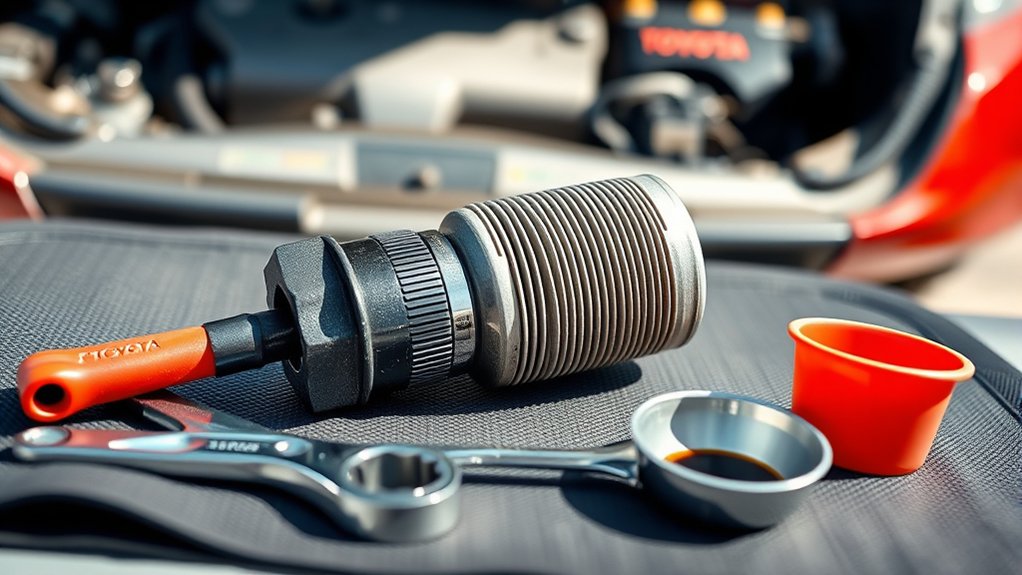
What tools do you need to change the oil filter on your 2016 Sienna XLE? First, you’ll require a socket wrench with the appropriate oil filter socket size, typically 64mm for this model.
A socket wrench with a 64mm oil filter socket is essential for your 2016 Sienna XLE.
A drain pan to catch old oil and gloves for safety are essential non-technical considerations that ensure a clean workspace and protect your hands. Include a funnel to avoid spills when adding new oil.
Conduct a cost benefit analysis before purchasing specialized tools versus using available ones. Investing in a quality oil filter wrench can save time but might not be necessary if you already have compatible equipment.
Additionally, using a torque wrench ensures you tighten the filter to manufacturer specs, preventing leaks or damage. These tools streamline the process efficiently and safely.
Getting Your 2016 Sienna Ready for an Oil Filter Change
Before you begin the oil filter change on your 2016 Sienna XLE, prepare your vehicle to ensure safety and ease of access. Park on a flat, stable surface and engage the parking brake. Allow the engine to cool for at least 30 minutes to avoid burns.
Open the hood and secure it with the prop rod. Remove any irrelevant topic or filler content from your workspace to minimize distractions and optimize efficiency. Gather your essential tools nearby but avoid clutter that might interfere with your task.
If you have access to ramps or jack stands, position them securely before starting. Finally, lay down absorbent mats or newspapers under the vehicle to catch any oil drips. Taking these preparatory steps will streamline the oil filter replacement process and maintain a clean working environment.
How to Drain the Old Engine Oil Safely
Start by positioning a suitable oil drain pan under the engine to catch all the used oil without spills. Make sure the area is well-ventilated and free from ignition sources.
After draining, transfer the old oil into a sealed container for proper recycling or disposal at an authorized facility.
Preparing Drainage Area
Where should you position your workspace to ensure safe and effective oil drainage? Choose a flat, level surface with ample lighting and ventilation, such as a driveway or garage floor.
Set up your drainage area by placing a sturdy, oil-resistant catch pan directly below the oil drain plug. Ensure the drainage setup aligns precisely to avoid oil splashing or spilling.
Use absorbent mats or cardboard around the pan to catch any accidental drips, enhancing spill prevention. Keep tools and rags nearby but clear of the immediate drainage zone to maintain organization and safety.
Confirm that the vehicle’s parking brake is engaged and the engine is cool to prevent burns or leaks. This preparation minimizes mess and facilitates a smooth oil change process.
Proper Oil Disposal
With your drainage area set and secured, you can now focus on handling the old engine oil safely. Begin by removing the drain plug carefully to let the oil flow into a clean, leak-proof container. Avoid spills to maintain an eco friendly workspace.
Once drained, tightly seal the container to prevent contamination and evaporation.
Follow recycling basics by transporting the used oil to a certified recycling center or auto shop that accepts motor oil. Never dispose of oil in drains, soil, or regular trash, as it harms the environment.
Use gloves and clean rags to wipe any spills immediately. Proper oil disposal not only protects ecosystems but also complies with local regulations, ensuring your oil change process remains responsible and safe.
How to Locate and Remove the Old Oil Filter
Finding and removing the old oil filter on your 2016 Sienna XLE requires careful attention to its location and proper tools. Avoid irrelevant discussion or off-topic concerns that don’t directly relate to the filter’s position. The oil filter is typically located on the engine block’s front or side, near the oil pan.
Use a flashlight to clearly identify it.
To remove the filter:
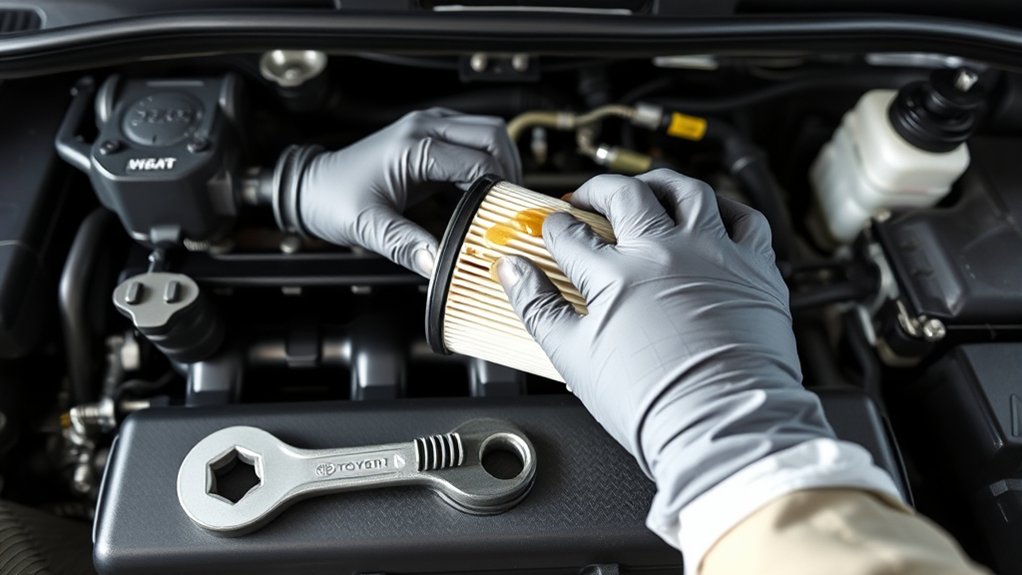
Position an oil drain pan underneath to catch spills. Use an oil filter wrench to loosen the filter by turning it counterclockwise.
Once loose, unscrew the filter by hand carefully to avoid oil leakage.
Handle the filter cautiously to prevent damage or contamination, ensuring a clean removal process before installing the new filter.
How to Install a New Oil Filter Correctly
Place the new oil filter onto the mounting surface, ensuring the gasket seats evenly to prevent leaks. Tighten the filter by hand until the gasket contacts the base, then apply an additional three-quarters to one full turn for a secure seal.
Avoid using tools to overtighten, as this can damage the filter or cause installation issues.
Proper Oil Filter Placement
How should you position the new oil filter to guarantee a secure and leak-free installation? Start by aligning the filter’s threaded center hole with the engine’s mounting stud. This precise alignment avoids cross-threading and ensures the filter seals properly, preventing leaks that could cause irrelevant maintenance down the line.
Next, rotate the filter clockwise until the gasket contacts the mounting surface. This step is critical as improper placement can lead to oil seepage, which not only affects engine performance but also causes unnecessary cosmetic impact under the hood.
Finally, ensure the filter sits flush against the mounting surface before tightening.
- Align threaded hole squarely with mounting stud
- Rotate filter until gasket contacts mounting surface
- Confirm filter sits flush, preventing gaps and leaks
Tightening Techniques and Tips
When should you stop tightening the oil filter to ensure a proper seal without causing damage? Tighten the filter until the gasket contacts the mounting surface, then turn it an additional 3/4 to 1 full rotation by hand. Avoid overtightening, which can crush the gasket or cause filter wobble, compromising the seal.
Use a consistent torque sequence if your filter housing requires multiple bolts; tighten them evenly in a crisscross pattern to prevent leaks or damage. After installation, check for filter wobble by gently rocking the filter. Any movement suggests insufficient torque.
Finally, do not rely solely on tools; hand-tightening ensures you don’t exceed manufacturer specifications. Following these tightening techniques guarantees a secure, leak-free oil filter installation on your 2016 Sienna XLE.
How to Refill Your 2016 Sienna Engine With the Right Oil
Before refilling your 2016 Sienna’s engine, ensure you select the correct oil type specified in the owner’s manual, typically SAE 0W-20 synthetic oil. Using the correct oil viscosity is crucial for optimal engine performance and minimizing engine noise.
To refill the engine oil properly:
Use a clean funnel to prevent contamination.
Pour the recommended quantity gradually to avoid overfilling.
Check the dipstick frequently during filling to monitor oil level.
Stop pouring oil once the dipstick shows the full mark. Overfilling can cause increased engine noise and damage. Always allow the oil to settle for a minute before rechecking.
Proper oil viscosity ensures efficient lubrication, reduces wear, and maintains engine temperature control. Following these steps guarantees your Sienna runs smoothly post oil filter replacement.
Key Checks After Changing Your 2016 Sienna Oil Filter
After refilling your 2016 Sienna’s engine with the correct oil, you’ll need to verify several key points to ensure the oil filter replacement was successful. First, inspect the oil filter area for leaks by running the engine and observing the filter base and drain plug.
Check the oil level using the dipstick, topping off if necessary to maintain optimal fuel efficiency. Next, monitor your engine’s performance for changes in cabin noise; unusual sounds may indicate improper installation or oil circulation issues.
Finally, ensure the oil pressure warning light deactivates after startup. Confirming these steps prevents engine damage and maintains your 2016 Sienna’s operational efficiency. Conduct these checks promptly and routinely after oil filter changes to sustain peak vehicle performance and reliability.
Common Oil Filter Change Mistakes to Avoid
Why do some oil filter changes lead to engine issues despite careful work? Often, the root causes are avoidable mistakes that compromise filter performance or oil flow. To ensure optimal results, focus on these critical areas:
Improper filter calibration: Using a filter not calibrated for the 2016 Sienna XLE can cause poor sealing or inadequate filtration.
Neglecting oil compatibility: Always verify the oil’s compatibility with the new filter media to prevent chemical degradation or clogging.
Incorrect installation torque: Over-tightening or under-tightening the filter can lead to leaks or damage to the filter housing.
How Often to Change the Oil Filter on a 2016 Sienna
Although your 2016 Sienna’s oil filter plays a crucial role in maintaining engine health, you should change it regularly to ensure optimal performance and longevity. Toyota recommends replacing the oil filter every time you perform an oil change, typically every 5,000 to 7,500 miles, depending on your driving conditions and oil type.
Sticking to this interval during your maintenance planning prevents contaminants from circulating and damaging engine components. Neglecting timely oil filter changes reduces oil flow efficiency, causing accelerated engine wear.
To maintain peak engine function, align your oil filter replacement precisely with your scheduled oil changes. Always consult your owner’s manual for specific recommendations and adjust intervals based on severe driving conditions.
This disciplined approach guarantees proper filtration and extends your engine’s lifespan.
Frequently Asked Questions
Can I Use Synthetic Oil With the 2016 Sienna XLE?
Yes, you can use synthetic oil with your 2016 Sienna XLE. Ensure synthetic compatibility by checking your owner’s manual, and perform a filter type cross reference to match the oil filter designed for synthetic oil use.
What Type of Oil Filter Is Compatible With the 2016 Sienna XLE?
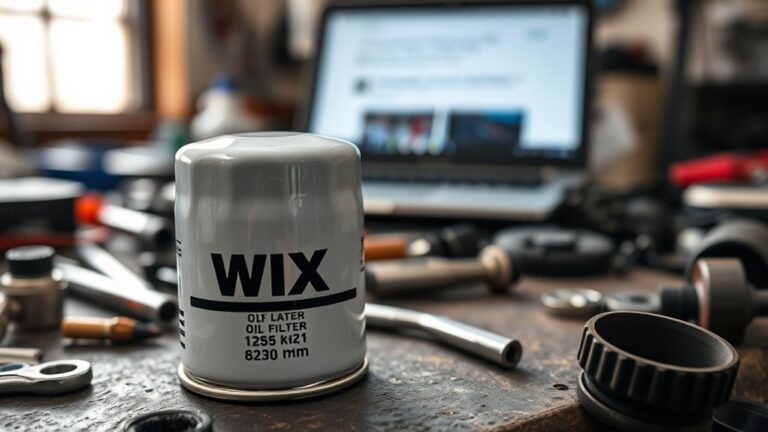
You’ll want an oil filter compatible with the 2016 Sienna XLE’s engine, like the Genuine Toyota 90915-YZZF2 or equivalent.
Always verify fitment with your vehicle’s model to guarantee proper filtration and engine protection.
Is It Necessary to Reset the Oil Change Light After Replacement?
You must reset the oil change light to maintain accurate digital reminders, guarantee proper auto maintenance, and track service intervals effectively. Failing to reset can lead to missed alerts and compromised vehicle performance.
Can I Change the Oil Filter Myself Without Professional Help?
Yes, you can change the oil filter yourself. Assess DIY feasibility by reviewing necessary tools and skills.
Compare cost: DIY saves labor fees but requires proper disposal. Follow technical steps precisely for a successful, safe replacement.
What Environmental Precautions Should I Take Disposing of Old Oil?
You should store used oil in a sealed container, avoid spills, and never pour it down drains. Utilize local recycling options or hazardous waste disposal sites to ensure proper oil disposal and maintain environmental safety.
Conclusion
Changing your 2016 Sienna XLE’s oil filter regularly is crucial—did you know that neglecting this can reduce engine efficiency by up to 30%?
Start by warming the engine to ensure the oil flows smoothly. Next, carefully remove the old oil filter, making sure to catch any drips to avoid messes.
Install the new filter properly, applying a bit of oil to the gasket for a secure seal. Finally, refill with the correct oil to maintain optimal performance and longevity.
Stay diligent with your maintenance schedule to avoid costly repairs and keep your vehicle running smoothly and efficiently. Following these steps will help you successfully change the oil filter on your 2016 Sienna XLE.