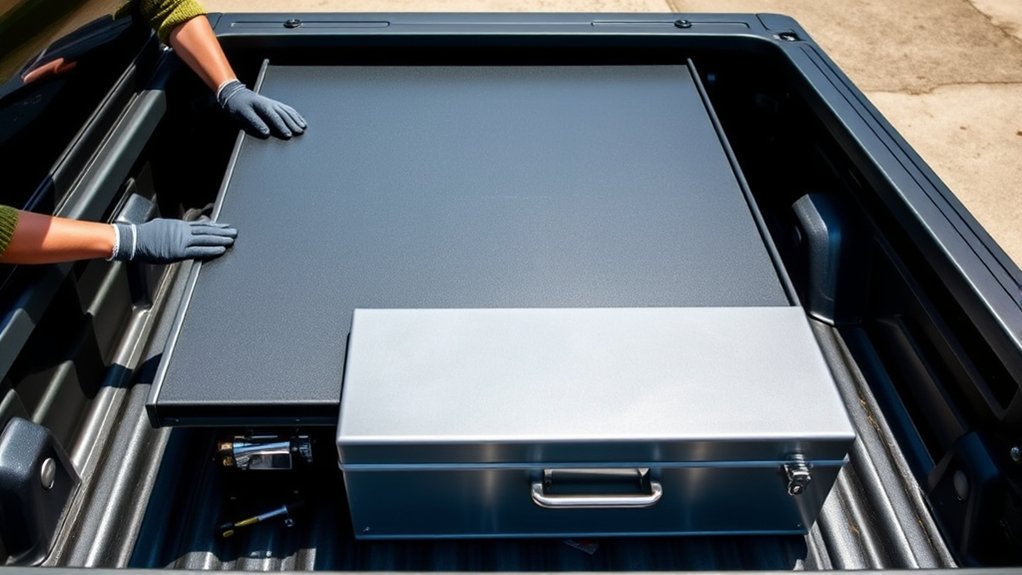
How to Install a Tonneau Cover With a Tool Box
When installing a tonneau cover with a toolbox, you need exact measurements to ensure a tight, flush fit that won’t interfere with either component. Proper installation of a tonneau cover with a toolbox requires careful planning and attention to detail.
You’ll want to carefully plan the sequence—toolbox first, then cover—while choosing the right mounting hardware and weatherproofing materials. Precise alignment and gradual tightening are crucial to avoid damage and maintain functionality.
Understanding these steps will help you achieve a secure, weather-tight installation that performs well over time. Taking the time to measure and align everything correctly ensures both components work seamlessly together.
Key Takeaways
- Measure truck bed and toolbox dimensions accurately to ensure proper fit and clearance before selecting a compatible tonneau cover.
- Choose a tonneau cover designed to accommodate toolboxes, considering material durability and mounting specifications for secure attachment.
- Clean the truck bed surface and secure the toolbox with proper hardware before installing the tonneau cover for stability and alignment.
- Align the tonneau cover flush against the toolbox, ensuring even spacing, proper clearance, and correct engagement with clamps or straps.
- Adjust tension and test opening/closing to confirm a secure, watertight fit without interference or damage to the toolbox or cover.
Choosing the Right Tonneau Cover for Trucks With Toolboxes
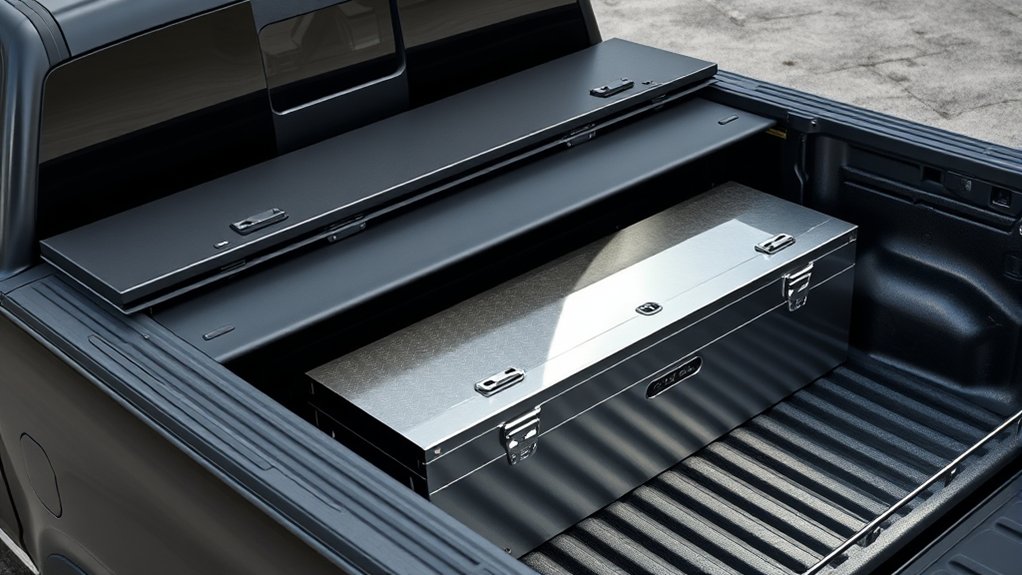
How do you select a tonneau cover that fits seamlessly over your truck’s toolbox? Start by evaluating your budget considerations to narrow down options without sacrificing quality. Look for covers specifically designed to accommodate toolboxes, ensuring proper fit and functionality.
Pay close attention to material durability. Aluminum, fiberglass, or heavy-duty vinyl each offer distinct benefits. Next, scrutinize warranty coverage; a comprehensive warranty signals manufacturer confidence and protects your investment from defects or premature wear.
Consider ease of installation and compatibility with your truck model as well. Avoid generic covers that might not align properly over the toolbox, causing gaps or interference. By focusing on these technical aspects—fit, material, cost, and warranty—you’ll confidently choose a tonneau cover that integrates flawlessly with your toolbox for maximum utility and protection.
Measuring Your Truck Bed and Toolbox for a Perfect Fit
Start by accurately measuring your truck bed’s length, width, and depth to guarantee the tonneau cover fits properly. Account for your toolbox height and its position to avoid clearance issues.
Finally, check overlap areas where the cover meets the toolbox for a secure, flush installation.
Truck Bed Dimensions
Accurately measuring your truck bed and toolbox is essential to guarantee the tonneau cover fits securely and functions properly. Start by measuring the length, width, and height of your truck bed, noting any variations caused by wheel wells. Also, consider your toolbox materials and weatherproofing considerations, as these impact the fit and seal of the cover.
| Dimension | Measurement Tips |
|---|---|
| Length | Measure from bulkhead to tailgate |
| Width | Measure at the widest point inside |
| Height | Measure toolbox height without cover |
Make sure to account for the toolbox’s position and size within the bed. This precision prevents gaps, ensuring effective weatherproofing and secure attachment of the tonneau cover.
Toolbox Height Considerations
Why does the height of your toolbox matter when installing a tonneau cover? Toolbox height directly affects the mounting clearance required for a secure, flush fit. You need to measure from the truck bed floor to the top of the toolbox accurately.
This ensures the tonneau cover’s rails and clamps align without interference. If your toolbox is too tall, it may obstruct the cover’s mounting points or cause improper sealing. Use a tape measure to record the toolbox height and compare it to the tonneau cover’s specifications for mounting clearance.
Precise measurement prevents installation issues and potential damage. By accounting for toolbox height before installation, you guarantee a perfect fit and smooth operation of your tonneau cover with the toolbox installed.
Clearance and Overlap Measurements
Once you’ve confirmed the toolbox height fits within the tonneau cover’s mounting specifications, focus on measuring clearance and overlap to ensure a tight seal and secure attachment.
Start by measuring the toolbox clearance, the gap between the toolbox and the tonneau cover mounting rails. This clearance must be minimal to prevent water intrusion and maintain aerodynamic efficiency.
Next, take accurate overlap measurements, which determine how much the tonneau cover extends over the toolbox edges. Proper overlap ensures the cover locks down firmly and avoids gaps that could allow debris or moisture inside.
Use a tape measure to record these dimensions precisely, double-checking all measurements for consistency. Accurate toolbox clearance and overlap measurements are critical to achieving a seamless fit and long-lasting performance.
Gathering Your Tools and Materials
What tools and materials do you need to install a tonneau cover with a toolbox? For an efficient toolbox installation and securing tools properly, you must gather everything beforehand. Having the right equipment ensures a smooth process and prevents interruptions.
Here’s what you’ll need:
Socket wrench set: essential for tightening bolts on the toolbox and cover.
Clamps or mounting brackets: to secure the toolbox firmly during installation.
Measuring tape and marker: for precise alignment and clearance checks.
These items guarantee you can handle the toolbox installation accurately while securing tools effectively. Avoid starting without these, as the right tools and materials are crucial for a secure, professional fit of both the toolbox and tonneau cover.
Installing Your Toolbox Before the Tonneau Cover
How do you guarantee your toolbox is securely installed before fitting the tonneau cover? Start by positioning the toolbox in the desired location within the truck bed, ensuring it aligns correctly with the bed rails.
Confirm that your toolbox installation meets the manufacturer’s specifications for mounting points and hardware. Use a torque wrench to tighten bolts to recommended settings, preventing loosening during transit.
Next, verify cover compatibility by measuring clearance between the toolbox and bed rails; the tonneau cover must fit without obstruction. Ensure the toolbox does not interfere with the cover’s latching mechanisms or sealing surfaces.
Proper toolbox installation before cover placement is essential for a seamless fit, preventing damage and maintaining weather resistance. Double-check all fasteners before proceeding to the tonneau cover installation step.
Preparing Truck Bed and Toolbox for Installation
Before installing the tonneau cover, thoroughly clean the truck bed surface to remove dirt and debris that could affect adhesion and fit.
Ensure the toolbox is securely positioned and firmly anchored to prevent movement during installation. Proper preparation guarantees a smooth, stable installation process.
Clean Truck Bed Surface
A clean truck bed surface guarantees proper adhesion and fitment of your tonneau cover and toolbox. Start by removing all debris, dirt, and grease using effective cleaning methods such as a degreaser followed by a pressure wash. Allow the bed to dry completely to prevent moisture interference during installation.
Inspect the surface for scratches or chips; perform paint touch ups where necessary to protect the metal and ensure a smooth base. Neglecting this step can cause poor sealant bonding or uneven mounting.
- Use a non-abrasive cleaner to avoid surface damage
- Apply primer and touch up paint on exposed metal areas
- Wipe down with isopropyl alcohol before final installation
This preparation ensures a secure, long-lasting installation for both your toolbox and tonneau cover.
Secure Toolbox Positioning
Positioning the toolbox securely in your truck bed sets the foundation for a stable installation of both the toolbox and tonneau cover. Start by selecting a toolbox that fits your toolbox budget while meeting your functional needs.
Ensure the toolbox sits flush against the truck bed bulkhead and aligns with the bed rails to prevent gaps that could compromise weatherproofing concerns. Use mounting brackets and bolts designed for your toolbox model to anchor it firmly, avoiding any movement that might disrupt the tonneau cover’s seal.
Double-check for level alignment and tighten all fasteners evenly. Address any potential water entry points with appropriate seals or weather stripping to maintain a dry environment. Properly securing the toolbox not only supports the cover but also extends the longevity of both components.
How to Align Your Tonneau Cover With Your Toolbox
Aligning your tonneau cover with your toolbox guarantees a secure fit and prevents damage during installation. Begin by positioning the cover so it sits flush against the toolbox, ensuring no gaps that could compromise sealing or interfere with a creative windshield setup. Use the off road mounting points as reference marks for alignment, as they provide consistent anchor locations.
Position your tonneau cover flush against the toolbox using off road mounting points for a secure, damage-free fit.
Check for these key alignment factors:
- Even spacing between the tonneau cover edges and toolbox sides
- Proper clearance above the toolbox to avoid contact during movement
- Correct engagement with mounting clamps, ensuring no strain on either component
Precise alignment reduces stress on mounting hardware and maintains the integrity of both the toolbox and tonneau cover during use.
How to Secure a Soft Tonneau Cover With a Toolbox
How exactly do you secure a soft tonneau cover to a toolbox without compromising durability or functionality? Start by ensuring the cover’s clamps or Velcro straps align precisely with the toolbox edges, providing a snug fit.
Use high-quality adhesive-backed weatherstripping between the toolbox and cover to enhance weatherproof sealing, preventing moisture intrusion. Reinforce the attachment with stainless steel or aluminum brackets where possible, following manufacturer guidelines.
Regularly check tension on straps or clamps to maintain secure fixation, avoiding sagging or gaps. As a key tip for toolbox security, avoid overtightening fasteners which can damage both the cover and toolbox.
Finally, inspect all seals and attachments periodically for wear, replacing components promptly to preserve performance and protect cargo effectively.
How to Secure a Hard Tonneau Cover With a Toolbox
You’ll start by precisely aligning the hard tonneau cover with the toolbox to ensure a flush fit. Next, use robust fastening methods like clamps or bolts designed for heavy-duty applications to secure both components firmly.
Proper alignment and secure attachment are crucial to prevent gaps and maintain structural integrity.
Aligning Cover And Toolbox
Where exactly should the tonneau cover sit in relation to your toolbox? Positioning is critical for functionality and preserving tonneau aesthetics. The cover should align flush with the toolbox’s front edge, ensuring a seamless look and preventing gaps that invite water or debris.
Consider these factors:
- Toolbox materials: Ensure compatibility with the cover’s mounting points to avoid damage or misalignment.
- Height alignment: Match the cover height to the toolbox top to maintain a uniform surface.
- Clearance: Leave minimal space for easy opening of both the cover and toolbox without interference.
Using Secure Fastening Methods
Why is secure fastening essential when installing a hard tonneau cover with a toolbox? Without proper fastening, you risk shifting, damage, or water leaks. You must use reliable clamps or bolts designed for your specific cover and toolbox model.
Avoid alternative installation pitfalls like relying on adhesives or makeshift fasteners, which often fail under stress. Secure fastening ensures stability and protects your investment. Remember, the myth vs reality here is that quick fixes suffice; in truth, only manufacturer-recommended hardware guarantees durability.
You’ll want to tighten fasteners to the specified torque to avoid loosening during transit. Double-check alignment before final tightening to prevent undue stress on components. By following these steps, you secure a tight, long-lasting fit, maintaining both functionality and aesthetics of your setup.
Adjusting and Testing Your Tonneau Cover for Proper Function
How can you guarantee your tonneau cover operates smoothly alongside your toolbox? Start by adjusting the cover’s tension and alignment carefully. Ensure it sits flush without gaps that could cause leaks or rattling.
Guarantee smooth tonneau cover operation by carefully adjusting tension and alignment for a flush, secure fit.
Next, test the opening and closing motion to confirm it clears the toolbox without obstruction. Avoid two word discussion ideas or subtopic not relevant to these steps, focusing solely on function.
Check these key points:
- Confirm clamps and hinges are tight but not overtightened to prevent binding.
- Verify the cover seals correctly against the truck bed and toolbox edges.
- Operate the cover multiple times, noting any resistance or misalignment.
This precise adjustment and functional testing prevent damage and ensure reliable use.
Troubleshooting Fit and Alignment Issues With Tonneau Covers and Toolboxes
After adjusting and testing your tonneau cover for smooth operation, you might still encounter fit or alignment issues with the toolbox. Begin troubleshooting by performing compatibility testing between the cover and toolbox models to ensure they’re designed to work together.
Check mounting points and hardware for tightness and correct positioning. Misaligned brackets often cause gaps or interference. Inspect weatherproof seals carefully; damaged or improperly seated seals can compromise both fit and waterproofing.
Adjust hinge positions incrementally to improve alignment without stressing the cover or toolbox. If gaps persist, verify that the toolbox height doesn’t exceed the tonneau cover’s clearance specifications.
Finally, test operation after each adjustment to confirm smooth function and proper sealing. Addressing these factors systematically resolves most fit and alignment challenges effectively.
Frequently Asked Questions
Can a Tonneau Cover Improve My Truck’s Fuel Efficiency?
Yes, a tonneau cover can improve your truck’s fuel efficiency by optimizing tailgate aerodynamics, but don’t fall for fuel economy myths. Benefits depend on speed, cover type, and your truck’s design, so results may vary.
Are Tonneau Covers Weather-Resistant in All Climates?
You’ll find many tonneau covers offer strong weather durability and climate compatibility, resisting rain, snow, and UV exposure. However, performance varies by material and design, so choose one rated specifically for your local climate conditions.
How Do I Clean and Maintain My Tonneau Cover?
You should use gentle cleaning techniques like mild soap and water, avoiding harsh chemicals. Establish maintenance routines by regularly inspecting seals and hinges, lubricating moving parts, and ensuring the cover stays taut to prevent wear and damage.
Can I Lock My Toolbox and Tonneau Cover Together Securely?
You can’t directly lock your toolbox and tonneau cover together, but you can enhance security features by installing a locking toolbox with integrated locks. Using a tonneau cover with keyed latches also provides combined protection against theft.
Will a Tonneau Cover Affect My Truck’s Resale Value?
Oh, sure, your truck’s resale value impact will skyrocket because everyone dreams of a cover, right? In reality, a well-installed tonneau cover can enhance market perception by protecting cargo. It often boosts your truck’s appeal and resale potential.
Conclusion
Installing your tonneau cover with a toolbox is like fitting puzzle pieces with precision—each measurement and adjustment ensures a seamless, weather-tight seal. By methodically securing hardware and aligning hinges, you’ll create a durable, sleek finish that protects your cargo.
Remember, gradual tightening prevents damage, while careful testing guarantees smooth operation. These steps help maintain the integrity of both your toolbox and tonneau cover.
With these steps, your truck bed transforms into a fortress, blending functionality and style in perfect harmony. Proper installation of a tonneau cover with a toolbox is key to achieving this balance.