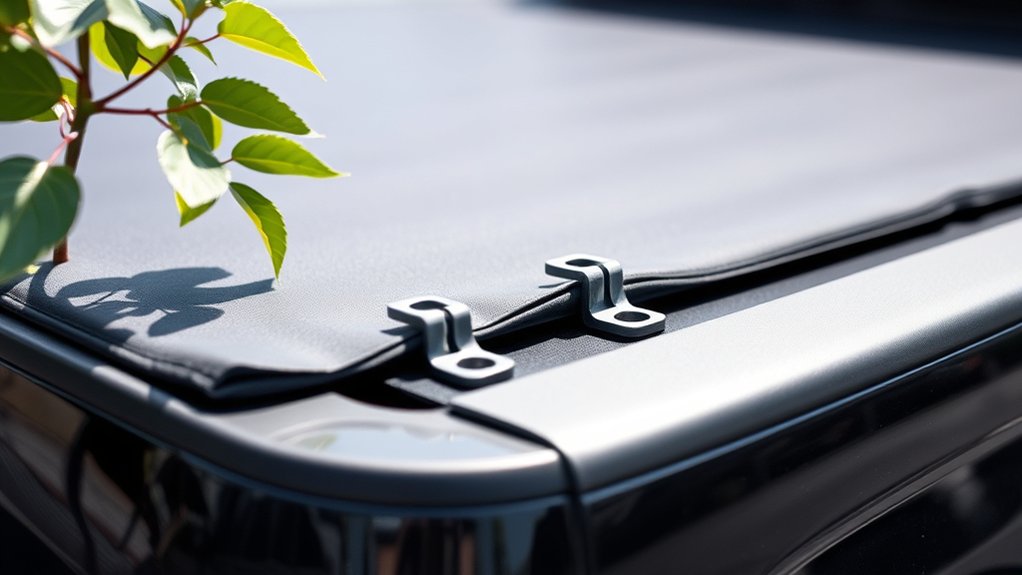
How Do I Stop My Tonneau Cover From Flapping
If your tonneau cover is flapping, it’s usually due to improper tension or alignment issues that let wind catch underneath. You’ll want to inspect the clamps, rails, and edges closely to ensure everything is securely fastened and flush. Even minor gaps can cause noise and wear over time.
Before considering replacement, there are precise adjustments and securing methods you can apply to minimize movement and improve durability. Tightening the cover properly and checking the seals can significantly reduce flapping. Small fixes often prevent bigger problems down the road.
Key Takeaways
- Ensure your tonneau cover is properly aligned and clamps are evenly spaced and securely tightened to prevent movement.
- Check and evenly distribute tension across all edges, especially the tailgate, to minimize slack and flapping.
- Inspect and maintain fastening points, replacing any worn or damaged latches, clamps, or rails promptly.
- Use weatherstripping and clips along cover edges to improve seal and reduce air infiltration that causes flapping.
- Apply temporary fixes like adhesive strips, weights, or bungee cords to counteract wind lift until a permanent adjustment is made.
Why Does My Tonneau Cover Flap in the Wind?
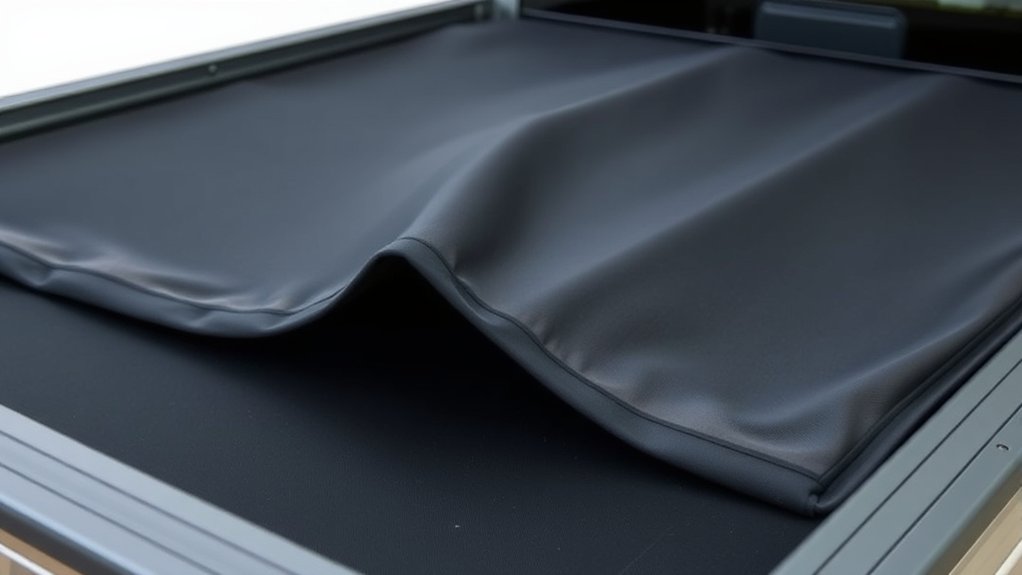
Why does your tonneau cover flap in the wind? Flapping occurs primarily due to insufficient wind resistance, which means the cover can’t adequately withstand airflow forces.
When wind flows over your truck bed, it exerts pressure that can lift or ripple the cover if it lacks proper tension or if the material isn’t rigid enough. Material durability also plays a crucial role; covers made from less durable fabrics or thinner vinyl tend to flex and flap more under wind stress.
Over time, exposure to elements can degrade material integrity, reducing its ability to resist wind forces. Understanding these factors helps you pinpoint why your cover moves excessively and emphasizes the importance of selecting a tonneau cover with high wind resistance and superior material durability to minimize flapping.
How to Check If Your Tonneau Cover Is Properly Installed
Start by inspecting the alignment of the clamps and rails to ensure they sit flush and parallel. Next, verify that the cover’s tension is evenly distributed across the entire surface without any slack.
Finally, confirm all fastening points are securely tightened to prevent any movement during travel.
Inspect Clamp and Rail Alignment
How can you tell if your tonneau cover’s clamps and rails are properly aligned? Misalignment often causes insufficient fit or improper clearance, leading to flapping.
To inspect clamp and rail alignment:
- Visually check that clamps sit flush against the rails without gaps.
- Confirm clamps are evenly spaced along the rail length.
- Measure the clearance between the cover edge and truck bed to ensure uniform spacing.
- Test for any lateral movement by gently pushing the cover near each clamp.
- Inspect clamp tightening torque; uneven torque can cause misalignment.
Proper alignment prevents gaps that let wind get underneath, causing flapping. If you detect uneven spacing or loose clamps, adjust them carefully to restore a snug, consistent fit along the rails.
Verify Cover Tension Evenness
When checking your tonneau cover’s installation, you need to verify that the tension is evenly distributed across the surface. Uneven tension can cause flapping, reduce the cover’s lifespan, and affect design aesthetics or color coordination with your vehicle.
To check tension evenness, apply firm pressure along each edge and center, noting any slack or tight spots.
| Section | Tension Level | Notes on Design Aesthetics/Color Coordination |
|---|---|---|
| Front Edge | Even | Maintains sleek profile |
| Driver Side | Slightly Loose | May affect color alignment |
| Passenger Side | Even | Preserves uniform look |
| Tailgate Edge | Tight | Enhances water resistance |
Adjust tension until all sections feel uniform to ensure optimal function and appearance.
Confirm Secure Fastening Points
To lock down your tonneau cover’s effectiveness, you need to confirm that all fastening points are securely engaged and free from wear or damage. Loose or compromised fasteners can cause flapping, leading to irreversible damage or cosmetic concerns on your truck bed and cover.
Follow these steps to inspect your fastening points precisely:
- Visually check each latch, clamp, or snap for cracks, rust, or deformation.
- Manually test each fastener by applying moderate pressure to ensure it holds firmly.
- Inspect mounting rails and brackets for bending or looseness.
- Verify that all fasteners align correctly with their corresponding anchors.
- Replace any worn or damaged parts immediately to prevent further issues.
Properly securing fastening points will maintain tension uniformity and prevent unnecessary stress on your tonneau cover.
Easy Temporary Fixes to Stop Tonneau Cover Flapping
Why does your tonneau cover flap persistently even on calm days? This often stems from subtle wind resistance and occasional rain impact causing slight movement. To address this temporarily, you can use weather-resistant adhesive strips along the edges to reduce air infiltration, effectively minimizing lift caused by wind resistance.
Additionally, applying temporary weights, such as small sandbags or magnetic clamps, near the cover’s trailing edge can help counteract the upward force during rain impact, preventing water pooling and flapping. Ensure these weights don’t damage the cover material.
Another quick fix is to use bungee cords hooked to secure points under the truck bed, tightening the cover without permanent modification. These easy, non-invasive methods provide immediate relief from flapping until you implement a more permanent solution.
Adjusting the Tension on Your Tonneau Cover
First, identify the tension adjustment points along the edges or underside of your tonneau cover.
Then, apply even tightening to these points to ensure uniform tension across the entire cover surface. This balanced adjustment minimizes slack that causes flapping during driving.
Locate Tension Adjustment Points
Although adjusting the tension might seem straightforward, you’ll need to precisely locate the adjustment points to Ensure your tonneau cover remains taut and secure. Accurate identification reduces flapping caused by wind resistance and prevents uneven strain on the cover’s material.
Begin with thorough installation checks to confirm all components are properly aligned. Typically, tension adjustment points are found:
- Along the rails where the cover clamps to the truck bed
- Near the tailgate to manage rear tautness
- At corner brackets to balance lateral tension
- Around the latch mechanisms for fine-tuning
- On straps or tension rods integrated into the cover’s frame
Tighten Cover Evenly
How do you guarantee your tonneau cover maintains consistent tension across its entire surface? Start by evenly tightening the adjustment points you located earlier, applying incremental turns to each side. Use a torque wrench if available to ensure uniform tension and avoid overtightening, which can stress materials and cause premature wear.
Monitor the cover’s surface closely for any slack, especially near storm drift areas prone to wind pressure. Address uneven tension immediately to prevent flapping and fabric distortion.
Remember, your cover’s color choice can influence heat absorption, subtly affecting material expansion and tension throughout the day. After adjustment, perform a thorough inspection by gently pressing on the cover; it should resist deformation and remain taut.
Maintaining even tension optimizes durability and performance, significantly reducing unwanted noise and wear caused by flapping.
Using Clips or Straps to Secure Your Tonneau Cover
Where exactly should you attach clips or straps to minimize your tonneau cover’s flapping? Focus on securing points along the cover’s edges where tension naturally loosens during motion. Attach clips or straps to:
- Rear corners of the truck bed rails
- Midpoints along each side rail
- Front edge near the cab for added stability
- Underneath the bed lip to avoid visibility
- Buckle or snap points designed for your cover model
Choose clips or straps that complement your cover’s color options for a seamless look. Consider storage ideas like quick-release clips for easy removal when needed. Proper placement ensures uniform tension, reducing wind noise and wear.
Avoid attaching straps too tightly to prevent material stress but firm enough to keep the cover taut and secure during drives.
Seal Gaps to Keep Your Cover Tight
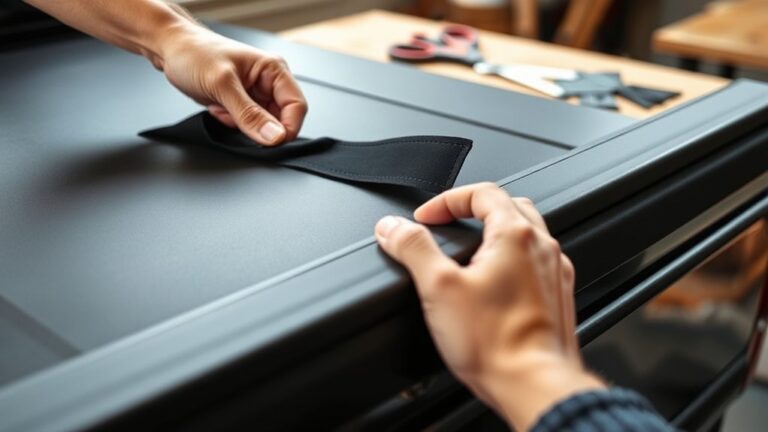
You need to identify common gap areas along the edges and seams of your tonneau cover where air can enter and cause flapping. Apply weatherstripping precisely to these gaps to create an airtight seal without interfering with cover operation.
Then, secure the edges firmly with clips to maintain consistent tension and prevent movement.
Identify Common Gap Areas
Why does your tonneau cover flap even after installation? Often, it’s due to unnoticed gaps that increase wind resistance. To keep your cover tight, you need to identify and address these common gap areas precisely. Focus on these spots:
- Tailgate edge: Check for uneven alignment causing gaps.
- Side rails: Inspect for loose clamps or misaligned seals.
- Cab end: Ensure the cover meets the truck cab without gaps.
- Latch mechanisms: Verify proper engagement to prevent lifting.
- Frame corners: Look for warping or damage creating openings.
Careful inspection using these installation tips helps reduce air intrusion, minimizing flapping. By targeting these gap areas, you control wind resistance and enhance cover stability. Addressing these specifics ensures a snug fit and prolongs your tonneau cover’s performance.
Use Weatherstripping Effectively
How exactly can weatherstripping improve your tonneau cover’s stability? By applying high-quality weather sealing around the perimeter, you effectively eliminate gaps that allow air to flow underneath. This prevents wind distortion, which causes the cover to flap and wear prematurely.
Use pliable, adhesive-backed weatherstripping designed for automotive use, ensuring it compresses tightly when the cover is closed. Focus on sealing edges where the cover meets the truck bed rails or tailgate, as these areas are most vulnerable to wind infiltration.
Properly installed weatherstripping maintains consistent tension across the cover, reducing movement caused by air pressure changes. Inspect and replace worn or compressed weatherstripping regularly to maintain an airtight seal.
This precise sealing method optimizes aerodynamic stability and extends your tonneau cover’s lifespan by minimizing wind-induced stress.
Secure Edges With Clips
While weatherstripping effectively seals gaps to prevent wind intrusion, additional hardware like clips can further secure the edges of your tonneau cover. Installing edge clips enhances wind resistance by firmly anchoring the cover’s perimeter, reducing flapping caused by turbulent airflow.
To properly secure your cover with edge clips, you should:
- Select clips designed for your tonneau model to ensure compatibility
- Position clips evenly along the cover edges to maintain consistent tension
- Attach clips to the truck bed’s side rails or existing mounting points
- Use corrosion-resistant materials to withstand environmental exposure
- Test the cover at various speeds to confirm reduced movement
Use Tailgate Locks to Keep Your Cover Secure
Where exactly should you focus to prevent your tonneau cover from flapping? Concentrate on the tailgate area, where unsecured edges allow wind to lift and flap the cover.
Using tailgate locks creates a firm anchor point, ensuring your cover remains taut during transit. Install locks designed specifically for your truck’s tailgate to achieve secure storage, minimizing movement and preventing gaps that cause wind noise.
By locking the cover at the tailgate, you eliminate lift caused by airflow underneath the cover’s rear edge. This not only reduces annoying noise but also protects your cargo from exposure or theft.
Tailgate locks work best when paired with properly sealed edges and tension adjustments, creating a comprehensive system that keeps your tonneau cover stable and secure.
When to Replace a Worn or Damaged Tonneau Cover
When should you consider replacing your tonneau cover instead of repairing it? If tension measurement shows your cover consistently fails to maintain proper tautness under normal wind pressure, replacement might be necessary. Persistent flapping often indicates structural wear beyond simple fixes.
Look for these signs to decide on replacement:
- Irreparable tears or holes compromising coverage
- Frame or rails bent, warped, or corroded affecting tension
- Material degradation causing loss of elasticity
- Repeated failure to hold tension despite adjustments
- Excessive wear on attachment points leading to instability
Replacing your cover ensures reliable tension and resistance to wind pressure, preventing damage to your truck bed and improving overall durability.
Choosing the Right Tonneau Cover for Wind Resistance
If your current tonneau cover shows signs of wear or fails to maintain proper tension against wind, selecting a cover designed specifically for wind resistance can markedly reduce flapping issues. Look for covers constructed from rigid materials like aluminum or heavy-duty composite panels that resist deformation under aerodynamic pressure.
Low-profile designs optimize vehicle aerodynamics by minimizing turbulence and air pockets around the cover’s edges. Additionally, ensure the cover features secure, adjustable clamps or rails that maintain consistent tension, preventing wind-induced gaps.
Some models incorporate aerodynamic contours that direct airflow smoothly over the truck bed, reducing lift forces that cause flapping. By prioritizing these engineering elements, you enhance wind resistance effectively, improving stability and durability while complementing your vehicle’s overall aerodynamic profile. This precision in selection is key to eliminating nuisance flapping.
Preventive Maintenance Tips to Keep Your Cover Flap-Free
How often should you inspect and maintain your tonneau cover to prevent flapping? Establish a strict maintenance schedule, ideally every 1-2 months, to ensure optimal performance.
Your cleaning routine should involve gentle washing with mild soap and water to remove debris that can cause uneven tension. Follow these preventive maintenance tips to keep your cover flap-free:
- Check and tighten all mounting hardware to maintain secure fitment.
- Inspect seals and weather stripping for cracks or wear, replacing as needed.
- Lubricate moving parts with appropriate silicone spray to prevent stiffness.
- Ensure the cover is properly aligned and tensioned according to manufacturer specs.
- Store the cover correctly when not in use to avoid warping or damage.
Adhering to this schedule keeps your tonneau cover taut, reducing wind-induced flapping effectively.
Frequently Asked Questions
Can a Tonneau Cover Improve My Truck’s Fuel Efficiency?
Yes, a tonneau cover can improve your truck’s fuel efficiency by reducing aerodynamic drag. Combining tint options and bed mats optimizes airflow and weight distribution, enhancing fuel savings with precise control over your truck bed’s environment.
Are There Specific Tonneau Covers for Different Truck Bed Sizes?
Over 70% of tonneau covers are tailored to specific truck bed sizes. You’ll find two-word discussion ideas like “fit precision” essential, ensuring exact coverage and durability.
Avoid unrelated topic covers to maintain optimal sealing and performance.
How Do I Clean and Care for My Tonneau Cover Properly?
You should clean your tonneau cover regularly with mild soap and water, ensuring flap maintenance to prevent wear. Inspect seals to avoid water leakage, and apply a protectant to maintain flexibility and durability under varying weather conditions.
Can a Tonneau Cover Protect My Truck Bed From Theft?
If you’re worried about theft, a tonneau cover can help, but only with high-quality mounting hardware and exceptional tonneau cover durability. These factors guarantee a secure fit, deterring casual thieves but not professional break-ins.
Are Tonneau Covers Compatible With Truck Bed Liners?
Yes, tonneau compatibility with truck bed liners depends on liner type and cover design. Hard liners may interfere with cover seals, while spray-on liners usually ensure better bed liner interaction.
This helps maintain a secure fit and prevents damage.
Conclusion
You’ve tightened clamps, checked alignment, and sealed every edge—yet that stubborn flap lingers. Imagine the quiet confidence of a taut, secure tonneau cover, slicing through wind without a whisper.
With precise tension adjustments, strategic clips, and regular maintenance, you can achieve that silent seal. Don’t let flapping undermine your truck’s sleek profile—take control now, and transform your cover into a fortress against the breeze.
The solution is in your hands. To truly stop your tonneau cover from flapping, focus on proper fit and consistent care for lasting results.